
Waking up after a long night’s sleep should leave you feeling refreshed and energized. But if you’ve ever slept for ten hours or more and still felt sluggish—head pounding, mind foggy—you’re not alone. In fact, excessive sleep can trigger headaches and a disoriented state known as sleep inertia. This phenomenon is more common than many realize, and understanding its causes can help you optimize your rest and avoid morning discomfort.
Sleep isn’t just about duration—it’s about quality, timing, and consistency. While most adults need 7–9 hours of sleep per night, regularly exceeding that range can disrupt your body’s internal clock, alter brain chemistry, and lead to physical symptoms like headaches. The key lies in recognizing how sleep inertia works and why oversleeping interferes with your natural wake-up process.
What Is Sleep Inertia—and Why Does It Cause Headaches?
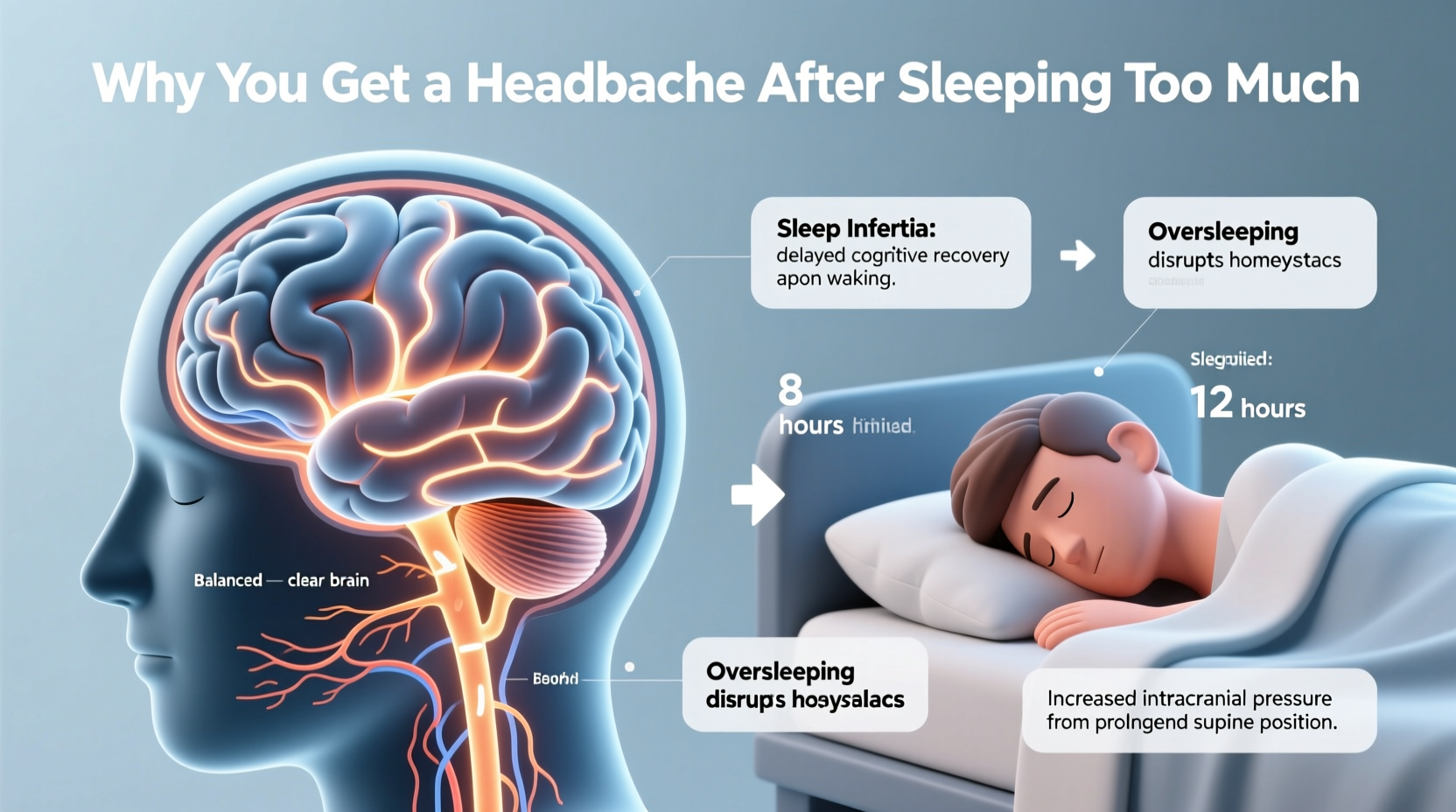
Sleep inertia refers to the transitional state between sleep and wakefulness, characterized by impaired cognitive performance, drowsiness, disorientation, and sometimes headaches. It typically lasts from 15 minutes to several hours, depending on how deeply you were sleeping when awakened.
When you sleep longer than usual, especially beyond 9–10 hours, you're more likely to be pulled out of deep sleep or REM (rapid eye movement) stages. These are critical phases for memory consolidation and emotional regulation, but waking during them interrupts essential brain processes. During deep sleep, cerebral blood flow decreases, and certain neurotransmitters like adenosine accumulate. Abrupt awakening floods the brain with oxygenated blood before it’s fully ready, which can dilate blood vessels and trigger pain-sensitive nerves—leading to a headache.
“Sleep inertia is not just mental fog—it can manifest physically. Headaches upon waking after prolonged sleep often stem from abrupt shifts in cerebral blood flow and disrupted neurochemical balance.” — Dr. Lena Patel, Neurologist & Sleep Specialist
This vascular shift, combined with elevated levels of inflammatory markers linked to extended sleep, contributes to what researchers call “hypnic headache” or “sleep drunkenness,” where individuals feel mentally clouded and physically unwell.
The Science Behind Oversleeping and Brain Chemistry
Your brain operates on a finely tuned circadian rhythm regulated by light exposure, hormones, and neural activity. One of the most influential hormones is melatonin, which rises at night and falls in the morning. When you oversleep, you delay the suppression of melatonin, keeping your brain in a sleep-ready state even as your body tries to wake up.
Additionally, serotonin and dopamine—neurotransmitters tied to mood and alertness—can become imbalanced due to irregular sleep patterns. Excessive sleep has been associated with lower daytime dopamine levels, contributing to fatigue and low motivation. At the same time, glutamate, an excitatory neurotransmitter, builds up during deep sleep. A sudden wake-up releases this compound rapidly, potentially overstimulating neurons and increasing sensitivity to pain, including headaches.
Studies also show that people who consistently sleep more than nine hours have higher rates of chronic headaches and migraines. A 2020 meta-analysis published in *Neurology* found that both short and long sleep durations were independently linked to increased headache frequency, suggesting a U-shaped risk curve.
Common Triggers of Post-Oversleep Headaches
Oversleeping doesn’t occur in isolation. Several lifestyle and environmental factors amplify the likelihood of waking with a headache:
- Inconsistent sleep schedule: Going to bed and waking up at different times daily confuses your circadian rhythm.
- Poor sleep quality: Frequent awakenings, sleep apnea, or noise disturbances reduce restorative sleep, prompting longer sleep attempts.
- Dehydration: Not drinking enough water before bed leads to mild dehydration by morning, a common headache trigger.
- Low blood sugar: Skipping dinner or going too long without food can cause hypoglycemia overnight, leading to morning headaches.
- Medications or alcohol: Substances that alter sleep architecture increase the chance of waking from deep sleep abruptly.
Moreover, weekend oversleeping—often called \"social jetlag\"—can be particularly disruptive. Sleeping in two or more hours past your weekday wake time misaligns your internal clock, making Monday mornings especially brutal.
How to Reduce Sleep Inertia and Prevent Morning Headaches
Preventing post-oversleep headaches involves aligning your habits with your body’s biological needs. Here’s a step-by-step guide to minimize sleep inertia and improve morning clarity:
- Set a consistent wake-up time: Even on weekends, aim to rise within one hour of your weekday schedule to stabilize your circadian rhythm.
- Limit total sleep to 9 hours max: Respect your body’s optimal range. More sleep isn’t better if it disrupts cycle completion.
- Expose yourself to bright light immediately upon waking: Open curtains or use a daylight-simulating lamp to suppress melatonin and signal alertness.
- Hydrate first thing: Drink a glass of water to counteract overnight fluid loss and support vascular function.
- Avoid screens before bed: Blue light delays melatonin release, pushing your sleep phase later and encouraging catch-up sleep the next day.
- Engage in light movement: Gentle stretching or walking boosts circulation and helps transition the brain out of sleep mode.
| Do | Don’t |
|---|---|
| Maintain a regular sleep-wake schedule | Sleep in more than 60 minutes past usual time |
| Use alarm clocks across the room to avoid snoozing | Consume alcohol or caffeine close to bedtime |
| Practice relaxation techniques before bed (e.g., meditation) | Watch stimulating content right before sleep |
| Keep bedroom cool, dark, and quiet | Use electronic devices in bed |
Real-Life Example: Sarah’s Weekend Sleep Struggle
Sarah, a 32-year-old graphic designer, regularly worked late during the week, averaging only six hours of sleep. On Saturdays, she’d sleep for 10–11 hours, hoping to “catch up.” But instead of feeling rested, she woke with throbbing headaches, nausea, and difficulty focusing. Her productivity plummeted, and she dreaded weekends.
After consulting a sleep clinic, she learned that her extended weekend sleep was disrupting her circadian rhythm and triggering rebound headaches. By gradually adjusting her weekday bedtime to gain an extra hour of sleep and limiting Saturday wake-up time to no later than 9 a.m., Sarah reduced her headaches significantly within three weeks. She also started using a sunrise alarm clock and drinking water immediately upon waking—small changes that made a big difference.
Sarah’s case illustrates a common misconception: that lost sleep can be fully recovered with marathon sessions. In reality, the brain prefers consistency over compensation.
FAQ: Common Questions About Oversleeping and Headaches
Can sleeping too much cause migraines?
Yes. Extended sleep, particularly when irregular, is a recognized migraine trigger. Changes in serotonin levels, blood vessel dilation, and delayed melatonin clearance may contribute. People with a history of migraines should maintain strict sleep schedules to reduce attack frequency.
Is there a difference between a regular headache and a sleep inertia headache?
While symptoms overlap, sleep inertia-related headaches tend to appear shortly after waking from prolonged or disrupted sleep. They’re often dull, bilateral (on both sides), and accompanied by brain fog. Unlike tension or cluster headaches, they usually resolve within a few hours with movement, hydration, and light exposure.
How can I tell if I’m oversleeping or just sleep-deprived?
If you consistently need more than 9–10 hours to feel functional, you may be chronically sleep-deprived. However, if you sleep long hours regularly and still feel groggy, it could indicate poor sleep quality or a condition like hypersomnia. Tracking your sleep with a journal or wearable device can help distinguish between the two.
Expert-Backed Checklist for Healthier Sleep Habits
To prevent headaches caused by oversleeping and sleep inertia, follow this actionable checklist based on clinical recommendations:
- ✅ Go to bed and wake up at the same time every day (±30 minutes)
- ✅ Limit naps to 20–30 minutes and avoid them after 3 p.m.
- ✅ Create a pre-sleep routine (e.g., reading, warm shower) to signal wind-down
- ✅ Remove phones and laptops from the bedroom
- ✅ Drink a glass of water upon waking
- ✅ Get natural sunlight within 30 minutes of waking
- ✅ Monitor caffeine intake—avoid after noon
- ✅ Consult a doctor if headaches persist despite improved sleep hygiene
Conclusion: Reclaim Your Mornings
Waking up with a headache after too much sleep isn't just inconvenient—it's a sign that your sleep pattern is out of sync with your biology. Sleep inertia isn’t laziness; it’s a neurological response to disrupted sleep architecture. By respecting your body’s natural rhythms, avoiding extreme sleep durations, and creating a supportive morning routine, you can eliminate grogginess and start your day with clarity and energy.
Small adjustments yield significant results. Whether it’s setting a consistent alarm, hydrating early, or stepping into sunlight, each habit reinforces a healthier relationship with sleep. Don’t let another morning pass in pain and confusion. Take control of your rest—and reclaim your mornings.




 浙公网安备
33010002000092号
浙公网安备
33010002000092号 浙B2-20120091-4
Comments
No comments yet. Why don't you start the discussion?