
If you’ve ever reached for a doorknob, car door, or faucet in winter and been met with a sudden, sharp zap—welcome to the world of static electricity. This common phenomenon spikes during colder months, turning everyday interactions with metal into minor jolts of discomfort. While harmless in most cases, frequent static shocks can be annoying, even painful. The good news: they’re predictable, understandable, and largely preventable.
The root cause lies not in the metal itself, but in how your body interacts with dry air, synthetic materials, and insulating surfaces. By understanding the science behind winter static and adjusting your habits, you can significantly reduce—or eliminate—those surprise shocks.
The Science Behind Winter Static Shocks
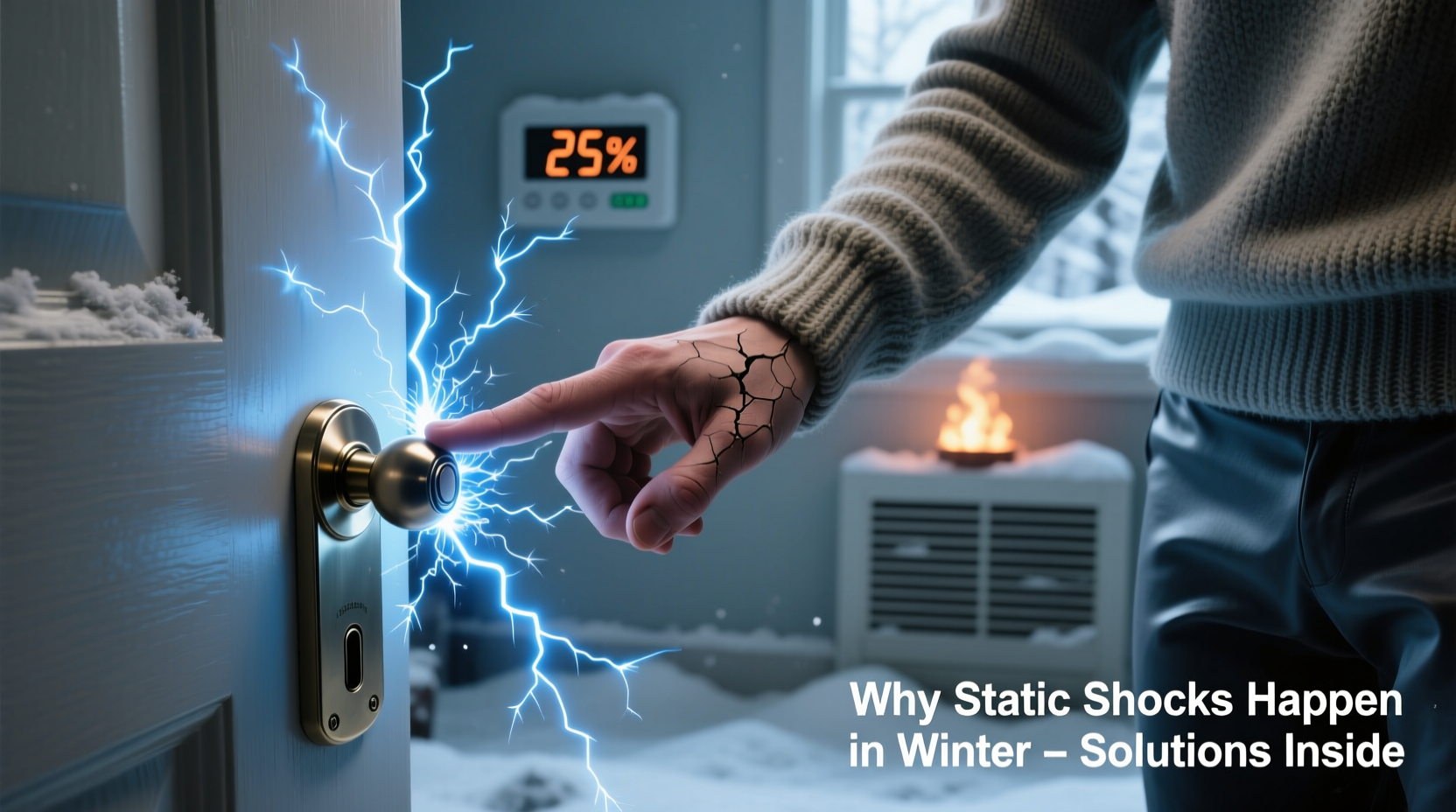
Static electricity occurs when electrons transfer between two surfaces through contact and separation—a process called triboelectric charging. When you walk across a carpet, slide off a car seat, or remove a sweater, electrons move from one material to another. Your body becomes charged as a result.
Metal objects don’t generate this charge—but they do conduct it. When your charged body touches a conductive surface like a metal doorknob, the excess electrons rapidly discharge, creating a spark. That’s the shock you feel.
This effect intensifies in winter due to low humidity. Cold air holds less moisture than warm air, and indoor heating further dries out the environment. Dry air is a poor conductor, so charges build up on your body instead of dissipating gradually. In contrast, humid summer air allows static to leak away harmlessly before reaching shock-inducing levels.
“Indoor relative humidity below 30% dramatically increases static buildup. At 40–60%, the problem nearly disappears.” — Dr. Alan Hirsch, Atmospheric Physicist, National Institute of Environmental Physics
Common Triggers and High-Risk Scenarios
Certain daily routines set the stage for static accumulation. Recognizing these patterns helps you anticipate and avoid shocks:
- Walking on synthetic carpets: Nylon and polyester fibers easily shed electrons, especially when rubbed by rubber-soled shoes.
- Getting in and out of vehicles: Sliding across fabric or leather seats builds charge, which discharges when you touch the metal frame upon exiting.
- Wearing wool or synthetic clothing: Materials like polyester, acrylic, and nylon are high on the triboelectric series—prone to gaining or losing electrons.
- Using plastic-handled tools or electronics: Plastic insulates charge, allowing it to build until you touch something conductive.
- Dry indoor environments: Heated homes and offices with RH (relative humidity) below 30% become static hotspots.
Proven Strategies to Prevent Winter Static Shocks
You don’t need expensive gear to combat static—just consistent adjustments to your environment and behavior. These science-based methods target the root causes: dry air, insulating materials, and uncontrolled discharge.
1. Increase Indoor Humidity
Maintaining indoor humidity between 40% and 60% is the single most effective way to reduce static. Moisture in the air allows charges to dissipate naturally, preventing buildup.
Use a hygrometer (available for under $15) to monitor room humidity. If levels fall below 40%, deploy one or more of these solutions:
- Run a humidifier in frequently used rooms, especially bedrooms and living areas.
- Place bowls of water near heat sources—evaporation adds moisture over time.
- Boil water on the stove with cinnamon or citrus peels for a dual-purpose scent boost and humidity lift.
- Hang wet towels near radiators or heating vents.
2. Choose Natural-Fiber Clothing and Footwear
Synthetic fabrics like polyester and rayon generate more static than cotton, linen, silk, or wool. While wool can create charge, it's less likely to cause shocks when paired with conductive footwear.
Leather-soled shoes allow some grounding compared to rubber soles, which insulate completely. Consider wearing leather shoes indoors or going barefoot at home to let charge escape through the floor.
| Fabric Type | Static Risk | Notes |
|---|---|---|
| Polyester | High | Common in winter layers; highly prone to charging |
| Nylon | High | Used in jackets, tights, and base layers |
| Cotton | Low | Best for undershirts and linings |
| Wool | Moderate | Can generate charge but often balanced by moisture retention |
| Silk | Low-Moderate | Natural but smooth; less friction-based charging |
3. Use Anti-Static Sprays and Lotions
Anti-static sprays work by leaving a thin, conductive layer on fabrics that prevents electron buildup. Lightly mist coats, sweaters, and car seats once daily during peak winter.
Moisturizing your skin also helps. Dry skin increases personal resistance, making shocks more intense. Apply lotion after showering, focusing on hands and arms—the most common discharge points.
4. Ground Yourself Before Touching Metal
Instead of letting the shock happen unexpectedly, control the discharge. Use a non-sensitive part of your body—like your knuckle or elbow—to touch a grounded surface first. The smaller nerve density makes the zap less painful.
Better yet, carry a small metal object like a key or coin. Touch the metal object to the doorknob first—the spark jumps from the key, not your finger.
Step-by-Step Routine to Avoid Daily Shocks
Follow this morning-to-night routine to minimize static buildup throughout your day:
- Morning: Hydrate and moisturize. Apply unscented lotion to hands and arms after your shower. Drink water to improve skin conductivity.
- Before dressing: Check indoor humidity. If below 40%, turn on a humidifier.
- Choose natural-fiber clothing: Wear cotton undershirts, even under wool sweaters, to reduce direct synthetic contact.
- Shoes: Opt for leather soles if staying indoors, or use anti-static shoe straps if working in sensitive environments.
- Before exiting your car: Hold the metal door frame *while* placing your foot on the ground. This discharges safely without a shock.
- Entering buildings: Touch walls or wood surfaces before grabbing metal handles.
- Evening: Lightly spray clothes with an anti-static solution and rehydrate skin before bed.
Real-Life Example: Office Worker’s Static Struggles
Sarah, a project manager in Chicago, dreaded her morning routine. Every time she touched the office elevator button or her desk drawer, she got zapped. Her cubicle sat on a raised carpeted floor, and she wore rubber-soled boots with a polyester-blend coat.
After tracking her shocks for a week, she noticed a pattern: worst after walking from her heated car, moderate in the afternoon, rare on days she wore cotton layers.
She made three changes: switched to leather-soled indoor shoes, placed a desktop humidifier, and began using a handheld anti-static spray on her coat each morning. Within four days, shocks dropped from 8–10 per day to zero. “It felt like I’d fixed a glitch in real life,” she said.
Checklist: Eliminate Winter Static in 7 Steps
Use this checklist weekly during cold months to stay shock-free:
- ✅ Measure indoor humidity—aim for 40–60%
- ✅ Run a humidifier if needed
- ✅ Wear cotton or natural-fiber underlayers
- ✅ Apply hand and body lotion daily
- ✅ Use anti-static spray on clothing and car seats
- ✅ Discharge safely using keys or knuckles before touching metal
- ✅ Avoid dragging feet on carpets—lift toes when walking
Frequently Asked Questions
Are static shocks dangerous?
For healthy individuals, no. The voltage may reach 20,000V, but current is extremely low and duration is nanoseconds. However, people with pacemakers or sensitive medical devices should consult their doctor. In industrial settings involving flammable materials, static sparks can pose fire risks.
Why do I get shocked more than others?
Differences come down to footwear, clothing choices, skin dryness, and movement patterns. Someone wearing rubber soles and polyester layers on thick carpet will accumulate more charge than someone in leather shoes and cotton socks on hardwood floors. Body chemistry and hydration also play subtle roles.
Can I make my own anti-static spray?
Yes. Mix 1 cup of water with 1 tablespoon of fabric softener in a spray bottle. Shake lightly and mist clothing from 6–8 inches away. Test on a small area first. Alternatively, dilute hairspray with water (1:3 ratio) for a quick fix. Note: Overuse may leave residue on dark fabrics.
Final Thoughts and Action Plan
Static shocks in winter aren’t inevitable—they’re the result of specific environmental and behavioral factors that can be managed. The combination of dry air, synthetic materials, and insulated footwear creates the perfect storm for electrostatic discharge. But with small, consistent changes, you can reclaim comfort in your daily routine.
Start tonight: check your home’s humidity, apply lotion, and lay out natural-fiber clothes for tomorrow. Keep a key in your hand when exiting the car. These actions take seconds but deliver lasting relief.
Remember, prevention works better than reaction. Once you stabilize your environment and habits, those surprise zaps will fade into memory. You don’t need to live with winter shocks—you just need to understand them.




 浙公网安备
33010002000092号
浙公网安备
33010002000092号 浙B2-20120091-4
Comments
No comments yet. Why don't you start the discussion?