
Winter brings cozy sweaters, warm drinks, and unfortunately, frequent static shocks. You reach for a doorknob, pet your dog, or even pull off a sweater—only to feel that sudden, sharp zap. If this happens more often during colder months, you're not imagining it. Static electricity is significantly more common in winter due to low humidity, synthetic fabrics, and indoor heating. But understanding the science behind it is the first step toward reducing those jolts.
Static shocks occur when an imbalance of electric charges builds up on the surface of your body and discharges upon contact with a conductor like metal or another person. While harmless in most cases, repeated shocks can be annoying and sometimes painful. The good news: with a few targeted changes to your environment and habits, you can dramatically reduce or even eliminate winter static.
The Science Behind Winter Static Shocks
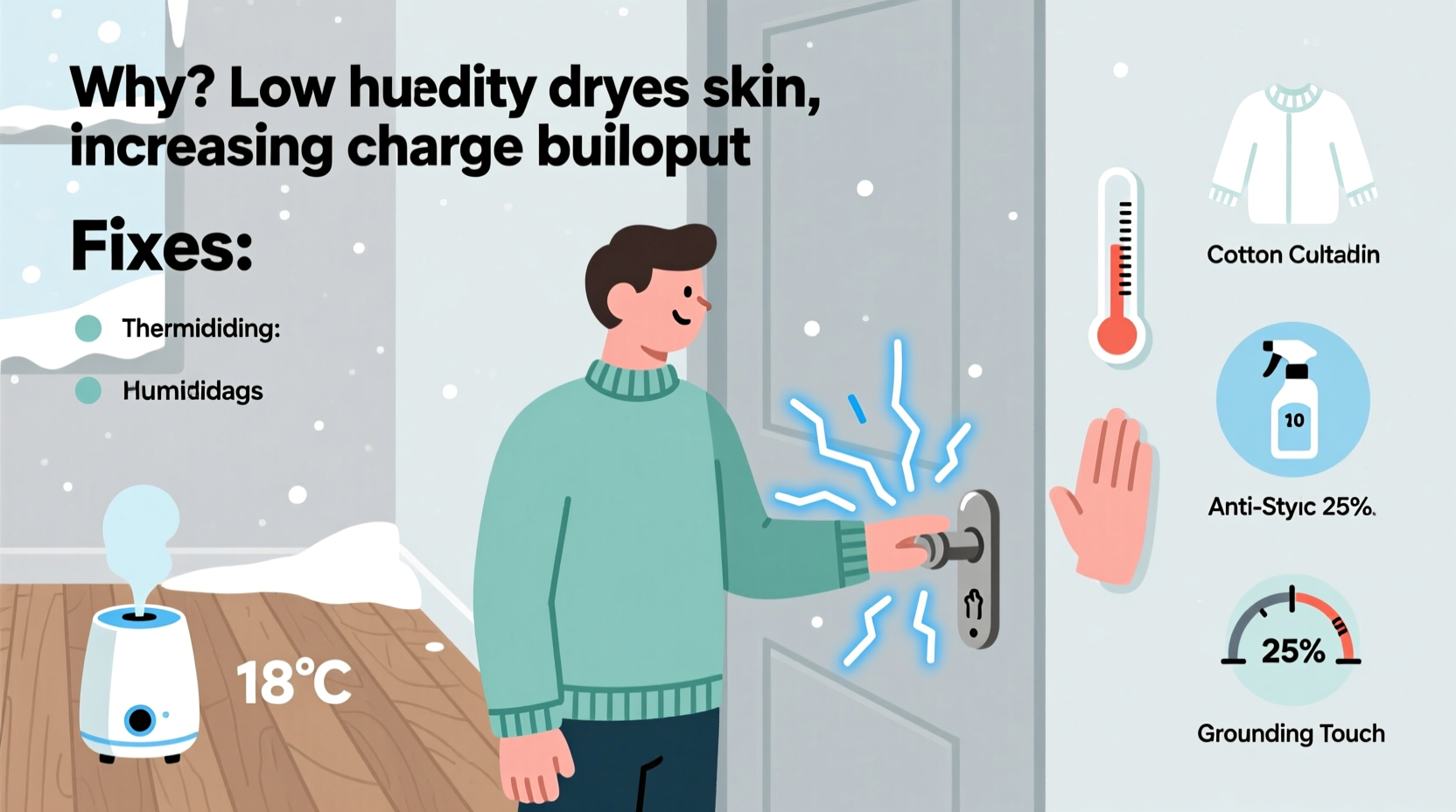
Static electricity forms when two surfaces come into contact and then separate, causing electrons to transfer from one surface to the other. This creates a charge imbalance. When you walk across a carpet, electrons rub off onto your shoes and build up on your body. When you touch a metal object, the excess charge rapidly equalizes—resulting in a shock.
In winter, the air becomes drier due to cold temperatures and indoor heating systems. Cold air holds less moisture than warm air, and heated indoor air further reduces relative humidity—often dropping below 30%. Dry air is a poor conductor of electricity, which means charges build up more easily on surfaces and dissipate slowly. In contrast, humid summer air allows charges to leak away gradually, preventing sudden discharges.
Additionally, people wear more layers in winter—especially synthetic materials like polyester, nylon, and acrylic. These fabrics are excellent at generating and holding static charge. Combine dry air, synthetic clothing, and insulated shoes, and you've created the perfect storm for regular zaps.
“Low humidity is the primary driver of static buildup in homes during winter. Below 40% RH, the risk of noticeable shocks increases exponentially.” — Dr. Alan Foster, Environmental Physicist, National Indoor Air Quality Lab
7 Proven Fixes to Reduce Winter Static Shocks
Combatting static isn’t about eliminating it entirely—it’s about managing charge buildup and encouraging safe dissipation. Here are seven effective strategies grounded in physics and real-world testing.
1. Increase Indoor Humidity
The single most effective solution is raising indoor humidity levels. Aim for 40–60% relative humidity (RH), which is ideal for both comfort and static control. At this level, moisture in the air helps conduct small charges away before they accumulate.
Use a humidifier in key areas like bedrooms and living rooms. Cool-mist ultrasonic models work well and don’t add heat. For larger homes, consider a whole-house humidifier attached to your HVAC system. Even placing bowls of water near radiators or using houseplants can slightly boost moisture.
2. Choose Natural Fibers Over Synthetics
Your clothing choices play a major role. Synthetic fibers generate far more static than natural ones like cotton, wool, silk, and linen. While wool can generate some static, it tends to hold less charge than polyester blends.
Opt for cotton underlayers, especially close to the skin. Replace fleece jackets with wool coats when possible. Socks made from cotton or merino wool reduce foot-to-carpet charge buildup.
3. Treat Carpets and Upholstery
Carpets, especially synthetic ones, are prime sources of static generation. Anti-static sprays containing quaternary ammonium compounds can neutralize surface charges. A simple DIY version: mix 1 part fabric softener with 10 parts water in a spray bottle and lightly mist carpets or car seats (test on a small area first).
Vacuuming with a microfiber cloth or anti-static attachment also helps remove charged particles. Consider using rugs with natural fibers like wool or cotton over large synthetic carpets.
4. Moisturize Skin Regularly
Dry skin is more prone to holding static charge. As we age or face harsh winter conditions, our skin loses moisture, becoming an efficient insulator. Well-hydrated skin conducts minor charges better, reducing shock intensity.
Apply lotion immediately after showering while skin is still damp. Focus on hands, arms, and legs—areas most likely to touch metal objects. Look for lotions with glycerin, hyaluronic acid, or shea butter for long-lasting hydration.
5. Ground Yourself Before Touching Metal
You can't always avoid metal objects, but you can discharge safely. Before touching a doorknob, faucet, or car door, touch a non-conductive surface like a wooden door frame or wall with your knuckle. This allows slower, painless discharge.
Alternatively, carry a metal key and tap it against the object first. The spark jumps from the key, not your finger, minimizing discomfort.
6. Use Anti-Static Products
A range of products can help manage static:
- Anti-static wristbands – Used in electronics work, these ground you via a cord.
- Shoe straps or heel grounders – Conductive strips that attach to shoes and discharge as you walk.
- Laundry additives – Dryer sheets and liquid fabric softeners coat fabrics with lubricants that reduce friction and static cling.
While dryer sheets are effective, they contain chemicals that may irritate sensitive skin. Wool dryer balls are a natural alternative that soften clothes and reduce static without residue.
7. Modify Your Footwear
Rubber-soled shoes insulate your body from the ground, allowing charge to build. Leather soles or shoes with carbon-infused soles allow gradual discharge. Walking barefoot indoors (on non-carpeted floors) also helps, though impractical in cold weather.
If you work in a static-sensitive environment, consider ESD (electrostatic discharge) safe footwear designed to prevent charge accumulation.
Do’s and Don’ts: Static Shock Prevention Table
| Do’s | Don’ts |
|---|---|
| Use a humidifier to maintain 40–60% humidity | Run heaters without monitoring humidity |
| Wear cotton or wool clothing layers | Wear polyester or nylon next to skin |
| Moisturize skin daily, especially hands | Use alcohol-based hand sanitizers excessively (dries skin) |
| Touch metal objects with a key first | Touch doorknobs directly with fingertips |
| Add dryer balls or softener to laundry | Overload the dryer—tight packing increases friction |
Step-by-Step Guide: Morning Routine to Prevent Static All Day
Start your day with habits that minimize static buildup:
- Shower with lukewarm water – Hot water strips natural oils; lukewarm preserves moisture.
- Apply moisturizer within 3 minutes of drying off – Locks in hydration before skin dries.
- Choose natural-fiber clothing – Cotton underwear, wool socks, and a cotton shirt reduce charge generation.
- Use a metal comb instead of plastic – Plastic combs generate static in hair; metal combs help discharge it.
- Drink water – Hydrated bodies conduct electricity more efficiently, reducing surface charge retention.
- Check indoor humidity – Adjust humidifier if below 40%.
- Carry a key or coin – Use it to touch metal surfaces before your fingers do.
Real-Life Example: Office Worker’s Static Solution
Sarah, a graphic designer in Minneapolis, experienced constant shocks at her office every winter. Her desk was near a heating vent, she wore fleece-lined boots, and worked on a synthetic carpet. After three weeks of painful zaps from her keyboard and office chair, she decided to act.
She placed a small humidifier under her desk, switched to cotton-blend socks, applied hand cream hourly, and used a wool dryer ball for her laundry. Within a week, shocks dropped by 80%. She also started tapping her metal water bottle against her desk before sitting down—a ritual that prevented the final 20%. Her coworkers noticed and adopted similar practices, turning her cubicle into a “static-safe zone.”
Expert Tips Checklist
- ✅ Maintain indoor humidity between 40–60%
- ✅ Wear natural fiber clothing (cotton, wool)
- ✅ Use a humidifier in frequently used rooms
- ✅ Moisturize skin morning and night
- ✅ Discharge static with a key before touching metal
- ✅ Replace synthetic rugs with natural fiber options
- ✅ Use dryer balls or eco-friendly softeners in laundry
- ✅ Avoid rubber-soled shoes indoors when possible
Frequently Asked Questions
Why do I only get shocked in winter and not summer?
Winter air is drier, especially indoors where heating reduces humidity. Dry air prevents static charges from dissipating naturally, allowing them to build up on your body. In humid summer air, moisture acts as a conductor, quietly neutralizing charges before they become noticeable.
Are static shocks dangerous?
For healthy individuals, static shocks are generally harmless—though uncomfortable. However, people with certain medical devices like pacemakers should consult their doctor, as strong discharges could theoretically interfere. Additionally, in environments with flammable gases or dust, static sparks can pose fire risks.
Can my diet affect static buildup?
Indirectly, yes. Dehydration makes skin drier and more insulative, increasing the likelihood of charge retention. Drinking enough water supports skin hydration, which improves conductivity. Diets rich in omega-3 fatty acids (like fish, flaxseeds, and walnuts) also support skin health and moisture retention.
Conclusion: Take Control of Winter Static
Static shocks in winter are common but not inevitable. By addressing the root causes—dry air, synthetic materials, and insulated environments—you can reclaim comfort and avoid those startling zaps. Simple changes like using a humidifier, choosing natural fabrics, and grounding yourself before touching metal make a measurable difference.
These solutions are backed by physics, tested in homes and offices, and proven effective across climates. Start with one or two adjustments, track your results, and build a personalized static-reduction routine. Small actions compound into lasting comfort.




 浙公网安备
33010002000092号
浙公网安备
33010002000092号 浙B2-20120091-4
Comments
No comments yet. Why don't you start the discussion?