
Procrastination isn’t just about laziness or poor time management. It’s a deeply rooted psychological pattern that affects even the most capable, motivated people. You can have a clear plan, full awareness of your goals, and every tool at your disposal—yet still find yourself scrolling through social media instead of working on an important task. The real question isn’t whether you should act, but why you don’t, despite knowing better.
This disconnect between intention and action is not a moral failing. It’s a signal—a clue pointing to emotional resistance, fear, or misaligned motivation. Understanding the root causes of procrastination is the first step toward overcoming it. More importantly, practical strategies grounded in psychology and neuroscience can help rewire your habits and restore agency over your time and attention.
The Hidden Psychology Behind Procrastination
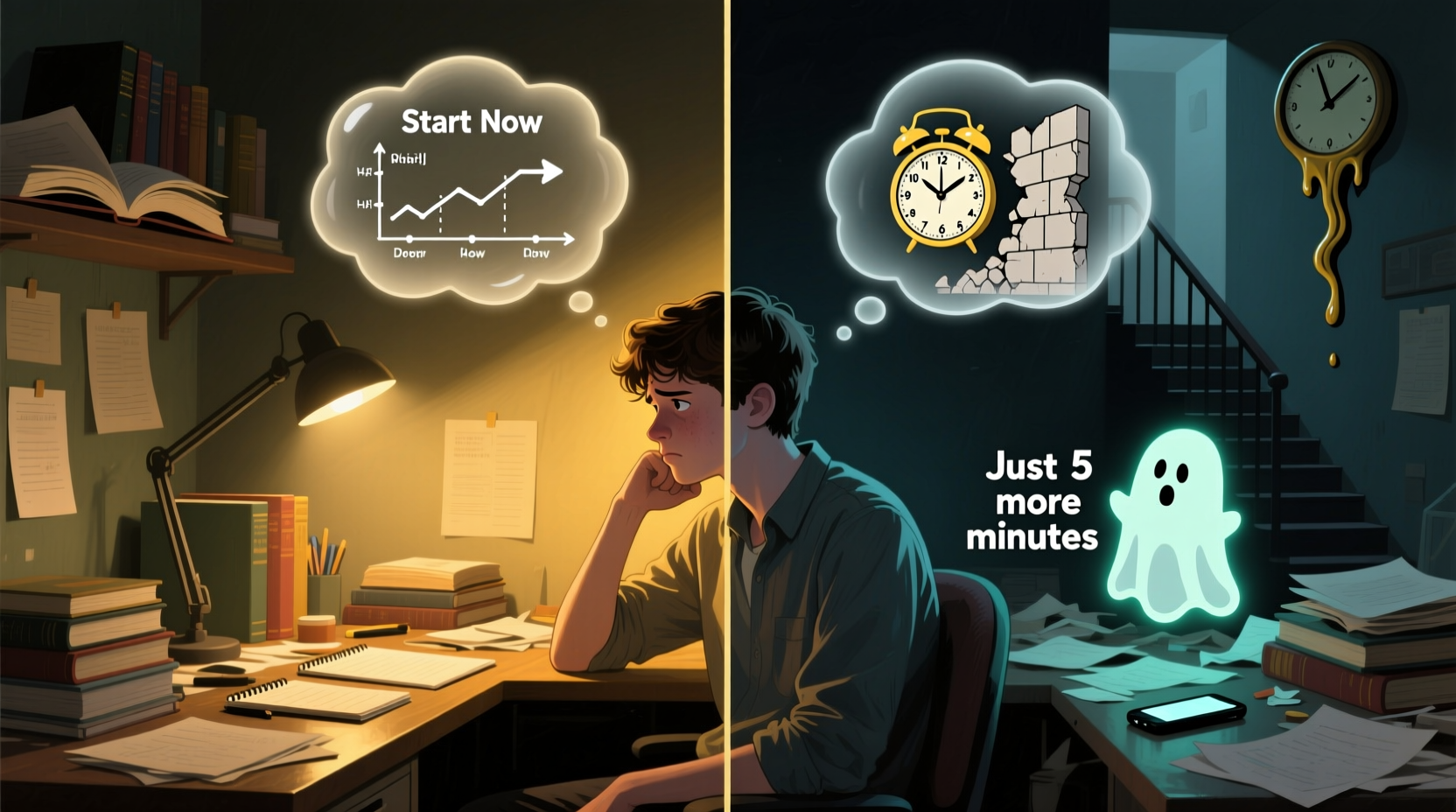
At its core, procrastination is an emotional regulation problem, not a time management issue. Dr. Tim Pychyl, a leading researcher on procrastination at Carleton University, explains: “We delay tasks not because we’re disorganized, but because we want to escape negative emotions associated with them—boredom, anxiety, insecurity, frustration.”
“We don’t avoid work. We avoid how work makes us feel.” — Dr. Tim Pychyl, Procrastination Researcher
When faced with a daunting project, your brain doesn’t assess deadlines or long-term consequences. Instead, it reacts emotionally. Tasks that trigger discomfort—like writing a report that might be judged, starting a fitness routine that demands effort, or making a difficult phone call—are perceived as threats. In response, your mind seeks immediate relief by switching to something more pleasurable: checking emails, watching videos, or cleaning your desk (productively avoiding).
This short-term mood repair reinforces the habit. Each time you escape discomfort through distraction, your brain learns that avoidance feels good—making it more likely you’ll repeat the behavior next time.
Common Triggers That Keep You Stuck
Even when you know exactly what to do, certain mental and environmental factors can derail action. These triggers operate below conscious awareness but significantly influence behavior:
- Fear of failure: Worry that your work won’t meet expectations can paralyze you before you begin.
- Perfectionism: Believing a task must be done perfectly—or not at all—creates unrealistic standards that discourage starting.
- Lack of intrinsic motivation: Tasks that feel meaningless or externally imposed reduce engagement and increase resistance.
- Task ambiguity: Even if you know the goal, unclear steps or undefined outcomes create mental friction.
- Low energy or decision fatigue: Willpower is finite. After a long day, even simple decisions become harder to act on.
These triggers activate the limbic system—the brain’s emotional center—which overrides the prefrontal cortex responsible for planning and rational thinking. This neurological tug-of-war explains why willpower alone rarely wins.
A Step-by-Step Guide to Overcoming Procrastination
Breaking free from procrastination requires a structured approach that addresses both mindset and behavior. Here’s a practical, research-backed sequence to regain momentum:
- Identify the emotional barrier: Pause and ask, “What am I feeling right now?” Is it anxiety? Boredom? Overwhelm? Naming the emotion reduces its power.
- Reframe the task: Shift from “I have to” to “I choose to.” This restores autonomy. For example: “I’m choosing to write this email because it helps me build trust with my client.”
- Break it into micro-actions: Reduce friction by defining the smallest possible next step. Instead of “write report,” try “open document and type title.”
- Use the 2-minute rule: Commit to working on the task for just two minutes. Often, starting is the hardest part—momentum builds once you begin.
- Design your environment: Remove distractions. Put your phone in another room, close unnecessary browser tabs, and use tools like website blockers if needed.
- Schedule focused intervals: Work in 25-minute blocks (Pomodoro technique) followed by 5-minute breaks. Knowing a break is coming reduces resistance.
- Reflect and adjust: At the end of the day, review what worked and what didn’t. Adjust your strategy accordingly—this builds self-awareness over time.
Consistency matters more than intensity. Small actions repeated daily rewire neural pathways, making productive behavior more automatic.
Do’s and Don’ts When Fighting Procrastination
| Do | Don’t |
|---|---|
| Start with the easiest part of the task to build momentum | Wait for motivation to strike before beginning |
| Use implementation intentions: “When X happens, I will do Y” | Rely solely on vague goals like “be more productive” |
| Practice self-compassion after setbacks | Criticize yourself harshly for procrastinating |
| Track progress visually (e.g., checklist or calendar) | Focus only on the final outcome, ignoring small wins |
| Pair unpleasant tasks with rewards (e.g., coffee after 30 minutes of work) | Promise big rewards far in the future |
Real Example: How Sarah Regained Control of Her Workflow
Sarah, a freelance graphic designer, consistently missed deadlines despite having years of experience and a clear workflow. She knew what to do—create mockups, send revisions, follow up with clients—but found herself delaying until the last minute, then working through the night in stress.
After tracking her behavior for a week, she realized her procrastination spiked when clients requested major changes. The underlying emotion was fear: she worried her work wasn’t good enough and dreaded negative feedback. Avoiding the task gave temporary relief, but increased long-term anxiety.
She applied the step-by-step method: first naming her fear, then reframing the revision as a chance to improve and strengthen client trust. She broke each revision into tiny steps—starting with simply opening the design file. Using the 2-minute rule, she committed to making one small edit. Once started, she usually worked for 45 minutes.
Within three weeks, her turnaround time improved by 60%. More importantly, her confidence grew. She no longer saw revisions as threats, but as normal parts of her process.
“Self-compassion changed everything. I stopped shaming myself for procrastinating and started understanding why. That shift made all the difference.” — Sarah, Freelance Designer
Actionable Checklist to Stop Procrastinating Today
Use this checklist to interrupt the cycle of delay and build sustainable productivity habits:
- ☐ Identify one task you’ve been avoiding and write down the emotion behind it (e.g., fear, boredom, uncertainty).
- ☐ Break the task into the smallest possible action (e.g., “open document,” “send one email”).
- ☐ Set a timer for 2 minutes and complete that micro-action without judgment.
- ☐ Schedule your next work session using time blocking (e.g., “Tuesday 9:00–9:25 AM”).
- ☐ Remove one major distraction (e.g., turn off notifications, log out of social media).
- ☐ Reflect at the end of the day: What helped you start? What held you back?
- ☐ Practice self-kindness if you slip up. Progress isn’t linear.
Repeat this process daily. Over time, you’ll notice a growing sense of control and reduced emotional resistance.
Frequently Asked Questions
Isn’t procrastination just a lack of discipline?
No. While discipline plays a role, procrastination is primarily driven by emotional regulation challenges. People who procrastinate aren’t undisciplined—they’re often highly capable but struggle with tasks that evoke stress, fear, or insecurity. Building emotional resilience and reducing task aversion is more effective than forcing willpower.
What if I keep procrastinating even after trying these methods?
If procrastination persists despite consistent effort, consider deeper factors such as chronic stress, ADHD, or depression. These conditions affect executive function and require tailored support. Speaking with a therapist or counselor can help identify underlying causes and develop personalized strategies.
Can technology help me stop procrastinating?
Yes, when used intentionally. Tools like focus timers (e.g., Pomodoro apps), website blockers (e.g., Freedom, Cold Turkey), and task managers (e.g., Todoist, Notion) reduce distractions and provide structure. However, tools alone won’t solve the problem—they work best alongside behavioral and emotional strategies.
Conclusion: Take Back Your Time and Confidence
Procrastination doesn’t mean you’re lazy or broken. It means you’re human—responding to emotional cues in ways that made sense in the moment. But you’re not stuck. By understanding the real reasons behind your delays and applying practical, compassionate strategies, you can transform your relationship with work and responsibility.
Start small. Be kind to yourself. Focus not on perfection, but on progress. Every time you choose action over avoidance, you reinforce a new identity: someone who shows up, even when it’s hard.




 浙公网安备
33010002000092号
浙公网安备
33010002000092号 浙B2-20120091-4
Comments
No comments yet. Why don't you start the discussion?