
You go to bed at a reasonable hour. You log a solid eight hours. Yet, when your alarm rings, you feel like you’ve barely slept—groggy, heavy-limbed, mentally foggy. If this sounds familiar, you're not alone. Millions of people assume that as long as they’re in bed for eight hours, they’re getting enough sleep. But quantity doesn’t guarantee quality. The truth is, even with sufficient time spent in bed, poor sleep architecture, environmental disruptions, and lifestyle habits can sabotage your rest, leaving you exhausted despite the numbers.
Sleep isn’t just about duration; it’s about depth, continuity, and the balance of sleep stages. When any part of this system is disrupted, your body doesn’t complete the full restoration process. This article breaks down the most common but often overlooked sleep quality killers—the silent thieves robbing you of energizing rest—and provides actionable strategies to reclaim your mornings.
The Myth of the 8-Hour Rule
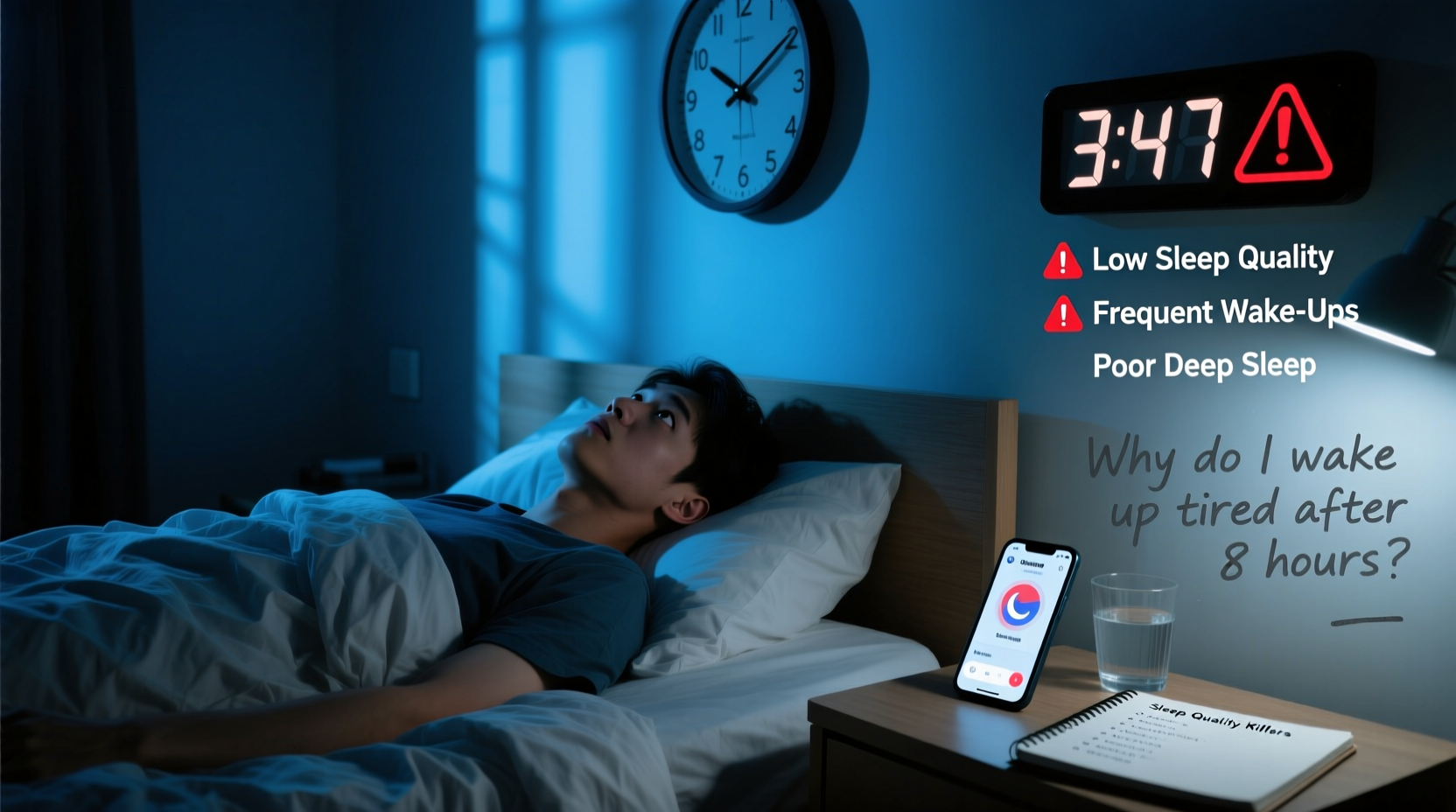
The widely promoted “eight hours of sleep” guideline has become a cultural benchmark for good health. However, this number is a generalization. What matters more than the clock is whether your sleep is uninterrupted, deep, and properly cycled through all essential stages: light sleep, deep (slow-wave) sleep, and REM (rapid eye movement) sleep.
Each stage serves a unique purpose:
- Light sleep: Transition phase where heart rate and breathing begin to slow.
- Deep sleep: Critical for physical recovery, immune function, and hormonal regulation.
- REM sleep: Essential for memory consolidation, emotional processing, and cognitive performance.
If your sleep is fragmented—by noise, stress, or medical conditions—you may spend less time in deep and REM sleep, even if you’re technically asleep for eight hours. As Dr. Rebecca Robbins, sleep researcher at Harvard Medical School, explains:
“Sleep efficiency—how much time in bed is actually spent sleeping deeply and without interruption—is a far better predictor of daytime energy than total sleep time.” — Dr. Rebecca Robbins, Harvard Medical School
Common Sleep Quality Killers
Beneath the surface of seemingly adequate sleep lie several disruptors that degrade rest without obvious symptoms. These are the primary culprits behind waking up tired despite sufficient time in bed.
1. Poor Sleep Environment
Your bedroom environment plays a crucial role in sleep continuity. Factors such as light exposure, room temperature, noise levels, and mattress quality can significantly affect your ability to stay in deeper sleep stages.
2. Blue Light Exposure Before Bed
Using phones, tablets, or computers within one to two hours of bedtime suppresses melatonin, the hormone responsible for signaling sleep onset. Even dim screen light can delay sleep by up to 30 minutes and reduce REM sleep later in the night.
3. Undiagnosed Sleep Disorders
Conditions like obstructive sleep apnea (OSA), restless legs syndrome (RLS), and insomnia disrupt sleep architecture. OSA, for example, causes repeated breathing interruptions throughout the night, leading to micro-awakenings you may not remember—but which prevent sustained deep sleep.
4. Stress and Hyperarousal
Mental tension keeps the nervous system in a state of alertness, making it difficult to enter deep sleep. Chronic stress elevates cortisol levels, which can interfere with both falling asleep and staying in restorative stages.
5. Alcohol and Caffeine Misuse
While alcohol may make you drowsy initially, it fragments sleep later in the night by disrupting REM cycles. Similarly, caffeine consumed even six hours before bedtime can reduce total sleep time by more than an hour.
Sleep Disruptors: A Side-by-Side Comparison
| Disruptor | How It Affects Sleep | Impact on Morning Energy |
|---|---|---|
| Blue light exposure | Delays melatonin release, reduces REM sleep | Foggy thinking, delayed alertness |
| Obstructive sleep apnea | Causes breathing pauses, frequent micro-awakenings | Severe fatigue, headaches, irritability |
| Poor room temperature | Increases nighttime awakenings, reduces deep sleep | Restlessness, unrefreshed feeling |
| Late-night eating | Triggers digestion, increases heartburn risk | Disrupted sleep, morning bloating |
| Caffeine after 2 PM | Blocks adenosine receptors, delays sleep onset | Difficulty waking, low motivation |
A Real-Life Example: Sarah’s Sleep Struggle
Sarah, a 38-year-old project manager, consistently went to bed at 10:30 PM and woke at 6:30 AM. On paper, she was getting eight hours. But every morning, she dragged herself out of bed, relying on three cups of coffee to function. She assumed she was just “not a morning person.”
After tracking her sleep with a wearable device, she discovered her sleep efficiency was only 78%—meaning over an hour of her time in bed was spent in light sleep or brief awakenings. Further investigation revealed two key issues: she used her phone in bed until lights out, and her bedroom faced a busy street with intermittent traffic noise.
By implementing a no-screens rule after 9 PM and using a white noise machine, Sarah increased her deep sleep by 22% within two weeks. Within a month, she reported waking up feeling alert and no longer needing afternoon naps.
Step-by-Step Guide to Improving Sleep Quality
Fixing sleep quality isn’t about drastic changes—it’s about consistent, targeted adjustments. Follow this five-step timeline to identify and eliminate your personal sleep disruptors.
- Week 1: Track Your Sleep Patterns
Use a sleep diary or wearable tracker to record bedtime, wake time, perceived sleep quality, and any nighttime awakenings. Note what you did in the evening (e.g., caffeine, screen use, stress level). - Week 2: Optimize Your Bedroom Environment
Adjust temperature, eliminate light sources, and reduce noise. Replace old pillows or mattresses if they cause discomfort. Aim for a space that feels like a sleep sanctuary. - Week 3: Establish a Wind-Down Routine
Begin a 60-minute pre-sleep ritual: warm shower, light stretching, reading a physical book, or mindfulness meditation. Avoid stimulating conversations or work-related tasks. - Week 4: Eliminate Key Disruptors
Cut off screens 90 minutes before bed. Avoid alcohol and large meals after 7 PM. If snoring or gasping during sleep is reported by a partner, consult a sleep specialist for possible apnea screening. - Ongoing: Monitor and Adjust
Reassess your sleep weekly. Small setbacks are normal. The goal is progress, not perfection. Consider professional help if fatigue persists beyond six weeks of self-improvement efforts.
Sleep Improvement Checklist
Use this checklist nightly to reinforce habits that promote high-quality sleep:
- ✅ No screens (phone, TV, laptop) 90 minutes before bed
- ✅ Bedroom temperature between 60–67°F (15–19°C)
- ✅ Lights dimmed or off by 9 PM
- ✅ Caffeine avoided after 2 PM
- ✅ Alcohol limited or eliminated, especially close to bedtime
- ✅ Consistent bedtime and wake time (even on weekends)
- ✅ Physical activity completed at least 3 hours before bed
- ✅ Stress-relief practice (journaling, breathing, meditation) included in evening routine
When to Seek Professional Help
If you’ve optimized your sleep hygiene and still wake up exhausted, it may be time to consult a healthcare provider. Persistent symptoms such as loud snoring, gasping for air at night, leg twitching, or excessive daytime sleepiness could indicate an underlying condition.
Sleep studies, either at home or in a lab, can diagnose disorders like sleep apnea, periodic limb movement disorder, or narcolepsy. Treatment options—including CPAP therapy, cognitive behavioral therapy for insomnia (CBT-I), or medication—can dramatically improve sleep quality and daytime functioning.
“Treating sleep apnea doesn’t just improve sleep—it reduces risks for hypertension, stroke, and depression.” — Dr. Neil Kline, Board-Certified Sleep Physician
Frequently Asked Questions
Can I be sleep-deprived even if I’m in bed for 8 hours?
Yes. Sleep deprivation isn’t solely about time—it’s about restorative quality. Frequent awakenings, shallow sleep, or lack of deep/REM stages mean your brain and body aren’t recovering, even if you’re technically “asleep” for eight hours.
Why do I wake up at 3 AM and can’t fall back asleep?
This is often linked to cortisol spikes due to stress or blood sugar fluctuations. It can also occur during natural transitions between sleep cycles. If it happens regularly, evaluate your stress levels, diet, and sleep environment. Cognitive behavioral therapy for insomnia (CBT-I) is highly effective for this pattern.
Is it better to get 6 hours of deep sleep or 8 hours of fragmented sleep?
Quality trumps quantity. Six hours of continuous, deep sleep with adequate REM is typically more refreshing than eight hours of broken, light sleep. Focus on improving sleep efficiency rather than chasing arbitrary numbers.
Conclusion: Wake Up Refreshed, Not Just Awake
Waking up tired after eight hours isn’t a personal failing—it’s a signal. Your body is telling you that something in your sleep ecosystem needs attention. Whether it’s your phone habits, bedroom setup, or an undiagnosed condition, the solution lies in looking beyond the clock and focusing on the quality of your rest.
Small, consistent changes compound into transformative results. Start tonight: put the phone away, lower the thermostat, and create a calm transition into sleep. Track your progress, listen to your body, and don’t hesitate to seek expert guidance if needed. Restorative sleep isn’t a luxury—it’s the foundation of energy, focus, and long-term health.




 浙公网安备
33010002000092号
浙公网安备
33010002000092号 浙B2-20120091-4
Comments
No comments yet. Why don't you start the discussion?