
Fall is one of the most colorful times of the year. Trees that were once green all summer suddenly burst into brilliant shades of red, orange, yellow, and even purple. If you’ve ever looked up at a maple tree glowing crimson or an aspen shimmering gold, you’ve probably wondered: Why do leaves change color in the fall?
The answer lies inside the leaves themselves — in tiny chemicals, sunlight, temperature, and the changing seasons. It’s not magic (though it looks like it), but science. And the best part? You don’t need to be a scientist to understand it. Let’s take a close-up look at what happens inside a leaf when autumn arrives.
What Makes Leaves Green in the First Place?
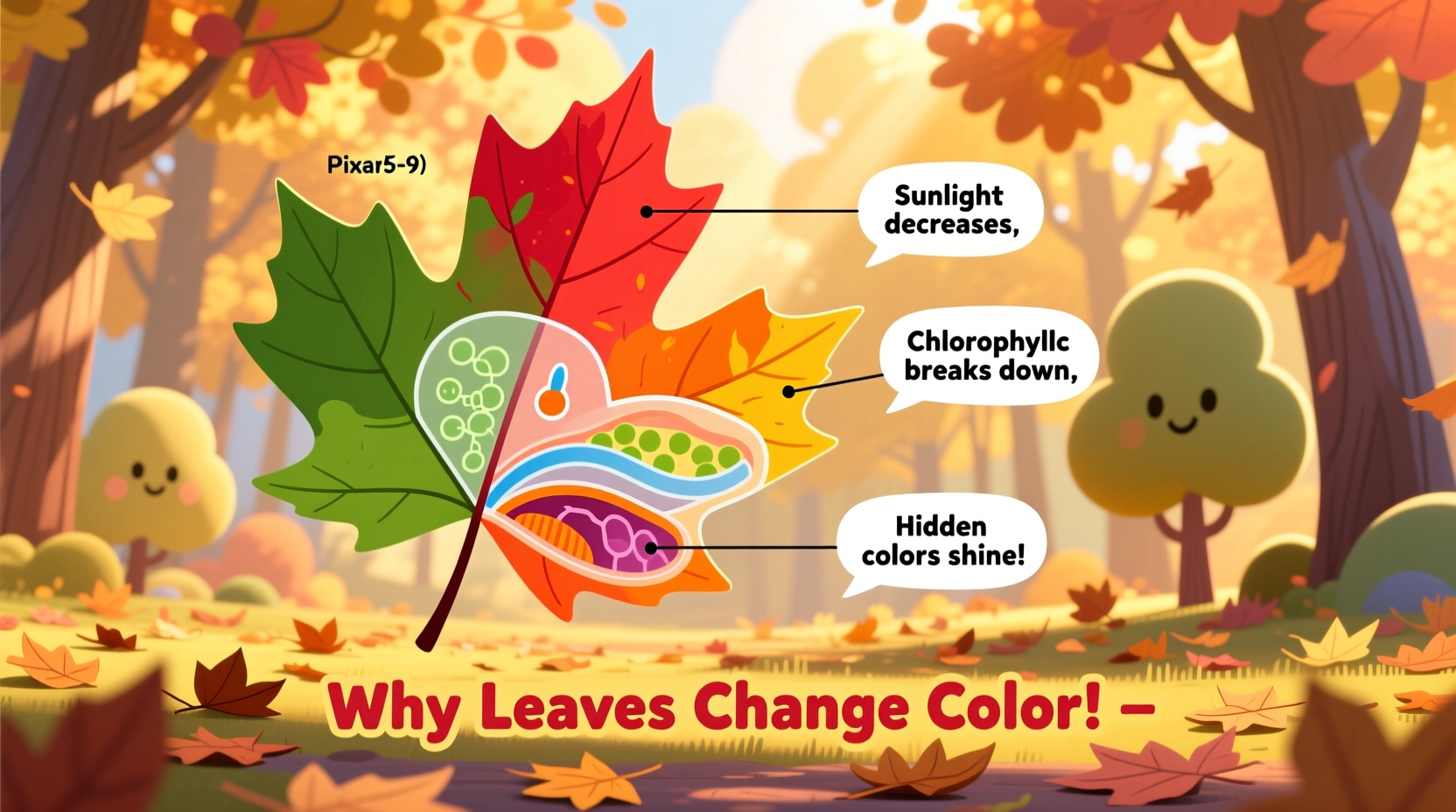
All summer long, leaves are hard at work. They act like tiny food factories for the tree, using sunlight to make sugar through a process called photosynthesis. This process depends on a special green pigment called chlorophyll.
Chlorophyll is what gives leaves their green color. It captures energy from sunlight and uses it to turn carbon dioxide and water into glucose — a type of sugar the tree uses for energy and growth. Think of chlorophyll as the engine that keeps the tree running during warm months.
But chlorophyll isn’t the only pigment in a leaf. There are others hiding underneath, just waiting for their moment to shine.
The Hidden Colors Inside Every Leaf
Beneath the green surface, leaves contain other pigments that are always present but usually masked by chlorophyll. These include:
- Carotenoids – responsible for yellow, orange, and brown hues (like in carrots and corn).
- Xanthophylls – a type of carotenoid that adds bright yellows.
- Anthocyanins – pigments that aren’t always in the leaf but are made in the fall; they create reds, purples, and deep blues.
When chlorophyll breaks down in autumn, these hidden pigments become visible. It’s like taking off a green filter and finally seeing the true colors beneath.
Here’s how each contributes to fall’s palette:
| Pigment | Color Produced | Found In (Examples) |
|---|---|---|
| Chlorophyll | Green | All green leaves during growing season |
| Carotenoids | Yellow, Orange, Brown | Oak, hickory, birch, sweetgum |
| Xanthophylls | Bright Yellow | Aspen, sycamore, ginkgo |
| Anthocyanins | Red, Purple, Crimson | Maple, dogwood, sumac, cherry |
This table shows why different trees have different fall colors. A sugar maple turns fiery red because it produces lots of anthocyanins. A poplar turns golden yellow because it’s rich in xanthophylls and carotenoids.
How the Seasons Trigger the Change
The shift from summer to fall doesn’t happen overnight. Trees respond to two big environmental clues: shorter days and cooler temperatures.
As daylight hours decrease in late summer and early fall, trees sense that winter is coming. Since photosynthesis becomes less efficient in cold weather, the tree begins preparing for dormancy — a kind of winter sleep.
To save energy, the tree starts sealing off the connection between the leaf and the branch. Tiny cells form a barrier at the base of the leaf stem, slowly cutting off water and nutrients. Without fresh supplies, chlorophyll breaks down and isn’t replaced.
Meanwhile, sugars trapped in the leaves can lead to the production of anthocyanins — especially if the fall has sunny days and cool (but not freezing) nights. That’s why some years have more vibrant reds than others.
“Fall color isn’t just about temperature — it’s a perfect storm of light, chemistry, and timing. The brightest displays happen when we have crisp, clear autumn days followed by chilly nights.” — Dr. Naomi Reed, Plant Biologist at the National Arboretum
Step-by-Step: What Happens Inside a Leaf Each Fall
Let’s follow the journey of a single leaf as it transforms from green to gold (or red, or orange):
- Daylight shortens: As September approaches, the amount of sunlight decreases. The tree detects this change through light-sensitive cells.
- Chlorophyll production slows: The tree reduces its investment in photosynthesis since winter is near.
- Nutrient reabsorption begins: Before dropping the leaf, the tree pulls back valuable nutrients like nitrogen and phosphorus from the leaf into the branches and trunk.
- Green fades: With no new chlorophyll being made, the existing green pigment breaks down, revealing yellow and orange pigments already present. <5> Reds begin to form: In some trees, excess sugars in the leaf combine with sunlight and cooler temperatures to produce anthocyanins, creating vivid reds.
- Leaf abscission layer forms: A cork-like layer develops where the leaf meets the twig, weakening the connection.
- The leaf falls: Eventually, wind or gravity causes the leaf to drop. The tree seals the spot to prevent disease and water loss.
This entire process ensures the tree survives winter while recycling resources efficiently. The fallen leaves also decompose and enrich the soil, helping the tree grow stronger next spring.
Why Don’t All Trees Lose Their Leaves?
You may have noticed that while maples and oaks drop their leaves every fall, pine, spruce, and fir trees stay green all year. These are called evergreen trees.
Evergreens have tough, waxy needles instead of broad leaves. These needles resist drying out and can continue limited photosynthesis even in cold weather. Plus, they contain natural antifreeze compounds that protect them from freezing.
Deciduous trees — those that lose their leaves — shed them to avoid damage from snow, ice, and freezing temperatures. Broad leaves would lose too much water in winter, so it’s smarter to let them go and regrow fresh ones in spring.
Real Example: Emma’s Autumn Science Project
Emma, a fifth-grader from Vermont, wanted to know why her favorite maple tree turned red every October. For her school science fair, she collected leaves weekly from early September to late November.
She labeled each batch with the date and recorded the weather: temperature, rainfall, and hours of sunlight. She pressed the leaves between wax paper and observed how the green faded over time.
By mid-October, she noticed that after several sunny days and cool nights, the leaves turned the brightest red. When a warm spell hit, the color development slowed. Her conclusion? Sunlight and cool temperatures help make red leaves more vibrant.
Her project won first place — and taught her classmates that nature follows patterns we can observe and understand.
Common Myths About Fall Leaf Color
There are a few popular misconceptions about why leaves change color. Let’s clear them up:
- Myth: Frost causes leaves to change color.
Reality: While frost can speed up leaf drop, it’s not needed for color change. The real triggers are shorter days and internal chemical changes. - Myth: Leaves change color because they’re dying.
Reality: Leaves aren’t “dead” when they change color. They’re actively breaking down chlorophyll and sending nutrients back to the tree — a smart survival strategy. - Myth: All trees change color at the same time.
Reality: Different species respond to environmental cues differently. Some oaks hold onto brown leaves well into winter, while ginkgos drop all their leaves almost overnight.
Frequently Asked Questions
Do all leaves change color?
No. Only deciduous trees (those that lose their leaves) undergo dramatic color changes. Evergreen trees keep their green needles year-round. Even among deciduous trees, not all turn bright colors — some simply turn brown and fall.
Why do some leaves turn red and others yellow?
It depends on the pigments inside the leaf. Trees high in carotenoids and xanthophylls turn yellow or orange. Trees that produce anthocyanins during fall — often in response to sunlight and sugar buildup — turn red or purple.
Can weather affect how colorful fall is?
Absolutely. The most vibrant displays happen when there’s a combination of sunny autumn days, cool (but not freezing) nights, and adequate moisture. Drought or extreme heat in summer can lead to a duller fall season.
Checklist: How to Observe Fall Colors Like a Scientist
Want to explore fall colors in your neighborhood? Use this checklist to conduct your own backyard investigation:
- Choose 2–3 different trees (e.g., maple, oak, birch).
- Visit them once a week starting in early fall.
- Take notes on leaf color, texture, and how many have fallen.
- Record the weather: temperature, cloud cover, rain.
- Collect a few fallen leaves (with permission) and press them in a book.
- Sketch or describe how each tree changes over time.
- Compare which tree changes earliest and which holds its leaves longest.
This simple activity helps you see firsthand how science unfolds in nature — no lab coat required.
Conclusion: Nature’s Annual Light Show
The changing colors of fall are more than just a pretty sight — they’re a sign of nature’s intelligence. Trees aren’t just reacting to the season; they’re planning ahead, conserving energy, and protecting themselves for winter.
Understanding the science behind leaf color helps us appreciate autumn on a deeper level. It’s not just about raking leaves or jumping in piles — it’s about witnessing a complex, beautiful process shaped by millions of years of evolution.




 浙公网安备
33010002000092号
浙公网安备
33010002000092号 浙B2-20120091-4
Comments
No comments yet. Why don't you start the discussion?