
As homes shift toward energy-efficient lighting, LED Christmas lights have become a staple for festive decor. They consume less power, last longer, and generate minimal heat compared to traditional incandescent bulbs. However, many homeowners encounter an unexpected issue: their LED Christmas lights flicker when connected to dimmer switches. This isn’t just annoying—it can ruin the ambiance of your holiday display and raise concerns about electrical safety.
The root of the problem lies in a fundamental mismatch between modern LED technology and legacy dimming systems designed decades ago for high-wattage incandescent bulbs. Understanding this incompatibility is the first step toward solving it—not temporarily, but permanently.
How Dimmer Switches Work (and Why LEDs React Differently)
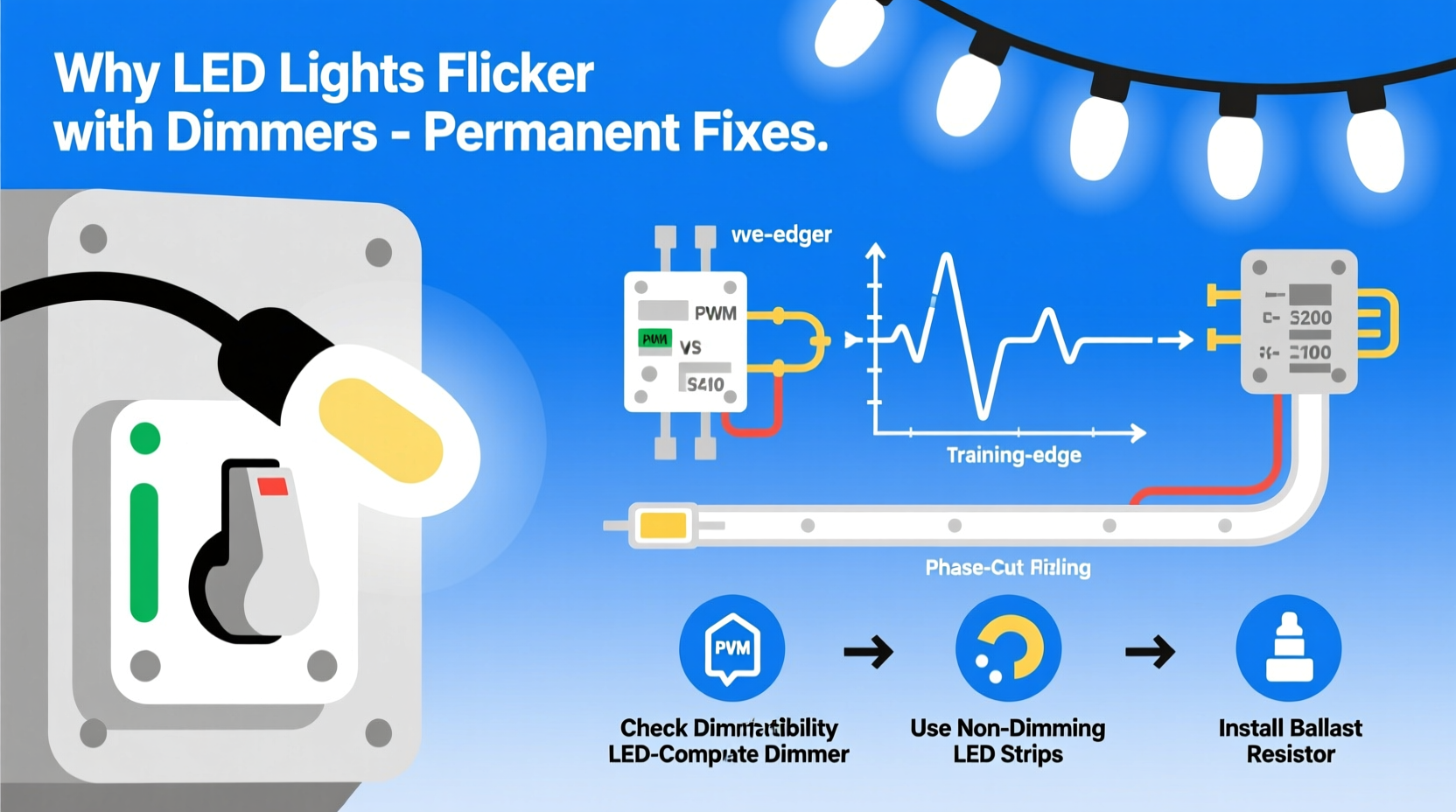
Traditional dimmer switches operate by reducing the amount of voltage delivered to a light fixture. They use a method called “phase-cut dimming,” which chops parts of the AC waveform before it reaches the bulb. Incandescent bulbs, which rely on heating a filament, respond smoothly to these interruptions because the filament cools and heats gradually—so minor fluctuations are imperceptible.
LEDs, however, function entirely differently. They require a constant low-voltage DC current and depend on internal drivers to convert incoming AC power. When a phase-cut dimmer disrupts the AC supply, the driver struggles to interpret the irregular signal. Instead of dimming smoothly, the LED may flicker, strobe, or even shut off intermittently.
This mismatch becomes especially pronounced with low-load devices like string lights. Most older dimmers were engineered to handle 60–600 watts—typical of multiple incandescent bulbs. A single strand of LED Christmas lights might draw only 5–10 watts, well below the minimum threshold needed for stable dimmer operation. The result? Unstable current flow and visible flickering.
“Many people assume their lights are defective when they flicker, but the real culprit is often the dimmer switch not being compatible with low-power LED loads.” — David Lang, Residential Lighting Engineer, IEEE Member
Common Causes of LED Flickering on Dimmers
Flickering isn’t random—it’s a symptom of specific technical conflicts. Identifying the cause is essential for choosing the right solution.
- Incompatible dimmer type: Leading-edge dimmers (common in older homes) are designed for resistive loads and perform poorly with LEDs.
- Low wattage load: LED strings often fall below the minimum load requirement of the dimmer, causing erratic behavior.
- Poor-quality LED drivers: Cheaply manufactured string lights may have underpowered or unstable internal drivers.
- Shared circuits: Other devices on the same circuit can introduce electrical noise that interferes with dimming signals.
- Dimmer age and wear: Older dimmers degrade over time, increasing the likelihood of inconsistent output.
Permanent Fixes to Stop LED Christmas Light Flickering
Temporary workarounds like turning the dimmer all the way up don’t solve the underlying problem. To eliminate flickering for good, implement one or more of the following permanent solutions.
1. Replace the Dimmer with an LED-Compatible Model
The most effective long-term fix is upgrading to a dimmer specifically designed for LED loads. Modern trailing-edge (electronic low-voltage) dimmers are built to handle low-wattage, capacitive loads typical of LED lighting.
Look for dimmers labeled as:
- “LED-compatible”
- “MLV/ELV compatible” (Magnetic/Electronic Low Voltage)
- Capable of handling loads as low as 5–10 watts
Brands like Lutron, Leviton, and Legrand offer models such as the Lutron Diva DVCL-153P or Leviton D26HD, both widely praised for stable LED performance. These dimmers provide smoother control and eliminate flicker by delivering cleaner waveforms that LED drivers can process reliably.
2. Add a Dummy Load (Shunt Resistor)
If replacing the dimmer isn’t feasible, install a dummy load—a small resistive device that increases the total wattage on the circuit to meet the dimmer’s minimum requirement. This tricks the dimmer into operating within its intended range.
A common solution is a dimmer shunt resistor, such as the Lutron LUT-MLC. Installed across the circuit, it draws enough power (typically 25–40 watts) to satisfy the dimmer without affecting the appearance of your lights.
Important: While effective, shunts generate heat and must be installed in accessible junction boxes with proper ventilation. Always consult a licensed electrician if you're unsure about installation.
3. Use a Dedicated Non-Dimming Circuit for Holiday Lights
For seasonal displays, consider bypassing the dimmer entirely. Install a separate switched outlet or plug your lights into a non-dimming circuit. Smart plugs offer a flexible alternative—program them to turn on at dusk and off at bedtime without any dimming involved.
This approach ensures consistent power delivery and removes the risk of flicker altogether. It also extends the lifespan of both the lights and the dimmer by preventing strain from incompatible loads.
4. Upgrade to High-Quality, Dimmable LED Strings
Not all LED Christmas lights are created equal. Many budget strands are not truly dimmable—even if labeled as such. Invest in premium-grade, UL-listed LED strings explicitly rated for dimming applications.
Reputable brands like Christmas Lights, Enerlites, and GE Lighting design their dimmable LEDs with advanced drivers capable of interpreting erratic dimmer signals more effectively. Look for packaging that states compliance with standards like IEEE 1789 for flicker reduction.
Step-by-Step Guide to Eliminating Flicker Permanently
Follow this logical sequence to diagnose and resolve flickering issues once and for all:
- Unplug the LED lights and turn off power at the breaker. Safety first—always de-energize circuits before inspection.
- Check the dimmer switch label. Identify its type (leading-edge vs. trailing-edge) and minimum/maximum load ratings.
- Calculate total wattage of connected LED strings. Add up the wattage of all lights on the circuit. If it's below 25 watts, the load is likely too low.
- Test lights on a non-dimming circuit. Plug them into a standard outlet using an extension cord. If flickering stops, the dimmer is confirmed as the source.
- Decide on a permanent solution:
- Replace dimmer with an LED-compatible model
- Install a shunt resistor
- Dedicate a new circuit or use smart outlets
- Upgrade to certified dimmable LED strings if necessary. Ensure compatibility with your chosen dimmer type.
- Reconnect and test at various dimmer levels. Observe for flicker, buzzing, or delayed response.
Do’s and Don’ts: What to Avoid When Using LED Lights with Dimmers
| Do | Don’t |
|---|---|
| Use LED-rated dimmers designed for low-wattage loads. | Use old incandescent-only dimmers with LED strings. |
| Verify labels—ensure both lights and dimmers are marked “dimmable.” | Assume “dimmable” labeling means universal compatibility. |
| Add a shunt resistor if upgrading the dimmer isn't possible. | Overload circuits by daisy-chaining too many strings. |
| Consult an electrician for complex installations or panel modifications. | Ignore buzzing sounds or warm switches—these indicate potential hazards. |
Real-World Example: Solving Flicker in a Historic Home
In Denver, Colorado, homeowner Maria Thompson spent three holiday seasons battling flickering LED icicle lights on her porch. She initially blamed the lights, replacing two sets before realizing the issue persisted across brands.
After consulting an electrician, she discovered her 1980s-era home used leading-edge dimmers originally installed for dining room chandeliers. Though she no longer used dimming functionality for the porch, the switch remained in place—and was inadvertently affecting the outdoor circuit.
The solution? The electrician replaced the dimmer with a Lutron Toggler switch (non-dimming) and added a weatherproof outlet controlled by a Wi-Fi timer. Since then, her lights have operated flawlessly every December, with no flicker, reduced energy use, and remote scheduling capabilities.
Maria’s experience highlights a common oversight: even unused dimmers can interfere with downstream circuits. Sometimes, the best fix isn’t an upgrade—but a removal.
FAQ: Common Questions About LED Flicker and Dimmers
Can I use any dimmer with LED Christmas lights?
No. Only dimmers specifically rated for LED loads should be used. Traditional dimmers designed for incandescent bulbs often cause flickering, buzzing, or premature failure of LED strings due to incompatible waveform signaling and insufficient minimum load requirements.
Why do my LED lights flicker even when the dimmer isn’t adjusted?
Flickering at a fixed setting usually indicates either a failing dimmer, incompatible driver electronics in the lights, or electrical interference from other devices. It can also occur if the total load is below the dimmer’s operational threshold, causing unstable regulation.
Are there smart lighting alternatives to avoid this issue?
Yes. Smart LED string lights (like those from Philips Hue or Govee) manage dimming internally via apps or controllers, eliminating reliance on wall dimmers. These systems provide precise brightness control, color tuning, and scheduling—all without flicker.
Conclusion: Enjoy Flicker-Free Holidays with the Right Setup
LED Christmas lights flicker with dimmer switches because of a technological mismatch—one rooted in outdated infrastructure meeting modern efficiency. But this issue isn’t inevitable. With the right knowledge and tools, you can eliminate flickering permanently, ensuring your holiday displays shine smoothly and safely year after year.
Whether you choose to upgrade your dimmer, add a shunt, or route holiday lighting through dedicated controls, the key is addressing the root cause rather than tolerating the symptom. Your lights, your energy bill, and your peace of mind will all benefit.




 浙公网安备
33010002000092号
浙公网安备
33010002000092号 浙B2-20120091-4
Comments
No comments yet. Why don't you start the discussion?