
As holiday seasons come around, homes light up with festive cheer—especially from strings of energy-efficient LED Christmas lights. While these lights offer long life and low power consumption, some users report a soft buzzing sound emanating from their displays. Though often subtle, this noise can signal underlying electrical problems, particularly in the transformer or power supply unit. Understanding the root causes, risks, and solutions behind this phenomenon is essential for both performance and safety.
The gentle hum or buzz from LED Christmas lights isn’t just an annoyance—it’s frequently a symptom of transformer malfunction, poor design, or incompatible components. Left unaddressed, such issues can lead to reduced lifespan of the lights, flickering, overheating, or even fire hazards. This article explores the science behind the buzz, how to diagnose transformer problems, and practical steps to ensure your holiday lighting remains safe, silent, and sparkling.
How LED Lights Work and Why They Shouldn’t Buzz
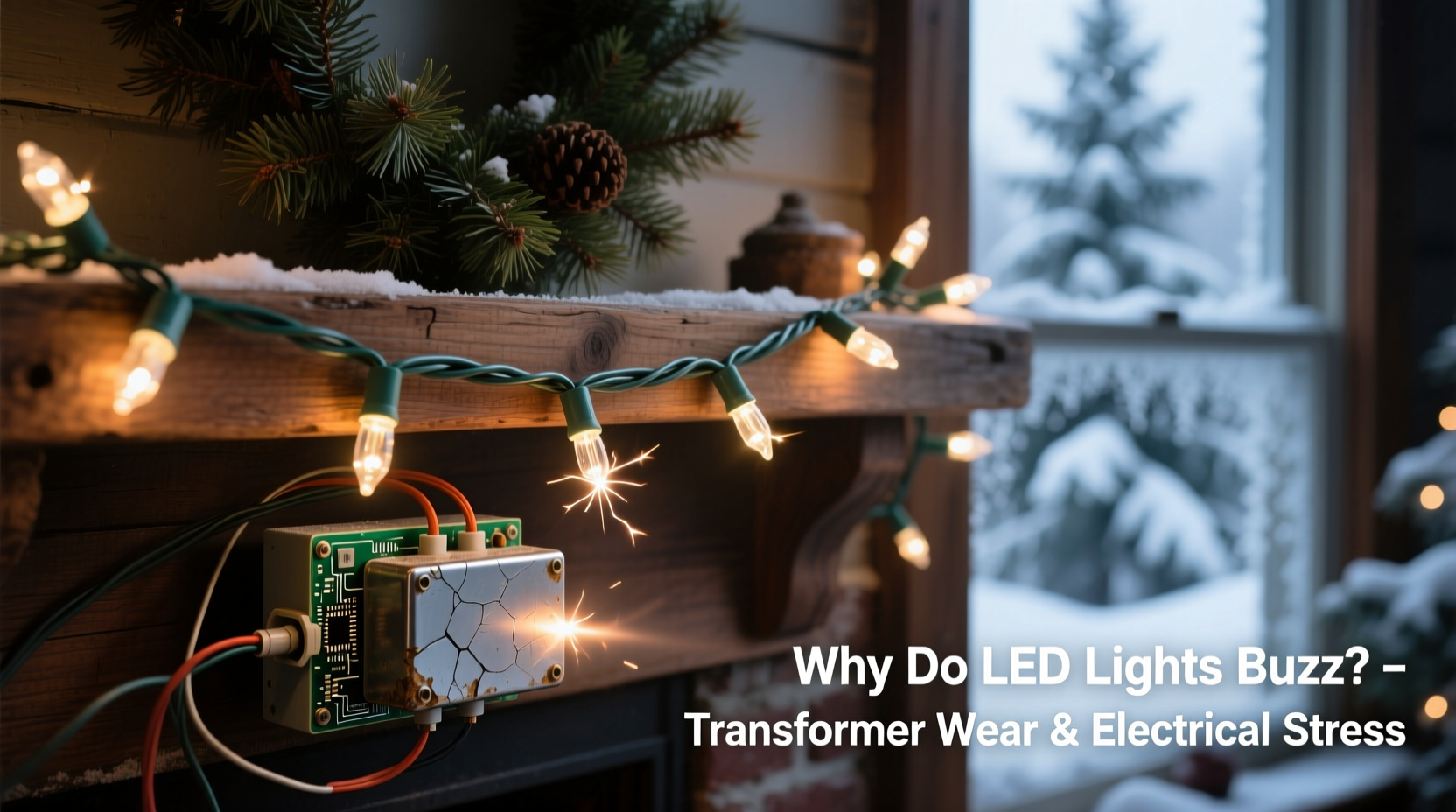
LED (Light Emitting Diode) technology operates on direct current (DC), but household outlets supply alternating current (AC). To bridge this gap, LED Christmas lights use a transformer—often built into the plug or as a separate box—to convert high-voltage AC into low-voltage DC suitable for LEDs. A well-designed transformer performs this conversion smoothly, with minimal electrical noise.
In theory, LED lights should operate silently. Unlike incandescent bulbs or older fluorescent fixtures, LEDs don’t rely on filaments or gas discharge that vibrate or arc. The absence of moving parts means any audible sound is not inherent to the LED itself but stems from supporting electronics—most commonly the transformer or driver circuit.
Buzzing occurs when components within the transformer vibrate due to electromagnetic forces. This is known as magnetostriction—a physical effect where magnetic materials expand and contract minutely under alternating magnetic fields. In poorly constructed or overloaded transformers, these vibrations can resonate at audible frequencies, producing a noticeable hum.
“Even small inefficiencies in transformer design can manifest as audible noise, especially under load. A quiet transformer is usually a well-engineered one.” — Dr. Alan Reeves, Electrical Engineer and Lighting Systems Specialist
Common Causes of Buzzing in LED Christmas Lights
Not all buzzing indicates imminent failure, but consistent or increasing noise should prompt investigation. Several factors contribute to transformer-related humming:
- Poor-quality transformers: Budget-friendly light sets may use substandard drivers with inadequate shielding or loose windings, making them prone to vibration and noise.
- Overloading: Connecting too many light strands in series can exceed the transformer’s rated capacity, forcing it to work harder and generate more heat and sound.
- Voltage fluctuations: Inconsistent household voltage, especially in older wiring systems, can cause the transformer to cycle irregularly, amplifying hum.
- Damaged or aging components: Capacitors degrade over time, coils loosen, and insulation wears—especially in lights stored improperly between seasons.
- Dimmer compatibility issues: Using non-dimmable LED lights with dimmer switches creates waveform distortions that stress the transformer and produce buzzing.
Environmental conditions also play a role. Moisture ingress from outdoor use, temperature swings, or physical damage can compromise internal components, leading to erratic behavior and noise.
Diagnosing Transformer Problems: A Step-by-Step Guide
If your LED Christmas lights emit a soft buzz, follow this systematic approach to isolate the source and determine whether the transformer is at fault.
- Disconnect all connected strands and test the transformer with just one set of lights. If the buzz disappears, overloading is likely the culprit.
- Inspect the transformer housing for cracks, discoloration, or bulging—signs of overheating or internal damage.
- Feel the transformer during operation. Excessive warmth suggests inefficiency or overload; hot-to-touch units may be failing.
- Test in a different outlet to rule out voltage instability or grounding issues in your circuit.
- Use a multimeter to measure output voltage. Compare readings to the manufacturer’s specifications. Significant deviation (more than ±5%) indicates a failing transformer.
- Listen closely in a quiet room. A rhythmic 50/60 Hz hum typically points to transformer issues, while intermittent clicking may suggest loose connections or failing capacitors.
- Try a known-good transformer (if compatible) to see if the buzz persists. If the noise stops, the original unit is defective.
This process helps differentiate between harmless operational noise and dangerous malfunctions. Persistent or worsening sounds after troubleshooting require immediate action.
Transformer Safety: Risks of Ignoring the Buzz
A buzzing transformer might seem trivial, but it can be an early warning sign of serious electrical faults. Overworked or degraded transformers generate excess heat, which degrades insulation, increases resistance, and accelerates component failure.
In extreme cases, thermal runaway can occur—where rising temperature causes higher current draw, which in turn produces more heat. This cycle can lead to melting plastic, smoke, or ignition, particularly in enclosed spaces or near flammable decorations.
According to the U.S. Fire Administration, decorative lighting accounts for an estimated 7% of home fires during the holiday season. While modern LED systems are safer than older incandescent strings, faulty transformers remain a key risk factor.
| Symptom | Normal? | Action Required |
|---|---|---|
| Faint hum, no heat | Yes (low risk) | Monitor periodically |
| Noticeable buzz, warm transformer | No | Reduce load or replace unit |
| Loud buzz, hot to touch, odor | No (high risk) | Unplug immediately; discard |
| Flickering with buzzing | No | Inspect for loose wires or failing capacitor |
| Intermittent operation and noise | No | Replace transformer or entire string |
Never attempt to open or repair a sealed transformer unless you’re qualified. These units contain tightly wound coils and sensitive electronics that can be permanently damaged by improper handling.
Real-World Example: A Homeowner’s Close Call
In December 2022, Sarah M., a homeowner in Vermont, noticed a faint buzzing from her rooftop LED icicle lights. Initially dismissing it as normal, she later detected a burning smell near the garage outlet where the transformer was plugged in. Upon inspection, she found the casing discolored and slightly melted.
She unplugged the system and contacted an electrician, who confirmed the transformer was drawing 30% more current than rated due to water seepage through a cracked seal. The unit had been operating in this state for nearly two weeks. “It was a ticking clock,” the electrician said. “Another few days and we could’ve had a fire.”
Sarah replaced the entire light set with a UL-listed, weatherproof model featuring a sealed, potted transformer. Since then, her display has operated silently and safely. Her experience underscores the importance of paying attention to subtle warning signs—even something as minor as a soft buzz.
Prevention and Best Practices: Keeping Your Lights Quiet and Safe
Proactive care goes a long way in preventing transformer issues. Follow these best practices to extend the life of your LED Christmas lights and eliminate unwanted noise.
Storage Tips
- Store lights in dry, temperature-stable environments—avoid attics or damp basements.
- Wrap cords loosely around cardboard or use specialized reels to prevent wire stress.
- Keep transformers protected in sealed plastic bins with desiccant packs to deter moisture.
Installation Guidelines
- Always use outdoor-rated extension cords and GFCI-protected outlets for exterior displays.
- Avoid covering transformers with snow, mulch, or fabric, which traps heat.
- Position the transformer off the ground and in a sheltered area when possible.
Selection Criteria
- Choose lights with UL or ETL certification—these meet strict safety and performance standards.
- Opt for models with encapsulated (potted) transformers, which reduce vibration and resist moisture.
- Check customer reviews for mentions of noise or reliability issues before purchasing.
FAQ: Common Questions About Buzzing LED Lights
Is a slight buzz from LED Christmas lights normal?
A very faint hum may be present in some budget or older-model transformers, especially under full load. However, any noticeable or growing buzz should be investigated. Silence is ideal.
Can I replace just the transformer on my LED light string?
Only if the manufacturer offers a replacement and the voltage/current specs match exactly. Most consumer-grade sets have non-replaceable transformers. Mismatched replacements can damage LEDs or create safety hazards.
Why do my LED lights buzz only when dimmed?
This usually means you’re using non-dimmable LEDs with a dimmer switch. The dimmer chops the AC waveform, causing erratic current flow that stresses the transformer. Switch to dimmable-compatible LEDs and trailing-edge dimmers for silence.
Final Checklist: Ensuring Silent, Safe Holiday Lighting
Before hanging your lights each season, run through this quick checklist to prevent transformer issues:
- ✅ Inspect cords and plugs for fraying, cracking, or corrosion
- ✅ Verify transformer is cool to the touch after 15 minutes of use
- ✅ Confirm total light count does not exceed transformer capacity
- ✅ Ensure outdoor units are rated for wet/damp locations
- ✅ Test lights indoors first to catch buzzing or flickering early
- ✅ Install on a surge-protected outlet or power strip
- ✅ Replace any unit showing discoloration, odor, or excessive noise
Conclusion: Listen Closely, Act Early
The soft buzz from LED Christmas lights is more than a seasonal nuisance—it’s a potential red flag for transformer failure. With proper knowledge and vigilance, homeowners can enjoy bright, efficient, and silent holiday displays year after year. Pay attention to sound, heat, and performance. Invest in quality-certified products, store them properly, and never ignore warning signs.
Your safety—and the safety of your home—depends on the small details. This holiday season, let your lights shine without a whisper of trouble.




 浙公网安备
33010002000092号
浙公网安备
33010002000092号 浙B2-20120091-4
Comments
No comments yet. Why don't you start the discussion?