
Multicolor Christmas lights carry nostalgia—childhood memories of blinking reds, greens, blues, and yellows strung across mantels and porches. Yet in today’s design-conscious landscape, those same strings can unintentionally signal “2003,” “garage sale find,” or “grandma’s attic.” It’s not the colors themselves that age poorly; it’s how they’re deployed, controlled, and contextualized. The disconnect isn’t aesthetic failure—it’s a mismatch between legacy lighting technology and contemporary expectations for harmony, subtlety, and intentionality. This article dissects the precise reasons multicolor lights fall out of step with modern decor—and delivers actionable, design-led strategies to reclaim their charm without sacrificing sophistication.
The Five Core Reasons Multicolor Lights Feel Dated
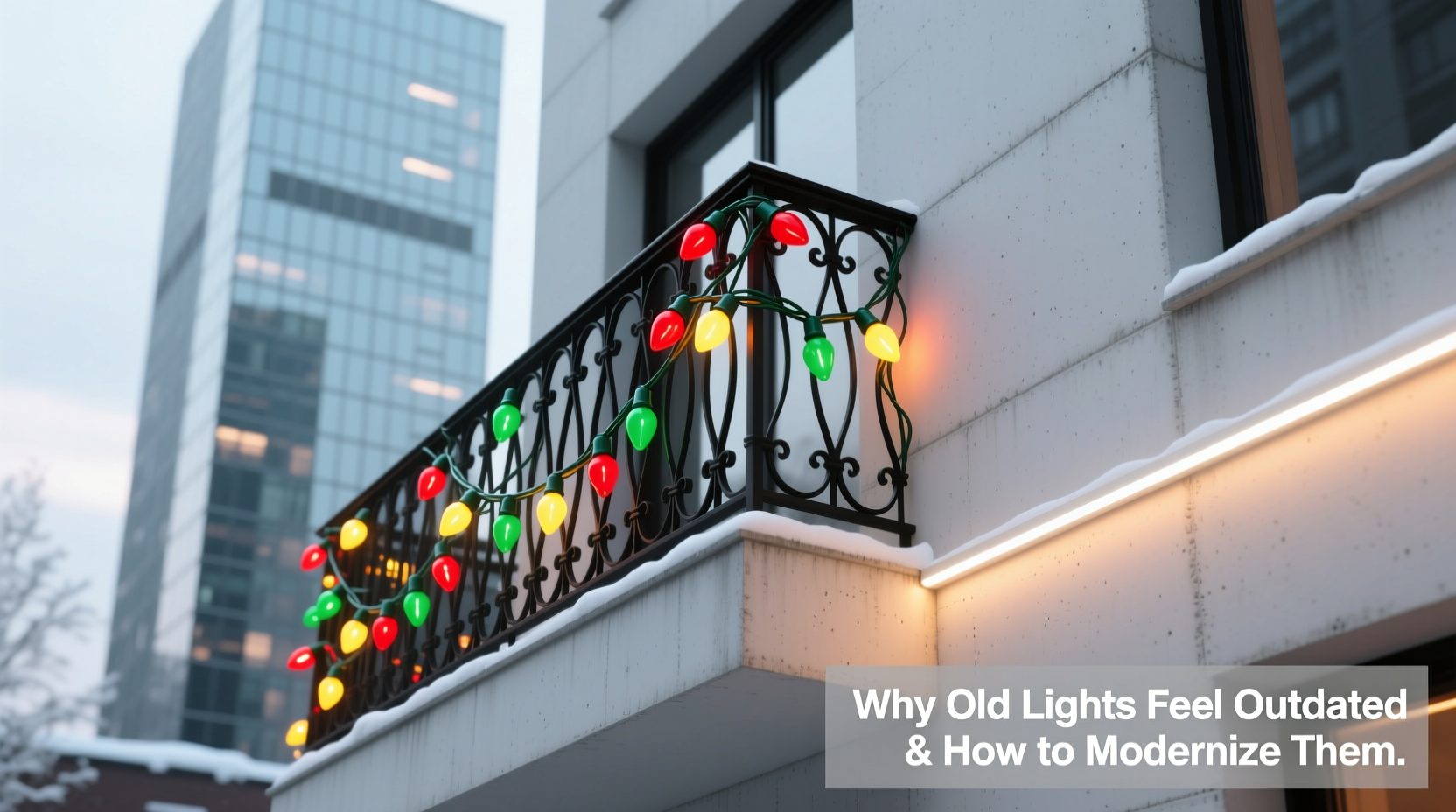
Understanding why something feels outdated is the first step toward updating it meaningfully. These aren’t subjective impressions—they reflect measurable shifts in lighting technology, color theory application, and cultural expectations around holiday expression.
- Legacy Incandescent Technology: Most vintage multicolor strings use incandescent bulbs with warm-white filaments. When colored plastic sleeves filter that warm light, the resulting hues are muddy—especially orange, yellow, and pink—which lack chromatic purity. Modern LEDs emit light at precise wavelengths, yielding cleaner, more saturated tones.
- Fixed, Unmodulated Sequencing: Older strings rely on simple, repetitive chaser patterns (e.g., “red → green → blue → yellow → repeat”) with no variation in speed, intensity, or pause. That predictability reads as mechanical rather than magical—like a metronome instead of music.
- Unbalanced Color Ratios: Traditional sets often over-index on primary colors (40% red, 30% green, 20% blue, 10% yellow), creating visual noise. Contemporary palettes favor tonal harmony: deeper emerald greens, charcoal blues, burgundy reds, and muted golds—not primary-school primaries.
- Lack of Dimming & Layering Capability: Vintage strings operate at full brightness or off—no dimming, no fade-ins, no ability to layer with white or amber accent lighting. Modern installations thrive on dimension: ambient base layers, focal points, and gentle transitions.
- Clashing Contextual Integration: A string of bright, evenly spaced multicolor bulbs looks jarring against minimalist architecture, matte black siding, or monochrome interiors. The issue isn’t the lights—it’s the absence of framing, scale adjustment, or complementary texture.
How Lighting Science Informs Modern Color Selection
Color perception during the holidays isn’t just about preference—it’s governed by photometry, circadian biology, and spatial psychology. Warm-toned lighting (2200K–2700K) promotes coziness and reduces eye strain in evening hours. Cool whites (>4000K) increase alertness but diminish warmth—a critical consideration when blending colors.
Chroma (saturation) matters equally. High-chroma reds and greens pop against snow or dark evergreens—but overwhelm neutral interiors. Lower-chroma, desaturated tones—think forest green instead of lime, cranberry instead of fire-engine red—integrate seamlessly into contemporary palettes. Research from the Lighting Research Center at Rensselaer Polytechnic Institute confirms that viewers consistently rate harmonized, lower-saturation color schemes as “more elegant” and “longer-lasting” in seasonal displays.
“Color harmony in holiday lighting isn’t about matching your sofa—it’s about respecting how light interacts with architecture, time of day, and human neurology. A well-tuned multicolor set should feel like an extension of the space, not an interruption.” — Dr. Lena Torres, Lighting Psychologist & Senior Advisor, Illuminating Engineering Society (IES)
Modernization Strategies: From Dated to Deliberate
Modernizing multicolor lights isn’t about discarding them—it’s about upgrading execution. Below are field-tested approaches used by professional lighting designers for residential and boutique commercial projects.
1. Curate, Don’t Collect: Edit Your Palette
Remove 30–50% of bulbs—not randomly, but strategically. Eliminate yellow and pure white bulbs first. Then reduce red and green by alternating with deeper tones: replace one red bulb with a burgundy, one green with a sage, one blue with a navy. The result is a tonal gradient—not a rainbow. This mimics natural light transitions (dawn to dusk) and aligns with Pantone’s 2024 “Earthy Radiance” palette recommendations for seasonal design.
2. Introduce Dynamic Control
Swap out mechanical timers for smart controllers (e.g., Twinkly Pro, Lumenplay, or Nanoleaf Light Panels with multicolor sync). These enable:
- Fade-to-black transitions instead of abrupt on/off
- Variable speed sequencing (e.g., slow pulse for dining areas, gentle chase for outdoor eaves)
- Sunrise/sunset syncing via geolocation
- Customizable “scenes” (e.g., “Cozy Hearth”: low-intensity burgundy + sage + amber; “Festive Entry”: full-spectrum at 70% brightness)
3. Layer With Monochrome Anchors
Multicolor strings gain gravitas when framed by intentional monochrome elements. Wrap porch columns in warm-white micro LED rope lights. Tuck battery-operated amber fairy lights into garlands. Use matte-black or brushed-brass clip-on sockets to mount multicolor bulbs—avoiding plastic clips that scream “discount store.” This creates visual hierarchy: multicolor becomes the accent, not the anchor.
Do’s and Don’ts: A Practical Comparison Table
| Action | Do | Don’t |
|---|---|---|
| Placement | Drape loosely along rooflines with 8–12 inch spacing; tuck ends into gutters for clean termination. | Stretch taut across fences or wrap tightly around thin branches—creates visual tension and exposes wiring. |
| Color Balance | Use a 40/30/20/10 ratio: 40% deep green, 30% burgundy, 20% navy, 10% antique gold. | Equal distribution of red/green/blue/yellow—guarantees visual fatigue. |
| Power Management | Use GFCI-protected outdoor outlets with built-in surge suppression; daisy-chain no more than three 100-bulb strings. | Plug into indoor extension cords or ungrounded outlets—major fire and shock risk. |
| Indoor Integration | Weave multicolor micro LEDs into dried eucalyptus wreaths or linen table runners; pair with unscented ivory pillar candles. | String bulbs across bare mantels or hang them solo above white walls—no texture, no contrast, no depth. |
Mini Case Study: The Portland Bungalow Transformation
In late October 2023, interior designer Maya Chen was hired to refresh holiday lighting for a 1920s Portland bungalow with shingle siding, black steel windows, and a restrained Scandinavian interior. The homeowners owned three aging 150-bulb multicolor LED strings—bright, fast, and visually overwhelming against their charcoal-gray exterior.
Chen’s approach was surgical: she removed all yellow bulbs and 40% of the reds, replacing them with hand-selected burgundy and forest-green SMD5050 LEDs (same voltage, compatible base). She installed a Twinkly Pro controller programmed with three scenes: “Twilight Glow” (20% brightness, slow fade), “Evening Hearth” (45% brightness, gentle pulse), and “Midnight Calm” (5% amber-only glow). Finally, she wrapped the front porch railing in warm-white rope lights and tucked the multicolor string into boxwood garlands mounted on black iron brackets.
Result? Neighbors reported the display felt “expensive, quiet, and intentional”—not loud or cluttered. The homeowners extended the display through New Year’s Day because, as one said, “It doesn’t scream ‘Christmas’—it whispers ‘celebration.’”
Step-by-Step: Modernizing Your Existing Multicolor Strings in One Afternoon
- Inventory & Audit (15 min): Lay out all strings. Identify bulbs with cracked lenses, inconsistent color, or flickering. Discard damaged ones; keep only working, uniform-quality strings.
- Edit the Palette (30 min): Using needle-nose pliers, remove 1 in 3 yellow bulbs and 1 in 4 red bulbs. Replace with deeper-tone replacements (burgundy, forest green, navy) if available—or simply leave gaps for breathing room.
- Upgrade the Controller (20 min): Purchase a compatible smart controller. Follow manufacturer instructions to pair bulbs (most require a reset sequence: power on → hold button 5 sec → wait for flash pattern).
- Program Two Signature Scenes (25 min): Set Scene 1 to “Slow Pulse” at 30% brightness for daytime/early evening. Set Scene 2 to “Gentle Fade” at 60% brightness for dinner hours. Save both.
- Layer & Frame (40 min): Install warm-white micro LED rope lights along architectural edges (eaves, railings, window frames). Weave remaining multicolor string into greenery or drape it asymmetrically—avoid perfect symmetry.
- Test at Dusk (10 min): View from street level at civil twilight (30 minutes after sunset). Adjust brightness down if glare occurs; add more warm-white layering if multicolor feels isolated.
FAQ
Can I mix old and new multicolor strings safely?
Yes—if voltage and connector types match (e.g., both are 24V DC with JST connectors). Never mix AC-powered incandescent strings with DC LED strings. Use a multimeter to verify output consistency before daisy-chaining. When in doubt, power older strings separately through their own controller.
Why do some modern multicolor sets still look cheap despite being new?
Many budget “smart” lights prioritize feature count over optical quality. Look for CRI (Color Rendering Index) ratings above 90—this ensures colors appear true under the light, not washed out or neon. Also check viewing angle: ≥120° prevents “hot spots” and ensures even dispersion.
Is it possible to modernize multicolor lights for a minimalist, all-white interior?
Absolutely—but shift emphasis from color to texture and rhythm. Use only burgundy, charcoal, and warm-amber bulbs. Mount them inside clear glass cloches or wrap them around matte-white ceramic vases. Program for ultra-slow fade (12-second cycle) at 15% brightness. The effect is less “light show,” more “glowing ember.”
Conclusion
Multicolor Christmas lights don’t need retirement—they need reinterpretation. Their vibrancy, joy, and layered energy remain culturally vital. What’s outdated isn’t the concept of color, but the assumption that more = better, faster = festive, and uniformity = cohesion. Modernization is an act of curation: choosing fewer, richer tones; embracing slowness and subtlety; honoring architecture over ornament; and treating light as atmosphere—not decoration. You don’t need a new string to begin. You need a new lens—one that sees potential where others see clutter, and harmony where others hear noise.




 浙公网安备
33010002000092号
浙公网安备
33010002000092号 浙B2-20120091-4
Comments
No comments yet. Why don't you start the discussion?