
Every holiday season, homes across the country light up with festive cheer—strings of glowing bulbs wrap around trees, drape along rooftops, and outline windows. But behind the sparkle, a quiet danger can emerge: warm or even hot extension cords. If you’ve noticed your cords heating up while powering multiple Christmas light strands, you’re not imagining things—and it’s not normal. This phenomenon signals an underlying electrical issue that, if ignored, could lead to equipment damage, tripped breakers, or worse, a fire.
Understanding why this happens isn’t just about preserving your decorations—it’s about protecting your home and family. The warmth in an extension cord is a symptom of resistance, overloading, or improper use. By examining the science behind electricity flow, the design limitations of cords, and real-world usage patterns, we can identify causes and implement practical solutions to keep your holiday lighting both bright and safe.
How Electricity Flows Through Extension Cords
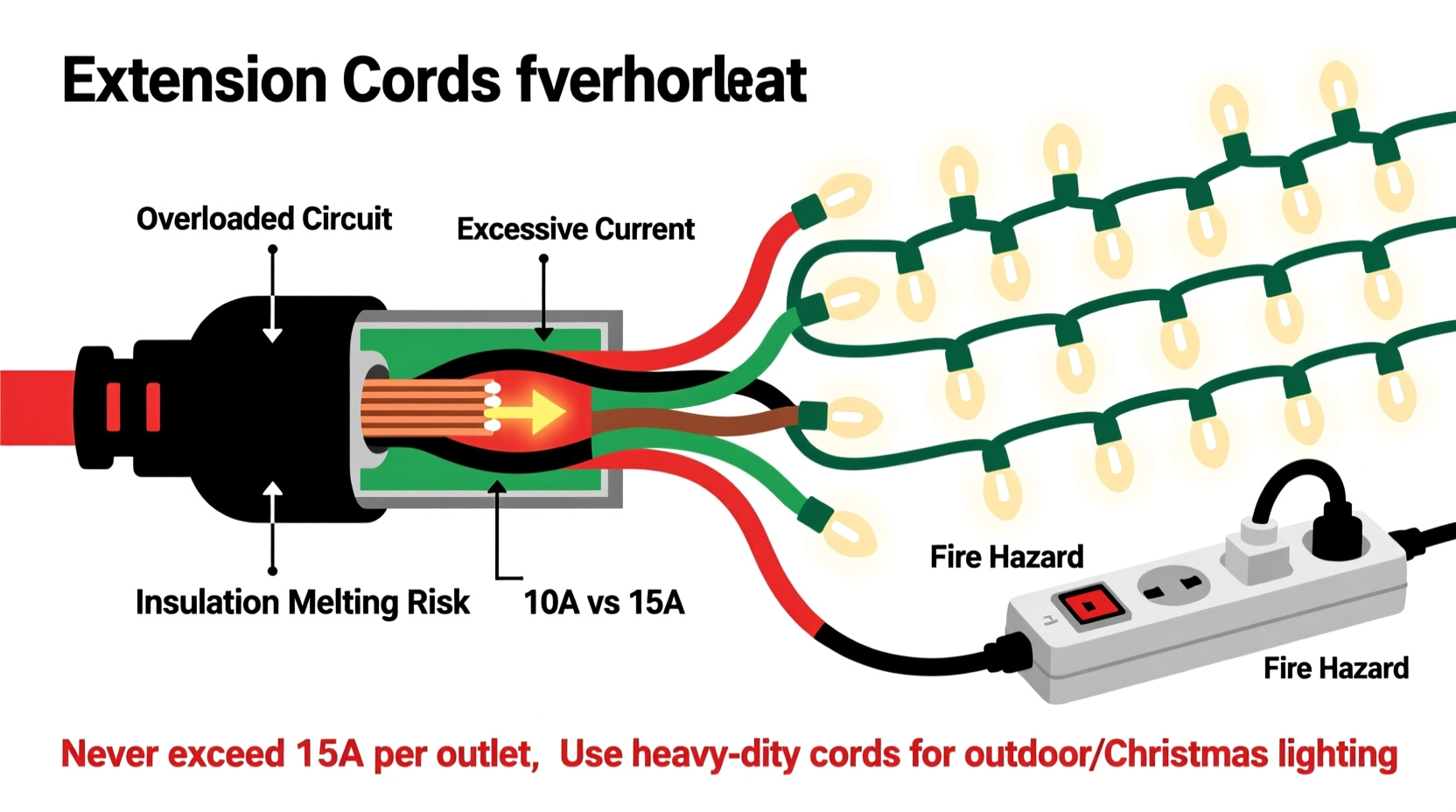
An extension cord is more than just a wire connecting your lights to an outlet—it’s a conduit for electrical current, and its performance depends on several physical and engineering factors. When you plug in a strand of Christmas lights, electrons travel from the power source through the copper conductors inside the cord, delivering energy to each bulb. As current flows, some energy is lost as heat due to resistance in the wire—a natural byproduct of electron movement through metal.
The amount of heat generated depends on three primary variables: current (measured in amperes or amps), resistance (in ohms), and time. According to Joule’s Law, heat produced equals current squared multiplied by resistance and time (H = I²Rt). This means doubling the current quadruples the heat output. Most household circuits are rated for 15 or 20 amps, but individual extension cords vary widely in their capacity to handle load safely.
Low-quality or undersized cords have thinner gauge wires, which increase resistance. Higher resistance leads to more heat buildup, especially when multiple light strands draw significant power. Additionally, longer cords inherently have more resistance simply due to increased wire length. So, running 100 feet of lightweight cord to power dozens of mini-lights may seem convenient—but it creates conditions ripe for overheating.
Common Causes of Overheating During Holiday Lighting
Several interrelated factors contribute to extension cord heating during seasonal displays. Recognizing these early helps prevent escalation.
Overloaded Circuits and Daisy-Chaining Lights
One of the most frequent mistakes is daisy-chaining too many light strands together. Many manufacturers specify a maximum number of sets that can be safely linked—often between three and seven, depending on bulb type and wattage. Exceeding this limit forces the first cord in the chain to carry more current than it's designed for, leading to excessive heat at connection points and along the wire.
For example, a single strand of incandescent mini-lights might draw 40 watts. Plugging six together adds up to 240 watts—about 2 amps at 120 volts. While that may sound low, when combined with other decorations like inflatables or projectors, the cumulative draw can approach or exceed the cord’s rating.
Poor-Quality or Undersized Extension Cords
Not all extension cords are created equal. Cords labeled “light duty” or sold exclusively for indoor use often feature 16- or 18-gauge wire—too thin for sustained outdoor or high-load applications. These cords lack the cross-sectional area needed to efficiently carry current over distance without overheating.
In contrast, heavy-duty cords use 12- or 14-gauge wiring, allowing better current flow with less resistance. Using a lightweight cord to power a large display is like trying to push a firehose stream through a garden hose—it creates pressure (resistance), generating dangerous levels of heat.
Environmental Factors and Physical Damage
Cords exposed to moisture, snow, or extreme cold become more resistive. Ice buildup or water ingress into connectors increases resistance at junctions, creating localized hot spots. Similarly, cords pinched under furniture, run across walkways, or coiled tightly retain heat instead of dissipating it, compounding thermal stress.
A kinked or frayed cord also reduces effective conductor size, increasing resistance. Even minor internal breaks in the wire can cause arcing and intense localized heating, invisible until smoke appears.
“Extension cords are temporary solutions, not permanent wiring. Treating them as such is critical to avoiding fires.” — National Fire Protection Association (NFPA)
Safe Power Management: A Step-by-Step Guide
To enjoy your holiday lights without risking safety, follow this systematic approach to power distribution.
- Calculate Total Load: Add up the wattage of all connected lights and devices. Divide total watts by voltage (usually 120) to get amps. Example: 720 watts ÷ 120V = 6 amps.
- Select the Right Cord: Use a grounded (three-prong), outdoor-rated extension cord with appropriate gauge:
- Up to 5 amps: 16-gauge (short runs only)
- 5–10 amps: 14-gauge
- 10+ amps: 12-gauge
- Lay Out Cords Strategically: Avoid coiling excess length; unroll fully to prevent heat retention. Keep connections off the ground and away from water.
- Distribute Across Multiple Outlets: Plug different sections of your display into separate circuits to avoid overloading one line.
- Use GFCI-Protected Outlets: Especially outdoors, these cut power instantly if current leakage is detected, preventing shocks and potential fires.
- Inspect Daily During Peak Use: Feel cords gently after an hour of operation. If warm, reduce load immediately.
Do’s and Don’ts: Extension Cord Safety Checklist
| Do | Don’t |
|---|---|
| Use outdoor-rated, grounded extension cords | Use indoor-only cords outside |
| Unroll cords completely before use | Leave cords coiled on spools |
| Limit daisy-chained light strands to manufacturer specs | Connect more than 3–7 strands end-to-end |
| Plug high-draw items into separate circuits | Run everything from one wall outlet |
| Test cords annually for damage or wear | Use cracked, frayed, or stiff cords |
Real-World Example: A Close Call in Denver
In December 2022, a homeowner in Denver decorated his two-story house with over 20 strands of incandescent Christmas lights, powered by a single 50-foot, 18-gauge extension cord routed from a garage outlet. He had daisy-chained eight strands together—the maximum recommended was four. After three nights of continuous use, neighbors reported a burning smell.
Firefighters arrived to find the base of the cord near the outlet charred and partially melted, though no flames had erupted. Investigation revealed the cord was carrying nearly 8 amps—double its safe capacity. The circuit breaker hadn’t tripped because the overload wasn’t severe enough to trigger it instantly, but the prolonged heat degraded insulation and posed a serious ignition risk.
The homeowner switched to three separate 12-gauge cords, each serving smaller zones, and installed smart timers to limit daily runtime. His display remained bright, but now operated within safe electrical parameters.
FAQ: Common Questions About Hot Extension Cords
Is it normal for extension cords to get warm?
Slight warmth is common under load, especially with longer cords. However, if the cord is too hot to touch comfortably, emits a rubbery smell, or shows discoloration, it’s dangerously overloaded and must be disconnected immediately.
Can LED lights still cause overheating?
LEDs consume far less power—typically 80–90% less than incandescent bulbs—so they generate less heat overall. However, using a poor-quality or damaged cord, or plugging in non-light devices (like heaters or motors), can still create hazardous conditions even with efficient LEDs.
How long can I leave Christmas lights plugged in?
It’s safest to limit continuous operation to 8–12 hours per day. Use timers to automate shutdown overnight. Extended use increases wear on cords and connections, raising the risk of failure. NFPA recommends turning off decorative lights when leaving home or sleeping.
Expert Recommendations for Long-Term Safety
Electrical safety experts emphasize prevention over reaction. According to Mike Reynolds, a licensed electrician with over 25 years of residential experience:
“The holidays bring joy, but also peak electrical demand in homes already stressed by space heaters and ovens. People don’t realize that a $10 extension cord from a discount store might not meet the same standards as one tested by UL. That corner-cutting can cost thousands in property damage.” — Mike Reynolds, Master Electrician, Colorado Electrical Services
He advises homeowners to treat every extension cord as a potential hazard point. Regular inspection, proper storage (never yank cords from outlets), and investing in quality products pay off in reliability and peace of mind.
Additionally, consider upgrading outdoor outlets to weather-resistant (WR) and tamper-resistant (TR) models, which offer better protection against environmental wear and accidental contact. For permanent displays, consult an electrician about installing dedicated circuits or low-voltage landscape lighting systems.
Conclusion: Shine Bright, Stay Safe
Your Christmas lights should illuminate memories—not endanger them. Heat in an extension cord is not a minor quirk; it’s a warning sign of electrical strain that demands attention. From selecting the right gauge wire to avoiding daisy-chain overload, every decision impacts safety.
By calculating loads, choosing durable materials, and respecting the limits of temporary power solutions, you can create a dazzling display that lasts throughout the season—and for many to come. Don’t wait for smoke or sparks to act. Inspect your setup now, make necessary upgrades, and enjoy the holidays with confidence.




 浙公网安备
33010002000092号
浙公网安备
33010002000092号 浙B2-20120091-4
Comments
No comments yet. Why don't you start the discussion?