
There’s nothing more frustrating than your favorite pair of jeans—perfectly broken in, flattering, and comfortable—starting to show wear along the inner thigh. A small hole or thinning fabric can quickly escalate into a full tear, often just months after purchase. This common issue affects both men and women, especially those with active lifestyles or specific body proportions. But before you toss them or assume all denim is doomed, it's important to understand why this happens and what you can do about it.
The inner thigh area is one of the most stressed zones in any pair of pants. Constant friction from leg movement, sitting, walking, and even cycling wears down fibers over time. When combined with poor fit, low-quality fabric, or improper care, the result is premature ripping. The good news? With the right knowledge and habits, you can significantly delay or even prevent this damage—and repair existing tears effectively.
Why Inner Thigh Ripping Happens: The Science Behind the Tear
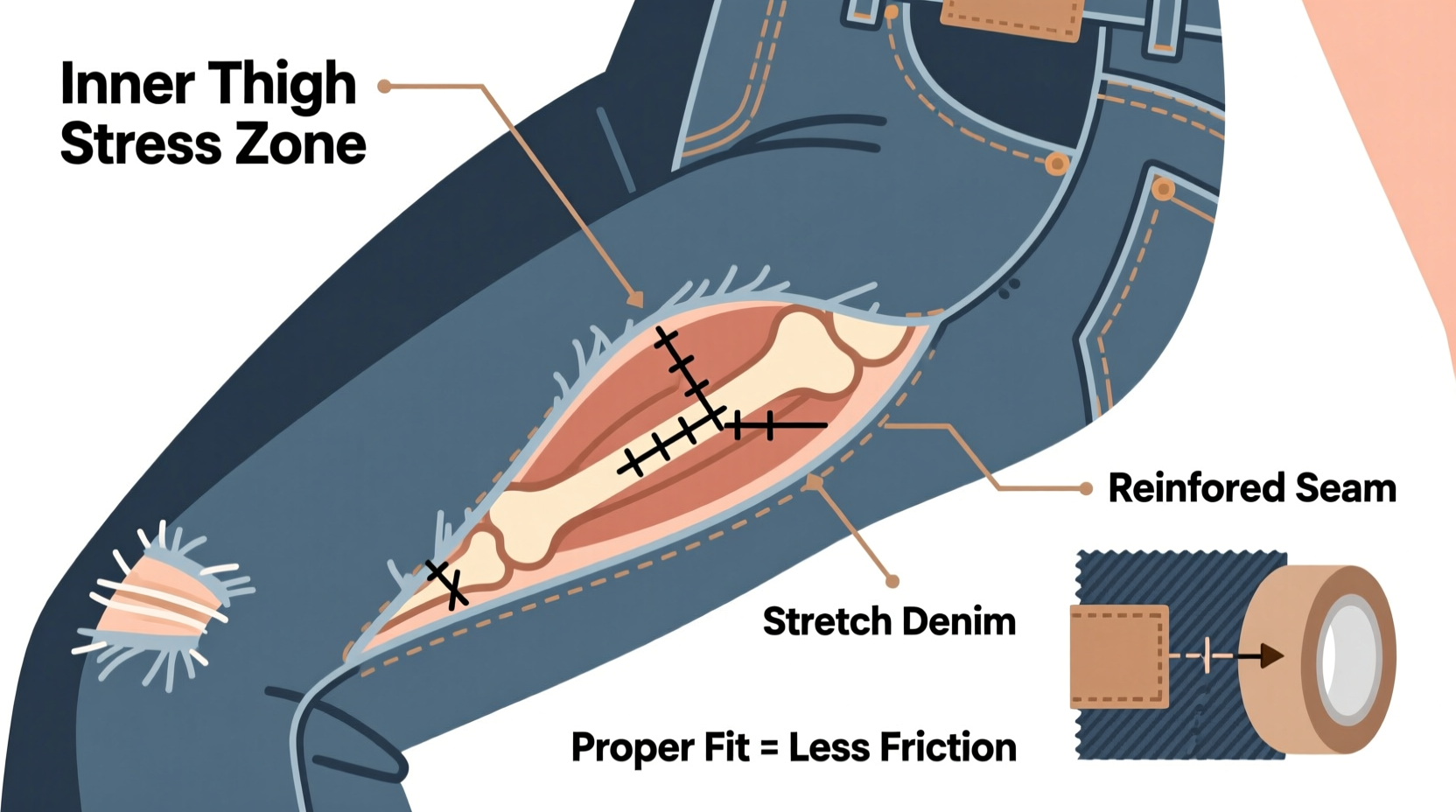
Denim may seem durable, but it’s not immune to mechanical stress. The inner thigh region experiences repeated rubbing between the legs during motion. This friction is amplified if:
- Your thighs touch when you walk or sit.
- You frequently bike, climb stairs, or engage in physical activity.
- The jeans are too tight, increasing pressure on high-movement areas.
Cotton fibers, which make up most denim, weaken when bent and rubbed repeatedly. Over time, microscopic breaks accumulate until the fabric loses structural integrity. Stretch denim, while more comfortable, often contains elastane (spandex), which degrades faster under friction than pure cotton. Once the weave starts to separate, even minor movements can accelerate tearing.
“Repeated abrasion in the crotch-to-inner-thigh zone is the leading cause of premature denim failure. Fit and fabric choice play critical roles.” — Lena Park, Textile Engineer & Denim Consultant
Additionally, environmental factors like humidity and sweat contribute to fiber breakdown. Salt from perspiration can corrode cotton and weaken stitching, especially in hot climates or during intense daily commutes.
Preventative Measures: How to Stop Jeans from Ripping Before It Starts
Prevention is always more effective—and economical—than repair. By adjusting your choices in fit, fabric, and care, you can dramatically extend the life of your jeans.
Choose the Right Fit and Cut
Fitting is the single most influential factor in preventing inner thigh wear. Jeans that pinch or bind in the upper leg create excessive tension and increase friction.
Look for jeans labeled “tapered” or “athletic fit,” which provide extra room in the thigh while narrowing toward the ankle. These cuts accommodate movement without excess fabric bunching at the back or strain on the inner seam.
Prioritize Fabric Quality
Not all denim is created equal. Higher thread count, tighter weaves, and raw or selvedge denim tend to be more durable. While heavier denim (12–16 oz) feels stiffer at first, it resists abrasion better than lightweight (8–10 oz) versions commonly used in fashion-forward skinny jeans.
If you prefer stretch for comfort, choose blends with no more than 2–3% elastane. Higher spandex content increases flexibility but reduces long-term resilience. Some premium brands now use reinforced yarns like Kevlar or Twaron in high-stress zones—ideal for commuters or travelers.
Use Liners or Protective Layers
Wearing shorts, leggings, or cycling liners under your jeans creates a buffer between your skin and the denim. This simple step can reduce direct friction by up to 70%, according to textile testing labs.
For example, many urban cyclists wear moisture-wicking compression tights beneath jeans to prevent saddle-related wear. Even regular cotton boxer briefs or biker shorts help minimize contact and absorb sweat.
Avoid Overwashing and Harsh Detergents
Every wash cycle removes natural oils and weakens cotton fibers. Washing jeans too frequently—especially in hot water—accelerates deterioration in already stressed areas.
Instead, spot-clean stains and air out jeans between wears. When washing is necessary, turn them inside out, use cold water, and select a gentle cycle. Avoid bleach and enzyme-heavy detergents, which break down cellulose-based fabrics like cotton.
Step-by-Step Guide to Reinforcing Your Jeans
If your jeans haven’t ripped yet but show signs of thinning, reinforcing them now can add months—or even years—to their life. Follow this timeline to strengthen vulnerable areas.
- Inspect Weekly: After wearing, check the inner thigh for sheen, fuzziness, or slight transparency—early signs of fiber breakdown.
- Clean Gently: Wash using cold water and mild detergent only when needed (every 5–10 wears).
- Dry Flat: Never tumble dry. Heat damages elasticity and shrinks cotton unevenly. Hang vertically or lay flat to preserve shape.
- Apply Tape Reinforcement (Optional): Iron-on denim patches or adhesive-backed fabric tape can be applied to the inside of the thigh before wear becomes problematic.
- Stitch Proactively: Use a sewing machine or hand-stitch with heavy-duty nylon thread along the inner seam if fraying begins.
This proactive maintenance routine ensures early intervention before irreversible damage occurs.
Effective Fixes for Already-Ripped Jeans
Once a tear appears, don’t panic. Depending on its size and location, several repair methods can restore strength and appearance.
Small Holes (Under 1 inch)
For pinholes or tiny rips, fabric glue combined with an iron-on patch works well. Apply a small square of denim or felt backing inside the leg, then press firmly with a warm iron (use a cloth barrier). Allow 24 hours to cure before wearing.
Larger Tears or Thinning Panels
Sewing is the best solution here. You can either:
- Hand-stitch with a whipstitch using polyester thread for durability.
- Machine-sew a rectangular patch (preferably denim scrap) over the damaged area.
- Use a zig-zag stitch around the edges to prevent further unraveling.
For a seamless look, source matching denim from old jeans or order swatches online. Always finish seams with fray-check liquid to lock threads in place.
Decorative Repairs (Sashiko or Visible Mending)
Rather than hide the damage, embrace it. Sashiko mending—a traditional Japanese technique—uses contrasting white thread to create geometric patterns over worn areas. Not only does this reinforce the fabric, but it also adds unique character.
Do’s and Don’ts: Quick Reference Table
| Action | Do | Don't |
|---|---|---|
| Washing Frequency | Every 5–10 wears; spot clean in between | After every single wear |
| Water Temperature | Cold water only | Hot or warm water |
| Drying Method | Air dry flat or hang vertically | Tumble dry on high heat |
| Repair Timing | Fix thinning areas before holes form | Wait until the hole is large |
| Fit Choice | Slight ease in thigh area | Skin-tight with constant pulling |
Mini Case Study: From Daily Commuter to Five-Year Jeans
Jamal, a 34-year-old software developer in Seattle, walks 45 minutes each way to work and bikes occasionally on weekends. He noticed his favorite black jeans developing inner thigh holes within three months. Frustrated, he tried multiple brands—same result.
After consulting a tailor and researching denim care, he changed his approach:
- Switched from skinny to slim-straight fit with 2% stretch.
- Began wearing moisture-wicking bike liners under jeans on commute days.
- Reduced washing frequency to once every two weeks.
- Applied iron-on patches inside both thighs preemptively.
The next pair lasted over four years with only minor wear. “I thought all dark jeans were fragile,” Jamal said. “Turns out, it was the combo of tight fit and daily friction killing them.”
FAQ: Common Questions About Inner Thigh Rips
Can I prevent inner thigh rips without changing my jeans' style?
Yes, but effectiveness depends on severity. Wearing protective layers (like thin leggings), reducing wash cycles, and applying internal patches can help even with skinny jeans. However, switching to a more ergonomic cut will yield the best long-term results.
Are there jeans specifically designed to resist inner thigh wear?
Yes. Several brands now engineer jeans with gusseted crotches, double-layered inner thighs, or blended fibers for durability. Look for terms like “reinforced inseam,” “performance denim,” or “commuter-ready.” Brands like Levi’s Commuter Series, Outlier, and Buck Mason offer such options.
Is it worth repairing expensive jeans?
Absolutely. High-end denim often uses superior materials and construction. Repairing a $150+ pair with professional stitching or sashiko mending preserves value and sustainability. In contrast, fast-fashion jeans may not justify repair due to poor base quality.
Checklist: Protect and Extend Your Jeans’ Life
Use this checklist monthly to keep your denim in top condition:
- ☐ Inspect inner thighs for shine or thinning
- ☐ Rotate jeans to avoid overuse of one pair
- ☐ Wear liners or undershorts during high-friction activities
- ☐ Wash inside-out in cold water, only when necessary
- ☐ Air-dry away from direct sunlight
- ☐ Apply iron-on patches at first sign of wear
- ☐ Learn basic hand-sewing for emergency fixes
- ☐ Invest in at least one pair of performance-fit jeans
“Your jeans should move with you, not against you. Preventing inner thigh blowouts comes down to smart design, mindful habits, and timely care.” — Diego Mendez, Sustainable Fashion Designer
Conclusion: Make Your Denim Last
Jeans ripping at the inner thigh isn’t inevitable—it’s a solvable problem rooted in mechanics, material science, and behavior. By choosing better fits, protecting high-wear zones, and adopting thoughtful care routines, you can keep your favorite pairs looking sharp and functioning well for years.
Repairs aren’t failures; they’re part of a sustainable wardrobe philosophy. Whether you patch, sew, or style your mends proudly, each action extends the life of your clothing and reduces waste.




 浙公网安备
33010002000092号
浙公网安备
33010002000092号 浙B2-20120091-4
Comments
No comments yet. Why don't you start the discussion?