
For generations, people have claimed they can predict rain by the twinge in their knees or the stiffness in their fingers. Whether it’s a grandparent wincing at a change in the wind or an athlete pausing mid-stretch as clouds gather, the idea that joint pain forecasts weather shifts has persisted across cultures. While often dismissed as folklore, modern science reveals there may be more truth to this than myth. Millions with arthritis, past injuries, or chronic joint conditions report increased discomfort before storms roll in. But what exactly causes this phenomenon? And are these so-called “old wives’ tales” actually rooted in physiology?
This article explores the connection between atmospheric changes and joint pain, evaluates scientific evidence behind weather sensitivity, and separates fact from fiction in long-held beliefs about bodily predictions of rain.
The Science Behind Joint Pain and Weather Changes
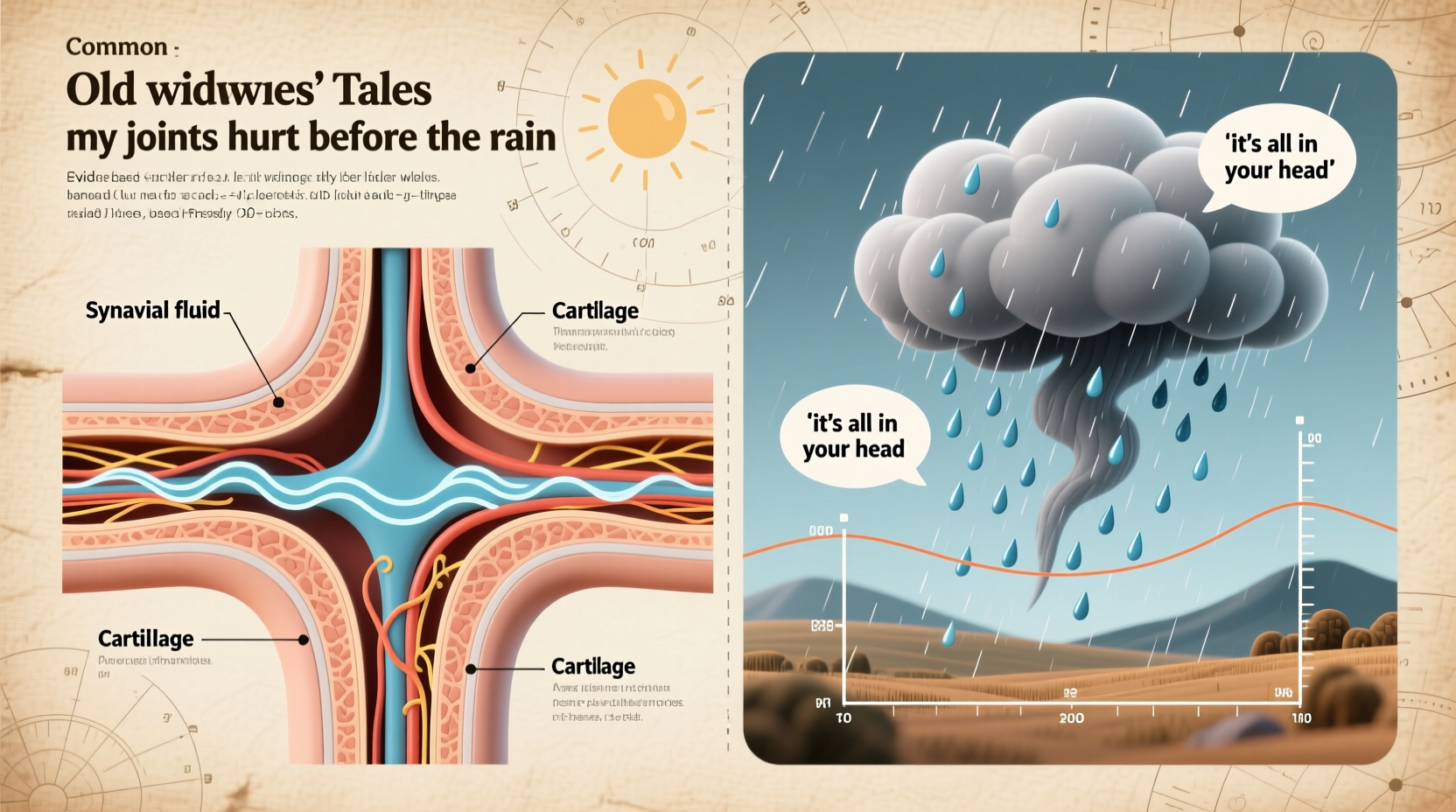
Joint pain before rainfall isn’t merely imagination—it’s tied to measurable environmental shifts. The key factors include barometric pressure, humidity, temperature, and even wind patterns. Among these, **barometric pressure**—the weight of the atmosphere pressing down on the Earth—plays the most significant role.
When a storm approaches, barometric pressure drops. This decrease reduces the external pressure exerted on the body, which can cause tissues around joints to expand slightly. In individuals with inflamed or damaged joints—such as those with osteoarthritis or rheumatoid arthritis—this subtle swelling can compress nerves and irritate already-sensitive areas, resulting in pain or stiffness.
“Changes in barometric pressure can influence fluid dynamics within joints. For patients with pre-existing joint damage, even small shifts can trigger discomfort.” — Dr. Alan Pierce, Rheumatologist at Boston Arthritis Institute
Additionally, cold temperatures cause synovial fluid—the lubricant inside joints—to thicken, reducing mobility and increasing stiffness. High humidity may exacerbate this effect by influencing how heat dissipates from the body, potentially amplifying pain signals.
Evidence from Research: What Studies Show
Scientific inquiry into weather-related joint pain has produced mixed but increasingly supportive results. A landmark 2019 study published in Pain Medicine analyzed over 11 million doctor visits for joint pain and correlated them with real-time meteorological data. Researchers found a statistically significant increase in knee and hip pain complaints during periods of falling barometric pressure and rising humidity—conditions typical before rainfall.
Another multi-year survey conducted by the University of Washington followed 2,100 adults with chronic musculoskeletal pain. Over 67% reported worsening symptoms prior to rainy weather, with many accurately predicting precipitation up to 24 hours in advance based solely on physical sensations.
However, not all studies agree. Some controlled trials fail to find consistent links, suggesting individual variability plays a major role. Still, the sheer volume of anecdotal reports combined with emerging physiological models gives credibility to the experience of \"weather-sensitive\" individuals.
One explanation lies in nerve sensitivity. Damaged cartilage or scar tissue lacks uniform structure, making surrounding nerves more reactive to minute physical changes. As pressure drops, expanded soft tissue presses against these hypersensitive zones, sending pain signals even without direct injury.
Old Wives’ Tales vs. Scientific Reality
Many cultural sayings reflect observations passed down through generations. Let’s examine some common ones and assess their validity:
| Tale | Belief | Scientific Assessment |
|---|---|---|
| \"If your bones hurt, rain’s on its way.\" | Pain predicts rain. | Plausible: Supported by barometric pressure research. |
| \"Cold weather ruins arthritic joints.\" | Cold directly damages joints. | Misleading: Cold stiffens fluids but doesn’t cause degeneration. |
| \"Cracking knuckles brings arthritis.\" | Habit leads to joint disease. | False: No link found in longitudinal studies. |
| \"Wear warm socks to protect your knees.\" | Insulation prevents joint damage. | Partially True: Warmth improves circulation and comfort. |
| \"Pain moves with the wind.\" | Wind direction affects pain location. | Anecdotal: Possibly due to associated pressure systems. |
While some tales contain exaggerations or outdated assumptions, others align surprisingly well with current medical understanding. The persistence of such beliefs underscores how consistently people observe correlations between weather and bodily sensation—even if mechanisms were unknown until recently.
Who Is Most Affected?
Not everyone experiences weather-related joint pain. Susceptibility depends largely on underlying health conditions and previous injuries. Key risk groups include:
- People with arthritis – Both osteoarthritis and inflammatory types like rheumatoid arthritis show strong weather sensitivity.
- Those with prior joint injuries – Old fractures, ligament tears, or surgeries can leave residual nerve sensitivity.
- Fibromyalgia patients – Often report amplified pain during damp, low-pressure days.
- Older adults – Age-related cartilage wear increases vulnerability to environmental shifts.
- Chronic pain sufferers – Central sensitization may heighten response to subtle stimuli.
A lesser-known factor is psychological conditioning. If someone believes strongly that rain causes pain, they may subconsciously interpret normal aches as weather-linked, reinforcing the cycle. However, this doesn't negate the physical component—it simply adds complexity to diagnosis and management.
Mini Case Study: Maria’s Knee Predicts the Storm
Maria, a 58-year-old gardener from Portland, Oregon, began noticing her left knee flared up about two hours before rain arrived. Initially skeptical, she started logging her discomfort and cross-referencing it with weather forecasts. Over six months, she recorded 37 instances where moderate to severe pain preceded rainfall—only missing two minor drizzles. Her primary care physician confirmed mild osteoarthritis via X-ray and explained how Pacific storm fronts bring rapid pressure drops that likely affect her joint lining. Armed with knowledge, Maria now adjusts her outdoor activities when her knee acts up—and yes, she’s become the unofficial weather predictor among her neighbors.
Managing Weather-Related Joint Discomfort
You can't control the weather, but you can reduce its impact on your joints. Below is a practical, step-by-step guide to minimizing flare-ups.
Step-by-Step Guide to Reducing Weather-Induced Pain
- Monitor Local Barometric Trends: Use a reliable weather app that shows pressure changes. Look for downward trends indicating approaching storms.
- Stay Warm and Dry: Dress in layers during cool, damp weather. Use thermal sleeves or braces on vulnerable joints.
- Keep Moving: Gentle movement keeps synovial fluid circulating. Try daily stretching or swimming to maintain flexibility.
- Hydrate and Eat Anti-Inflammatory Foods: Dehydration worsens stiffness. Incorporate omega-3s (like salmon), turmeric, and leafy greens into meals.
- Use Heat Therapy Proactively: Apply heating pads before expected discomfort. Heat relaxes muscles and improves blood flow.
- Consider Medication Timing: For chronic sufferers, taking prescribed anti-inflammatories earlier during pressure drops may prevent severe flare-ups.
- Improve Indoor Climate Control: Maintain steady indoor temperature and use dehumidifiers in damp climates to buffer external changes.
Checklist: Daily Habits to Reduce Joint Sensitivity
- ✅ Check weather forecast for pressure drops
- ✅ Perform 10 minutes of light joint mobility exercises
- ✅ Drink at least 8 glasses of water
- ✅ Avoid prolonged sitting or standing in one position
- ✅ Wear supportive footwear, especially on uneven terrain
- ✅ Use assistive devices (e.g., cane) if needed during unstable weather
- ✅ Log pain episodes to identify personal patterns
Frequently Asked Questions
Can joint pain really predict rain better than a forecast?
Not more accurately, but sometimes sooner. The human body can detect subtle pressure shifts before visible weather changes occur. While not infallible, some individuals develop high sensitivity akin to biological barometers. However, forecasts remain more reliable for timing and intensity.
Does living in a dry climate eliminate weather-related joint pain?
It may reduce frequency but not eliminate it. Even in arid regions, seasonal pressure systems pass through. People in desert areas still report occasional flare-ups during monsoon transitions or cold fronts. Stable climates help, but aren't a cure.
Are younger people immune to this effect?
No. While older adults are more commonly affected, young people with sports injuries, autoimmune conditions, or repetitive strain can also experience weather-linked pain. The presence of joint damage—not age—is the primary determinant.
Conclusion: Listening to Your Body Isn’t Superstition
The notion that joint pain foretells rain was once relegated to folk wisdom. Today, science confirms there’s a physiological basis behind the ache. While not every twinge signals a storm, the interplay between barometric shifts, inflammation, and nerve sensitivity explains why so many feel the weather in their bones—literally.
Understanding this connection empowers individuals to take proactive steps rather than dismiss their discomfort as inevitable. By tracking symptoms, adapting routines, and applying targeted relief strategies, it’s possible to stay ahead of weather-driven flare-ups.




 浙公网安备
33010002000092号
浙公网安备
33010002000092号 浙B2-20120091-4
Comments
No comments yet. Why don't you start the discussion?