
Lighting tall windows effectively is one of the most common interior design challenges homeowners and designers face. What looks like an elegant idea—installing multiple lights or sconces along a vertical window frame—can quickly become visually jarring if the spacing appears off. The human eye is highly sensitive to symmetry, especially in architectural features, and even slight imbalances can make a room feel unsettled. Understanding why lights look uneven and learning how to correct it isn’t just about aesthetics; it’s about creating harmony in your space.
The problem often lies not in the fixtures themselves but in how they’re distributed across the height of the window. Tall windows, particularly those over 7 feet, amplify small miscalculations in spacing. A difference of just a few inches between light placements can create a cascading visual effect that reads as disorderly. This article breaks down the root causes of uneven appearance, provides actionable solutions, and guides you through achieving flawless symmetry every time.
Why Lights Appear Uneven on Tall Windows
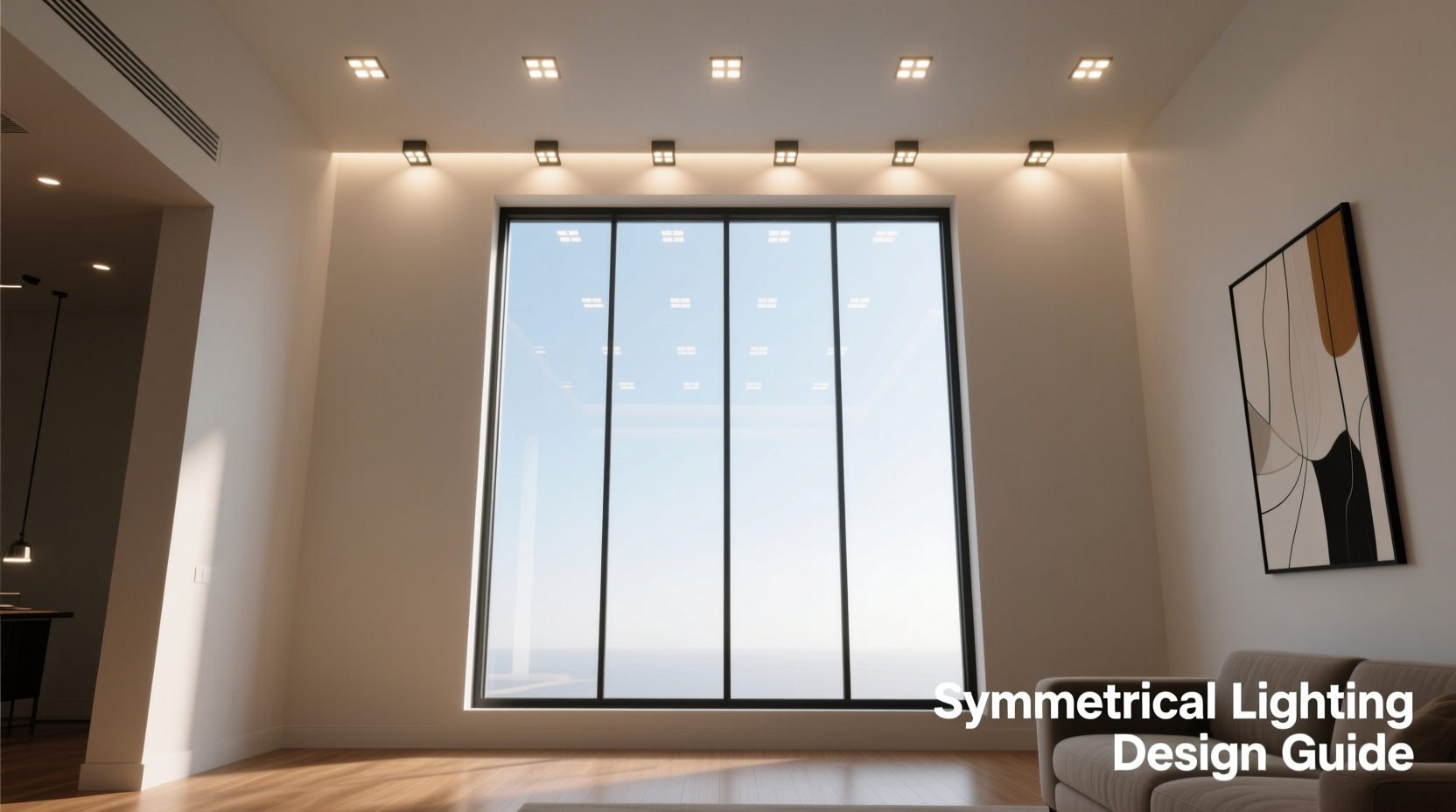
The perception of unevenness stems from both mathematical principles and human visual psychology. When we look at a tall window flanked by lights—whether recessed ceiling lights, wall sconces, or pendant fixtures—we expect a rhythm. Our brains naturally seek patterns, and when those patterns are disrupted, discomfort follows.
One major cause is inconsistent spacing due to improper measurement. Many people divide the total height of the window by the number of fixtures, then place each light at equal intervals. While this seems logical, it ignores the importance of starting and ending points. If the top and bottom fixtures are too close to the ceiling or floor—or too far—the entire sequence loses balance.
Another factor is scale. On a 9-foot-tall window, four lights spaced evenly might still look odd because the gaps between them are too large, making each fixture feel isolated rather than part of a cohesive system. Conversely, too many lights can crowd the space and create visual noise.
Additionally, lighting type plays a role. Directional lights like track heads or adjustable recessed cans draw attention to where the beam lands. If beams don’t align symmetrically with architectural lines (e.g., mullions or window frames), the imbalance becomes more pronounced. Even ambient wall washers can highlight irregularities in placement when they cast shadows or gradients unevenly.
The Science of Symmetry in Lighting Design
Symmetry in lighting isn’t just about dividing space equally—it’s about proportion and visual weight. Designers use principles such as the golden ratio (approximately 1:1.618) and modular coordination to create pleasing arrangements. For tall windows, applying these concepts ensures that light distribution feels intentional and harmonious.
Consider this: placing lights at exact thirds or quarters of the window height may seem balanced mathematically, but if the top light sits flush under the ceiling, it gets visually “crushed,” while the bottom light near the floor disappears into shadow. Instead, professionals recommend offsetting the outermost fixtures inward by a consistent margin—typically 12 to 18 inches from top and bottom—to allow breathing room.
This technique creates what’s known as a \"framing effect,\" where the lights act like bookends around the central portion of the window. The remaining fixtures are then spaced evenly within that framed zone, ensuring rhythm without rigidity.
“Symmetry in lighting isn’t about rigid duplication—it’s about perceived balance. Sometimes, equal spacing isn’t the most balanced solution.” — Lena Torres, Architectural Lighting Designer, Studio Lume
Step-by-Step Guide to Achieving Symmetrical Spacing
Follow this practical process to install lights on tall windows with precision and confidence.
- Measure the total vertical span: Start from the baseboard or finished floor to the underside of the ceiling or crown molding. Record this dimension precisely.
- Determine fixture count: For windows over 7 feet, three to five fixtures typically work best. Fewer than three risks under-lighting; more than five may clutter the view.
- Establish buffer zones: Deduct 15 inches from the top and bottom of the measured span. This creates a visual boundary that prevents lights from appearing pinned against edges.
- Calculate the active zone: Subtract the buffers from the total height. For example, on a 108-inch (9-foot) wall: 108 – 30 = 78 inches available for spacing.
- Divide the active zone: If using four lights, divide 78 inches by 3 (the number of spaces between four points). That gives 26 inches between centers.
- Mark positions: Starting 15 inches up from the floor, mark the first point. Add 26 inches for the second, another 26 for the third, and so on, until the final mark is 15 inches below the ceiling.
- Check alignment: Use a laser level or long spirit level to ensure all marks are vertically aligned. Misalignment laterally will ruin symmetry even if vertical spacing is perfect.
- Install and test: After installation, observe the lights at different times of day and under various lighting conditions. Adjust beam angles if necessary.
Do’s and Don’ts of Tall Window Lighting
| Do | Don’t |
|---|---|
| Use consistent fixture styles and sizes | Mix different shapes or finishes |
| Space lights based on visual flow, not just math | Place the top light directly under the ceiling |
| Align lights with window mullions or grid lines | Ignore architectural details when positioning |
| Use dimmers to control intensity and focus | Overlight the area, causing glare |
| Test layouts with temporary markers first | Drill holes without verifying sightlines |
Real Example: Fixing a Problematic Foyer Window
A homeowner in Portland installed four wall sconces beside a 10-foot-tall arched foyer window. Initially, they spaced the sconces exactly 24 inches apart, starting 12 inches from the floor. Despite precise measurements, the result looked unbalanced—the top sconce nearly touched the ceiling, and the rhythm felt bottom-heavy.
After consulting a lighting designer, they revised the plan. They repositioned the top and bottom sconces 18 inches from the ceiling and floor, respectively, leaving 84 inches of active space. With three intervals between four lights, that meant 28 inches between centers. The new layout created a cleaner vertical progression, and the sconces now framed the window elegantly.
The key insight? Equal distance doesn’t always mean equal visual weight. By adjusting the end margins, they restored symmetry without changing the number of fixtures.
Checklist: Pre-Installation Lighting Alignment
- ☑ Measure full wall height from baseboard to ceiling
- ☑ Choose number of fixtures based on window scale (3–5 recommended)
- ☑ Set top and bottom buffer zones (12–18 inches)
- ☑ Calculate spacing between center points
- ☑ Mark positions with tape or pencil
- ☑ Use a level to confirm vertical alignment
- ☑ View mock-up from primary vantage points (entryway, adjacent rooms)
- ☑ Confirm beam direction matches window architecture
- ☑ Install and test under natural and artificial light
Frequently Asked Questions
Can I use different types of lights on the same tall window?
It’s generally not advisable. Mixing fixture types (e.g., sconces and pendants) disrupts visual rhythm. Stick to one style and size for symmetry. If layering light types, keep them functionally separated—e.g., sconces for ambiance, recessed lights for task lighting above.
What if my ceiling height varies slightly?
Older homes often have uneven ceilings. In such cases, anchor your layout to the floor instead of the ceiling. Position the bottom light at a fixed height (e.g., 18 inches above floor), then work upward. This ensures consistency from the viewer’s perspective, which is usually seated or standing at floor level.
Should lights align with window panes or mullions?
Yes, whenever possible. Aligning lights with vertical mullions or pane divisions strengthens the connection between lighting and architecture. It creates a sense of intentionality and enhances symmetry. Use a measuring tape to match fixture centers to structural lines.
Final Tips for Long-Term Success
Maintaining symmetry goes beyond initial installation. Over time, furniture rearrangement, new window treatments, or changes in wall color can alter how light interacts with the space. Reassess your lighting annually, especially during seasonal deep cleans.
Also consider control systems. Smart dimmers or automated scenes allow you to adjust brightness depending on time of day or mood, preserving balance across changing conditions. For example, brighter settings in the evening can compensate for reduced natural light, keeping the window area visually anchored.
Finally, remember that symmetry doesn’t mean sterility. You can introduce subtle variation—such as alternating warm and cool tones—if done with precision. But only after mastering the fundamentals of even spacing and alignment.
“The best lighting disappears. When done right, you notice the beauty of the space—not the fixtures.” — Rafael Kim, Interior Lighting Consultant
Conclusion: Illuminate with Intention
Uneven lighting on tall windows is a common issue, but it’s entirely preventable with careful planning and attention to detail. By understanding the principles of visual balance, applying smart spacing techniques, and respecting architectural context, you can transform a problematic feature into a striking focal point.
Don’t let a few misaligned sconces undermine the elegance of your tall windows. Take the time to measure thoughtfully, plan deliberately, and install with precision. Your space deserves lighting that enhances, not distracts.




 浙公网安备
33010002000092号
浙公网安备
33010002000092号 浙B2-20120091-4
Comments
No comments yet. Why don't you start the discussion?