
If you're slathering on lip balm multiple times a day yet still dealing with dry, flaky, cracked lips, you're not alone. In fact, constant balm use without improvement can be more than just frustrating—it might mean you're missing the root cause of the problem. Chapped lips aren't always about moisture deficiency. Sometimes, the very products meant to help are making things worse or masking deeper issues like environmental exposure, nutritional deficiencies, or even underlying health conditions.
This article breaks down why your lips may still be chapping despite diligent balm use, identifies common mistakes in lip care routines, and offers practical, dermatologist-approved solutions to restore soft, healthy lips for good.
The Myth of Lip Balm as a Cure-All
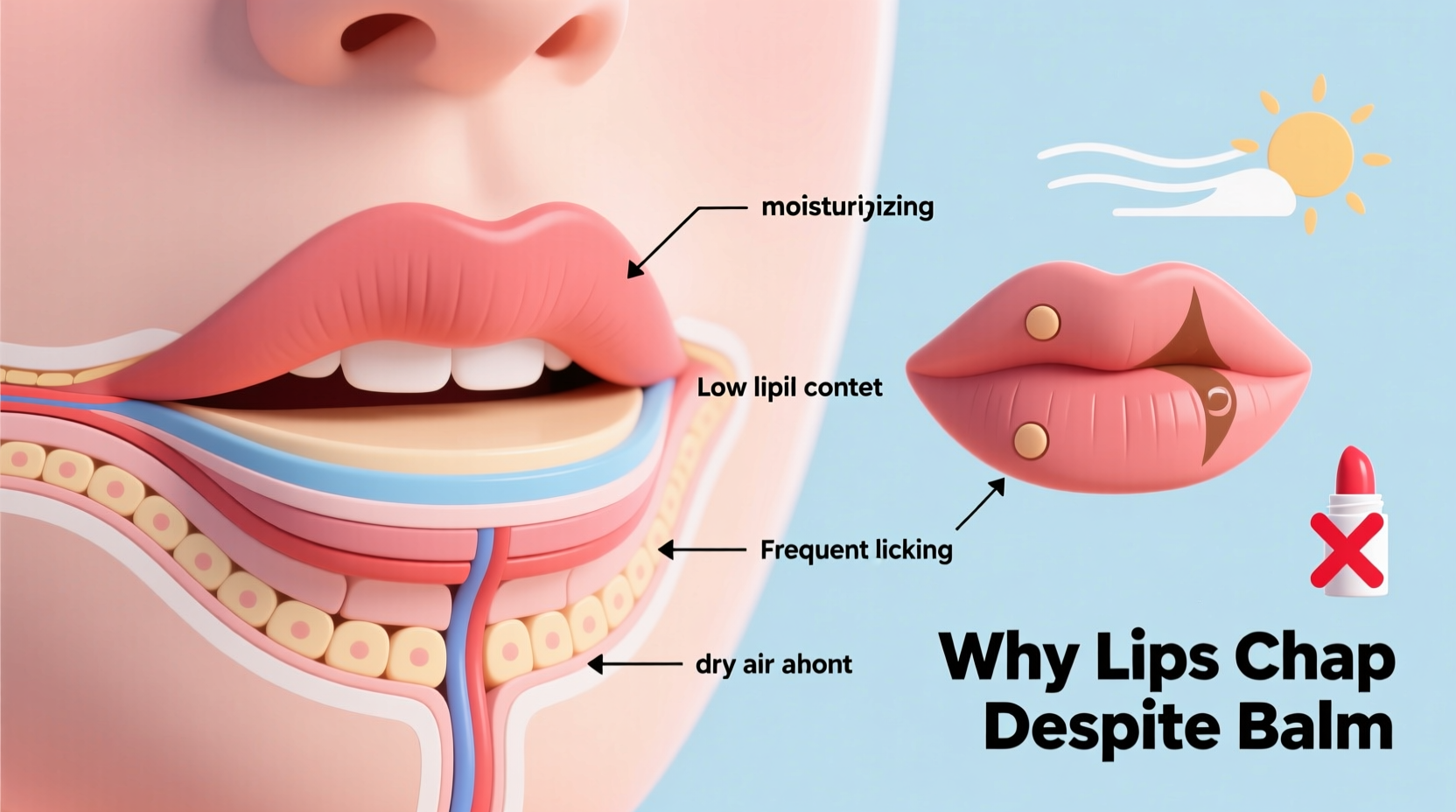
Lip balm is widely seen as the go-to solution for dry lips. But here's the truth: most balms don’t heal—they only offer temporary relief by creating a surface-level barrier. If your lips are constantly cracking, peeling, or feeling tight, relying solely on balm is like putting a bandage on a wound that keeps reopening.
Many popular lip balms contain ingredients such as menthol, camphor, phenol, or alcohol, which can actually irritate sensitive lip tissue over time. These additives create a cooling sensation that feels soothing at first but can lead to increased dryness and dependency. Some people develop a cycle where their lips feel drier right after the balm wears off, prompting them to reapply—reinforcing irritation instead of healing.
Hidden Causes of Persistent Chapped Lips
Even with consistent balm application, several factors can undermine your efforts. Understanding these root causes is essential for breaking the cycle of recurring chapping.
1. Dehydration (Internal and External)
While drinking water might seem unrelated to lip health, systemic dehydration directly affects your skin’s moisture levels—including your lips. Air conditioning, heated indoor spaces, low humidity, and high-altitude environments pull moisture from your skin. If you’re not hydrating adequately from within, no amount of topical balm will fully compensate.
2. Licking Your Lips
A surprisingly common habit—especially among people who feel their lips drying out—is licking them for instant moisture. Saliva contains enzymes like amylase and maltase designed to break down food, not protect delicate skin. When saliva evaporates, it leaves lips drier than before and can trigger micro-inflammation, leading to chronic irritation.
3. Allergic or Irritant Reactions
You could be allergic to an ingredient in your lip balm or another product touching your mouth—like toothpaste, lipstick, or facial cleanser. Common allergens include fragrances, lanolin, beeswax, and preservatives like parabens. Contact cheilitis, a form of lip inflammation caused by allergens, often presents as persistent scaling, redness, and fissures.
4. Nutritional Deficiencies
Lips are highly sensitive to nutrient imbalances. Deficiencies in B vitamins—particularly B2 (riboflavin), B3 (niacin), B6 (pyridoxine), and B12 (cobalamin)—are strongly linked to chapped, inflamed lips. Iron deficiency and zinc insufficiency can also impair skin repair and immune function, slowing healing.
5. Underlying Medical Conditions
Chronic lip chapping can sometimes signal a broader health issue. Conditions such as eczema, psoriasis, autoimmune disorders like Sjögren’s syndrome, or fungal infections like angular cheilitis (cracks at the corners of the mouth) require targeted treatment beyond moisturizing.
“Persistent chapping despite proper care should prompt a closer look. It could be a sign of vitamin deficiency, allergy, or systemic disease.” — Dr. Lena Patel, Board-Certified Dermatologist
Choosing the Right Lip Balm: What Works and What Doesn’t
Not all lip balms are created equal. The key is selecting one that supports healing rather than just providing momentary comfort. Here’s how to evaluate what’s in your tube.
| Effective Ingredients | Why They Work | Common Products That Contain Them |
|---|---|---|
| Petroleum jelly (e.g., Vaseline) | Creates an occlusive barrier that locks in moisture and protects healing skin | Vaseline Lip Therapy, Aquaphor Healing Ointment |
| Shea butter | Rich in fatty acids; deeply nourishes and reduces inflammation | Burt’s Bees Intense Hydration, Alba Botanica Soothing Lip Balm |
| Squalane | Mimics natural skin oils; lightweight yet highly moisturizing | The Ordinary 100% Plant-Derived Squalane, Biossance Squalane + Antioxidant Shield |
| Ceramides | Restore the skin’s natural lipid barrier, especially helpful for sensitive or eczema-prone lips | CeraVe Healing Ointment, Vanicream Lip Protectant |
Step-by-Step Guide to Heal Chronically Chapped Lips
If your lips haven’t responded to regular balm use, follow this seven-day recovery protocol to reset and repair.
- Stop using flavored or medicated balms. Switch to a fragrance-free, hypoallergenic ointment like plain petroleum jelly or a ceramide-based formula.
- Exfoliate gently once. After a warm shower, use a soft washcloth or a DIY scrub (mix honey with a pinch of sugar) to remove dead skin. Do not pick or peel.
- Hydrate internally. Drink at least 8–10 glasses of water daily and reduce diuretics like coffee and alcohol.
- Apply ointment liberally throughout the day. Reapply after eating, drinking, or being outdoors. Use a clean fingertip or applicator to avoid contamination.
- Wear a protective balm at night. Thicker formulas like Aquaphor or Lanolips work well overnight to accelerate healing.
- Avoid triggers. Stop licking your lips, and switch to a non-foaming, SLS-free toothpaste if you suspect irritation.
- Monitor progress. If there’s no improvement after 7–10 days, consider seeing a dermatologist to rule out infection or allergy.
Real-Life Example: Breaking the Balm Cycle
Sarah, a 34-year-old teacher from Colorado, used a mint-flavored lip balm up to ten times a day during winter. Despite constant application, her lips were raw, cracked, and occasionally bled. She assumed she wasn’t using enough product—until she saw a dermatologist.
After reviewing her routine, the doctor identified two issues: her balm contained menthol and phenol, both known irritants, and she had unknowingly been licking her lips due to nervous habits. Sarah switched to a plain petroleum jelly, applied it every few hours, and consciously stopped touching her mouth. Within five days, her lips began to heal. By day ten, they were smooth and pain-free for the first time in months.
Her experience highlights a crucial point: more balm isn’t always better. The right product—and eliminating hidden irritants—made all the difference.
Lifestyle Adjustments for Long-Term Lip Health
Preventing future flare-ups means going beyond the medicine cabinet. Small changes in daily habits can have a big impact.
- Use a humidifier at night. Dry indoor air strips moisture from skin, especially in winter. A bedroom humidifier maintains optimal humidity (40–60%).
- Protect lips outdoors. Wear a broad-spectrum SPF 30 lip balm during the day. UV exposure contributes to premature aging and chapping.
- Eat a balanced diet. Include foods rich in B vitamins (eggs, dairy, leafy greens, legumes), iron (red meat, spinach, lentils), and zinc (pumpkin seeds, shellfish, nuts).
- Check your oral care products. Sodium lauryl sulfate (SLS), found in many toothpastes, can cause irritation in sensitive individuals. Try switching to an SLS-free brand like Biotene or Sensodyne Pronamel.
- Manage stress-related habits. Lip biting, chewing, or licking often increase during periods of anxiety. Awareness and behavioral techniques (like keeping hands busy) can help reduce these actions.
Frequently Asked Questions
Can lip balm become addictive?
While not technically addictive, some balms create a psychological and physical dependency. Products with irritating ingredients (like menthol) cause temporary relief followed by rebound dryness, making users feel the need to reapply frequently. This cycle mimics dependence and can delay healing.
Is it safe to use Vaseline on lips every day?
Yes. Petroleum jelly is non-comedogenic, inert, and highly effective at sealing in moisture. It’s recommended by dermatologists for dry lips and poses minimal risk unless you have a rare sensitivity. Just ensure you're using a clean application method to avoid bacterial contamination.
How long does it take for severely chapped lips to heal?
With proper care—using gentle, occlusive products and avoiding irritants—most cases improve within 3–7 days. Deep cracks or chronic conditions may take 2–3 weeks. If there’s no improvement or signs of infection (yellow crust, pus, swelling), consult a healthcare provider.
Dermatologist-Approved Checklist for Healthy Lips
Follow this simple checklist to maintain soft, resilient lips year-round:
- ✅ Use a fragrance-free, non-irritating lip balm or ointment
- ✅ Apply SPF 30 lip protection during daytime sun exposure
- ✅ Drink plenty of water and maintain balanced nutrition
- ✅ Avoid licking, biting, or picking at your lips
- ✅ Replace old or contaminated lip products regularly
- ✅ Use a humidifier in dry environments
- ✅ Switch to SLS-free toothpaste if you have sensitive lips
- ✅ See a dermatologist if chapping persists beyond two weeks
Conclusion: Break the Cycle, Restore Comfort
Chapped lips that won’t heal despite constant balm use are more than a minor annoyance—they’re a signal that something in your routine or environment needs adjustment. Whether it’s an irritating ingredient, a nutritional gap, or a subconscious habit like lip licking, identifying the true cause is the first step toward lasting relief.
Healing doesn’t come from applying more product. It comes from smarter choices: choosing gentle, effective formulations, protecting your lips from environmental damage, and supporting your body’s natural repair processes from within. With consistent, informed care, soft, comfortable lips are not only possible—they’re sustainable.




 浙公网安备
33010002000092号
浙公网安备
33010002000092号 浙B2-20120091-4
Comments
No comments yet. Why don't you start the discussion?