
If you’ve ever dropped a Lush bath bomb into your tub only to watch it immediately sink like a stone, you’re not alone. These colorful, fragrant treats are designed to fizz, spin, and float—creating a sensory experience that’s as delightful visually as it is aromatically. When they fail to perform, it’s more than just disappointing; it can signal deeper issues in how they’ve been stored. The truth is, bath bomb buoyancy isn’t random—it’s directly tied to their composition and handling. And surprisingly, the most common culprit behind sinking bath bombs? Poor storage practices.
Bath bombs rely on a precise balance of ingredients—baking soda, citric acid, essential oils, and binders—to create their signature effervescence. But even slight changes in moisture exposure or air pressure during storage can compromise their internal structure, affecting density and gas retention. Over time, improper storage degrades performance, leading to flat fizz, weak scent, and yes—sinking. This article breaks down the science behind bath bomb floatation, identifies critical storage mistakes, and provides actionable solutions to keep your bath treats performing at their best.
The Science Behind Floating Bath Bombs
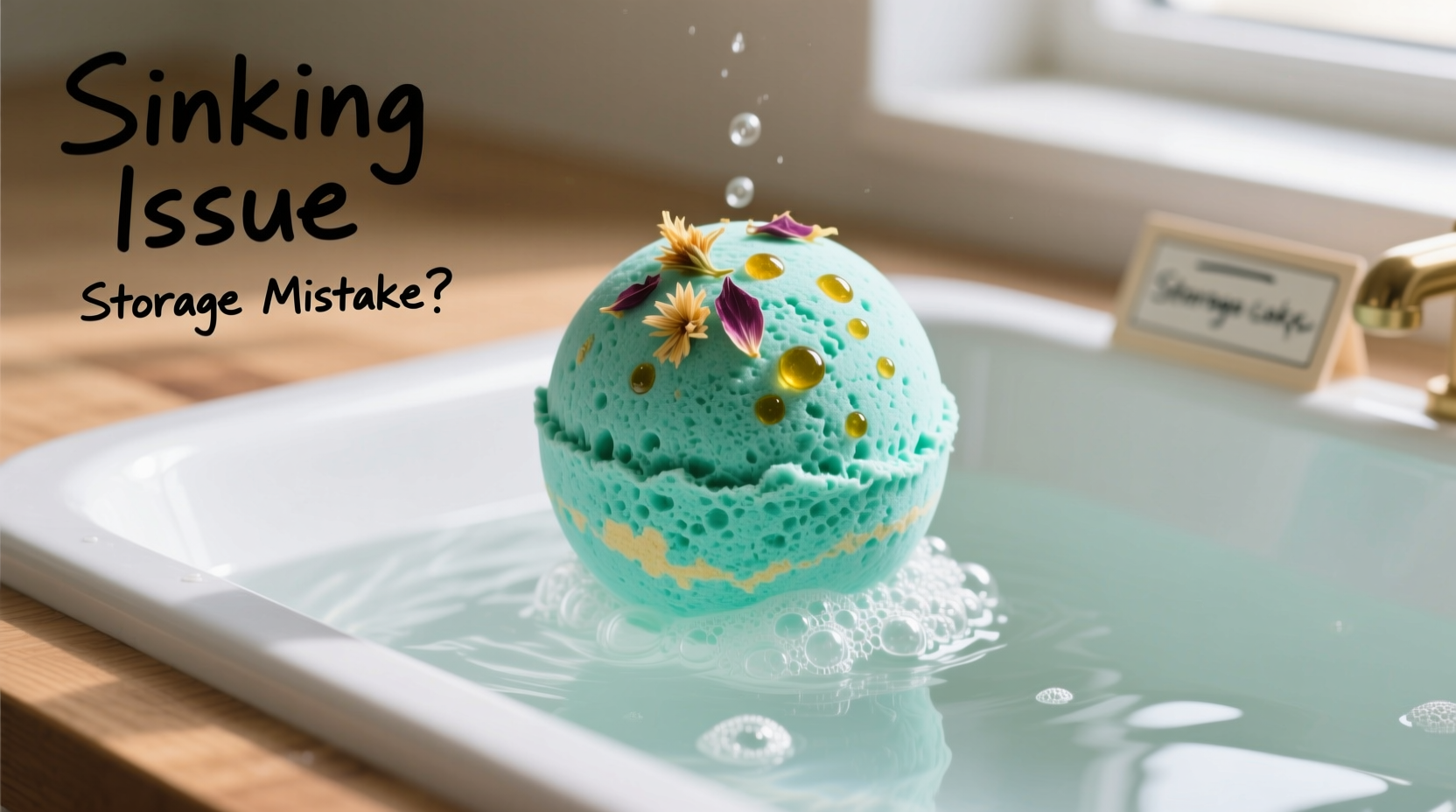
At first glance, a bath bomb floating seems trivial. But from a chemical and physical standpoint, buoyancy reveals a lot about product quality and integrity. For an object to float in water, its overall density must be less than that of the liquid it displaces. Bath bombs achieve this low density through a combination of dry ingredients and trapped air pockets formed during compression.
When properly made, bath bombs contain microscopic air bubbles embedded within the mixture. These voids reduce the overall mass per volume, allowing the bomb to remain above water initially. As the outer layer begins reacting with water—triggering the release of carbon dioxide—the fizzing action further enhances lift, often causing gentle spinning or bubbling movement across the surface.
However, if a bath bomb absorbs moisture during storage, those air pockets begin to collapse. Water acts as a premature activator, initiating minor reactions between baking soda and citric acid. This leads to partial neutralization before the bath even begins. The result? A denser, heavier product with diminished fizz and no chance of floating.
“Buoyancy in bath bombs is not cosmetic—it's diagnostic. A sinking bomb often indicates compromised formulation due to environmental exposure.” — Dr. Lena Patel, Cosmetic Chemist & Product Stability Analyst
Common Storage Mistakes That Cause Bath Bombs to Sink
Lush products are crafted for performance, but they aren’t indestructible. Their high concentration of natural ingredients makes them especially sensitive to environmental conditions. Here are the top five storage errors that lead to sinking bath bombs:
- Storing in humid environments (e.g., bathrooms): Steam from showers increases ambient moisture, which bath bombs absorb rapidly through porous surfaces.
- Leaving them unwrapped for extended periods: Even short exposure to room air can initiate slow degradation, particularly in coastal or rainy climates.
- Poor sealing after opening: Once removed from original packaging, bath bombs need airtight containers to prevent moisture ingress.
- Stacking or compressing them: Pressure can crush internal air pockets, increasing density and reducing buoyancy potential.
- Exposure to temperature fluctuations: Heat accelerates chemical instability, while cold can cause condensation when items are returned to warmer rooms.
Do’s and Don’ts of Bath Bomb Storage
| Do’s | Don’ts |
|---|---|
| Store in a cool, dark, dry place (like a linen closet) | Leave bath bombs exposed on open shelves |
| Use airtight containers (glass jars or vacuum-sealed bags) | Keep them in cardboard boxes without liners |
| Keep original plastic wrap until ready to use | Unwrap all bath bombs at once upon purchase |
| Place silica gel packets in storage containers | Store near windows, radiators, or sinks |
| Rotate stock using “first-in, first-out” method | Stack bath bombs tightly on top of each other |
Step-by-Step Guide to Proper Bath Bomb Storage
To preserve both performance and longevity, follow this systematic approach to storing your Lush bath bombs:
- Inspect Upon Arrival: Check each bath bomb for cracks, soft spots, or stickiness—signs of early moisture absorption.
- Preserve Original Packaging: If still wrapped in shrink film, leave it intact. This barrier is specifically designed to resist humidity.
- Select a Dry Storage Location: Choose a cupboard away from plumbing, heating units, and exterior walls where dampness may accumulate.
- Transfer to Airtight Containers: For long-term storage (over 2 weeks), move unused bombs into sealable containers. Glass jars with rubber gaskets work best.
- Add Desiccants: Include food-safe silica gel packs or reusable moisture absorbers to maintain low humidity inside the container.
- Avoid Frequent Handling: Oils from hands can transfer moisture and degrade surface integrity. Use clean tongs or gloves when retrieving bombs.
- Limit Exposure Time: Only remove a bath bomb from storage shortly before use. Do not leave it sitting out overnight.
This routine ensures maximum preservation of volatile compounds, structural porosity, and reaction efficiency—key factors in achieving that coveted float-and-fizz effect.
Real Example: How One Customer Fixed Her Sinking Bath Bomb Problem
Sarah, a self-described “bath enthusiast” from Portland, Oregon, noticed her Lush purchases were consistently underperforming. Despite buying seasonal favorites like *Angels on Bare Skin* and *Cosmic Cupcake*, she found they sank instantly and fizzed weakly. At first, she assumed batch inconsistency. But after tracking her habits, she realized she was storing her entire collection in a woven basket on her bathroom counter—just three feet from the shower.
Portland’s rainy climate meant indoor humidity regularly exceeded 70%. After switching to airtight mason jars with desiccant packs stored in a bedroom closet, Sarah reported immediate improvement. Her next bath bomb floated for over 90 seconds and produced twice the usual foam. She now rotates her stock monthly and keeps opened packages refrigerated in sealed containers—a trick she learned from a Lush staff member.
Her experience underscores a key point: environment matters more than people realize. Even premium products degrade when subjected to constant moisture cycles.
How Long Can You Store Bath Bombs Before They Lose Buoyancy?
Most Lush bath bombs have a shelf life of 14 months from manufacture, but optimal performance diminishes much sooner under poor conditions. In ideal storage—cool, dry, sealed—they typically retain full fizz and float capability for 6–8 months. Beyond that, gradual loss of volatile oils and slight acid-base reaction creep reduces reactivity.
In contrast, bath bombs kept in humid environments may lose buoyancy within 4–6 weeks. The timeline varies based on local climate, packaging integrity, and ingredient profile. For example, bombs containing clays or milks (like *Dream Cream*) tend to absorb moisture faster than simpler formulations.
Frequently Asked Questions
Can I revive a bath bomb that’s already sunk once?
No. Once a bath bomb has fully reacted and dissolved, it cannot be reused. However, if you have a partially used one that got wet but didn’t fully activate, allow it to dry completely in a well-ventilated area before sealing it again. Its performance will likely still be reduced.
Why do some bath bombs float even after being stored poorly?
Density varies by formula. Some bath bombs are intentionally made lighter with added foaming agents or hollow cores. While these may still float despite minor moisture exposure, their fizz duration and scent throw will almost always suffer.
Is it safe to store bath bombs in the fridge or freezer?
The refrigerator can work—if the bath bomb is double-wrapped in moisture-proof material. However, condensation upon removal can trigger instant activation. Freezing is not recommended, as ice crystal formation can fracture internal structure and accelerate breakdown.
Checklist: Optimize Your Bath Bomb Storage Today
- ✅ Remove bath bombs from the bathroom environment
- ✅ Keep original plastic wrapping intact until use
- ✅ Invest in airtight glass or hard-plastic containers
- ✅ Add silica gel or moisture-absorbing packets
- ✅ Label containers with purchase dates
- ✅ Avoid stacking—store in single layers if possible
- ✅ Monitor humidity levels in storage areas
- ✅ Use older stock first to minimize waste
Conclusion: Small Changes, Big Results in Bath Time Experience
The simple joy of watching a bath bomb dance across the water’s surface is more than aesthetic—it reflects the care you’ve taken in preserving its quality. Sinking bath bombs aren’t a flaw in the product; they’re a symptom of unseen environmental damage. By understanding how moisture, heat, and air affect these delicate creations, you gain control over their performance.
Implementing proper storage doesn’t require expensive equipment or complex routines. It starts with awareness—recognizing that even brief exposure to steam or humidity can alter chemistry—and ends with consistent habits that protect your investment. Whether you buy Lush bath bombs occasionally or stock up seasonally, treating them like the reactive, hygroscopic products they are will transform your bathing ritual.




 浙公网安备
33010002000092号
浙公网安备
33010002000092号 浙B2-20120091-4
Comments
No comments yet. Why don't you start the discussion?