
Solar-powered Christmas lights promise an energy-efficient, hassle-free way to brighten the holiday season. But if yours consistently fail after just two snowfalls, you're not imagining things — there's a logical explanation rooted in design limitations, environmental exposure, and maintenance gaps. Unlike traditional plug-in sets, solar lights rely on a delicate balance of sunlight, battery performance, and circuit protection. When snow enters the equation, that balance is easily disrupted. Understanding the technical and environmental factors at play can help you diagnose issues early, prevent future failures, and get more seasons out of your investment.
How Solar Christmas Lights Work: A Quick Overview
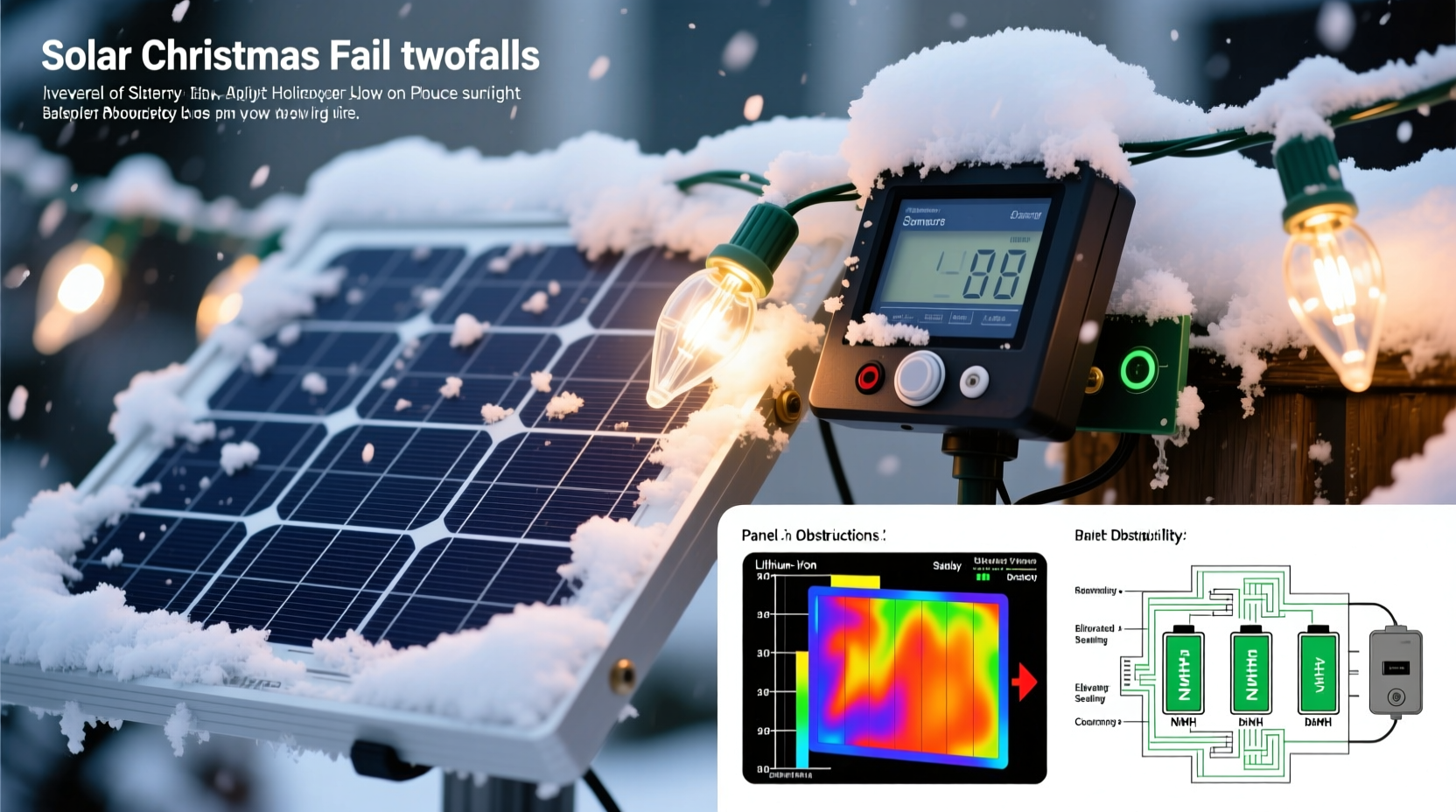
At their core, solar Christmas lights convert sunlight into electrical energy using a small photovoltaic (PV) panel, usually attached to the light string or mounted nearby. This energy charges a rechargeable battery — typically NiMH or lithium-ion — housed within the control box. Once darkness falls, a light-dependent resistor (LDR) or photoresistor detects the drop in ambient light and automatically turns the LEDs on. The cycle repeats daily: charge during daylight, discharge at night.
The efficiency of this system depends on several factors:
- Sunlight exposure: At least 6–8 hours of direct sunlight is ideal for full charging.
- Battery health: Rechargeable batteries degrade over time, especially in extreme temperatures.
- Water resistance: While many units claim \"weatherproof\" status, few are truly sealed against snowmelt infiltration.
- LED efficiency: LEDs consume little power, but longer strings demand more from the battery.
In theory, these lights should work all winter. In practice, snowfall introduces multiple failure points that manufacturers often underestimate.
Why Snowfall Causes Early Failure
Snow doesn’t just cover your roof or yard — it directly impacts every component of a solar lighting system. Here’s how two snowfalls can be enough to disable your display:
1. Blocked Solar Panels
The most immediate issue is coverage. Even a thin layer of snow prevents sunlight from reaching the PV cells. If the panel stays covered for more than a day or two, the battery doesn't recharge. After two consecutive snowfalls with insufficient melting periods in between, the battery drains completely. Without a fallback power source, the lights remain off even when skies clear.
2. Moisture Infiltration and Corrosion
Snow melts. That meltwater seeps into seams, cable joints, and battery compartments. Most solar light housings use basic IP44 or IP54 ratings — sufficient for rain, but inadequate against repeated freeze-thaw cycles. Water trapped inside expands when frozen, cracking plastic casings or breaking solder joints. Over time, this leads to short circuits or permanent corrosion of internal contacts.
3. Cold Temperatures Reduce Battery Efficiency
Lithium-ion and NiMH batteries lose capacity in cold weather. At 32°F (0°C), a typical solar light battery may deliver only 50–70% of its rated capacity. Below freezing, chemical reactions slow significantly, reducing both charging speed and discharge capability. Two snowfalls often mean sustained sub-zero conditions, pushing the system beyond its operational limits.
“Solar lights are designed for seasonal use, not sustained winter operation. Manufacturers rarely test below 23°F (-5°C), so real-world cold performance is often disappointing.” — Dr. Alan Reeves, Renewable Energy Systems Engineer
4. Poor Placement and Shading
Many users mount solar panels on north-facing eaves, under tree branches, or behind decorations — locations that receive minimal winter sun. Shorter daylight hours in December and January already limit charging windows. Add snow cover and shading, and the panel might receive less than two effective hours of sunlight per day. Chronic undercharging kills batteries prematurely.
Common Design Flaws in Budget Solar Lights
While some premium solar lights perform well in moderate winter climates, most budget-friendly holiday sets cut corners. These compromises become evident after minimal snow exposure:
| Component | Typical Quality | Winter Vulnerability |
|---|---|---|
| Solar Panel | Low-wattage (0.5–1W), untempered glass | Easily cracked by ice; inefficient in low light |
| Battery | Non-replaceable NiMH (often 600mAh or less) | Degrades quickly in cold; no user replacement option |
| Housing Seal | Rubber gasket or silicone drip | Fails after 1–2 freeze-thaw cycles |
| Wiring | Thin gauge, PVC-insulated | Becomes brittle in cold; prone to cracking |
| Controller Board | Basic LDR switch, no overcharge protection | Shorts when moisture enters |
This combination means that even minor snow events expose systemic weaknesses. Two snowfalls may not destroy the lights outright, but they initiate cascading failures: moisture ingress → corrosion → increased resistance → voltage drop → failed startup.
Step-by-Step Guide to Winter-Proofing Your Solar Lights
You don’t need to abandon solar lights altogether. With proactive care, many systems can survive multiple winters. Follow this timeline to maximize reliability:
- Before First Snow (Late Fall): Inspect all components. Check for cracks, loose connections, or swollen batteries. Clean the solar panel with a damp microfiber cloth. Ensure the mounting location receives maximum southern exposure.
- After Every Snowfall: Clear snow from the panel within 24 hours. Use a soft brush or gloved hand. Do not pour hot water — thermal shock can shatter the panel.
- Daily Monitoring: Verify lights turn on at dusk. If they flicker or stay off, check battery voltage with a multimeter (if accessible). Replace batteries if below 1.1V (NiMH) or 3.0V (lithium).
- Middle of Winter Maintenance: Remove lights during prolonged storms. Store them indoors for 2–3 days to warm up and dry out. This prevents deep discharge and condensation buildup.
- End of Season: Disassemble and store in a dry, temperature-stable area. Remove batteries to prevent leakage. Label cords to simplify next year’s setup.
Tips for Choosing Winter-Resilient Solar Lights
Not all solar Christmas lights are created equal. When shopping for replacements or upgrades, prioritize durability over decorative appeal:
- Look for IP65 or higher waterproof rating — indicates full dust sealing and protection against low-pressure water jets.
- Choose models with replaceable batteries. This extends lifespan and allows off-season storage.
- Select lights with a separate solar panel that can be mounted in a sunny, sheltered location, away from snow accumulation zones.
- Opt for lower LED counts per string (e.g., 50 instead of 200). Fewer LEDs reduce daily power draw, improving cold-weather runtime.
- Consider hybrid solar-wired options that allow plugging into an outlet during extended overcast periods.
Real-World Example: A Maine Homeowner’s Experience
Karen M., a homeowner in Bangor, Maine, installed a set of 100-light solar string lights in December 2022. The display worked perfectly for the first week, then failed after the second snowstorm. Assuming a defect, she replaced the set with an identical model. The same pattern repeated: two snowfalls, then silence.
After consulting a local electrician, she discovered the root cause: her solar panel was mounted under a pine tree, receiving less than three hours of indirect sunlight daily. Snow cover blocked what little light remained. The battery never charged above 40%, and freezing nights drained it completely.
Her solution? She repositioned the panel on a south-facing fence post, added a transparent polycarbonate shield angled to shed snow, and switched to a model with a removable lithium pack. The following winter, the lights operated for 45 consecutive nights, including six snowfalls.
Her experience underscores a key truth: solar lights don’t fail because of snow alone — they fail due to cumulative stress from poor placement, weak design, and lack of maintenance.
Checklist: Keep Your Solar Lights Running All Winter
Use this practical checklist to avoid premature failure:
- ✅ Mount solar panel in direct southern sunlight, elevated to avoid snowdrifts
- ✅ Clear snow from panel after every storm
- ✅ Inspect seals and cables monthly for cracks or moisture
- ✅ Replace old or swollen batteries before winter
- ✅ Use zip ties or clips to secure wires — flapping increases fatigue
- ✅ Bring lights indoors during multi-day blizzards
- ✅ Store properly after the holidays — don’t leave outside year-round
Frequently Asked Questions
Can I leave solar Christmas lights outside all winter?
You can, but it’s not recommended unless they’re high-quality, fully sealed, and regularly maintained. Most budget sets aren’t built for sustained winter exposure. Prolonged moisture, freeze-thaw cycles, and UV degradation will shorten their life. For best results, remove them during heavy storms and store between uses.
Why do my solar lights work in fall but not in winter?
Fall offers longer daylight hours, milder temperatures, and less precipitation. Solar panels charge efficiently, and batteries operate at full capacity. Winter brings shorter days, weaker sunlight, colder temps, and snow cover — all reducing energy input while increasing demand. The system simply can’t keep up without adjustments.
Can I replace the battery in my solar Christmas lights?
Some models allow battery replacement; most do not. Check the manufacturer’s specs or open the control box carefully. If it uses a standard AA or 18650 cell and has accessible screws, you can upgrade to a higher-capacity, cold-tolerant battery. Avoid mixing brands or chemistries.
Conclusion: Extend the Life of Your Solar Holiday Lights
Your solar Christmas lights stopping after two snowfalls isn’t bad luck — it’s a predictable outcome of design limitations meeting harsh winter reality. But that doesn’t mean you have to give up on solar decor. By understanding how snow affects charging, battery performance, and hardware integrity, you can take meaningful steps to improve reliability. Choose better products, install them wisely, and maintain them proactively. A few minutes of attention after each snowfall can add weeks to your display’s runtime.
With smarter habits and informed choices, solar-powered holiday lights can shine brightly throughout the season — even in snowy climates. Don’t let one failed season discourage you. Upgrade your approach, and your next winter display can be both festive and functional.




 浙公网安备
33010002000092号
浙公网安备
33010002000092号 浙B2-20120091-4
Comments
No comments yet. Why don't you start the discussion?