
Solar path lights are a sustainable, cost-effective way to illuminate walkways, gardens, and entry points. Their energy efficiency and easy installation make them popular among homeowners seeking ambiance and safety. But many users notice an unintended side effect: swarms of moths and other nocturnal insects hovering around the fixtures each evening. While harmless, these gatherings can be annoying, diminish light quality, and create messes over time. Understanding why this happens—and how to address it humanely—is key to enjoying both well-lit paths and a peaceful outdoor experience.
The attraction isn’t personal. Moths don’t seek out your garden because they like your taste in landscaping. Instead, their behavior is driven by biology and the specific characteristics of the light emitted by your solar fixtures. Fortunately, there are practical, non-toxic strategies to reduce moth activity without compromising illumination or ecological balance.
The Science Behind Moth Attraction to Light
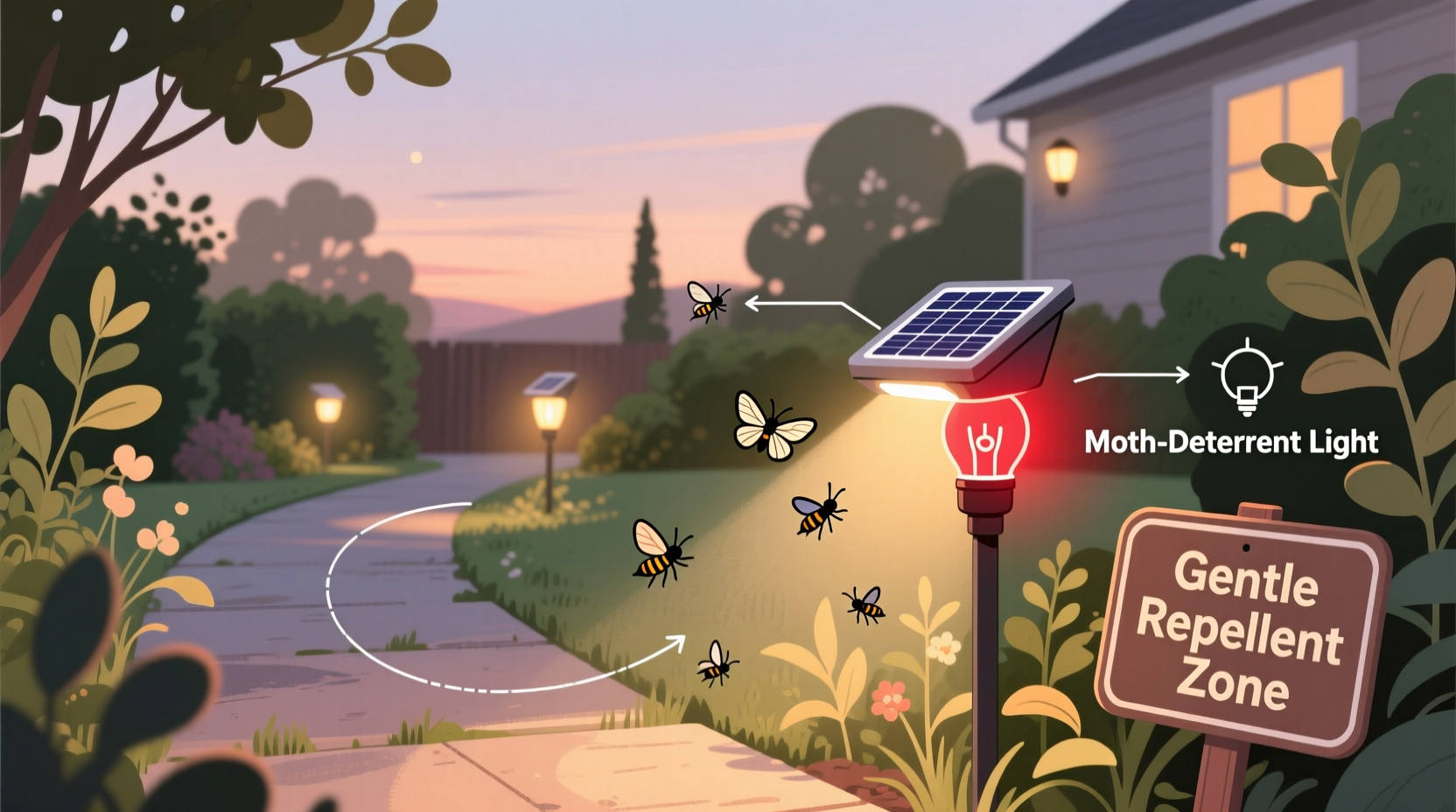
Moths and many other night-flying insects are naturally drawn to artificial light sources—a phenomenon known as positive phototaxis. Unlike humans, who use vision primarily for object recognition, insects rely on light cues for navigation. Many species orient themselves using celestial bodies like the moon and stars, which emit steady, distant light. Artificial lights, especially those rich in short-wavelength blue and ultraviolet (UV) light, disrupt this system.
When moths encounter bright, nearby lights, their internal navigation becomes confused. Instead of maintaining a straight flight path by keeping a constant angle to a faraway light source, they spiral toward the artificial one, often circling it endlessly. This disorientation explains why moths appear to “flock” to solar path lights even when no food or mates are present.
“Artificial lighting interferes with the natural orientation mechanisms of nocturnal insects. What seems like fascination is actually navigational collapse.” — Dr. Lena Pruitt, Entomologist at the National Institute of Urban Ecology
Additionally, some research suggests that shorter wavelengths—blue and UV—are particularly disruptive because they scatter more in the atmosphere, mimicking the sky’s polarization patterns that insects use during twilight navigation. Solar path lights, especially older models or budget brands, often emit a cool white or bluish glow that closely resembles these problematic wavelengths.
How Solar Path Light Design Influences Insect Behavior
Not all solar lights attract moths equally. The type of LED, color temperature, brightness level, and fixture design all influence how appealing a light is to insects. Most standard solar path lights use white LEDs with a color temperature between 5000K and 6500K—what’s commonly called “daylight white.” These high-Kelvin lights emit significant blue spectrum light, making them highly visible to insects.
In contrast, warmer-colored LEDs (2700K–3000K), which produce a soft yellow or amber glow, are far less attractive to moths. Studies have shown that insects are significantly less responsive to longer wavelengths in the red and amber range. This means switching to warmer-toned lights can dramatically reduce nighttime insect gatherings.
Brightness also plays a role. Overly bright fixtures cast wide halos of light that increase visibility to flying insects from greater distances. Dimmer, focused lighting reduces the “signal” that draws them in. Furthermore, upward-facing or exposed bulbs create broader light dispersion, while downward-shielded or recessed designs limit spillover and minimize skyglow—an added benefit for reducing light pollution.
Gentle, Effective Ways to Deter Moths Without Harm
Eliminating moths entirely isn't necessary—or desirable. As pollinators and part of the food chain, moths play an important ecological role. The goal should be to reduce nuisance-level concentrations around living spaces, not eradicate insects altogether. Here are several humane, environmentally sound methods to achieve that balance.
Switch to Amber or Yellow-Tinted Bulbs
The most effective long-term solution is changing the color of the light itself. Amber or yellow LED bulbs emit minimal blue and UV light, making them nearly invisible to many night-flying insects. Some manufacturers now offer “bug-resistant” solar lights specifically designed with warm amber LEDs. Even if you must retrofit existing fixtures, replacement bulbs or colored sleeves are available online.
Use Physical Barriers and Shields
Installing small wire mesh domes or transparent shields around the light can prevent moths from landing directly on the bulb while still allowing illumination. These barriers don’t block light output significantly but discourage insects from clustering close. Alternatively, repositioning lights slightly away from seating areas or high-traffic zones can reduce perceived annoyance without sacrificing functionality.
Add Natural Repellents Nearby
While not a direct fix for light attraction, planting certain herbs near your path lights can help repel moths and other insects. Lavender, mint, citronella, and marigolds release essential oils that many flying pests find unpleasant. Placing pots of these plants adjacent to light fixtures creates a subtle deterrent zone. Note: avoid spraying essential oils directly on lights, as moisture and residue can damage solar panels and electronics.
Adjust Placement and Height
Mounting lights lower to the ground—just a few inches above soil level—can reduce visibility to flying insects while still providing adequate path illumination. Ground-hugging light spreads sideways rather than upward, minimizing the vertical glow that acts as a beacon. Also consider spacing lights farther apart; dense clusters create overlapping light fields that amplify attractiveness.
“We installed amber-path lighting along our garden walkway last spring. Within a week, moth activity dropped by at least 80%. We still get occasional visitors, but nothing like before.” — Michael Tran, homeowner in Portland, OR
Step-by-Step Guide to Reducing Moth Activity Around Solar Lights
If you're currently dealing with persistent moth gatherings, follow this timeline to gradually reduce their presence using gentle, sustainable methods.
- Week 1: Audit Your Current Setup
Walk through your property at dusk and note which lights attract the most insects. Record the model, color temperature (if known), height, and surrounding vegetation. - Week 2: Replace or Retrofit High-Attraction Fixtures
Begin swapping out cool-white lights with warm amber alternatives. If full replacement isn’t feasible, apply amber tint films or covers to existing bulbs. - Week 3: Introduce Natural Deterrents
Plant potted citronella or lavender near problem areas. Avoid chemical sprays or electric zappers, which harm beneficial insects. - Week 4: Optimize Positioning
Reposition lights so they shine directly onto the path, not into open air. Lower mounting height where possible and ensure solar panels face south for optimal charging. - Ongoing: Monitor and Maintain
Clean solar panels monthly with a damp cloth to maintain efficiency. Observe seasonal changes—moth activity typically peaks in late summer and early fall.
Comparison Table: Light Types and Insect Attraction Levels
| Light Type | Color Temperature | Insect Attraction Level | Best For |
|---|---|---|---|
| Daylight White LED | 5000K–6500K | Very High | Task lighting (not recommended for pathways) |
| Cool White LED | 4000K–5000K | High | Driveways, utility areas |
| Warm White LED | 2700K–3000K | Moderate | General outdoor ambiance |
| Amber/Yellow LED | <2200K (non-standard) | Low | Patio edges, garden paths, eco-sensitive zones |
| Incandescent (rare in solar) | 2400K–2800K | Moderate-High | Decorative fixtures (less efficient) |
Frequently Asked Questions
Do solar path lights need UV light to charge?
No. Solar panels convert visible and infrared light into electricity—they do not require UV exposure. In fact, blocking UV emissions from the LED (by using amber bulbs) does not affect charging performance. The panel charges during daylight hours regardless of the bulb’s output spectrum.
Can I paint my solar light cover to make it warmer in tone?
It's not recommended. Painting plastic covers may cause cracking, reduce light transmission, or trap heat. Instead, use removable tinted sleeves made for outdoor lighting or replace the bulb/fixture with a warm-toned version.
Will turning off the lights eliminate moths completely?
Yes, but it defeats the purpose of having path lighting. A better approach is to use motion-sensor solar lights that only activate when movement is detected. This reduces overall light exposure and limits insect attraction to brief periods.
Action Checklist: Reduce Moth Attraction in 5 Steps
- ✅ Identify and label all current solar path lights by location and color temperature
- ✅ Purchase warm amber or bug-resistant replacement lights or covers
- ✅ Install companion plants like lavender or marigolds near high-traffic zones
- ✅ Reposition or shield lights to minimize upward glow and direct illumination onto paths
- ✅ Schedule quarterly maintenance to clean panels and inspect for wear
Conclusion: Balance Light and Nature Thoughtfully
Solar path lights don’t have to come at the cost of nightly moth invasions. By understanding the biological reasons behind insect attraction and making informed choices about lighting design, homeowners can enjoy safe, attractive outdoor spaces without disrupting local ecosystems. The shift toward warmer, amber-toned lighting not only reduces pest activity but also contributes to darker skies, supporting biodiversity and improving sleep hygiene for humans too.
This isn’t about winning a battle against nature—it’s about coexisting intelligently. With small adjustments in bulb choice, placement, and landscaping, you can keep your garden glowing softly while letting moths follow their ancient paths under the stars.




 浙公网安备
33010002000092号
浙公网安备
33010002000092号 浙B2-20120091-4
Comments
No comments yet. Why don't you start the discussion?