
In living rooms across North America, a curious ritual unfolds each December: hidden among the tinsel and ornaments, a green pickle dangles from a pine branch. It’s not edible, not decorative in the traditional sense—yet thousands of families include this oddity as part of their holiday tradition. The sight of a glass or plastic pickle nestled in the boughs of a Christmas tree raises eyebrows and sparks questions. Where did this custom come from? Is it German in origin, as many claim? And perhaps most importantly—should you start doing it too?
The answer isn’t as straightforward as the bright green color of the ornament itself. What appears to be a centuries-old European tradition may actually be more marketing myth than historical fact. Yet despite its murky beginnings, the Christmas pickle has carved out a beloved niche in modern holiday culture. Whether you're intrigued, amused, or skeptical, understanding the story behind the pickle—and its role in today’s celebrations—can help you decide if it deserves a spot on your own tree.
The Legend of the Christmas Pickle
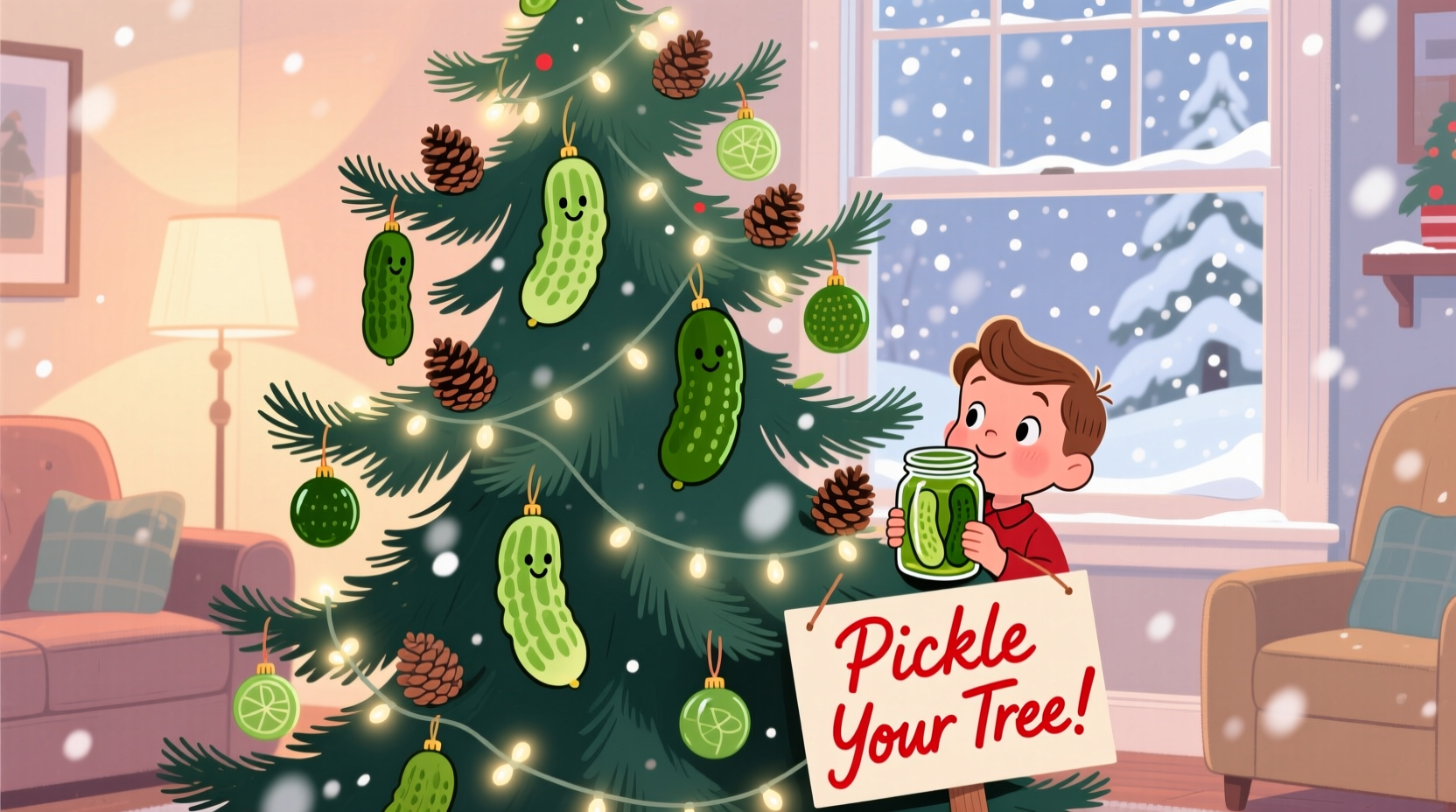
According to popular lore, the Christmas pickle tradition originated in Germany. The story goes that a Bavarian soldier, imprisoned during the Franco-Prussian War, was near death when he begged for one last request: a pickle. After eating it, he miraculously regained strength and survived. Upon returning home, he began placing a pickle on his Christmas tree as a symbol of gratitude for his second chance at life.
Another version claims that St. Nicholas once tested two children by offering them a pickle instead of sweets. One child accepted it with grace, proving their virtue, and was rewarded with gifts. The pickle thus became a token of humility and faith.
Yet here’s the twist: no verifiable evidence supports these tales in German cultural records. In fact, when asked, most Germans have never heard of the tradition. A 2018 survey by Deutsche Welle found that fewer than 3% of German households recognize the Christmas pickle as part of their customs. This suggests that the story may be more American invention than Old World heritage.
“The Christmas pickle is a classic example of invented tradition—a charming story layered onto an object that took on symbolic meaning over time.” — Dr. Lena Hoffmann, Cultural Anthropologist, University of Wisconsin-Madison
How the Pickle Made Its Way to America
If the tradition didn’t begin in Germany, how did it become so widespread in the U.S.? The answer lies in late 19th-century ornament manufacturing and clever marketing.
During the 1880s and 1890s, Americans imported most of their Christmas decorations from Germany, particularly from the town of Lauscha, a hub for glassblowing. Ornament makers produced a wide variety of whimsical shapes—fruits, vegetables, animals—many of which were not tied to any specific tradition. Among them was the pickle, likely created simply because it was a recognizable, colorful shape that could be easily blown from glass.
Retailers and catalog companies like F.W. Woolworth began selling these ornaments in the U.S., often inventing stories to make them more appealing. The narrative of the “German Christmas pickle” provided just enough exotic charm to sell the item. Over time, families adopted the ornament, creating their own rituals around it—especially the game of hiding the pickle for children to find on Christmas morning.
This blend of commercial influence and family storytelling transformed a novelty item into a cherished tradition, even if its roots are more economic than ethnic.
Why Families Love the Pickle Game Today
Regardless of its origins, the Christmas pickle has endured because it serves a real purpose in modern celebrations: fun, engagement, and family bonding. The most common practice involves hiding the pickle ornament deep within the tree on Christmas Eve. On Christmas morning, children search for it, and the first to find it receives an extra gift or the honor of opening the first present.
Psychologists note that such traditions create what they call “ritual scaffolding”—small, repeated actions that give holidays emotional weight and structure. The pickle hunt is simple, inclusive, and suspenseful, making it especially effective for younger kids who may struggle with the wait for Santa.
For some families, the pickle also represents humor and lightheartedness—an antidote to the stress and perfectionism that can accompany holiday preparations. It’s a reminder that Christmas doesn’t have to be flawless to be meaningful.
A Mini Case Study: The Miller Family Tradition
The Millers of Des Moines, Iowa, began using a pickle ornament in 2005 after receiving one as a gag gift. Initially, they hung it as a joke. But their youngest daughter, then five, was determined to find it every year. By 2007, the “Pickle Hunt” had become a central part of their Christmas morning routine.
“It started as a laugh,” says Sarah Miller, “but now it’s sacred. Our kids are 16 and 18 now, and they still race downstairs looking for it—even though they know where we usually hide it.”
The tradition has evolved: the finder gets to choose the Christmas playlist for the day. For the Millers, the pickle isn’t about history or authenticity—it’s about continuity, joy, and shared memories.
Should You Join the Pickle Tradition?
Whether or not to adopt the Christmas pickle depends less on historical accuracy and more on what you value in your holiday celebrations. Consider the following factors before hanging your first briny bauble.
Do’s and Don’ts of Adopting the Pickle
| Do | Don't |
|---|---|
| Use it as a fun game for kids | Treat it as a historically authentic German custom |
| Explain the story (real or invented) to add meaning | Force participation if it doesn’t fit your family’s vibe |
| Choose a durable, safe ornament | Hide it where small children might knock over the tree |
| Make it part of a larger set of traditions | Feel pressured to do it just because others do |
If you enjoy playful rituals and want to add a moment of surprise to Christmas morning, the pickle could be a delightful addition. But if your holidays lean toward minimalism, solemnity, or cultural authenticity, it might feel out of place.
There’s also a growing conversation about cultural appropriation versus appreciation. While the German connection appears fabricated, some argue that repackaging fictional European traditions can perpetuate stereotypes. Others counter that all traditions evolve, and new ones are born from creativity, not just lineage.
The key is intentionality. Ask yourself: Does this bring joy? Does it connect my family? Am I doing it mindlessly or meaningfully? Answering honestly will guide your decision.
How to Incorporate the Pickle Thoughtfully
If you decide to give the pickle a try, here’s a step-by-step approach to make it memorable and safe.
- Choose the right ornament: Select a pickle that’s easy to see but not so large it dominates the tree. Shatterproof plastic or acrylic works best for homes with kids.
- Create your own story: Whether you tell the soldier tale, invent a family legend, or admit it’s a silly American quirk, frame it in a way that resonates with your values.
- Hide it strategically: Place it high and deep in the branches—not so hard it frustrates, not so easy it’s boring. Avoid low branches where toddlers might pull it down.
- Add a reward: Offer a small prize—the first gift, hot cocoa-making rights, or choosing dinner. Keep it light and inclusive.
- Take a photo: Capture the moment someone finds it. These images become keepsakes that reinforce the memory over time.
Frequently Asked Questions
Is the Christmas pickle really a German tradition?
No credible evidence confirms that the Christmas pickle was ever a widespread tradition in Germany. Most Germans are unfamiliar with it. It likely originated as a marketing strategy by American retailers selling German-made glass ornaments.
At what age do kids typically enjoy the pickle hunt?
Children between the ages of 4 and 10 tend to enjoy the game most. Younger kids may need hints, while older ones might outgrow it—though many teens still participate for nostalgia or family bonding.
Can I make my own pickle ornament?
Absolutely. Craft stores sell green felt, foam, or clay supplies to create a DIY version. You can personalize it with faces, glitter, or family names. Handmade pickles often become the most treasured.
Final Thoughts: Tradition in the Making
The Christmas pickle isn’t ancient, authentic, or particularly elegant. But it doesn’t need to be. Its staying power comes not from pedigree, but from what it enables: laughter, anticipation, and a shared moment in the chaos of the holidays.
All traditions start somewhere. Some emerge from religion, others from folklore, and many—from moments of improvisation. The first person to hang a pickle on a tree probably didn’t think they were starting a movement. They were just having fun.
If you’ve ever rolled your eyes at the pickle—now might be the time to reconsider. Not because you “should,” but because sometimes the most meaningful rituals are the ones that don’t take themselves too seriously.
So go ahead: buy a pickle, hide it quietly, and watch what happens when someone shouts, “I found it!” That moment—brief, joyful, unscripted—is what the season is made of.




 浙公网安备
33010002000092号
浙公网安备
33010002000092号 浙B2-20120091-4
Comments
No comments yet. Why don't you start the discussion?