
Snoring is a common sleep disturbance affecting millions worldwide. While occasional snoring may be harmless, chronic snoring—especially when loud and disruptive—can signal underlying issues. One of the most consistent patterns observed in snorers is that they tend to snore significantly more when sleeping on their back. This isn't coincidence—it's rooted in human anatomy and the mechanics of airflow during sleep. Understanding why this happens opens the door to practical, effective solutions.
The supine position—lying flat on your back—alters the dynamics of the upper airway in ways that promote airway resistance and tissue vibration, both of which are central to snoring. By exploring the anatomical factors at play and pairing them with targeted interventions, individuals can dramatically reduce or even eliminate back-related snoring.
Anatomical Reasons for Increased Snoring on the Back
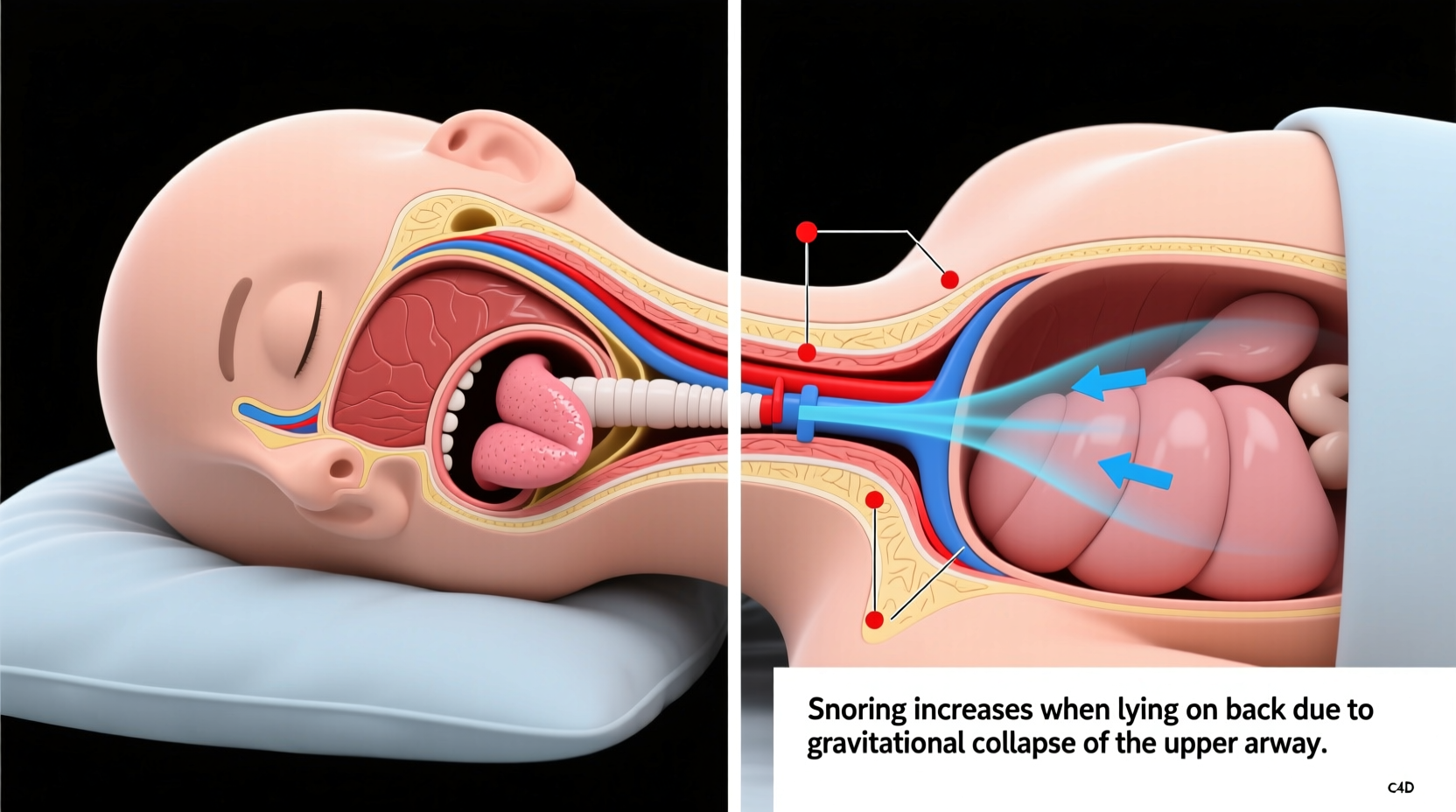
When you lie on your back, gravity acts directly on the soft tissues of the throat and neck. The tongue, soft palate, uvula, and pharyngeal walls all shift downward, narrowing the airway. This narrowing increases turbulence as air passes through during breathing, causing the tissues to vibrate—producing the sound we recognize as snoring.
The human airway is not rigid. It’s a flexible tube composed of muscles, cartilage, and soft tissue that extends from the nose and mouth down to the trachea. In an upright position, this passage remains relatively open. But during sleep, especially in deep stages, muscle tone decreases. When combined with a supine posture, the loss of muscular support allows the airway to collapse partially.
Research published in *The Journal of Laryngology & Otology* shows that airway cross-sectional area can decrease by up to 40% when transitioning from side-sleeping to back-sleeping. This reduction is particularly pronounced in individuals with naturally narrower airways, excess weight around the neck, or structural abnormalities such as enlarged tonsils or a deviated septum.
“Gravity is the silent accomplice in most cases of positional snoring. When lying supine, the tongue base falls posteriorly, obstructing airflow and setting the stage for snoring or even mild obstructive events.” — Dr. Nathan Shapiro, Sleep Medicine Specialist, Harvard Medical School
Key Anatomical Structures Involved
- Tongue Base: During sleep, reduced neuromuscular activity causes the tongue to relax and fall backward into the pharynx, especially in the supine position.
- Soft Palate and Uvula: These structures are highly flexible and prone to fluttering when airflow is turbulent, creating the characteristic snoring sound.
- Pharyngeal Walls: Excess tissue or fat deposits in the throat (common in overweight individuals) increase collapsibility.
- Nasal Passages: Nasal congestion or obstruction forces mouth breathing, which further destabilizes the airway and increases snoring likelihood.
Why Side Sleeping Reduces Snoring
Sleeping on your side—known as the lateral position—helps maintain a more open and stable airway. In this posture, gravity pulls the tongue and soft tissues sideways rather than directly backward, minimizing airway obstruction.
A 2020 study in *Sleep Medicine Reviews* found that over 60% of habitual snorers experienced at least a 50% reduction in snoring frequency and intensity when switching from back to side sleeping. For some, snoring ceased entirely.
The benefit isn’t just limited to noise reduction. Side sleeping also lowers the risk of apneic events in people with mild obstructive sleep apnea (OSA), making it a first-line behavioral intervention recommended by sleep clinics.
Challenges of Maintaining Side Sleep
While side sleeping is beneficial, many people naturally roll onto their back during the night, often without realizing it. This unconscious repositioning undermines the benefits unless preventive measures are taken.
Common reasons for rolling onto the back include:
- Uncomfortable mattress or pillow alignment
- Lack of physical barriers to movement
- Habitual sleep patterns developed over years
- Pregnancy (in later stages, side sleeping is medically advised but difficult to maintain)
Effective Solutions to Reduce Back-Related Snoring
Addressing back-related snoring requires a multi-pronged approach. While changing sleep position is foundational, combining it with lifestyle adjustments and tools enhances long-term success.
1. Positional Therapy Devices
These are designed to discourage back sleeping without fully disrupting sleep. Options include:
- Back pillows or wedge supports: Maintain a slight incline or angled posture.
- Bola bands or backpack techniques: Wearing a small object (like a tennis ball) sewn into the back of pajamas prevents comfortable back lying.
- Smart positional alarms: Wearable devices that vibrate gently when detecting supine positioning.
2. Elevate the Head of the Bed
Raising the head of the bed by 4–6 inches (using risers, not just extra pillows) helps reduce gravitational collapse of the airway. This gentle incline promotes better drainage and airway patency.
3. Address Nasal Congestion
Clear nasal passages encourage nasal breathing, which stabilizes the airway and reduces snoring. Consider:
- Nasal strips (e.g., Breathe Right) to widen nostrils
- Nasal sprays for allergies (use short-term to avoid rebound congestion)
- Saline rinses before bed to clear mucus
4. Lifestyle Modifications
Diet, exercise, and habits play a major role in snoring severity:
- Lose weight: Even a 5–10% reduction in body weight can significantly improve airway space.
- Avoid alcohol and sedatives: These relax throat muscles excessively, increasing collapse risk.
- Quit smoking: Smoking irritates the airway lining, causing swelling and increased mucus production.
Step-by-Step Guide to Stop Back Snoring
Follow this structured plan over 4 weeks to reduce or eliminate back-related snoring:
- Week 1: Assess Your Pattern
- Use a sleep tracking app or ask a partner to record when and how often you snore.
- Note whether snoring occurs mostly when on your back.
- Week 2: Begin Positional Training
- Sew a tennis ball into the back of an old T-shirt or use a commercial anti-snore shirt.
- Place a firm pillow behind your back to prevent rolling.
- Week 3: Optimize Sleep Environment
- Elevate the head of your bed using risers.
- Use a supportive pillow that keeps your neck aligned.
- Run a humidifier to keep air moist and reduce throat irritation.
- Week 4: Implement Lifestyle Changes
- Eliminate alcohol within 3 hours of bedtime.
- Begin a light exercise routine (e.g., walking 30 minutes daily).
- Practice nasal breathing exercises or consider myofunctional therapy.
Do’s and Don’ts: Quick Reference Table
| Do | Don’t |
|---|---|
| Sleep on your side or slightly elevated | Sleep flat on your back without intervention |
| Treat nasal allergies or congestion | Ignore chronic nasal blockage |
| Maintain a healthy weight | Consume alcohol before bed |
| Use a supportive, contoured pillow | Over-stack pillows under your head |
| Stay hydrated during the day | Smoke or vape, especially at night |
Mini Case Study: Mark’s Journey from Chronic Snorer to Quiet Sleeper
Mark, a 48-year-old accountant, had been snoring loudly for over a decade. His wife reported that the snoring was almost exclusive to nights when he slept on his back. After a home sleep test, Mark was diagnosed with mild obstructive sleep apnea, primarily positional.
His sleep specialist recommended starting with positional therapy. Mark began using a wearable alarm that vibrated when he rolled onto his back. He also elevated his bed and eliminated evening wine consumption. Within three weeks, his partner noticed a dramatic drop in snoring. After six weeks, a follow-up assessment showed a 70% reduction in respiratory events, all without CPAP.
“I didn’t realize how much my sleep position mattered,” Mark said. “Changing one habit unlocked better rest for both of us.”
Frequently Asked Questions
Can snoring on your back lead to sleep apnea?
Yes. Back sleeping increases the risk of partial or complete airway obstruction, which can result in obstructive sleep apnea (OSA). People who only experience breathing disruptions while on their back are classified as having \"positional OSA,\" a subtype that often responds well to positional therapy.
Are anti-snoring pillows effective?
Some anti-snoring pillows can help by supporting proper neck alignment and encouraging side sleeping. However, results vary. Look for pillows with cervical support and a design that discourages back sleeping. They work best when combined with other strategies like weight management and nasal clearance.
Is it possible to stop snoring without medical devices?
For many, yes—especially if snoring is primarily positional. Lifestyle changes, positional training, and environmental adjustments can eliminate or greatly reduce snoring. However, if snoring is accompanied by gasping, choking, or daytime fatigue, consult a healthcare provider to rule out sleep apnea.
Expert Insight: The Role of Myofunctional Therapy
Emerging research supports the use of oropharyngeal exercises—also known as myofunctional therapy—to strengthen the muscles of the airway. A 2015 meta-analysis in *Sleep* found that participants who performed daily tongue, palate, and facial exercises for 3 months reduced snoring frequency by 39% and improved symptoms of mild OSA.
“Just like any muscle, the tongue and soft palate respond to training. Strengthening these muscles improves airway stability, especially in the supine position.” — Dr. Samantha Carter, Sleep Researcher, University of Pennsylvania
Conclusion: Take Control of Your Sleep Quality
Snoring while on your back is not inevitable—it’s a predictable interaction between anatomy and gravity. By understanding the mechanisms behind it, you gain the power to intervene. Simple changes like adjusting sleep position, improving nasal airflow, and modifying lifestyle habits can yield profound improvements in sleep quality and relationship harmony.
Start tonight. Try sewing a tennis ball into your pajamas, elevate your bed, or simply place a pillow behind your back. Track your progress, stay consistent, and don’t hesitate to seek professional guidance if snoring persists or is accompanied by breathing pauses.




 浙公网安备
33010002000092号
浙公网安备
33010002000092号 浙B2-20120091-4
Comments
No comments yet. Why don't you start the discussion?