
Waking up at 3 a.m. is a surprisingly common experience. You drift off to sleep without issue, only to jolt awake in the dead of night—often just before dawn—with your mind suddenly alert, racing, or burdened by unshakable thoughts. For many, this isn't a one-off occurrence but a recurring pattern that disrupts sleep quality and daily energy levels. While it might feel like an isolated quirk, science reveals that waking at 3 a.m. is often rooted in a complex interplay between biology, circadian rhythms, and psychological factors—especially stress. Understanding why this happens is the first step toward reclaiming deeper, more restorative sleep.
The Science Behind Sleep Cycles and Nighttime Awakenings
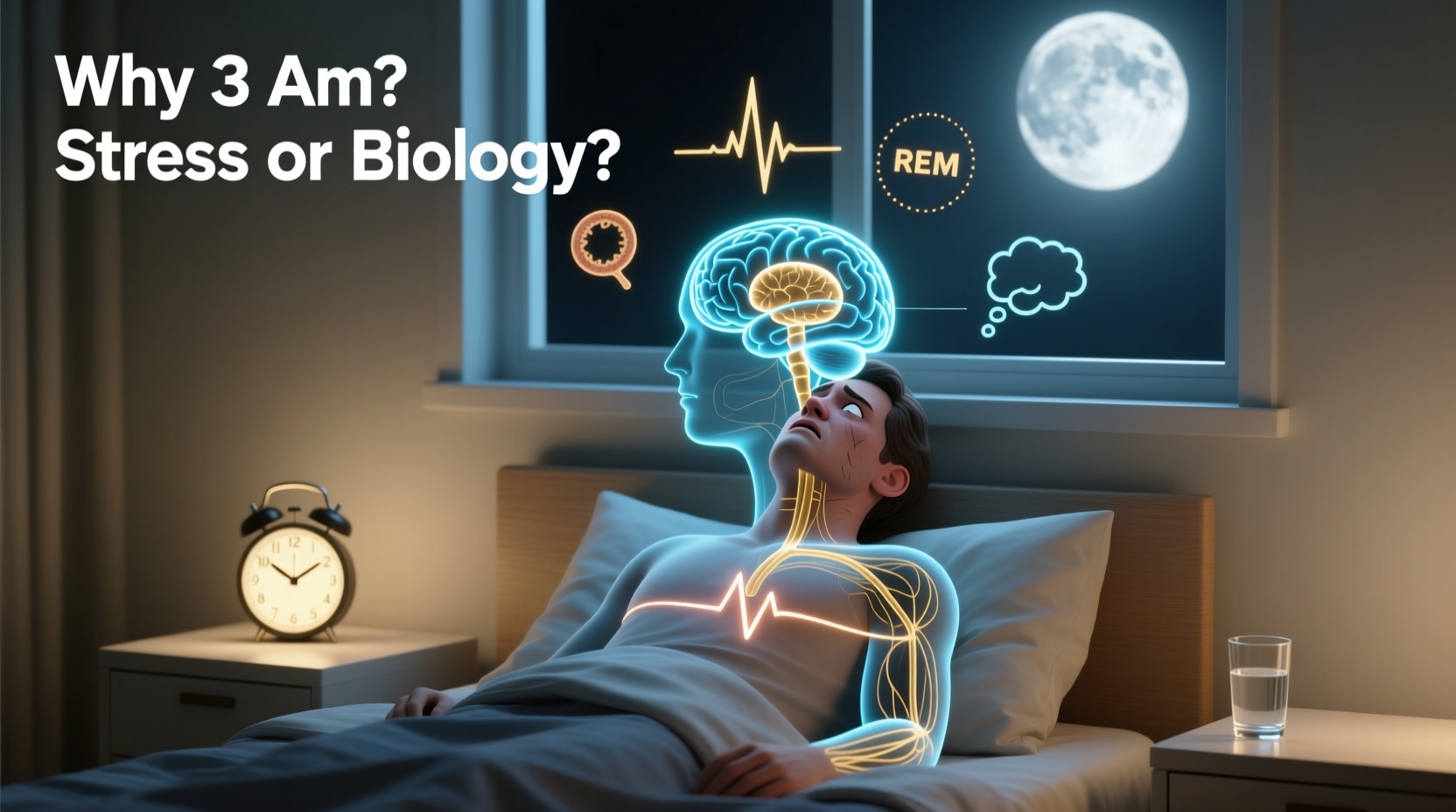
Sleep is not a uniform state of unconsciousness. Instead, it moves through predictable cycles lasting approximately 90 minutes each. These cycles consist of four stages: three non-REM (NREM) stages and one REM (rapid eye movement) stage. The NREM phases progress from light sleep (Stage 1) to deep, restorative slow-wave sleep (Stage 3), followed by REM sleep, where dreaming occurs and brain activity resembles wakefulness.
During the first half of the night, your body prioritizes deep NREM sleep, which supports physical recovery, immune function, and hormone regulation. As the night progresses, REM periods become longer and more frequent, peaking in the final third of your sleep window. This shift explains why you're more likely to remember dreams upon morning awakening.
It’s during the transition between these cycles—particularly between REM and lighter NREM stages—that brief awakenings are normal. Most people don’t recall these micro-arousals because they fall back asleep quickly. However, if something interrupts re-entry into sleep—such as stress, environmental noise, or hormonal shifts—you may become fully conscious, often around 3 a.m.
Circadian Rhythms and the 3 a.m. Wake-Up Call
Your internal biological clock, known as the circadian rhythm, governs when you feel alert or drowsy over a 24-hour period. This rhythm is regulated by the suprachiasmatic nucleus (SCN) in the brain, which responds primarily to light exposure. When functioning optimally, it aligns your sleep-wake cycle with natural daylight patterns.
However, modern lifestyles often disrupt this rhythm. Artificial lighting, late-night screen use, irregular work hours, and inconsistent sleep schedules can desynchronize your internal clock. One consequence is fragmented sleep architecture, where the timing and depth of sleep stages are altered.
At around 3 a.m., core body temperature begins to rise slightly, cortisol levels start increasing in preparation for waking, and melatonin—the sleep-promoting hormone—begins to decline. For individuals already experiencing light or unstable sleep, this physiological shift can trigger full awakening. Because the brain is transitioning into a more alert state in anticipation of morning, returning to sleep becomes harder once consciousness returns.
“Even slight misalignments in circadian timing can amplify nighttime awakenings, especially in people under chronic stress.” — Dr. Lena Torres, Sleep Neurologist, Stanford Center for Sleep Sciences
Stress, Anxiety, and the Mind’s Midnight Activity
If biology sets the stage, stress often plays the leading role in 3 a.m. awakenings. During deep sleep, emotional processing occurs in the brain, particularly in regions tied to memory and fear response. But when stress hormones like cortisol and adrenaline remain elevated due to ongoing anxiety or unresolved worries, the brain stays partially vigilant—even during sleep.
At 3 a.m., with external stimuli minimal and mental defenses lowered, intrusive thoughts often surface. This phenomenon, sometimes called “midnight rumination,” involves repetitive, negative thinking about past events, future concerns, or existential questions. Unlike daytime worrying, nighttime rumination feels more intense because there are no distractions to buffer its impact.
Chronic stress also alters sleep architecture. It reduces time spent in deep NREM sleep and increases REM density—the frequency of rapid eye movements during REM—which correlates with emotional arousal. Over time, this creates a feedback loop: poor sleep heightens stress sensitivity, and heightened stress further degrades sleep quality.
- Work-related pressure or financial insecurity
- Relationship conflicts or social isolation
- Health anxieties or undiagnosed mental health conditions
- Overstimulation from digital media before bedtime
Mini Case Study: Sarah’s 3 a.m. Pattern
Sarah, a 38-year-old project manager, began waking consistently at 3:15 a.m. six months after taking on a high-pressure leadership role. Initially, she dismissed it as temporary fatigue. But over time, the awakenings became ritualistic—she’d lie awake for hours, replaying meetings, anticipating deadlines, and questioning her performance. Despite going to bed at 10 p.m., she averaged only five hours of actual sleep.
After consulting a sleep specialist, Sarah learned that her cortisol levels spiked abnormally during the second half of her sleep cycle. Cognitive behavioral therapy (CBT) for insomnia, combined with mindfulness practices and a structured wind-down routine, gradually restored her ability to stay asleep. Within ten weeks, her 3 a.m. awakenings ceased entirely.
Biological Factors Beyond Stress
While stress is a major contributor, several other biological and medical conditions can explain early awakenings:
- Hormonal fluctuations: Menopause, thyroid disorders, and adrenal imbalances can disrupt sleep regulation.
- Blood sugar drops: Hypoglycemia during the night may trigger adrenaline release, causing sudden wakefulness.
- Sleep apnea: Brief breathing interruptions lead to micro-arousals, often unnoticed but sufficient to fragment sleep.
- Gastroesophageal reflux (GERD): Lying flat can worsen acid reflux, prompting awakenings due to discomfort.
- Aging: Older adults naturally spend less time in deep sleep and more in lighter stages, making awakenings more likely.
Additionally, certain medications—including antidepressants, beta-blockers, and corticosteroids—can interfere with sleep continuity. If you’ve recently started a new prescription and noticed changes in sleep, discuss timing and side effects with your healthcare provider.
Do’s and Don’ts: Managing 3 a.m. Wakefulness
| Do’s | Don’ts |
|---|---|
| Maintain a consistent sleep schedule—even on weekends | Check your phone or watch the time when awake |
| Create a calming pre-sleep routine (reading, gentle stretching) | Consume caffeine after 2 p.m. |
| Use blackout curtains and white noise to optimize sleep environment | Lie in bed frustrated for over 20 minutes |
| Practice relaxation techniques like diaphragmatic breathing | Eat heavy meals within three hours of bedtime |
| Expose yourself to bright morning light to strengthen circadian rhythm | Use alcohol to fall asleep—it fragments later sleep stages |
Step-by-Step Guide to Reducing 3 a.m. Awakenings
Addressing chronic early awakenings requires both behavioral adjustments and environmental optimization. Follow this seven-day reset plan to begin restoring healthy sleep:
- Day 1–2: Track Your Patterns
Keep a sleep journal noting bedtime, wake times, perceived stress levels, and any nighttime awakenings. Identify potential triggers. - Day 3: Optimize Light Exposure
Spend at least 15–30 minutes outside in the morning sunlight. Dim indoor lights in the evening and avoid blue light from screens after 9 p.m. - Day 4: Establish a Wind-Down Routine
Begin a 45-minute pre-sleep ritual: warm shower, herbal tea (like chamomile), and reading a physical book. - Day 5: Manage Evening Nutrition
Avoid large meals, spicy foods, and sugary snacks close to bedtime. A small protein-rich snack may help stabilize blood sugar overnight. - Day 6: Practice Mindfulness or Breathing Exercises
Try the 4-7-8 technique: inhale for 4 seconds, hold for 7, exhale slowly for 8. Repeat four cycles to calm the nervous system. - Day 7: Evaluate Your Sleep Environment
Ensure your bedroom is cool (60–67°F), dark, and quiet. Consider using earplugs or a fan for ambient sound.
Frequently Asked Questions
Is waking up at 3 a.m. a sign of depression?
Early morning awakening—waking significantly earlier than desired and being unable to return to sleep—is a recognized symptom of depression, particularly in older adults. It’s often accompanied by low mood, fatigue, and difficulty concentrating. If this pattern persists alongside emotional symptoms, consult a mental health professional.
Can diet affect whether I wake up at 3 a.m.?
Yes. Consuming caffeine late in the day, drinking alcohol, or eating high-sugar meals in the evening can destabilize blood sugar and disrupt sleep architecture. Skipping dinner or severely restricting calories may also cause nocturnal hypoglycemia, triggering adrenaline release and wakefulness.
Are there spiritual or cultural beliefs about waking at 3 a.m.?
In some traditions, 3 a.m. is referred to as the “witching hour” or the “hour of prayer.” Certain belief systems suggest heightened spiritual activity occurs at this time. While these ideas aren’t scientifically supported, they reflect widespread cultural recognition of this peculiar waking phenomenon. From a psychological standpoint, such interpretations may amplify anxiety in susceptible individuals, reinforcing the wakefulness pattern.
Conclusion: Reclaiming Rest Through Awareness and Action
Waking up at 3 a.m. is rarely random. It’s typically the result of intersecting forces—your body’s natural rhythms, hormonal shifts, and the weight of psychological stress. While occasional awakenings are normal, repeated disruptions signal a need for attention. Ignoring them can lead to cumulative sleep debt, reduced cognitive function, and increased risk of chronic health issues.
The good news is that most causes of 3 a.m. wakefulness are modifiable. By aligning your lifestyle with your biology, managing stress proactively, and creating a sleep-supportive environment, you can break the cycle. Start small: adjust your light exposure, establish a consistent bedtime, and practice mental unwinding techniques. Progress may be gradual, but each step brings you closer to uninterrupted, restorative sleep.




 浙公网安备
33010002000092号
浙公网安备
33010002000092号 浙B2-20120091-4
Comments
No comments yet. Why don't you start the discussion?