
As holiday seasons come around, millions of homes light up with festive displays. Yet, for many, the joy of decorating is interrupted by an odd, persistent buzzing sound coming from their Christmas lights. While it might seem like a minor annoyance at first, that hum could signal a deeper issue—especially within the transformer. Understanding why this happens and how to spot a failing transformer isn’t just about peace and quiet; it’s also critical for safety, energy efficiency, and protecting your investment in seasonal décor.
The source of buzzing in Christmas lights often lies in the electrical components, particularly the transformer—the small box that converts household voltage into a safer, lower level suitable for decorative lighting. When these components malfunction or degrade over time, they can produce audible noise, flickering lights, overheating, or even pose fire risks. This article breaks down the science behind buzzing lights, explains how transformers work, and provides actionable steps to diagnose and resolve issues before they escalate.
How Transformers Work in Christmas Lighting Systems
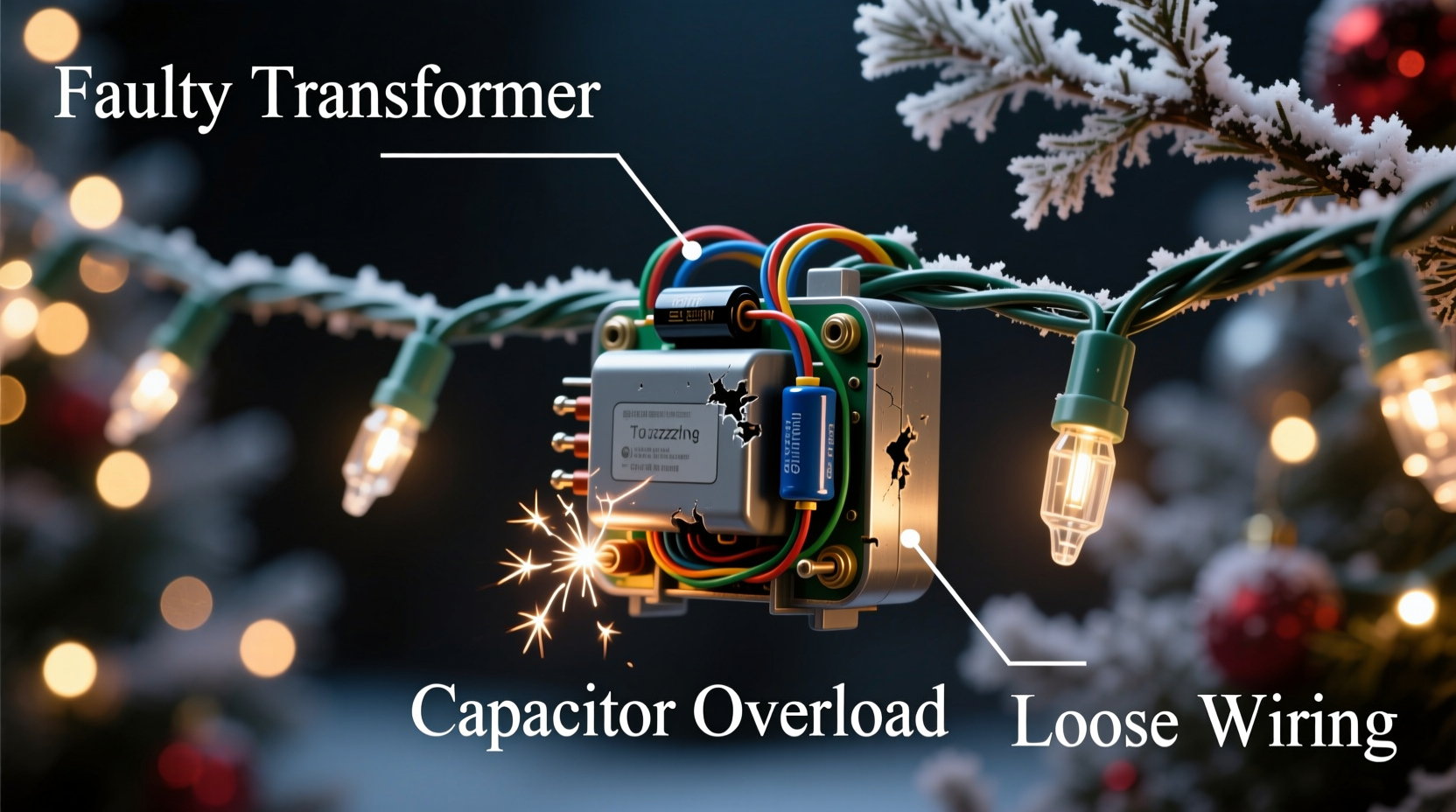
Most modern outdoor and indoor Christmas lights operate on low-voltage systems, typically 12V or 24V, to reduce the risk of electric shock and make installation safer. The transformer's job is to step down standard household voltage (120V in North America, 230V in Europe) to this lower level. It does so using electromagnetic induction between two coils: the primary coil connected to the mains supply and the secondary coil delivering reduced output.
In traditional magnetic transformers, this process involves alternating current constantly magnetizing and demagnetizing a laminated iron core. As electricity flows through the windings, the core expands and contracts slightly due to magnetostriction—a physical phenomenon where magnetic materials change shape under changing magnetic fields. This subtle vibration produces a low-frequency hum, usually around 50–60 Hz, depending on your region’s power frequency.
While a faint hum is normal in older magnetic models, excessive buzzing indicates mechanical stress, poor manufacturing, loose windings, or core degradation. Newer LED string lights often use electronic (switching) transformers, which operate at much higher frequencies (above 20 kHz), making them nearly silent. However, if poorly designed or damaged, even electronic units can emit high-pitched whines or erratic buzzing.
“Any noticeable increase in noise from a previously quiet transformer should be taken seriously—it may indicate internal damage or insulation breakdown.” — Dr. Alan Reeves, Electrical Safety Engineer at the National Decorative Lighting Institute
Common Causes of Buzzing in Christmas Lights
Buzzing doesn't always mean immediate danger, but it shouldn't be ignored. Several factors contribute to abnormal sounds:
- Loose Core Laminations: In magnetic transformers, thin metal sheets are stacked to form the core. Over time, vibrations can loosen these layers, causing them to rattle audibly when energized.
- Overloading: Connecting too many light strings to a single transformer exceeds its rated capacity, leading to overheating and increased magnetic flux, amplifying the hum.
- Poor Quality Components: Cheaply made transformers often skip proper varnish coating or clamping mechanisms, allowing internal parts to vibrate freely.
- Dampness or Corrosion: Outdoor transformers exposed to moisture may develop rust on internal components, disrupting smooth magnetic flow and increasing noise.
- Aging Insulation: As transformers age, wire insulation degrades, potentially causing partial short circuits or arcing, both of which generate buzzing or crackling sounds.
- Electrical Interference: Nearby motors, dimmer switches, or incompatible controllers can introduce harmonic distortions into the circuit, making the transformer resonate abnormally.
Step-by-Step Guide to Identify a Faulty Transformer
If your Christmas lights are buzzing louder than usual—or worse, accompanied by flickering, warmth, or burning smells—it’s time to investigate. Follow this systematic approach to assess the health of your transformer:
- Unplug Immediately: Before handling any electrical device, disconnect it from the power source to avoid shocks.
- Inspect for Physical Damage: Look for cracks, bulges, melted plastic, or discoloration on the casing. Any deformation suggests overheating.
- Check Connections: Examine input and output terminals for corrosion, frayed wires, or loose plugs. Tighten connections only after confirming the unit is unplugged.
- Smell Test: A distinct burnt odor, especially near the transformer, indicates internal component failure such as overheated windings or failed capacitors.
- Feel for Heat: After plugging in and running for 10–15 minutes (under supervision), touch the casing. Warmth is expected, but extreme heat means inefficiency or overload.
- Test Voltage Output: Using a multimeter set to AC voltage, measure the output terminals. Compare readings to the labeled specification. A deviation greater than ±10% signals malfunction.
- Listen Closely: Place your ear near (but not touching) the transformer while powered. Intermittent buzzing, sizzling, or loud humming points to instability.
- Isolate the Load: Disconnect all light strings and reconnect one at a time. If buzzing starts only after adding a specific set, the issue may lie in the wiring of that string—not the transformer.
This methodical inspection helps pinpoint whether the problem stems from the transformer itself, external loads, or environmental conditions.
Do’s and Don’ts: Managing Transformers Safely
| Do | Don’t |
|---|---|
| Use transformers rated for outdoor use when installing outside | Install indoor-rated transformers outdoors |
| Keep ventilation clear around the transformer | Bury or cover the unit with snow, mulch, or fabric |
| Replace units showing signs of wear annually | Reuse visibly damaged or excessively hot transformers |
| Store in dry containers during off-seasons | Leave plugged in unattended for days |
| Match LED lights with compatible drivers | Use incandescent-rated transformers with LED strings without verification |
Real Example: When Buzzing Led to a Near-Miss Incident
In December 2022, homeowner Maria Thompson in Portland, Oregon noticed a growing buzz from her front-yard light display. Initially dismissing it as seasonal “quirkiness,” she continued using the setup for several nights. One evening, her son remarked that the transformer felt unusually hot. Concerned, Maria unplugged it and called an electrician.
Upon inspection, the technician found that the transformer had been overloaded—originally rated for 100W, it was powering 180W of mixed LED and incandescent strings. Internal insulation had begun to char, and one winding showed signs of arcing. Moisture ingress through a cracked seal worsened the condition. The electrician emphasized that another few days of operation could have led to smoke or fire, especially given nearby pine branches and dry mulch.
Maria replaced the unit with a properly sized, UL-listed outdoor model and rewired her display in parallel circuits. Since then, her holiday setup has run silently and safely for two consecutive years.
Preventive Maintenance Checklist
To ensure long-term reliability and eliminate unexpected failures, follow this annual maintenance checklist before deploying your Christmas lights:
- ✅ Unpack and visually inspect all transformers for damage
- ✅ Clean dust and debris from vents and surfaces
- ✅ Verify compatibility with current light types (especially when upgrading to LED)
- ✅ Test output voltage with a multimeter
- ✅ Confirm grounding (if applicable) and GFCI protection for outdoor outlets
- ✅ Check cords and connectors for brittleness or exposed wires
- ✅ Confirm no daisy-chained transformers exceed manufacturer guidelines
- ✅ Store in labeled, sealed bins away from temperature extremes
Performing these checks annually extends equipment life and reduces hazards significantly.
Frequently Asked Questions
Is a buzzing Christmas light transformer dangerous?
A slight hum from magnetic transformers is normal, but loud, worsening, or new buzzing can indicate mechanical failure, overload, or internal arcing—all potential fire hazards. If accompanied by heat, smell, or flickering, discontinue use immediately.
Can I replace a buzzing transformer with a different type?
Yes, but ensure compatibility. Replacing a magnetic transformer with an electronic one requires matching voltage, amperage, and load type (resistive vs. constant current). For LED systems, use dedicated LED drivers to prevent premature failure.
Why do my new LED lights still buzz?
Even LEDs can buzz if paired with incompatible transformers or dimmers. Some budget LED strings lack adequate filtering, allowing high-frequency switching noise to travel back into the circuit. Use transformers specifically labeled “LED-compatible” and avoid mixing old incandescent controllers.
Conclusion: Stay Safe, Stay Bright
The gentle glow of Christmas lights brings warmth and cheer, but underlying electrical issues like buzzing transformers can turn celebration into hazard. Recognizing the causes—whether magnetostriction, overloading, or moisture damage—and knowing how to test and replace faulty components empowers you to enjoy festive lighting safely and reliably.
Annual inspections, proper load management, and using certified equipment aren’t just best practices—they’re essential habits for responsible holiday decorating. Whether you're illuminating a small tree or an entire roofline, taking a few extra minutes to verify your system’s integrity pays off in peace of mind and uninterrupted sparkle.




 浙公网安备
33010002000092号
浙公网安备
33010002000092号 浙B2-20120091-4
Comments
No comments yet. Why don't you start the discussion?