
As the holiday season approaches, few things are more frustrating than a string of Christmas lights that won’t stay steady. Flickering strands can ruin the ambiance, distract from your decorations, and even trigger headaches in sensitive individuals. While many assume the only solution is to toss the entire set and buy new ones, most flickering issues stem from simple, correctable problems. Understanding the root causes—and knowing how to troubleshoot them—can save you money, reduce waste, and keep your festive display shining bright.
Flickering isn't always a sign of failure. In fact, some lights are designed to flicker intentionally for a candlelight or twinkling effect. But when the flicker is erratic, inconsistent, or affects only part of the strand, it’s likely due to electrical, mechanical, or environmental factors. The good news: with basic tools and a methodical approach, you can diagnose and resolve most issues without replacing every bulb—or the whole string.
Understanding How Christmas Lights Work
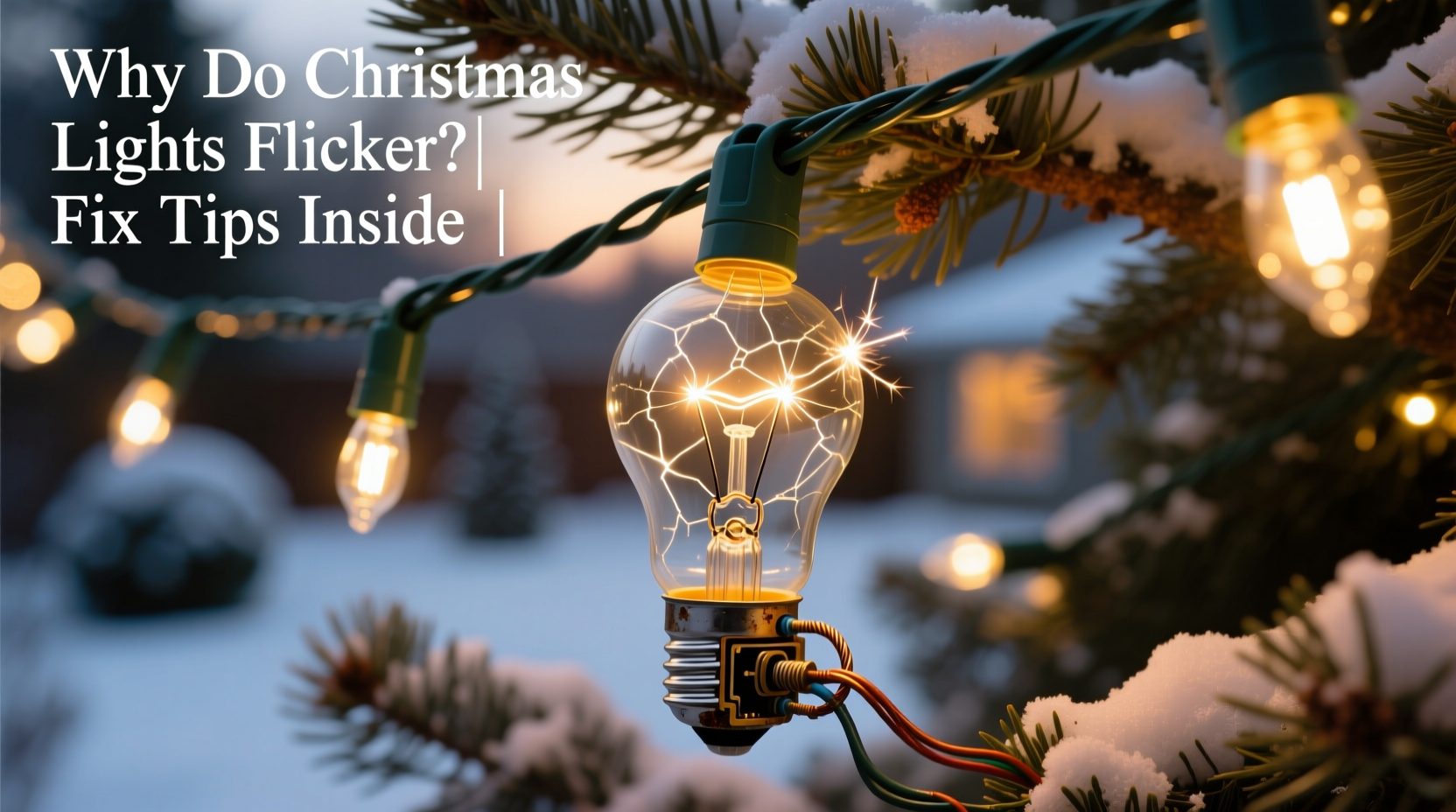
To effectively fix flickering lights, it helps to understand how they’re wired. Most traditional incandescent Christmas light strings use a **series circuit**, meaning electricity flows through each bulb in sequence. If one bulb burns out or becomes loose, the entire circuit can break, causing sections—or the whole string—to go dark or flicker intermittently.
Newer LED strings often use a combination of series and parallel wiring, which improves reliability. Still, even LEDs can flicker due to voltage fluctuations, incompatible dimmers, or poor connections.
The key components involved in flickering include:
- Bulbs: Loose, burned-out, or corroded bulbs disrupt current flow.
- Sockets: Worn or dirty sockets fail to maintain proper contact.
- Wiring: Frayed, pinched, or damaged wires cause intermittent connectivity.
- Plug and Fuse: A faulty plug or blown fuse interrupts power delivery.
- Power Source: Overloaded outlets or voltage drops affect performance.
Because these systems are interdependent, a single weak link can compromise the entire strand. That’s why diagnosing the exact issue matters more than blindly swapping bulbs.
Common Causes of Flickering and How to Diagnose Them
Flickering doesn’t happen randomly. Each pattern points to a specific underlying problem. Recognizing the type of flicker helps narrow down the culprit.
1. Intermittent Flickering (On/Off Cycles)
This occurs when a connection is unstable—often due to a loose bulb or poor socket contact. As the wire expands and contracts with temperature changes, the circuit briefly breaks and reconnects.
2. Partial Strand Flickering
If only half the strand flickers or goes dark, it may be a split circuit with a dead section. Many light strings have two independent circuits; if one fails, the other stays lit but may flicker under load.
3. Whole String Flickering
When the entire strand pulses or dims rhythmically, the issue is likely external: an overloaded outlet, incompatible dimmer switch (for indoor sets), or fluctuating voltage.
4. Flicker Only When Touched or Moved
This usually indicates damaged wiring or a failing connection point. Bending the cord temporarily restores contact, confirming a physical break.
Step-by-Step Guide to Fix Flickering Lights
Follow this systematic process to identify and resolve flickering without replacing all bulbs. Most fixes require only a screwdriver, spare bulbs, and a multimeter (optional but helpful).
- Unplug the lights immediately. Safety first—never work on live circuits.
- Inspect the plug and fuses. Remove the end cap of the plug and check the built-in fuses (usually two small glass tubes). Replace any that appear blackened or broken using identical-rated fuses (typically 3–5A).
- Examine the wiring for damage. Run your fingers along the entire length. Look for cuts, kinks, melted insulation, or rodent bites. Mark any damage with tape.
- Check each bulb visually. Remove bulbs one by one and inspect for darkened glass (sign of burnout), loose filaments, or corrosion. Clean oxidized bases with rubbing alcohol and a cotton swab.
- Test suspect bulbs. If you have a known working string, test questionable bulbs in it. Alternatively, use a multimeter to check continuity.
- Reseat all bulbs firmly. Even slightly loose bulbs can break the circuit. Press each bulb until it clicks into place.
- Replace missing shunts in incandescent bulbs. Some older bulbs rely on a tiny shunt wire inside the base to bypass a dead filament. If the shunt fails, the whole circuit breaks. You can sometimes restore it by gently tapping the bulb or replacing it with a modern shunted bulb.
- Use a light tester tool. Devices like the “LightKeeper Pro” send a pulse through the strand to clear socket faults and reset shunts—often reviving flickering sections instantly.
- Test the repaired string. Plug it in away from flammable materials. Monitor for 5–10 minutes to ensure stability.
If the problem persists after these steps, isolate sections by plugging in shorter segments. This helps determine whether the issue lies in a specific portion of the strand.
Tips and Tools to Prevent Future Flickering
Prevention is more effective than repair. With proper handling and storage, a quality light string can last 10 years or more.
Consider upgrading to LED strings. They consume less energy, generate less heat, and are less prone to flicker due to their parallel-wired design. Look for models labeled “steady-on” if you want to avoid any blinking effects.
Also, avoid mixing light types on the same circuit. Never connect incandescent and LED strings together—they have different voltage requirements, which can lead to flickering or premature failure.
“Most flickering issues I see during holiday repairs come down to one loose bulb or a blown fuse. Taking ten minutes to inspect the string saves hours of frustration later.” — Carlos Mendez, Seasonal Electrical Technician with 12 years of holiday lighting experience
Do’s and Don’ts: Quick Reference Table
| Do | Don’t |
|---|---|
| Use a light tester to quickly diagnose shunt issues | Shake the string to “fix” flickering—it can worsen internal damage |
| Replace fuses with the correct amperage rating | Use household fuses not rated for low-voltage lighting |
| Store lights coiled loosely with tissue paper between layers | Leave lights plugged in unattended or overnight |
| Check manufacturer guidelines before connecting multiple strings | Daisy-chain more than three incandescent strings together |
| Clean bulb bases with isopropyl alcohol before reinserting | Force a bulb into a socket that feels tight—this damages contacts |
Real Example: Reviving a Family Heirloom Strand
Maria from Portland inherited a set of vintage red-and-gold incandescent lights from her grandmother. Every year, they flickered more—until last season, only half the strand lit up. Instead of discarding them, she followed a careful inspection process.
She started by replacing both fuses, which looked intact but tested as open-circuit with a multimeter. No change. Then she removed each bulb, finding one with a darkened base and a broken filament. She replaced it with a spare from a dead string. Still flickering.
Next, she used a LightKeeper Pro to send a clearing pulse through the dark section. On the third try, the remaining bulbs lit up steadily. Maria realized the shunt in a middle bulb had failed to activate. The pulse restored the circuit path.
Now, the lights shine reliably each December. “They’re not just decoration,” she says. “They’re part of our family story.” Her experience shows that patience and the right tools can preserve sentimental value—and functionality.
FAQ: Common Questions About Flickering Christmas Lights
Why do my Christmas lights flicker even when all bulbs are in place?
Flickering can occur due to a failed shunt in an incandescent bulb, even if the bulb appears intact. The shunt is supposed to bypass a burned-out filament, but if it doesn’t activate, the circuit breaks. Using a light-pulse tool or replacing the bulb resolves this.
Can LED Christmas lights flicker too?
Yes. LED strings may flicker if connected to a dimmer switch not rated for LEDs, or if there’s a voltage drop across long daisy-chained runs. Ensure you’re using non-dimming outlets and check for compatibility between controllers and power supplies.
Is it safe to keep using flickering lights?
Occasional flickering from a loose bulb is generally safe once corrected. However, persistent flickering due to damaged wiring or overheating sockets poses a fire risk. Unplug and inspect any strand that flickers erratically, emits heat, or smells burnt.
Conclusion: Keep the Holidays Bright Without Starting Over
Flickering Christmas lights don’t mean game over. In most cases, the problem is fixable with basic troubleshooting and a little patience. By understanding how light strings operate, identifying the type of flicker, and applying targeted fixes, you can restore your display without spending extra money or contributing to seasonal waste.
Take the time to inspect, clean, and maintain your lights each year. Invest in a simple tool like a fuse tester or light pulse device—they pay for themselves after one successful repair. And remember: behind every flickering strand is a solvable issue, not a lost cause.




 浙公网安备
33010002000092号
浙公网安备
33010002000092号 浙B2-20120091-4
Comments
No comments yet. Why don't you start the discussion?