
As winter settles in and holiday decorations go up, nothing sets the mood quite like a string of twinkling Christmas lights. But when snow begins to fall, many homeowners notice an unexpected issue: their lights start to flicker. This isn’t just a minor annoyance—it can signal underlying electrical problems or environmental stress on your lighting system. Understanding why this happens and how to address it ensures your display remains bright, safe, and reliable throughout the season.
The flickering of Christmas lights under snow is not simply a seasonal quirk. It’s often the result of physical, thermal, and electrical interactions between the lights, moisture, and cold temperatures. While some flickering may be harmless, persistent or erratic behavior can point to safety risks or reduced lifespan of your lights. The good news is that with proper knowledge and preparation, most of these issues are preventable.
How Snow Affects Electrical Connections in Christmas Lights
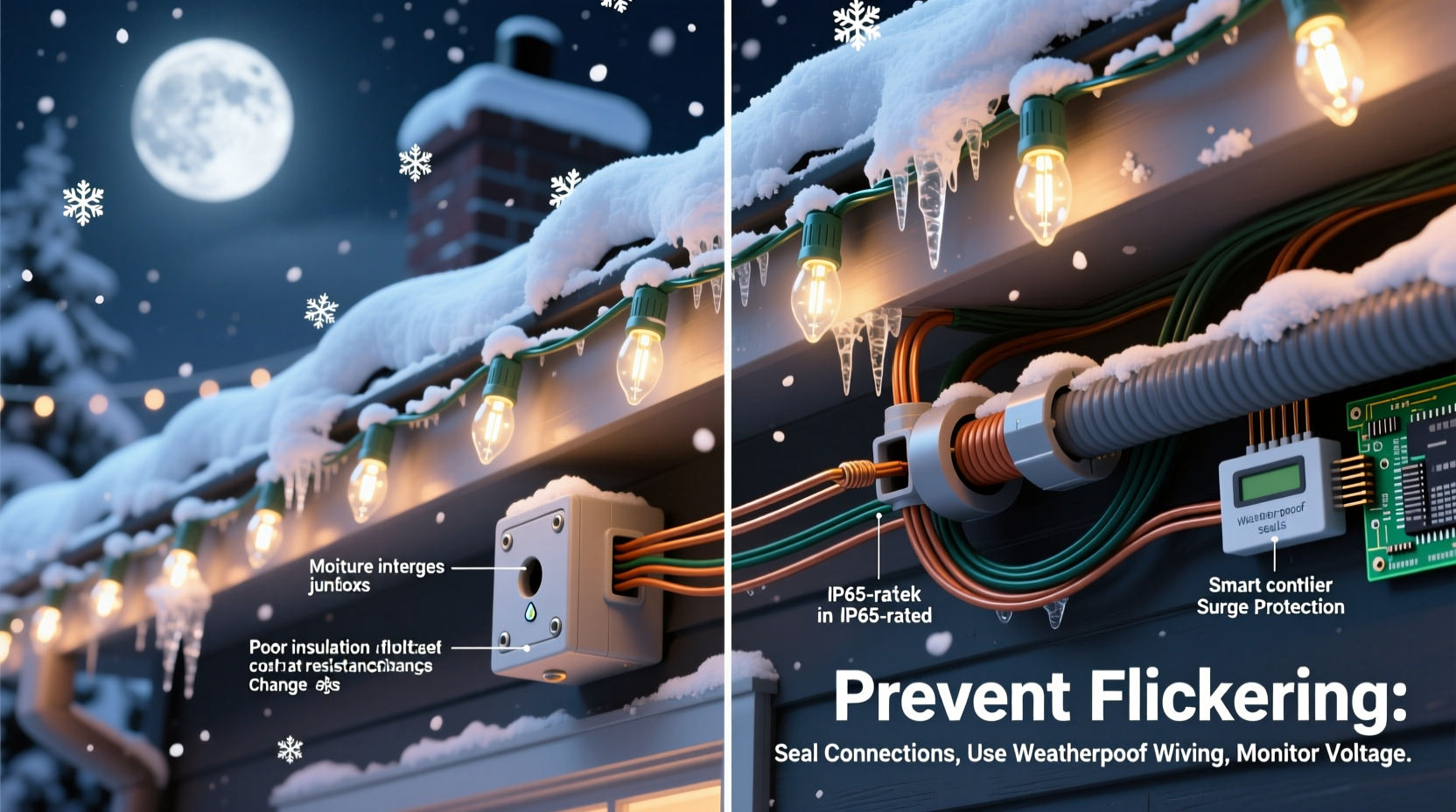
Snow may look soft and harmless, but when it accumulates on outdoor light strings, it introduces moisture and pressure into systems designed for dry conditions. Even though modern Christmas lights are marketed as “weather-resistant,” they aren’t always fully waterproof—especially at connection points such as plugs, sockets, and splices.
When snow melts slightly due to ambient heat from the bulbs or sunlight, it turns into water that can seep into junctions between light strands. This moisture creates temporary short circuits or increases electrical resistance, leading to inconsistent current flow. The result? Flickering. In some cases, the flicker stops once the area dries; in others, corrosion begins to set in, making the problem worse over time.
Cold temperatures also cause materials to contract. Wires, insulation, and plastic housings shrink slightly in freezing weather, which can loosen connections that were snug at room temperature. These micro-gaps allow intermittent contact, especially when combined with the weight of snow pressing down on hanging wires.
Types of Christmas Lights and Their Vulnerability to Snow
Not all Christmas lights react the same way to snow. The technology behind the lights plays a major role in how likely they are to flicker under winter conditions.
| Type of Light | Flicker Risk Under Snow | Key Reasons |
|---|---|---|
| Incandescent Mini Lights | High | Generate heat (melts snow into water), older wiring, less durable seals |
| LED Mini Lights | Moderate | Lower heat output, better seals, but still vulnerable at connectors |
| Net Lights | Moderate to High | Large surface area collects more snow; wires cross frequently |
| Rope Lights | Low to Moderate | Enclosed design resists moisture, but end caps can leak |
| String Lights with Individual Bulb Sockets | High | Sockets can trap water; bulbs may loosen with thermal cycling |
Incandescent lights, while warm and traditional, are particularly prone to flickering under snow because they generate significant heat. That heat melts snow directly around the bulb, creating pools of water that drip into sockets. LED lights run cooler and typically have sealed diodes, reducing immediate risk—but their low voltage makes them more sensitive to even small disruptions in current.
“Many people assume ‘outdoor-rated’ means fully protected from snow, but most certifications only test for rain exposure at specific angles. Snow introduces unique challenges due to accumulation and freeze-thaw cycles.” — Dr. Alan Reeves, Electrical Safety Engineer, National Decorative Lighting Institute
Preventing Flicker: A Step-by-Step Guide
Prevention starts before you hang a single strand. A systematic approach reduces the chances of flickering and extends the life of your lights. Follow this timeline to prepare and maintain your display through snowy conditions.
- Inspect All Strings Before Installation
Check each strand for cracked insulation, loose bulbs, corroded contacts, or damaged plugs. Replace any compromised sections. - Use Weatherproof Connectors
Invest in silicone-sealed couplers or use dielectric grease on male-female plug connections to block moisture. - Hang Lights with Proper Drainage in Mind
Position strands so water runs off rather than pooling. Avoid low sags where snow can collect. - Elevate End Caps and Junction Boxes
Keep the ends of rope lights or splice enclosures facing downward so water doesn’t enter by capillary action. - Install a GFCI-Protected Circuit
Ground Fault Circuit Interrupters shut off power if they detect current leakage—critical when moisture is present. - Add a Protective Cover Over Plug Connections
Use a plastic enclosure box or wrap connections in a water-resistant material like self-amalgamating tape. - Monitor After Snowfall
Within 24 hours of heavy snow, visually check your lights. If flickering occurs, turn them off and clear snow carefully. - Dry Components if Necessary
If a section becomes wet, disconnect it and let it dry completely indoors before reuse.
Real Example: The Johnson Family Porch Display
The Johnsons in upstate New York have maintained a large rooftop light display for over a decade. Each year, they faced worsening flickering during mid-December snowstorms. One year, half their roofline went dark after a storm, prompting an investigation.
A licensed electrician discovered that melting snow had dripped into unsealed plug connections between incandescent strands. The water caused micro-arcing, leading to both flickering and early filament burnout. Worse, one junction box showed signs of minor corrosion—a potential fire hazard.
The family replaced all old incandescent strings with commercial-grade LED lights rated IP65 (dust-tight and protected against water jets). They used dielectric grease on every connector and installed GFCI outlets for all circuits. Since then, their display has remained stable—even during record snowfall. The initial investment paid off in reliability, energy savings, and peace of mind.
Common Mistakes That Make Flickering Worse
Even well-intentioned efforts can backfire if based on misconceptions. Avoid these common errors:
- Using indoor lights outdoors – Indoor-rated lights lack the insulation and sealing needed for snow exposure.
- Daisy-chaining too many strands – Exceeding manufacturer limits causes voltage drop, increasing sensitivity to disruptions.
- Wrapping lights tightly around wet surfaces – Moisture trapped under wires accelerates corrosion and insulation breakdown.
- Ignoring GFCI tripping as normal – Frequent tripping indicates a real fault, not a nuisance.
- Using duct tape to seal connections – It degrades in cold and holds moisture, promoting long-term damage.
Essential Checklist for Snow-Ready Christmas Lights
Before turning on your display, verify each item below:
- ✅ All light strings are labeled “For Outdoor Use”
- Look for UL certification and weather-resistance ratings.
- ✅ No visible fraying, cracked sockets, or bent prongs
- Discard or repair damaged components immediately.
- ✅ Plugs and connectors are coated with dielectric grease
- Apply a thin layer to prevent oxidation and moisture ingress.
- ✅ Lights are plugged into GFCI outlets or power strips
- Test the GFCI monthly to ensure it trips correctly.
- ✅ Strands are hung with drainage in mind
- No low points where water or snow can accumulate.
- ✅ Maximum load per circuit is not exceeded
- Follow manufacturer guidelines—typically 3–5 strands for incandescent, up to 10+ for LEDs.
- ✅ Spare bulbs and fuses are on hand
- Some flickering stems from blown shunts in series-wired lights.
Frequently Asked Questions
Can snow cause Christmas lights to short circuit?
Yes. When snow melts and penetrates unsealed connections, it can create conductive paths between live wires. This leads to short circuits, which may trip breakers, blow fuses, or damage the light string. Persistent moisture can also corrode metal contacts, increasing resistance and generating heat.
Why do my LED Christmas lights flicker only when it snows?
LEDs operate at low voltage and require stable current. Snow-induced moisture can disrupt the driver circuit inside the plug or cause intermittent contact in daisy-chained connections. Unlike incandescents, LEDs don’t generate enough heat to melt snow away quickly, allowing moisture to linger longer at critical points.
Is flickering Christmas lights a fire hazard?
Occasional flickering due to transient moisture may not be dangerous. However, persistent flickering, especially accompanied by buzzing, discoloration, or a burning smell, indicates arcing or overheating—both fire risks. Unplug immediately and inspect. According to the NFPA, decorative lighting accounts for an estimated 7% of home fires during December and January, many linked to faulty wiring or moisture exposure.
Long-Term Maintenance Tips for Year-Round Reliability
Winter performance depends heavily on how well you store and maintain your lights the rest of the year. At the end of the season, follow these steps:
- Remove all snow, dirt, and debris before packing.
- Let lights dry completely to prevent mold and corrosion in storage.
- Wrap them around a cardboard reel or use a specialized light keeper to avoid tangles and wire stress.
- Store in a climate-controlled space—avoid attics, garages, or basements with high humidity.
- Label each string by location and color to simplify setup next year.
Consider upgrading older incandescent sets to modern LEDs. Not only do they consume up to 90% less energy, but their solid-state construction is inherently more resistant to vibration and thermal shock. Look for models with rubber gaskets at connection points and UV-stabilized jackets for prolonged sun exposure.
Conclusion: Keep Your Lights Steady Through Winter
Flickering Christmas lights under snow are more than a visual distraction—they’re a signal that your display may be vulnerable to environmental stress. By understanding the science behind moisture, temperature shifts, and electrical flow, you can take proactive steps to protect your investment and ensure safety.
From choosing the right type of lights to using proper installation techniques and maintenance habits, every decision matters. Whether you’re illuminating a modest porch or orchestrating a neighborhood-favorite spectacle, reliability should never be left to chance.




 浙公网安备
33010002000092号
浙公网安备
33010002000092号 浙B2-20120091-4
Comments
No comments yet. Why don't you start the discussion?