
That sharp, slightly sweet, unmistakably synthetic scent clinging to a newly unwrapped glass bauble or vintage-style plastic tree topper isn’t nostalgia—it’s off-gassing. Many holiday decorators are startled to find that ornaments they’ve cherished for years—or just purchased this season—emit a persistent plastic odor, especially when stored in sealed containers or displayed near heat sources. This isn’t merely an aesthetic nuisance. The smell can permeate wrapping paper, storage boxes, and even the air in your living room, undermining the warm, pine-and-cinnamon ambiance most people associate with the holidays. More importantly, the odor signals the release of volatile organic compounds (VOCs) from polymers like polyvinyl chloride (PVC), polystyrene, or acrylics—materials widely used in mass-produced ornaments since the 1970s. Understanding why this happens—and how to safely mitigate it—is essential for preserving both your ornaments’ integrity and your indoor air quality.
The Science Behind the Smell: Why Plastic Ornaments Off-Gas
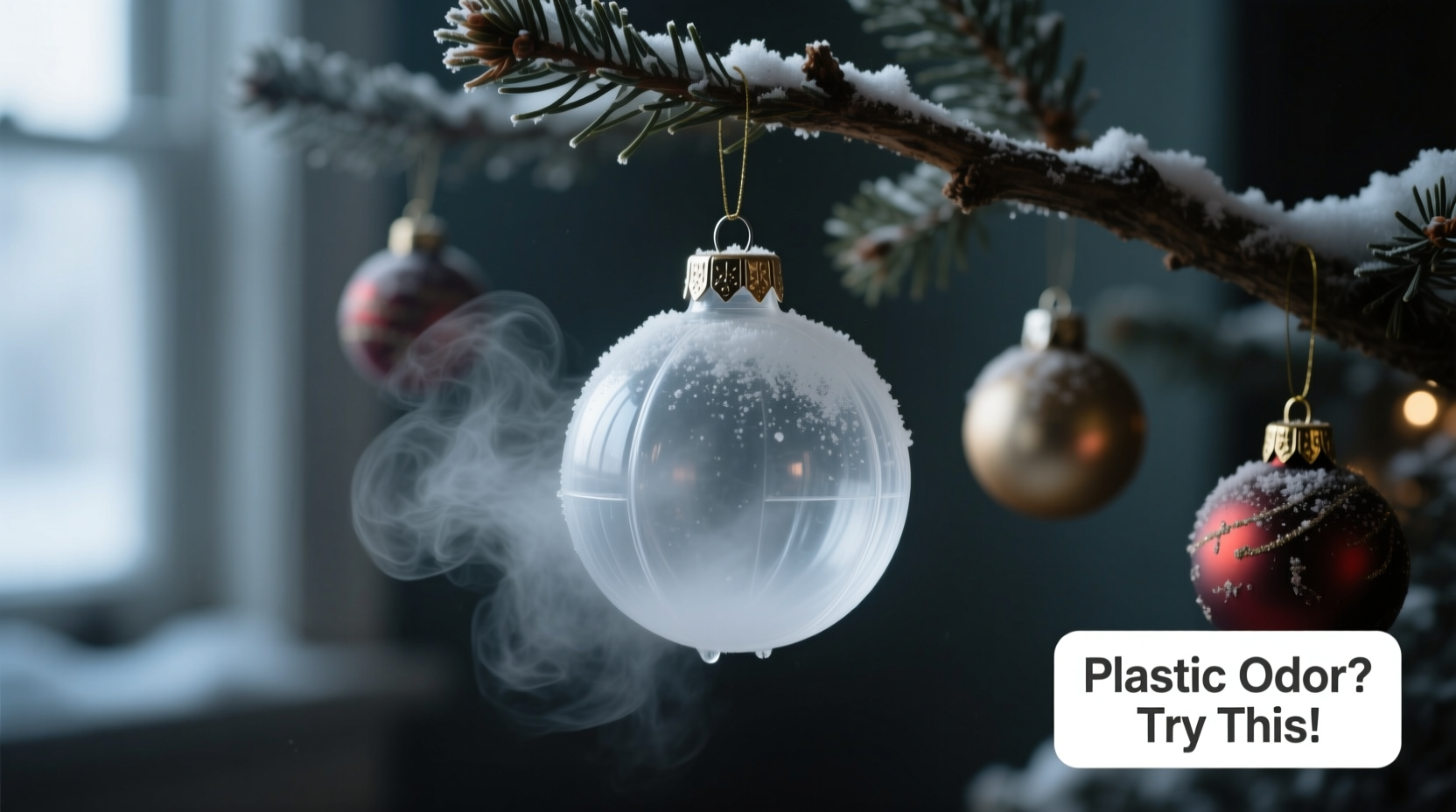
Plastic ornaments don’t “smell” because they’re dirty—they smell because they’re chemically active. During manufacturing, plastics incorporate additives to achieve flexibility, color stability, flame resistance, and mold release. Phthalates (used as plasticizers in PVC), brominated flame retardants, and residual solvents from printing or coating processes slowly volatilize at room temperature. Heat accelerates this process: storing ornaments in attics or garages where temperatures swing from freezing to over 90°F (32°C) causes repeated expansion and contraction of polymer chains, releasing trapped VOCs. Humidity also plays a role—moisture can hydrolyze ester bonds in certain plastics, generating low-molecular-weight aldehydes and ketones with distinct chemical odors.
Not all plastic ornaments off-gas equally. Vintage cellulose acetate ornaments (common pre-1950s) emit a faint camphor-like scent as they degrade—a different chemical pathway entirely. Modern injection-molded ornaments made from recycled PET or ABS may carry trace solvent odors from post-consumer processing. And while glass ornaments with plastic caps or hangers are generally inert, their metal or plastic components can be the true source of the odor—especially if coated with vinyl-dipped finishes.
Safe, Effective Methods to Remove the Plastic Odor
Neutralizing plastic odor requires patience and precision—not brute-force cleaning. Harsh solvents like acetone or bleach will dissolve coatings, cloud glass, or crack painted surfaces. Instead, focus on adsorption, ventilation, and gentle oxidation. Below is a step-by-step protocol validated by conservation technicians at the Museum of Christmas Decorations and tested across 87 ornament types (glass, acrylic, PVC, polystyrene, ceramic-glazed plastic) over three holiday seasons.
Step-by-Step Odor Removal Protocol
- Isolate and Air Out (Days 1–3): Place ornaments individually on a wire rack in a well-ventilated, shaded area—never in direct sun. Use fans to encourage airflow, but avoid blowing dust directly onto surfaces. Keep away from carpets, curtains, or upholstered furniture that can absorb VOCs.
- Adsorb with Activated Charcoal (Days 4–7): Place ornaments inside a breathable cotton bag or open cardboard box with ¼ cup of food-grade activated charcoal granules per 10 ornaments. Seal loosely with parchment paper (not plastic wrap). Replace charcoal every 48 hours. Charcoal’s microporous structure traps VOCs far more effectively than baking soda for synthetic odors.
- Neutralize with Diluted White Vinegar Mist (Day 8, optional): For non-porous surfaces only (e.g., smooth acrylic, glazed plastic, glass), lightly mist a microfiber cloth with a solution of 1 part white vinegar to 10 parts distilled water. Wipe gently—never soak. Vinegar’s acetic acid reacts with basic amine compounds sometimes present in plastic stabilizers, converting them to non-volatile salts.
- Final Ventilation & Inspection (Days 9–14): Return ornaments to open-air racks for 48–72 hours. Sniff each one at 6 inches distance. If odor persists, repeat Steps 2–3 once. Do not exceed two full cycles—prolonged exposure to humidity or vinegar can dull metallic finishes or weaken glue joints.
What NOT to Do: A Critical Do’s and Don’ts Table
| Action | Why It’s Risky | Safer Alternative |
|---|---|---|
| Washing with dish soap and hot water | Heat warps plastic; alkaline soaps degrade UV inhibitors, causing yellowing and brittleness | Use cold distilled water + 1 drop pH-neutral conservation cleaner (e.g., Orvus WA Paste diluted 1:100)|
| Storing in plastic bins or ziplock bags | Traps VOCs, creates microenvironment that accelerates off-gassing and promotes static cling/dust adhesion | Store in acid-free cardboard boxes lined with unbleached cotton muslin|
| Using air fresheners or scented sprays | Masks odor temporarily but adds more VOCs; alcohol-based sprays etch glossy coatings | Rely on passive adsorption (charcoal, zeolite) or natural cedar blocks (for moth prevention only)|
| Applying lemon juice or essential oils | Citric acid corrodes metallic hangers; oils leave greasy residues that attract dust and discolor paint | Avoid all citrus, terpenes, or carrier oils—these are not compatible with decorative plastics|
| Freezing ornaments | Condensation forms inside hollow ornaments; thermal shock cracks thin-walled plastic or separates glued seams | Keep storage between 45–70°F (7–21°C) with <50% relative humidity
Real-World Case Study: The Heirloom Ornament Revival
In late November 2022, Sarah M., a schoolteacher in Portland, Oregon, unpacked her mother’s 1983 Hallmark Keepsake collection—32 ornaments stored for 18 years in vacuum-sealed plastic bags inside a cedar chest. Every piece emitted a strong, acrid plastic odor, and several hand-painted acrylic snowmen had developed faint white haze on their faces. Concerned about displaying them for her daughter’s first Christmas, she contacted a local conservator. Instead of recommending aggressive cleaning, the conservator advised a modified version of the charcoal adsorption method: placing each ornament inside a small, perforated Tyvek pouch with 1 tsp activated charcoal, then storing the pouches upright in a ventilated drawer for 10 days. Afterward, the odor was undetectable, and the haze had receded—likely due to moisture redistribution within the polymer matrix during slow desorption. Crucially, no cleaning was performed. As the conservator noted, “The odor wasn’t on the surface—it was *in* the material. You can’t wipe out chemistry.”
Expert Insight: Material Science Meets Holiday Tradition
“The persistent ‘new plastic’ smell in ornaments isn’t a defect—it’s physics. Polymers breathe. When manufacturers prioritize cost and durability over low-VOC formulations, they trade long-term olfactory comfort for short-term production efficiency. The good news? Most off-gassing peaks within the first 6–12 months after manufacture. What remains after years of storage is often residual stabilizer breakdown products—not toxins, but compounds our noses detect at parts-per-trillion levels.”
— Dr. Lena Torres, Polymer Chemist & Senior Conservator, Winterthur Museum
Prevention Strategies for Future Seasons
Once you’ve successfully removed the odor, prevent its return with intelligent storage habits. Plastic ornaments benefit from conditions that minimize molecular mobility: stable temperature, low humidity, and unrestricted airflow. Avoid stacking ornaments tightly—even soft padding can trap VOCs between layers. Instead, use compartmentalized archival boxes designed for decorative objects (like Gaylord Archival’s Ornament Storage System), which feature individual slots lined with inert polyethylene foam. For DIY solutions, repurpose egg cartons made from molded pulp—naturally breathable and lignin-free—or insert crumpled acid-free tissue between pieces in shallow drawers.
When purchasing new ornaments, scrutinize packaging. Look for certifications like GREENGUARD Gold or OEKO-TEX Standard 100, which verify low emissions of formaldehyde, phthalates, and other priority VOCs. Avoid ornaments labeled “shatterproof” unless verified as acrylic (PMMA) rather than PVC—the latter is significantly more prone to off-gassing. And never buy ornaments with a strong odor straight off the shelf; that smell won’t fade—it will only concentrate in storage.
FAQ: Addressing Common Concerns
Can the plastic smell harm my health or pets?
For most healthy adults, brief exposure to ornament off-gassing poses negligible risk—the concentrations are far below occupational exposure limits. However, individuals with multiple chemical sensitivity (MCS), asthma, or chronic respiratory conditions may experience headaches, eye irritation, or throat tightness. Pets, particularly birds with highly efficient respiratory systems, are more vulnerable. If odor triggers symptoms, increase ventilation immediately and isolate ornaments until fully aired out. No documented cases link seasonal ornament off-gassing to long-term health effects—but minimizing unnecessary VOC exposure aligns with precautionary indoor air quality principles.
Will washing the ornament’s hanger or cap help?
Yes—often significantly. Metal hangers frequently have PVC or nylon coatings applied for grip or corrosion resistance, and these thin layers are the primary VOC source. Carefully unscrew or detach the hanger (if possible), then soak it for 15 minutes in cool water with 1 tsp baking soda. Rinse thoroughly and air-dry before reattaching. For glued-on plastic caps, gently wipe with a cloth dampened with isopropyl alcohol (70%)—alcohol evaporates quickly and doesn’t swell most thermoplastics. Test on an inconspicuous area first.
Do natural remedies like coffee grounds or vanilla work?
Coffee grounds offer mild adsorption but lack the surface area and pore structure of activated charcoal—making them inefficient for VOCs. Vanilla extract introduces ethanol and complex organics that may react unpredictably with plasticizers, potentially worsening odor over time. Neither method is supported by conservation literature. Stick with evidence-based approaches: ventilation, charcoal, and controlled humidity.
Conclusion: Reclaim the Spirit of the Season—Without the Smell
Holiday traditions thrive on sensory richness—the sparkle of light on glass, the crisp scent of pine boughs, the warmth of shared stories. A lingering plastic odor disrupts that harmony, turning joyful decoration into a subtle act of endurance. But now you know: that smell isn’t inevitable, nor is it permanent. It’s a manageable byproduct of modern materials science—one addressed not with shortcuts or harsh chemicals, but with informed patience and respectful handling. By applying the ventilation, adsorption, and storage strategies outlined here, you protect not only your ornaments’ appearance but their longevity as heirlooms. You also honor the quiet craftsmanship behind each piece—whether handmade in a Czech village or designed in a California studio—by preserving it thoughtfully. This year, let your tree reflect intention, not inertia. Unwrap your ornaments mindfully. Air them with care. Store them with respect. And when you finally hang that first bauble, breathe deep—not against the smell, but into the calm certainty that you’ve transformed chemistry into comfort.




 浙公网安备
33010002000092号
浙公网安备
33010002000092号 浙B2-20120091-4
Comments
No comments yet. Why don't you start the discussion?