
For many, the scent of pine, the soft glow of twinkling lights, and the sight of a decorated tree signal the arrival of the holiday season. But increasingly, people are noticing Christmas trees appearing not in December—but weeks earlier, in November. Some welcome the festive cheer; others wonder: Is putting up the tree this early crossing a line? The answer isn’t as simple as a calendar date. Behind the decision lies a mix of tradition, emotion, marketing influence, and personal rhythm.
The practice of erecting a Christmas tree before December 1st has grown more common over the past decade, particularly in Western countries like the United States, Canada, and the UK. While historically, Advent marked the official start of the Christmas season—beginning four Sundays before Christmas Day—modern life has reshaped how families engage with the holidays. Understanding why some families choose to decorate in November requires looking beyond judgment and into deeper motivations.
The Cultural Shift Toward Extended Holiday Seasons
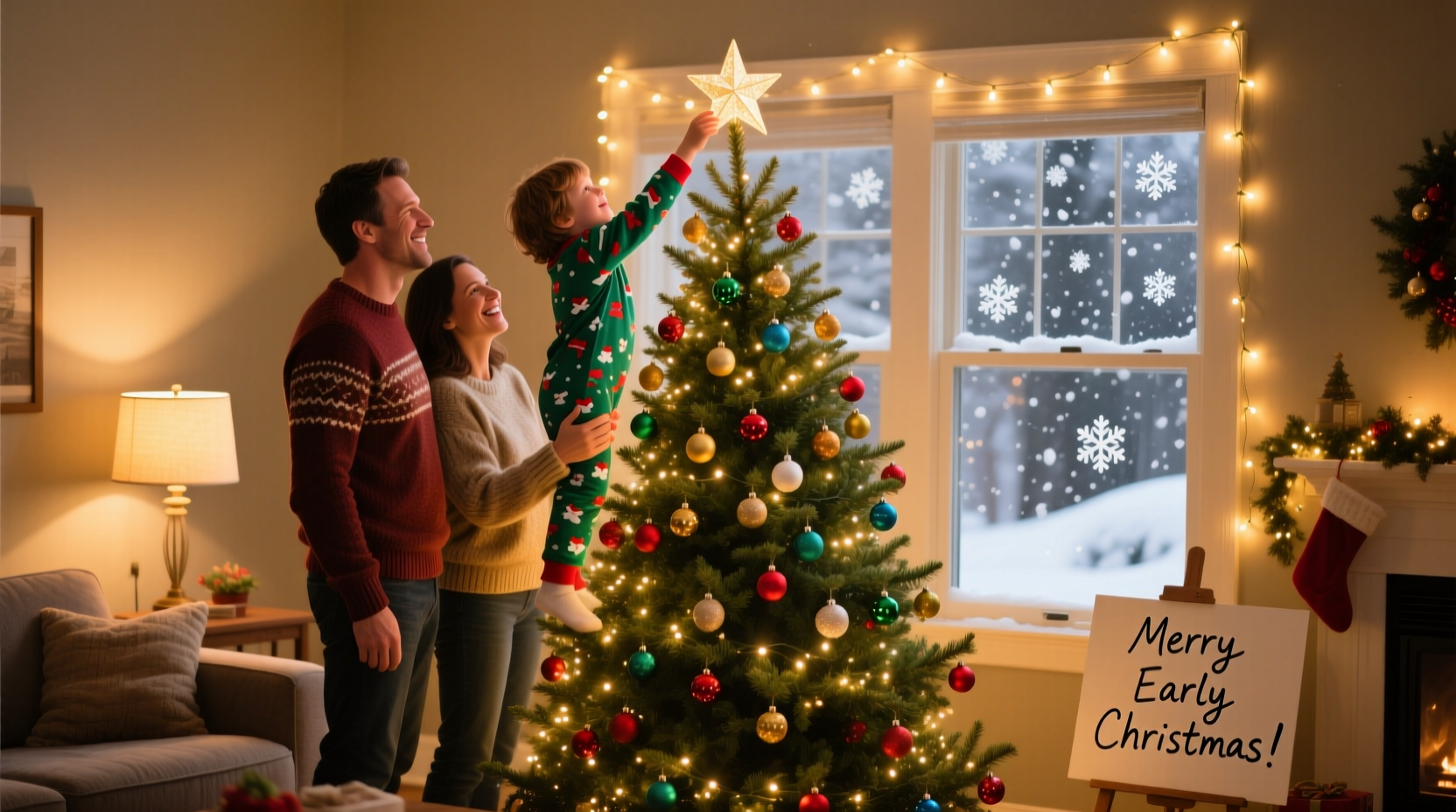
In previous generations, Christmas decorations often appeared only after Thanksgiving or even closer to Christmas Eve. However, the last two decades have seen a steady creep forward in holiday preparation. Retailers begin selling ornaments and lights in October. Radio stations switch to all-Christmas music by mid-November. These signals shape public perception, making early decorating feel less unusual and more normalized.
This shift reflects broader changes in consumer culture. The holiday shopping season now officially kicks off with Black Friday—often starting on Thanksgiving Day or even earlier. As stores decorate their windows and aisles, families may feel inspired—or pressured—to follow suit at home. A well-decorated house becomes part of the seasonal experience, not just for personal enjoyment but also for social media sharing, family traditions, and mental preparation for festivities.
“Holiday rituals aren't just about dates—they're about emotional readiness. For some, bringing in the tree is an act of reclaiming joy during difficult times.” — Dr. Rebecca Lang, Cultural Psychologist
Moreover, the rise of “hygge” (a Danish concept of coziness) and other wellness-focused trends has encouraged people to create comforting environments earlier in the winter months. With shorter days and colder weather setting in by late autumn, the warm ambiance of a lit tree can provide psychological comfort long before Christmas Day.
Emotional and Psychological Motivations
For many families, putting up the Christmas tree in November is not about commercialism—it’s about connection, memory, and emotional well-being. The holiday season holds powerful associations: childhood memories, time with loved ones, feelings of generosity and peace. When those elements are missing—due to loss, loneliness, or stress—families may turn to familiar rituals to restore a sense of stability.
Consider Sarah from Portland, Oregon, who lost her mother in January. Every November 15th since then, she sets up the tree using the same ornaments her mother collected over 40 years. “It’s not early to me,” she says. “It’s healing. It gives me four weeks to process grief while also celebrating what we had.” Her story illustrates how timing isn’t arbitrary—it’s tied to personal rhythms of remembrance and renewal.
Seasonal Affective Disorder (SAD), which affects millions during fall and winter, also plays a role. Light therapy is a common treatment, and decorative lighting—including Christmas lights—can contribute to mood regulation. A study published in the Journal of Affective Disorders found that exposure to bright, colorful lights increased serotonin levels in participants, suggesting that festive decor might offer subtle therapeutic benefits.
Practical Considerations: Realities of Tree Longevity
One of the most frequent concerns about early tree setup is whether the tree will dry out, drop needles, or become a fire hazard before December 25th. This concern is valid—but manageable with proper care.
Live evergreen trees typically stay fresh for 3–4 weeks when properly hydrated. That means a tree put up on November 15th could begin deteriorating by mid-December unless carefully maintained. However, modern preservation techniques and improved tree sourcing have extended viable display times.
| Care Factor | Best Practice | Avoid |
|---|---|---|
| Watering | Check water level daily; refill every 1–2 days | Letting the stand run dry even once |
| Cut | Freshly cut 1/4 inch off base before placing in stand | Using a tree without a fresh cut |
| Location | Keep away from heat sources (radiators, fireplaces) | Placing near vents or sunny windows |
| Type of Tree | Choose longer-lasting species (e.g., Fraser fir, Balsam) | White pine or spruce for long displays |
Artificial trees eliminate freshness concerns entirely, which explains their growing popularity among early decorators. According to the American Christmas Tree Association, nearly 82% of households use artificial trees, many of which are stored pre-lit and pre-decorated for quick assembly. For busy families, having a “plug-and-play” tree ready in November reduces stress later in the month.
When Tradition Meets Modern Life: A Step-by-Step Timeline
Some families adopt a phased approach to decorating, allowing them to enjoy the spirit of the season without committing fully in early November. This method balances anticipation with sustainability—both emotionally and logistically.
- Week of Thanksgiving: Set up stockings, wreaths, and outdoor lights. These elements are durable and don’t require daily maintenance.
- November 25–30: Assemble the tree frame (especially if artificial). Add lights and basic garlands, but hold off on ornaments.
- First Sunday of Advent (usually Dec 1–4): Hang ornaments, place gifts under the tree, light candles. This marks the symbolic beginning of the countdown.
- Christmas Eve: Final touches—angel or star on top, special heirloom additions, and family photo.
This gradual buildup extends the joy of preparation and prevents sensory overload. It also respects both traditional pacing and modern desires for early celebration. Families with children often find this timeline especially effective, giving kids multiple \"decorating days\" to look forward to.
Is It Too Early? Perspectives Across Generations
The question of whether November is “too early” often divides along generational lines. Older adults may recall strict rules: no decorations until after Thanksgiving, no presents wrapped until Christmas Eve. Younger generations, however, tend to view holidays as flexible experiences shaped by personal meaning rather than rigid timelines.
A 2023 Pew Research survey found that 43% of millennials and Gen Z respondents began decorating between November 15 and Thanksgiving, compared to just 17% of Baby Boomers. Yet across all groups, the primary reason cited was “wanting to feel joyful during a stressful time of year.”
Religious observance also influences timing. In Catholic, Anglican, and Lutheran traditions, Advent begins on the fourth Sunday before Christmas—ranging from November 27 to December 3. Many faithful families wait until this date to bring out Nativity scenes and full tree displays. Others, particularly in non-denominational or secular households, see no conflict in starting earlier.
“We light the first Advent candle to mark waiting and hope. Starting earlier doesn’t diminish that—it can deepen our reflection if done intentionally.” — Pastor Mark Thompson, First Congregational Church
The key distinction lies in intentionality. Decorating on November 1st because ads started playing Mariah Carey’s “All I Want for Christmas Is You” is different from doing so as part of a mindful family ritual. One is reactive; the other is purposeful.
Mini Case Study: The Bennett Family’s November Tradition
The Bennetts of Minneapolis began putting up their tree on November 20th five years ago, shortly after their youngest child was diagnosed with anxiety. Therapy sessions revealed that predictable routines helped reduce her stress, especially during chaotic seasons. Together, the family designed a “holiday roadmap” with specific dates for each activity: cookie baking on December 5th, letter to Santa on the 10th, movie night on the 17th.
The centerpiece? Erecting the tree on November 20th—exactly 40 days before Christmas. “We call it our ‘light count,’” says mom Lisa. “Each day, we turn on the lights together. It gives us something positive to focus on, even when school or work gets tough.”
What began as a coping strategy evolved into a cherished tradition. Neighbors initially raised eyebrows, but many have since adopted similar schedules. “Now there are three houses on our block with trees up by Thanksgiving,” Lisa notes. “It feels like we’ve created a little pocket of calm in a noisy world.”
Checklist: How to Decide If November Is Right for Your Family
- ✅ Discuss expectations as a household—do everyone feel excited, or is someone resistant?
- ✅ Assess your tree type—can a real tree realistically last 5+ weeks?
- ✅ Plan for maintenance—will someone remember to water it daily?
- ✅ Consider emotional needs—are you seeking comfort, connection, or nostalgia?
- ✅ Respect outside traditions—if hosting religious gatherings, align with meaningful dates.
- ✅ Be flexible—start with partial decor and add more later if desired.
Frequently Asked Questions
Is putting up a Christmas tree in November disrespectful to Thanksgiving?
Not inherently. Thanksgiving remains a distinct celebration of gratitude. However, some feel that blending the two holidays diminishes the uniqueness of each. If you celebrate Thanksgiving, consider keeping initial decorations modest—like a wreath or candles—and saving the tree for after the meal.
Can a real tree last from November 15 to December 25?
Possibly, but it requires diligent care. Choose a fresh-cut tree with high moisture retention (like Fraser fir), make a new cut at the base, keep it watered daily, and avoid heat sources. Even then, expect some needle drop by Christmas week. For longer displays, artificial trees are more reliable.
Does early decorating reduce the magic of Christmas?
It depends on the individual. For some, prolonged exposure dulls excitement. For others, it builds anticipation gradually. Families can preserve “magic” by reserving certain actions for December—like placing presents under the tree or hanging the star—while still enjoying lights and greenery earlier.
Conclusion: Redefining Holiday Timing on Your Own Terms
There is no universal rule dictating when a Christmas tree should go up. What feels premature to one person may be perfectly timed for another. The deeper value lies not in adhering to a calendar, but in understanding why you choose to celebrate when you do.
Whether driven by tradition, emotional need, convenience, or sheer love of tinsel, early decorating can be a meaningful act—not a sign of impatience. As society evolves, so do our rituals. The goal isn’t perfection according to outdated norms, but authenticity according to lived experience.




 浙公网安备
33010002000092号
浙公网安备
33010002000092号 浙B2-20120091-4
Comments
No comments yet. Why don't you start the discussion?