
Every holiday season, millions of homes are adorned with the warm glow of Christmas lights. While modern LED strings promise energy efficiency, longevity, and durability, many homeowners still find themselves replacing sets after just a few seasons. The frustration is real: you invest in what appears to be high-quality lighting, only to see sections dim or entire strands go dark by spring. The truth is, not all LED Christmas lights are created equal — and even the best can fail prematurely under poor conditions. Understanding the technical and environmental factors behind early burnout empowers you to make smarter purchases and care choices that ensure your lights last through countless celebrations.
The Hidden Causes Behind Premature LED Failure
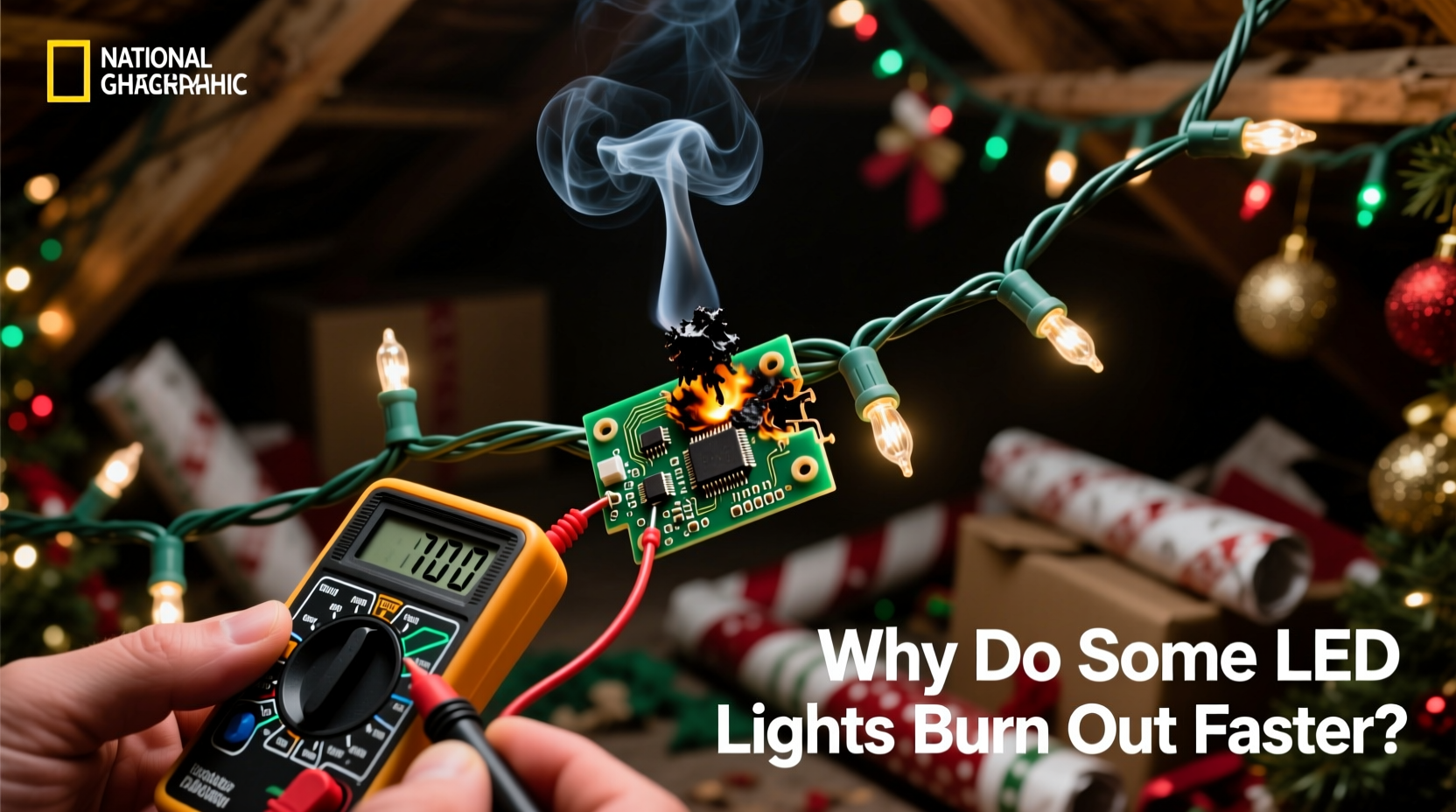
LEDs, or light-emitting diodes, are fundamentally different from traditional incandescent bulbs. They generate light through electroluminescence in a semiconductor, which consumes far less power and produces minimal heat. In theory, LEDs can last up to 50,000 hours — over five years of continuous use. So why do so many holiday strands fail within two or three seasons?
The answer lies not in the LEDs themselves, but in the surrounding components and design quality. A single weak link in the chain — literally — can compromise the entire set. Common culprits include:
- Inferior wiring insulation that cracks in cold weather, exposing conductors to moisture and short circuits.
- Poorly sealed connections between bulbs and sockets, allowing water ingress that corrodes internal circuitry.
- Low-grade resistors or drivers that fail under voltage fluctuations common in outdoor outlets.
- Tight clustering of LEDs without adequate heat dissipation, leading to thermal stress despite low overall heat output.
- Fragile bulb housings made from brittle plastic that shatter during installation or storage.
Manufacturers cutting corners on materials or skipping rigorous testing often produce lights that look identical to premium versions but degrade quickly when exposed to real-world conditions like temperature swings, UV exposure, and physical strain.
How Manufacturing Quality Impacts Longevity
One of the most significant differences between long-lasting and short-lived LED Christmas lights is manufacturing quality. High-end brands invest in durable materials, precision assembly, and comprehensive environmental testing. Budget models may pass basic safety checks but lack resilience under prolonged stress.
For example, premium lights often use copper wiring instead of cheaper aluminum alloys, which resist corrosion and maintain conductivity over time. The solder joints connecting LEDs to the circuit board are inspected and reflowed for consistency, whereas mass-produced sets may have cold solder joints that break under vibration or expansion.
“Many failures in consumer LED lighting trace back to component-level inconsistencies, not the diodes themselves.” — Dr. Alan Reyes, Electrical Engineer and Lighting Systems Researcher at MIT
Another key factor is the current regulation system. LEDs require steady, low-voltage DC power. Cheaper sets use simple resistor-based current limiting, which is sensitive to voltage spikes. Higher-end models incorporate constant-current drivers or integrated circuit (IC) controllers that regulate power more effectively, protecting each LED from surges caused by grid noise or lightning-induced induction.
Environmental and Usage Factors That Accelerate Wear
Even the best-made lights won’t survive harsh treatment. Environmental exposure plays a major role in determining actual lifespan. Consider these real-world stressors:
- Temperature cycling: Outdoor lights expand and contract daily as temperatures fluctuate. Repeated thermal stress can crack solder joints and weaken wire bonds.
- Moisture and humidity: Snow, rain, and condensation seep into poorly sealed end plugs or cracked sockets, causing corrosion and electrical shorts.
- UV radiation: Sunlight degrades plastic insulation and yellow or embrittle diffuser lenses, especially on rooftop or south-facing installations.
- Physical strain: Over-tightening clips, wrapping too tightly around sharp edges, or yanking tangled cords creates microfractures in wires.
- Power source instability: Using extension cords beyond recommended lengths or daisy-chaining too many sets can cause undervoltage or overheating.
A case in point: a homeowner in Minnesota installed a new set of LED icicle lights on their eaves in November. By January, half the strands had failed. Investigation revealed that snow accumulation had trapped moisture in the bottom connectors, and repeated freeze-thaw cycles had cracked the housing. Though labeled “outdoor-safe,” the lights lacked proper drainage channels and IP65-rated seals — features found only in higher-tier models.
Mini Case Study: The Apartment Balcony Experiment
In 2022, urban designer Maria Lopez conducted an informal test on her Chicago apartment balcony. She hung three types of LED string lights: a $12 budget pack from a discount retailer, a $28 mid-range brand from a home improvement store, and a $45 professional-grade set marketed for commercial displays. All were exposed to wind, snow, and temperature swings from -10°F to 45°F.
After 78 days:
- The budget lights showed flickering in two sections and complete failure in one strand due to a corroded end plug.
- The mid-range set had one dimmed section but otherwise functioned well.
- The premium lights remained fully operational with no visible wear.
Upon inspection, the budget lights used thin-gauge wire and non-potted LED bases — meaning no protective epoxy coating. The premium set featured molded rubber seals, tinned copper conductors, and individually replaceable bulbs. This small-scale experiment highlights how material quality directly correlates with field performance.
How to Choose LED Lights That Last
Selecting durable LED Christmas lights requires attention to detail beyond brightness or color options. Use this checklist before purchasing:
- Look for an IP (Ingress Protection) rating of at least IP44 for outdoor use.
- Verify the wire gauge — 22 AWG or lower (thicker) is better for long runs.
- Check if bulbs are replaceable; non-replaceable sets mean total replacement upon single failure.
- Ensure the product has UL certification (or ETL for North America).
- Read reviews specifically mentioning multi-season use and weather resistance.
- Prefer sets with shatter-resistant lenses and flexible PVC jackets.
- Avoid extremely cheap bulk packs — they often reuse old inventory or surplus parts.
Additionally, consider the type of connection. Older series-wired strings fail entirely if one bulb goes out. Modern parallel-wired or shunted designs allow other LEDs to stay lit even if one fails. Some advanced models use redundant pathways or built-in bypass diodes to maintain continuity.
Comparison Table: Features That Determine LED Light Lifespan
| Feature | Budget-Friendly Sets | Premium Durable Sets |
|---|---|---|
| Wire Material | Aluminum or thin copper | Tinned copper, 20–22 AWG |
| Weather Resistance | Basic plastic caps, no seal | Rubber gaskets, IP65-rated ends |
| Current Regulation | Simple resistors | Constant-current IC drivers |
| Bulb Housing | Fragile polycarbonate | Flexible, UV-stabilized silicone |
| Repairability | Entire string must be replaced | Replaceable bulbs/fuses |
| Lifespan Claim | “Up to 30,000 hours” (unverified) | Tested 50,000+ hours with warranty |
Proper Installation and Maintenance Practices
Even the highest-quality lights will fail early if installed incorrectly. Follow these steps to maximize performance and longevity:
Step-by-Step Guide: Installing and Maintaining LED Christmas Lights
- Inspect before installation: Unwrap the full length and plug in each set indoors first. Check for dark bulbs, flickering, or loose connections.
- Use proper fasteners: Avoid staples or nails. Use plastic clips designed for gutters, siding, or windows to prevent wire compression.
- Route away from water traps: Ensure end plugs and connectors are mounted facing down to shed moisture.
- Don’t overload circuits: Follow manufacturer guidelines for maximum daisy-chaining (usually 3–5 sets).
- Use a surge-protected timer: Plug lights into a GFCI-protected outlet with a programmable timer to reduce exposure to power spikes and extend life.
- Store carefully after use: Wind lights loosely around a cardboard reel or use a dedicated storage spool. Never yank them off surfaces.
- Clean gently before storing: Wipe down cords and bulbs with a dry or slightly damp cloth to remove salt residue or dirt buildup.
During storage, keep lights in a cool, dry place away from rodents. Attics and garages often experience extreme temperatures and pests that chew through insulation. Use labeled plastic bins to prevent tangling and damage.
Frequently Asked Questions
Can I leave LED Christmas lights on all night?
Yes, most LED lights are safe to leave on overnight due to low heat output. However, using a timer to limit operation to 6–10 hours per evening reduces thermal cycling and extends lifespan. Always ensure the setup is plugged into a GFCI outlet if used outdoors.
Why do only some bulbs in my LED string go out?
This usually indicates a partial failure in the circuit. It could be a single dead LED, a broken wire segment, or corrosion in one socket. In older series-wired strings, one open circuit kills the whole line. In modern sets, localized failures may affect only a section. Check for visible damage and test with a multimeter if possible.
Do LED Christmas lights really last 10 years?
Theoretically, yes — if operated under ideal conditions. At four hours per night for 45 days annually, 50,000 hours equals about 277 seasons. Realistically, environmental wear, power surges, and physical handling reduce average lifespan to 5–10 years for well-maintained premium sets. Most users replace lights earlier due to style changes or minor failures.
Conclusion: Make Your Lights Last Through the Seasons
The difference between LED Christmas lights that last a single season and those that light up your holidays for a decade comes down to informed choices and consistent care. Prioritize build quality over price, install with respect for environmental stresses, and handle your lights with the same care you’d give any seasonal heirloom. When you invest in better materials and follow smart practices, you’re not just decorating — you’re building traditions that endure.
Next time you shop, skip the bargain bin and look beyond lumens and color modes. Examine the wire thickness, test the flexibility of the jacket, and verify certifications. Treat your lights as long-term assets, and they’ll reward you with reliable brilliance year after year.




 浙公网安备
33010002000092号
浙公网安备
33010002000092号 浙B2-20120091-4
Comments
No comments yet. Why don't you start the discussion?