
LED lighting has transformed homes and businesses with its energy efficiency, longevity, and crisp illumination. Yet, despite promises of 25,000 to 50,000 hours of use, many users report a subtle but noticeable change in light quality within just two seasons: a creeping yellow tint. This shift not only affects ambiance but can also signal underlying material degradation. Understanding the science behind this phenomenon—and knowing whether it can be undone—is essential for maintaining both aesthetic appeal and lighting performance.
The Science Behind LED Light Discoloration
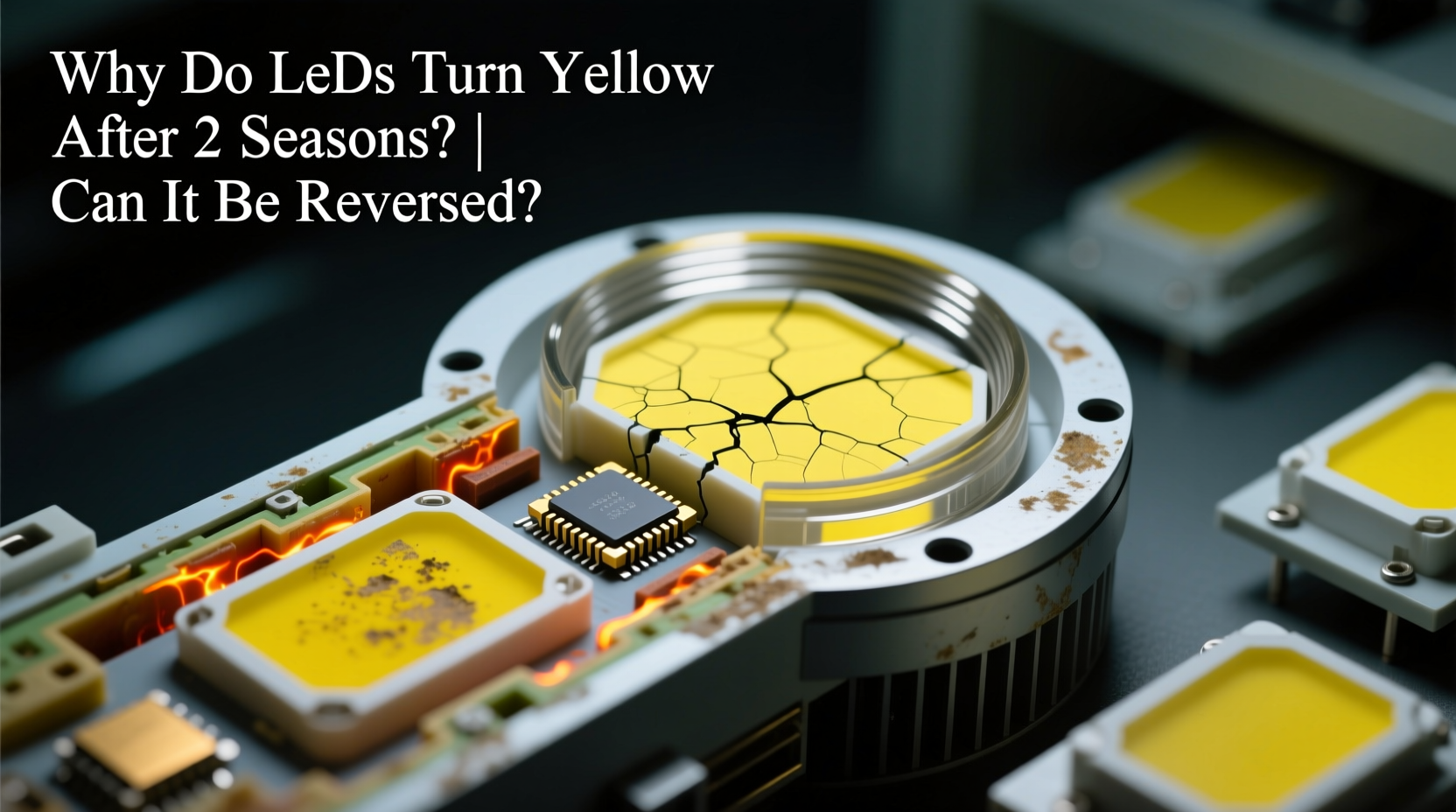
LEDs themselves do not emit yellow light as they degrade. Instead, the color shift originates from components surrounding the diode. Most white LEDs produce light through a blue LED chip coated with a phosphor layer—typically yellow-emitting cerium-doped yttrium aluminum garnet (YAG:Ce). This combination creates the perception of white light. Over time, however, external materials such as diffusers, lenses, and housing plastics undergo chemical changes due to heat, UV exposure, and environmental pollutants.
Polymeric materials like polycarbonate (PC) and acrylic are commonly used in LED fixtures for their clarity and moldability. Unfortunately, these plastics are susceptible to photodegradation. When exposed to prolonged heat and ultraviolet radiation—even the small amounts emitted by high-color-temperature LEDs—they begin to oxidize. This process breaks down polymer chains, forming chromophores that absorb blue wavelengths and reflect yellow or amber tones.
“While the LED chip may remain stable, the fixture’s secondary optics often fail first. The yellowing is rarely the diode—it’s the plastic sacrificing itself to protect the electronics.” — Dr. Lena Zhou, Materials Scientist at the Institute for Sustainable Lighting
This means the light source hasn’t changed; the filter between you and the light has. The effect is most pronounced in enclosed fixtures where heat builds up, accelerating thermal aging.
Key Factors That Accelerate Yellowing
Not all LED lights yellow at the same rate. Several interrelated factors determine how quickly discoloration appears:
- Heat buildup: Poor ventilation in recessed or enclosed fixtures traps heat, speeding up oxidation of plastic components.
- Ambient environment: High humidity, salt air (in coastal areas), or airborne chemicals (like kitchen grease or bathroom steam) increase surface degradation.
- UV exposure: Even indoor sunlight through windows emits enough UV to initiate photochemical reactions in plastics over time.
- Material quality: Budget fixtures often use lower-grade polycarbonates without UV stabilizers or anti-yellowing additives.
- Color temperature: Higher Kelvin LEDs (5000K–6500K) emit more blue light, increasing stress on phosphor layers and nearby plastics.
Can the Yellow Tint Be Reversed?
Once yellowing occurs, full reversal is generally not possible—but mitigation depends on the root cause.
If the discoloration is limited to removable plastic covers or diffusers, replacement is the most effective solution. Many manufacturers offer spare parts, or generic alternatives can be sourced based on size and fit. In rare cases, mild yellowing of polycarbonate can be slowed using specialized cleaning solutions containing hindered amine light stabilizers (HALS), though results vary and may only restore partial clarity.
Home remedies like hydrogen peroxide baths under UV light (popularized online for restoring yellowed electronics) are not recommended for LED fixtures. These methods involve disassembly, extended exposure, and carry risks of water ingress, seal damage, or lens warping. Moreover, they don’t address internal phosphor shifts or delamination.
True restoration would require reapplying optical coatings or replacing the phosphor matrix—procedures far beyond consumer capability and uneconomical compared to new units.
When Replacement Is the Only Option
Consider replacement when:
- The yellowing is widespread across multiple fixtures in similar environments.
- Light output has dropped noticeably (measured in lumens).
- The fixture is no longer under warranty or compatible parts are unavailable.
- You’re upgrading to more efficient or better-designed models.
Prevention Strategies: Extending LED Fixture Life
Preventing yellowing is far more practical than reversing it. A few strategic choices during purchase and installation can preserve light quality for years.
Choose Fixtures with High-Quality Materials
Opt for housings made from UV-resistant polycarbonate, silicone-based optics, or glass diffusers. While more expensive upfront, these materials resist discoloration significantly longer. Look for certifications like UL 746C (polymeric material safety) or IP ratings indicating resistance to dust and moisture.
Ensure Proper Ventilation
Install LEDs in well-ventilated areas. Avoid cramming high-output bulbs into tight enclosures unless rated for enclosed use. Use thermal pads or heatsinks where possible, especially in retrofit installations.
Control Ambient Exposure
In sunrooms or near large windows, consider switching to warmer color temperatures (2700K–3000K), which emit less blue light and reduce photostress on plastics. Alternatively, use window films that block UV-A and UV-B rays without darkening the room.
| Factor | Do | Don't |
|---|---|---|
| Material Choice | Select glass or UV-stabilized PC diffusers | Use unstabilized plastic in sunny areas |
| Installation | Allow airflow around fixtures | Install high-wattage LEDs in sealed enclosures |
| Maintenance | Clean covers every 6 months with mild soap | Use abrasive cleaners or ammonia-based sprays |
| Environment | Use damp-rated fixtures in bathrooms | Expose standard LEDs to steam or salt air |
Monitor Performance Over Time
Keep a simple log of fixture locations, installation dates, and observed changes. This helps identify patterns—such as faster yellowing in one room versus another—and informs future purchasing decisions.
Case Study: Coastal Kitchen Lighting Deterioration
A homeowner in Charleston, South Carolina installed ten identical LED under-cabinet lights in her seaside kitchen. Within 18 months, six fixtures developed a visible yellow cast, while four others remained clear. An inspection revealed that the discolored units were located directly above the stove and dishwasher—areas subject to heat, steam, and grease aerosols. The unaffected lights were near the sink, exposed primarily to brief moisture bursts and ambient air.
An electrician replaced the yellowed diffusers with food-grade silicone covers designed for commercial kitchens. The homeowner also began wiping down all fixtures monthly with a vinegar-water solution and installed a stronger range hood. Over the next year, no further yellowing occurred. This case highlights how localized environmental stress—not product defect—can drive premature aging.
Step-by-Step Guide to Managing LED Yellowing
If you’ve noticed yellowing in your LED lights, follow this timeline to assess and act appropriately:
- Month 1 – Identify and Document
Note which fixtures have changed color, their location, usage hours, and surrounding conditions (heat, moisture, sunlight). - Month 2 – Clean Gently
Remove diffusers (if possible) and wash with lukewarm water and non-abrasive soap. Dry thoroughly before reinstalling. Avoid solvents. - Month 3 – Evaluate Improvement
Determine if cleaning helped. If yellowing persists, it’s likely material degradation, not surface grime. - Month 4 – Source Replacement Parts
Contact the manufacturer or search for compatible diffusers. Measure dimensions carefully. - Month 5 – Upgrade Selectively
Replace affected units with higher-grade fixtures if recurring issues suggest systemic vulnerability. - Ongoing – Prevent Recurrence
Implement regular cleaning, ensure ventilation, and choose robust materials in future purchases.
Frequently Asked Questions
Does the LED bulb itself turn yellow?
No. The semiconductor diode does not yellow. The discoloration comes from the plastic housing, lens, or diffuser that surrounds the LED. The phosphor coating on the chip can degrade over extreme time or heat, but this usually results in lumen loss rather than visible yellowing.
Are warm-white LEDs more prone to yellowing?
Actually, cool-white LEDs (5000K and above) are more likely to contribute to yellowing because they emit more high-energy blue light, which accelerates photo-oxidation in plastics. Warm-white LEDs emit less blue light and may prolong the life of surrounding materials.
Can I prevent yellowing in outdoor LED fixtures?
Yes. Use only outdoor-rated fixtures with IP65 or higher protection. Choose models with polycarbonate treated with UV inhibitors or those using glass lenses. Regular cleaning and positioning away from direct afternoon sun will also help maintain clarity.
Conclusion: Protect Your Light Quality Proactively
The yellow tint that appears in some LED lights after two seasons is a sign of material fatigue, not inevitable failure. It reflects the hidden cost of cutting corners on housing quality or ignoring environmental stressors. While the change cannot be fully reversed, it can be managed—and more importantly, prevented. By selecting durable materials, ensuring proper installation, and staying vigilant about maintenance, you preserve not just the appearance of your lighting but its functional integrity.
Light shapes mood, function, and perception. Don’t let degraded fixtures dull your space. Audit your current setup, replace vulnerable components, and invest in smarter designs today. Your eyes—and your electricity bill—will thank you for years to come.




 浙公网安备
33010002000092号
浙公网安备
33010002000092号 浙B2-20120091-4
Comments
No comments yet. Why don't you start the discussion?