
In an age where personal storytelling meets mass visibility, vlogging has become a dominant form of digital expression. From travel adventures to daily routines, millions share their lives online with raw immediacy. Yet, alongside its popularity, a growing backlash persists. Many individuals not only disengage from vlogging but actively criticize it—citing concerns about privacy erosion, performative authenticity, and the normalization of oversharing. This tension isn’t merely generational or cultural; it reflects deeper anxieties about identity, consent, and what it means to live authentically in a world where every moment can be monetized.
The debate is not simply about liking or disliking a content format. It’s about fundamental values: How much of ourselves should we expose? Who owns our personal narratives once they’re uploaded? And can genuine connection exist when performance drives engagement? These questions lie at the heart of why some people fundamentally oppose vlogging as a practice.
The Erosion of Personal Privacy
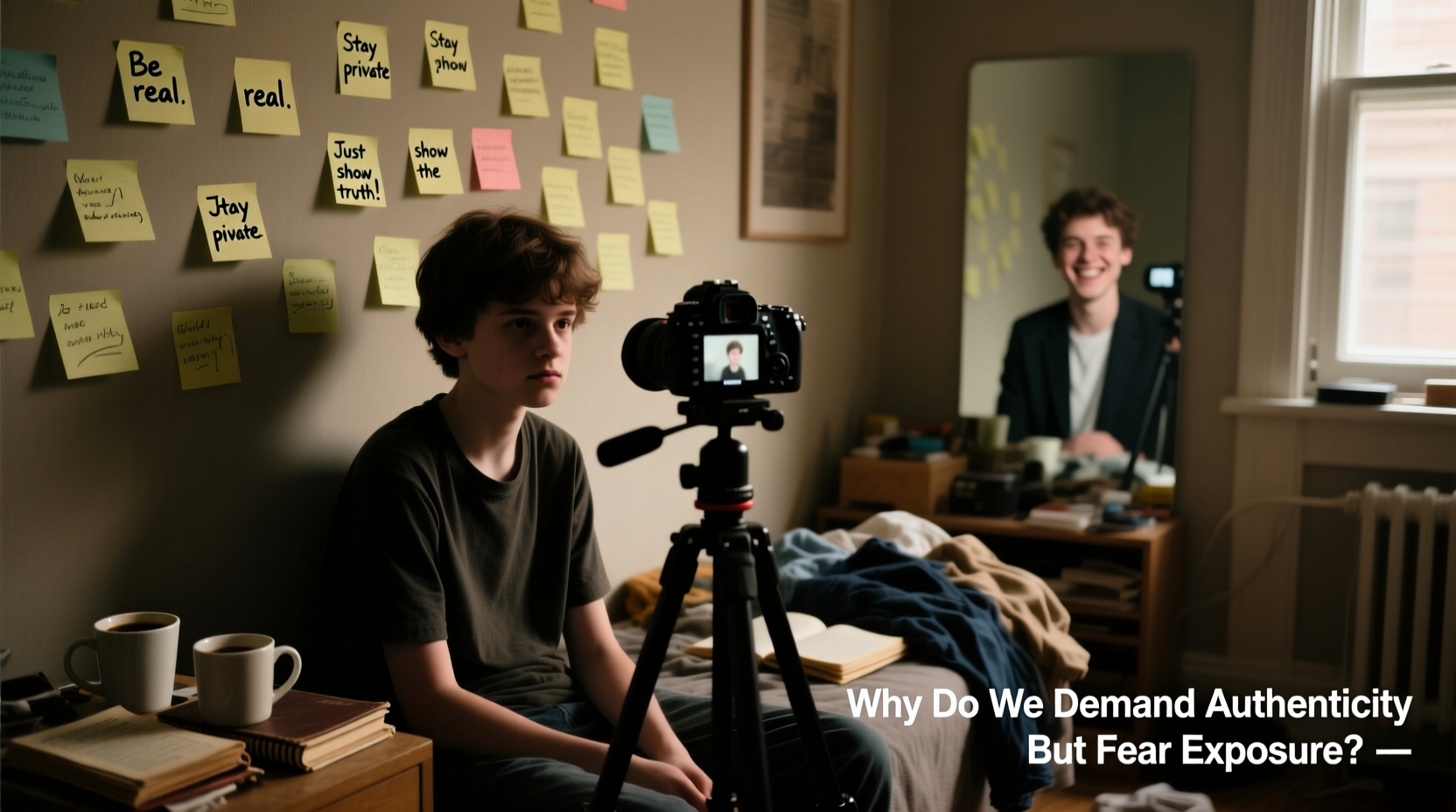
One of the most consistent criticisms of vlogging centers on privacy—both the vlogger’s and others’. When someone documents their life publicly, they often inadvertently expose family members, partners, children, and even strangers without explicit consent. A parent filming a tantrum in a grocery store may capture not just their child but bystanders reacting, all without permission.
This blurring of private and public spheres troubles many observers. In a 2022 Pew Research study, 67% of adults expressed concern about how much personal information is shared online by influencers. The issue intensifies when minors are involved. “Sharenting”—the act of parents extensively documenting their children’s lives online—has drawn scrutiny from child psychologists and privacy advocates alike.
“We’re raising a generation whose earliest memories are filtered through a lens they didn’t choose.” — Dr. Lena Torres, Child Development Specialist
For critics, this represents a profound ethical dilemma. Once content is online, it can be archived, repurposed, or weaponized. Even if deleted, copies may persist across platforms. The permanence of digital footprints clashes with the fluidity of human development, especially for children who grow up under public gaze.
The Performance of Authenticity
Vlogging often markets itself as “real life,” yet audiences increasingly recognize the curated nature behind so-called authenticity. A morning routine video might show sunlight streaming perfectly across a minimalist kitchen, while the reality involves multiple takes, strategic lighting, and careful editing. This paradox—presenting polished content as unfiltered truth—fuels skepticism.
Critics argue that the pressure to appear authentic while maintaining high production value creates a new kind of deception. Unlike traditional media, which openly acknowledges scripting and staging, vlogging thrives on the illusion of spontaneity. This perceived dishonesty alienates viewers who feel manipulated.
Moreover, the algorithmic demands of platforms like YouTube and TikTok incentivize drama, conflict, and emotional extremes. A vlogger might amplify minor disagreements into “relationship breakdown” narratives because such content generates more views. Over time, this shapes not only how stories are told but how relationships are lived—performing for the camera becomes indistinguishable from living.
| Aspect | Presented as (Perceived) | Reality (Behind the Scenes) |
|---|---|---|
| Morning Routine | Natural, effortless start to the day | Filmed over several hours, edited for flow |
| Family Interaction | Spontaneous bonding moments | Directed prompts, repeated takes |
| Emotional Confession | Vulnerable, off-the-cuff sharing | Scripted or rehearsed for impact |
| Travel Vlog | Adventurous exploration | Selective locations, staged scenes, omitted struggles |
This gap between perception and reality leads to a crisis of trust. When authenticity becomes a branding tool rather than a genuine state, audiences grow cynical. For those already wary of social media’s influence, vlogging epitomizes the commodification of intimacy.
The Emotional Toll of Constant Self-Disclosure
Beyond audience skepticism, there’s growing evidence that vlogging can negatively affect the mental health of creators themselves. The need to constantly produce content, respond to feedback, and maintain a public persona leads to burnout, anxiety, and identity fragmentation.
Many long-term vloggers report feeling disconnected from their “real” selves. One former lifestyle vlogger, Sarah K., shared her experience after quitting the platform:
“For five years, I didn’t just make videos—I became a character. My real emotions were secondary to what would get likes. When I finally stopped, I had no idea who I was without the camera.”
This phenomenon, sometimes called “digital self-alienation,” occurs when individuals internalize external validation as a core part of their identity. The line between self-expression and self-exploitation blurs. Critics of vlogging see this not as empowerment but as emotional labor disguised as freedom.
Additionally, the expectation of constant availability erodes personal downtime. Vacations become content opportunities; illnesses turn into “sick day vlogs”; breakups morph into viral confessionals. Life is no longer lived first—it is staged for later consumption.
A Mini Case Study: The Rise and Retreat of “DailyVlogger”
Jamal R., known online as “DailyVlogger,” gained over 800,000 subscribers by posting a video every single day for three years. His content ranged from cooking experiments to therapy session reflections (with therapist approval). Initially praised for his transparency, he began receiving criticism when he filmed a heated argument with his sister during a family visit.
The video went viral, amassing 2 million views. But backlash followed. Viewers questioned whether his sister knew the footage would be shared. She later confirmed she hadn’t consented to the upload. Jamal removed the video and issued an apology, but the damage was done. He deactivated his channel six months later, citing emotional exhaustion and guilt.
His story illustrates the fine line vloggers walk: the pursuit of connection through vulnerability can easily cross into violation—of others, and of oneself.
Authenticity as a Commodity
In today’s attention economy, authenticity has become a marketable trait. Brands seek influencers who “feel real” because audiences trust them more than traditional ads. But this commercial incentive distorts the meaning of authenticity. When being “real” translates to higher sponsorship rates, sincerity becomes strategic.
Consider the rise of “anti-vlogging”—videos where creators claim to reject performative content by saying things like “No edits, no script, just talking.” Ironically, these too are often carefully structured, filmed in ideal lighting, and optimized for retention. The rebellion is itself a performance.
Philosopher Byung-Chul Han describes this shift in his work *The Burnout Society*, noting that modern subjectivity is shaped by “achievement compulsions” and “forced positivity.” In the context of vlogging, this means individuals aren’t just sharing—they’re compelled to perform happiness, growth, and resilience, even when they’re struggling.
For critics, this transforms vlogging from a creative outlet into a form of emotional capitalism. People don’t just earn money from their lives—they must optimize their pain, joy, and relationships into consumable content. This instrumentalization of personal experience is deeply unsettling to those who value introspection and quiet reflection.
Tips for Ethical Vlogging: A Practical Checklist
Not all vlogging is exploitative or inauthentic. Many creators manage to balance transparency with responsibility. If you create or consume vlogs, consider this checklist to promote healthier practices:
- ✅ Obtain informed consent from anyone appearing in your videos, especially minors.
- ✅ Avoid filming during emotionally volatile moments unless you’ve processed them offline first.
- ✅ Disclose sponsorships clearly—don’t let partnerships distort your narrative.
- ✅ Set boundaries: designate tech-free times or zones in your home.
- ✅ Reflect regularly on your motivations: Are you creating for connection or validation?
- ✅ Archive or delete old content that no longer aligns with your values.
- ✅ Acknowledge the gap between your online persona and private self—without shame.
FAQ: Addressing Common Concerns
Isn’t vlogging just modern diary-keeping? Why the criticism?
While vlogging can serve a similar function to journaling, the key difference is audience and permanence. Diaries are private and ephemeral; vlogs are public and archived. Sharing intimate thoughts with millions carries different risks—like cyberbullying, data mining, or future professional repercussions—than writing in a notebook.
Can vlogging ever be truly authentic?
Yes—but authenticity requires intentionality. It means acknowledging the camera’s presence, owning your edits, and resisting the urge to exaggerate for views. True authenticity includes admitting when you’re performing. It’s not the absence of curation but the honesty about it.
Are younger generations more comfortable with vlogging because of digital nativism?
Many assume younger people are inherently more open to sharing online, but research shows mixed results. While some embrace digital expression, others are increasingly cautious. A 2023 Common Sense Media report found that 52% of teens limit their social media use due to privacy fears. Digital comfort doesn’t automatically mean endorsement of oversharing.
Conclusion: Reclaiming Presence in a Performative World
The resistance to vlogging isn’t just about disliking a trend—it’s a pushback against a culture that equates visibility with value. When every life event risks becoming content, we lose the sacredness of private experience. Moments meant for silence, grief, or simple presence are instead framed, lit, and uploaded.
Privacy isn’t outdated; it’s essential for autonomy. Authenticity isn’t obsolete; it’s worth protecting from commodification. The critics of vlogging aren’t necessarily anti-technology—they’re pro-integrity. They advocate for a world where we don’t have to perform our lives to prove we’re living them.
If you create content, consider how you can honor both your audience and your inner life. If you consume it, reflect on what you’re really seeking—connection, distraction, or comparison? And if you choose not to participate, know that your silence is not a failure. Sometimes, the most radical act is to live unrecorded.




 浙公网安备
33010002000092号
浙公网安备
33010002000092号 浙B2-20120091-4
Comments
No comments yet. Why don't you start the discussion?