
Tree wrapping is a common practice in arboriculture, gardening, and even spiritual rituals. While the primary purpose is often protection—against pests, sunscald, or physical damage—the direction in which people wrap trees has sparked curiosity and debate. Some swear by clockwise wrapping; others insist on counterclockwise. The reasons vary widely, spanning practical horticulture, cultural symbolism, energy flow beliefs, and regional traditions. This article explores the real-world applications, mythologies, and science behind wrapping trees in one direction over the other.
The Practical Side of Tree Wrapping
From a botanical standpoint, tree wrapping serves several essential functions. Young trees, especially those with thin bark like maples, ashes, and fruit trees, are vulnerable to temperature fluctuations during winter. Sudden heating from midday sun followed by rapid cooling at night can cause bark splitting—a condition known as sunscald. Tree wraps help regulate bark temperature and prevent this damage.
In addition, wraps act as a barrier against rodents such as mice and rabbits that gnaw on bark during winter months, potentially girdling and killing the tree. They also protect saplings from lawnmowers, weed trimmers, and mechanical injury during landscaping work.
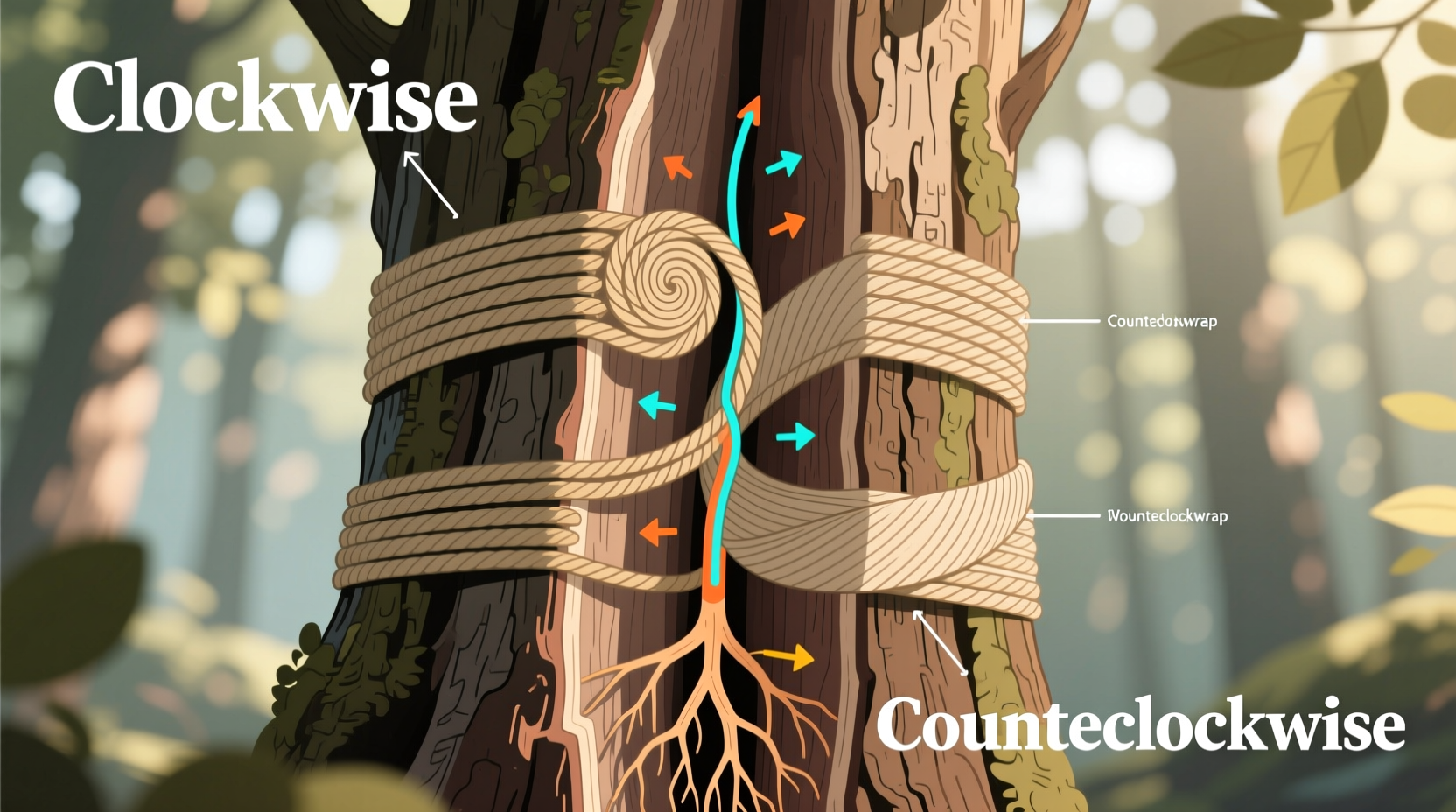
When applied correctly, tree wraps should start at the base of the trunk and spiral upward, overlapping slightly with each turn. But here’s where the directional question arises: does it matter if you go clockwise or counterclockwise?
Cultural and Spiritual Beliefs Behind Directional Wrapping
Beyond practicality, many cultures assign symbolic meaning to rotational directions. In numerous spiritual traditions, clockwise motion (also called \"deosil\" in Celtic practices) is associated with positive energy, progression, and harmony with natural cycles. Conversely, counterclockwise movement (\"widdershins\") is sometimes seen as disruptive or reserved for specific ritual purposes, such as banishing negative influences.
In parts of India and Nepal, sacred trees like the banyan or peepal are often adorned with cloth strips wrapped clockwise during religious ceremonies. Devotees believe this aligns with the sun’s path across the sky and channels auspicious energy into the tree and surrounding area. Similarly, in Shinto practices in Japan, ropes called shimenawa are placed around sacred trees or stones, typically arranged in a way that follows traditional ritual geometry—often involving clockwise patterns.
“Direction matters when intention is involved. In ritual contexts, clockwise wrapping honors life’s natural rhythm.” — Dr. Anika Mehta, Cultural Anthropologist, University of Delhi
This symbolic alignment extends to modern eco-spiritual movements. Permaculture practitioners and earth-based spiritual communities sometimes incorporate directional wrapping into land stewardship, believing that conscious actions enhance ecological balance.
Horticultural Best Practices: Does Direction Matter?
From a strictly scientific perspective, there is no empirical evidence that wrapping a tree clockwise or counterclockwise affects its health, growth rate, or survival. Arborists focus instead on material choice, timing, tension, and removal schedule.
However, subtle ergonomic factors may influence preference. Right-handed individuals often find it more natural to wrap in a clockwise direction when moving upward from the base, as this allows better control and overlap. Left-handed people may feel more comfortable going counterclockwise. While not a rule, this tendency can create regional or personal patterns.
The key is ensuring the wrap is snug but not too tight, allowing room for seasonal expansion. Overlapping by about one-third with each turn helps block pests and sunlight effectively. Whether the spiral goes left or right makes little difference as long as coverage is consistent.
Common Tree Wrap Materials and Their Uses
| Material | Best For | Lifespan | Direction Preference |
|---|---|---|---|
| Paper-based tree wrap | Winter sunscald protection | One season | No preference |
| Plastic mesh guards | Rodent and mechanical protection | 2–5 years | Ergonomic (usually clockwise) |
| Cloth or fabric strips | Ceremonial or aesthetic use | Varies (biodegradable) | Spiritual (often clockwise) |
| Reflective aluminum wrap | High-sun climates | 1–3 seasons | No effect |
Regional Traditions and Folk Practices
In certain rural communities, folk knowledge dictates the direction of wrapping based on generational teachings. For example, in parts of Eastern Europe, older gardeners teach younger family members to wrap fruit trees clockwise in late autumn to “help the tree remember the sun’s path” and awaken properly in spring. These beliefs, while not scientifically validated, reflect deep-rooted connections between people and nature.
In contrast, some Indigenous groups in North America use counterclockwise wrapping during specific healing rituals involving trees, symbolizing the release of illness or imbalance. Again, these are ceremonial acts rather than horticultural recommendations.
A mini case study from Vermont illustrates how tradition and practice intersect:
Step-by-Step Guide to Proper Tree Wrapping
Regardless of direction, correct technique ensures your efforts yield results. Follow this sequence for optimal protection:
- Choose the right time: Late fall, after leaf drop but before extreme cold sets in (typically November in temperate zones).
- Select appropriate material: Use commercial tree wrap or breathable fabric. Avoid plastic tape or non-porous materials that trap moisture.
- Start at the base: Begin just above the soil line, leaving root flare exposed.
- Spiral upward: Wrap in overlapping turns up to the lowest branches. Either clockwise or counterclockwise is acceptable—consistency matters more than direction.
- Secure gently: Fasten the end with a soft tie or adhesive dot. Do not staple or nail into bark.
- Inspect regularly: Check monthly for pests, mold, or tightness.
- Remove in spring: Take off wraps by early April to prevent overheating and girdling.
Debunking Myths About Rotational Energy
Some alternative wellness circles claim that clockwise wrapping “charges” a tree with positive chi or prana, while counterclockwise draining negative energy. While poetic, these ideas lack scientific basis. Trees do not possess nervous systems or energy fields in the way humans conceptualize them. Photosynthesis, nutrient transport, and growth are governed by biochemistry and environmental cues—not rotational direction during wrapping.
That said, the psychological benefit of intentional care should not be dismissed. Gardeners who approach tree maintenance mindfully—regardless of direction—are more likely to monitor plant health, respond to issues early, and form deeper connections with their environment.
Checklist: Effective Tree Wrapping Do’s and Don’ts
- Do wrap young, thin-barked trees in climate zones with harsh winters.
- Do use breathable, flexible materials.
- Do start low and move upward with slight overlap.
- Do remove wraps each spring without fail.
- Don’t leave wraps on year-round—this invites insects and disease.
- Don’t wrap too tightly—allow space for growth.
- Don’t apply to mature trees unless absolutely necessary.
- Don’t use duct tape, wire, or zip ties directly on bark.
Frequently Asked Questions
Does wrapping direction affect tree growth?
No. Scientific studies have shown no correlation between wrapping direction and tree health, growth rate, or survival. Factors like material, fit, and duration matter far more.
Why do some cultures prefer clockwise wrapping?
Many cultures associate clockwise motion with the sun’s path, natural cycles, and positive energy. Ritualistic wrapping often follows these symbolic patterns, especially in religious or ceremonial contexts.
Can I reuse tree wrap?
Durable plastic mesh guards can be reused for several years if cleaned and stored properly. Paper-based wraps should be replaced annually as they degrade quickly.
Conclusion: Purpose Over Pattern
The debate over clockwise versus counterclockwise tree wrapping ultimately reveals more about human culture than botany. While arborists emphasize technique, timing, and material over rotational direction, the persistence of directional customs speaks to our desire to imbue everyday actions with meaning.
Whether you wrap trees for protection, tradition, or ritual, the most important factors remain unchanged: use the right materials, apply them correctly, and remove them on time. If wrapping clockwise brings you peace of mind or connects you to your heritage, there’s no harm in continuing the practice—just don’t expect the tree to notice the difference.
What matters most is attention. A gardener who wraps a tree thoughtfully—regardless of direction—is already practicing a form of stewardship that benefits both plants and people.




 浙公网安备
33010002000092号
浙公网安备
33010002000092号 浙B2-20120091-4
Comments
No comments yet. Why don't you start the discussion?