
It’s a familiar experience: you spritz on a new fragrance in the morning, only to find it nearly gone by midday. Meanwhile, an old favorite from years ago still lingers well into the evening with just a single spray. Why such a stark difference? The answer lies not in magic or marketing hype, but in chemistry, concentration, skin compatibility, and application technique. Understanding these factors can transform how you choose, wear, and maintain your scents—ensuring they last as long as you intend.
The Science Behind Scent Longevity
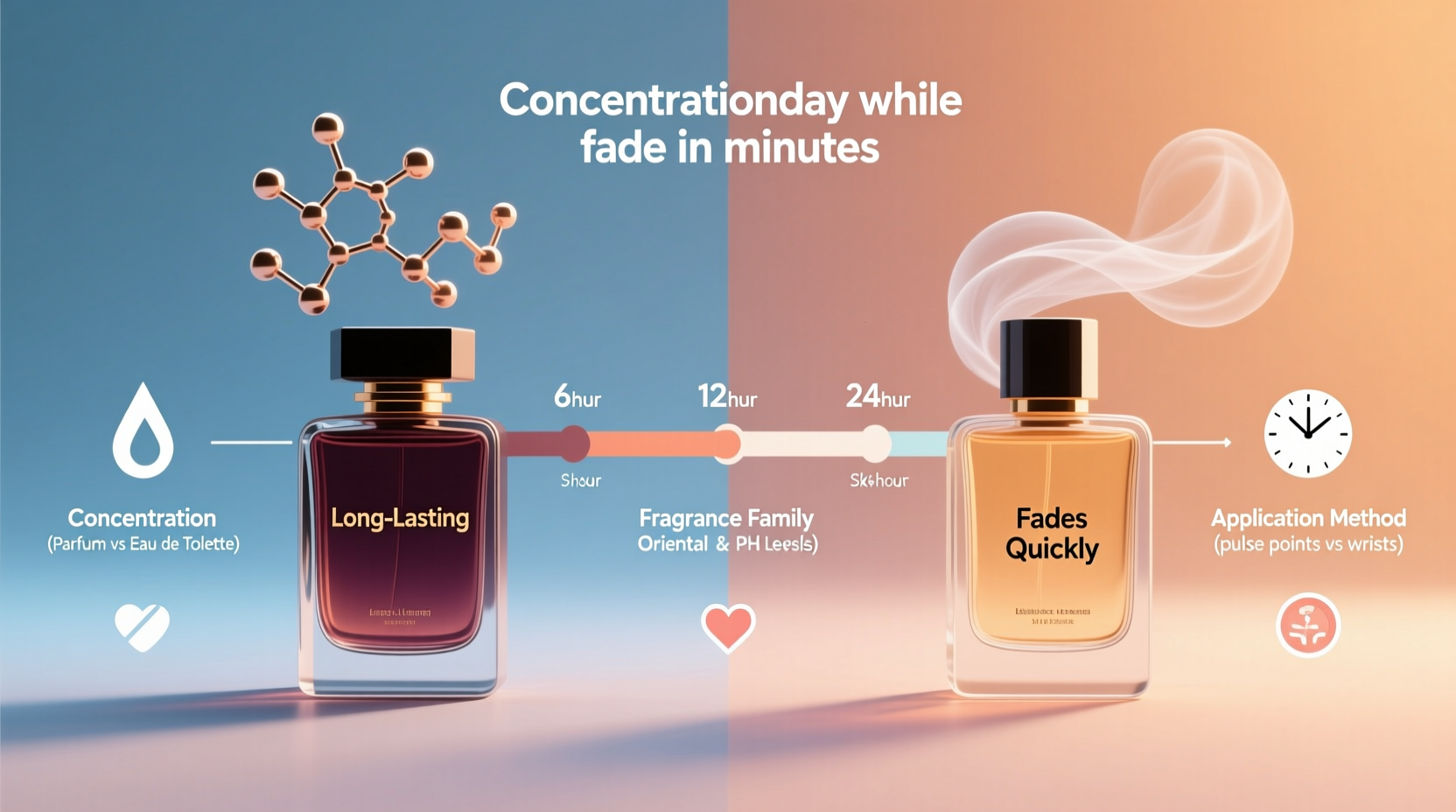
Fragrance longevity is determined by how slowly the aromatic compounds evaporate from the skin. Perfumes are made up of volatile organic compounds that release scent molecules over time. These compounds are categorized into three main stages known as \"notes\": top, middle (heart), and base.
- Top notes: The first impression of a perfume—light, fresh, and fleeting. They usually last 5–15 minutes.
- Middle notes: Emerge once the top notes dissipate. These define the character of the fragrance and typically last 20 minutes to several hours.
- Base notes: Deep, rich, and slow-evaporating. They anchor the scent and can linger for hours, even days on clothing or hair.
The rate at which each layer unfolds depends on molecular weight. Lighter molecules like citrus or aldehydes evaporate quickly, while heavier ones—such as sandalwood, vanilla, or musk—persist much longer. A well-balanced perfume ensures a smooth transition between these phases, creating a lasting olfactory journey.
Fragrance Concentration: The Key Determinant
One of the most significant reasons perfumes differ in staying power is their concentration of aromatic oils. The higher the oil-to-alcohol ratio, the longer the scent lasts. Here's a breakdown of common types:
| Fragrance Type | Oil Concentration | Average Longevity | Best For |
|---|---|---|---|
| Eau de Cologne (EDC) | 2–5% | 1–2 hours | Summer daytime use, casual wear |
| Eau de Toilette (EDT) | 5–15% | 3–5 hours | Daily wear, office settings |
| Eau de Parfum (EDP) | 15–20% | 6–8 hours | Evening events, cooler weather |
| Parfum (Extrait) | 20–30%+ | 8–12+ hours | Special occasions, long-lasting impact |
For example, a classic EDP like *Tom Ford Black Orchid* contains high levels of rich base notes and concentrated oils, allowing it to remain perceptible for over 10 hours. In contrast, a light citrus EDC may vanish within 90 minutes despite being pleasant initially.
“Longevity starts with formulation. A parfum isn’t just stronger—it’s built to evolve slowly on the skin.” — Dr. Lena Moreau, Cosmetic Chemist & Fragrance Formulator
Skin Chemistry and Body Factors
No two people experience a fragrance the same way. Your skin type, pH level, diet, and even hormones influence how a scent behaves. Oily skin tends to retain fragrance longer because natural sebum helps trap scent molecules. Dry skin, on the other hand, allows them to evaporate more rapidly.
Hydration plays a crucial role. Well-moisturized skin creates a better canvas for perfume adherence. Applying unscented lotion or petroleum jelly to pulse points before spraying can dramatically extend wear time.
Body temperature also affects diffusion. Warmer skin increases evaporation, making the scent project more—but sometimes shortening its lifespan. This explains why the same perfume might feel stronger in summer yet disappear faster than in winter.
Real Example: Two Women, One Perfume
Claire and Maya both bought the same popular floral EDT. Claire has oily, warm-toned skin and lives in a humid climate. She applies one spray to her wrists and neck and still smells hints of jasmine eight hours later. Maya, however, has dry, cool skin and works in an air-conditioned office. Her version of the same scent fades after two hours. Neither is doing anything wrong—their bodies simply interact with the fragrance differently.
Environmental and Application Influences
Where and how you apply perfume matters just as much as what you’re wearing. Common mistakes can sabotage even the longest-lasting formulas.
Common Application Errors That Reduce Longevity
- Rubbing wrists together: This breaks down delicate top notes and accelerates evaporation.
- Spraying in the air and walking through: Most of the mist lands on clothes or dissipates, reducing skin contact.
- Storing in direct sunlight or humid bathrooms: Heat and moisture degrade essential oils over time.
- Using heavily scented skincare: Competing fragrances alter the intended balance of your perfume.
Instead, target pulse points—wrists, inner elbows, base of the throat, behind knees—where blood flow generates warmth and gently lifts the scent throughout the day.
Additionally, fabric absorbs and holds fragrance far longer than skin. Spraying lightly on scarves, coat collars, or even hair (use sparingly to avoid drying) can preserve the scent well beyond skin-based wear.
Step-by-Step Guide: Maximizing Fragrance Longevity
- Exfoliate and hydrate: Start with clean, moisturized skin to improve adhesion.
- Use a matching fragrance base: Apply unscented or coordinating lotion before spraying.
- Target pulse points: Spray directly onto warm areas without rubbing.
- Reapply strategically: Carry a travel atomizer for touch-ups after lunch or before evening events.
- Store properly: Keep bottles in a cool, dark place, ideally upright to preserve the spray mechanism.
“I keep my favorite parfums in a small wooden box inside my closet. No light, no heat—just like wine.” — Adrian Reyes, Scent Collector & Blogger
Fragrance Families and Their Staying Power
Not all scent categories are created equal when it comes to endurance. Some accords naturally lend themselves to longevity due to their chemical composition.
- Oriental & Woody: Rich in resins, spices, and deep woods. Often last 8+ hours. Examples: *Maison Margiela By the Fireplace*, *Dior Sauvage Elixir*.
- Chypre: Built around oakmoss and patchouli, offering complex, enduring trails. Example: *Guerlain Chant d'Arômes*.
- Floral: Can be short-lived if dominated by top-note blossoms, but longer when anchored by vanilla or musk. Example: *Tom Ford Velvet Orchid*.
- Citrus & Fresh: Typically fade fastest unless blended with synthetic fixatives. Ideal for daytime refreshment rather than all-day wear.
Modern perfumery often uses synthetic molecules like Iso E Super, Ambroxan, or Galaxolide to enhance projection and staying power—even in lighter compositions. These materials are odorless or faintly scented but act as “carriers,” helping other notes cling to the skin longer.
Checklist: How to Choose a Long-Lasting Perfume
Before purchasing, ask yourself these questions:
- ✅ Is it Eau de Parfum or Parfum concentration?
- ✅ Does it feature base notes like vanilla, amber, sandalwood, or musk?
- ✅ Have I tested it on my skin for at least 6 hours?
- ✅ Am I applying it correctly (no rubbing, pulse points only)?
- ✅ Do I have dry skin that needs pre-moisturizing?
- ✅ Is my current bottle stored properly and not expired?
Frequently Asked Questions
Can I make a weak perfume last longer?
Yes. Apply it over a fragrance-free moisturizer or petroleum jelly. You can also layer with a similar-scented body spray or roll-on oil. Avoid mixing too many different scents, as this can distort the original aroma.
Why does my perfume last longer on clothes than skin?
Fabric fibers absorb and trap fragrance molecules more effectively than skin, which naturally sheds cells and produces oils that break down scent. However, always test on a small area first—some perfumes can stain silk or light-colored fabrics due to alcohol or dyes.
Does expensive mean longer-lasting?
Not necessarily. While luxury brands often invest in high-quality ingredients and concentrations, many affordable fragrances (like those from The Body Shop or Zara’s collaborations) offer impressive longevity thanks to modern synthetics. Price reflects branding, packaging, and distribution as much as performance.
Conclusion: Make Your Scent Work for You
The disparity between fleeting and enduring perfumes isn’t random—it’s rooted in formulation, biology, and habit. By understanding the role of concentration, skin type, and proper application, you gain control over how your fragrance performs. Whether you prefer a subtle morning refresher or a bold signature scent that stays with you until bedtime, there’s a strategy to match your lifestyle.
Next time you reach for your favorite bottle, consider not just how it smells at first spray, but how it evolves. With mindful choices and simple adjustments, you can turn even moderately lasting fragrances into all-day companions—or finally unlock the full potential of that luxurious parfum you’ve been saving for special moments.




 浙公网安备
33010002000092号
浙公网安备
33010002000092号 浙B2-20120091-4
Comments
No comments yet. Why don't you start the discussion?