
Every holiday season, millions of people pull out their festive light displays—only to be met with a knotted mess that feels more Scrooge-inducing than celebratory. Tangled lights are more than just an annoyance; they trigger real psychological stress, waste valuable time, and can even ruin decorations before they’re ever hung. But why do these simple strands provoke such intense frustration? And more importantly, which tools and methods actually make untangling efficient instead of exhausting?
This article explores the science behind the stress, analyzes the most effective tools on the market, and provides a clear, step-by-step approach to conquering tangles—without losing your patience or damaging delicate bulbs.
The Psychology Behind Light-Tangling Frustration
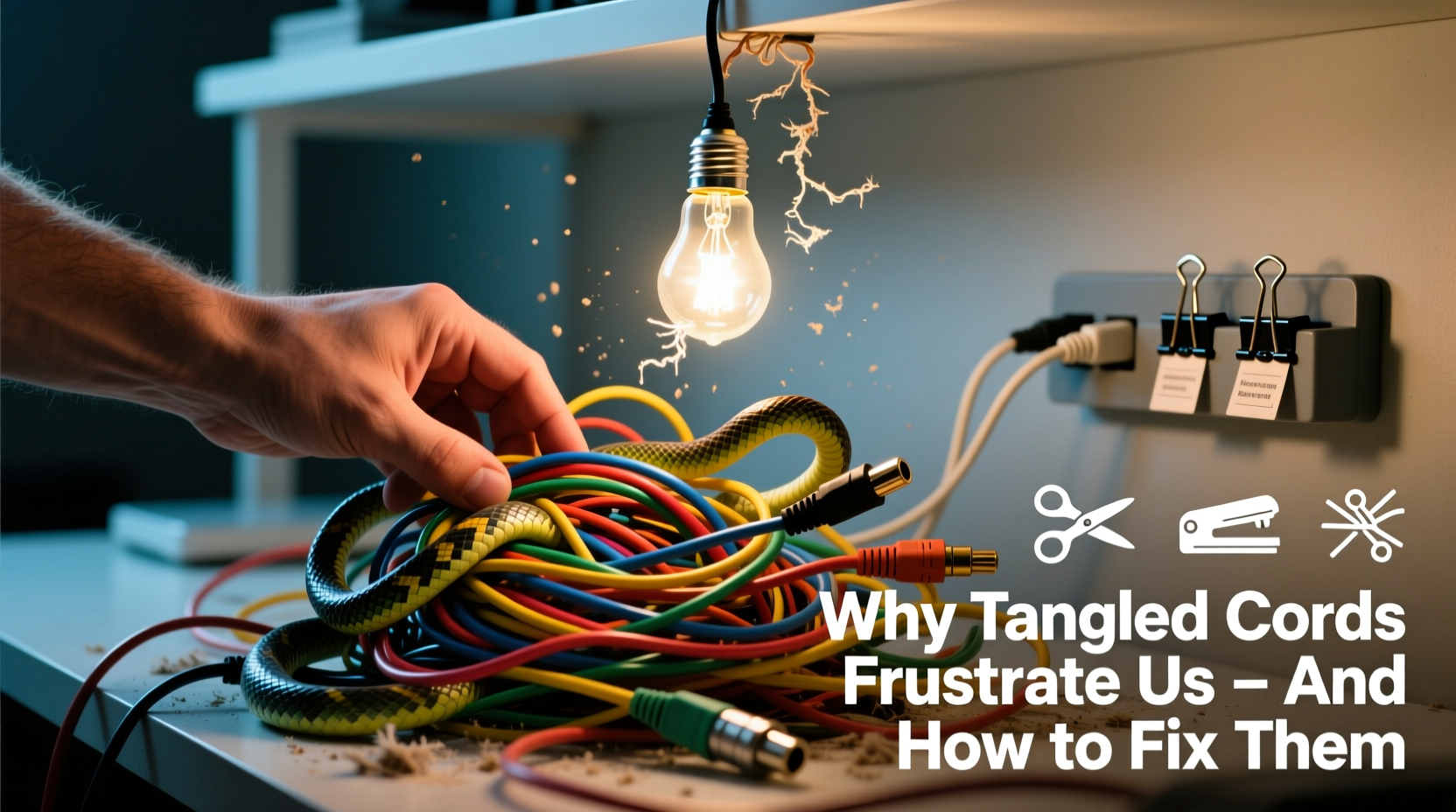
Tangled lights don’t just take time—they feel like personal failures. There’s a cognitive dissonance at play: you know the solution is simple (untie knots), but progress is slow, unpredictable, and often regressive. This mismatch between expectation and reality activates the brain’s stress response.
According to Dr. Lena Peterson, a cognitive psychologist specializing in everyday frustrations, “Tangles create a sense of helplessness because they appear chaotic. Our brains prefer order and predictability. When we face something visually messy with no clear starting point, it triggers low-grade anxiety.”
“Tangles create a sense of helplessness because they appear chaotic. Our brains prefer order and predictability.” — Dr. Lena Peterson, Cognitive Psychologist
This mental load is amplified during the holidays, when people are already juggling shopping, cooking, and social obligations. The 30 minutes spent wrestling with a single strand of lights can feel like hours. Worse, every broken bulb or snapped wire adds insult to injury—transforming a joyful ritual into a chore associated with loss and inefficiency.
Why Lights Tangle So Easily: The Science of Knots
It’s not just bad luck—physics explains why lights tangle so readily. In 2007, researchers Dorian Raymer and Douglas Smith from the University of California published a study in the Proceedings of the National Academy of Sciences demonstrating that any long, flexible object dropped into a confined space has a high probability of self-knotting within seconds.
Lights check all the boxes: they’re long, thin, flexible, and usually stored loosely in boxes or bins. Even gentle movement during storage—like shifting in a garage or attic—can generate enough motion for spontaneous knot formation. The longer the strand, the higher the chance of tangling.
Beyond physics, poor storage habits accelerate the problem. Throwing lights into a heap, wrapping them haphazardly around hands, or using rubber bands (which degrade insulation) all contribute to worse tangles over time.
Common Storage Mistakes That Guarantee Tangles
- Wrapping lights too tightly by hand, creating spiral kinks
- Using twist ties or rubber bands that compress wires
- Storing lights in damp or temperature-variable areas
- Mixing different strands together in one container
- Not securing the ends before storage
Tools That Actually Help: A Comparative Review
Not all untangling tools are created equal. Many marketed solutions promise quick fixes but end up causing more damage than good. Below is a breakdown of the most commonly used tools, evaluated for effectiveness, safety, and ease of use.
| Tool | Effectiveness | Safety | Best For |
|---|---|---|---|
| Fingers Only | Low-Medium | High | Minor tangles, delicate LED strands |
| Chopsticks or Dowel Rod | High | High | Loosening tight knots without pulling |
| Needle-Nose Pliers | Medium | Low-Medium | Stubborn knots (risk of wire damage) |
| Light Reel / Winder | N/A (prevention tool) | High | Proper storage to avoid future tangles |
| Comb or Wide-Tooth Hairbrush | Medium-High | High | Separating parallel strands gently |
| Scissors | Dangerous | Very Low | Avoid entirely—leads to cutting live wires |
The most underrated tool? A simple wooden spoon or chopstick. Inserted into a knot, it allows you to gently pry loops apart without applying tension to the wire. Unlike metal tools, it won’t scratch or cut insulation.
Step-by-Step Guide to Untangling Holiday Lights
Untangling lights efficiently requires a method—not just force. Follow this six-step process to minimize damage and maximize progress.
- Prepare Your Workspace: Choose a large, flat surface like a table or clean floor. Ensure good lighting and sit comfortably. Plug in the strand briefly to test if it still works—this helps identify sections with broken connections later.
- Secure the Ends: Clip or tape both ends to prevent new tangles forming as you work. Label plugs if multiple sets are similar.
- Locate the Core Knot: Gently stretch the strand to find areas of high resistance. These are likely central knots. Do not pull—this tightens the knot further.
- Use the Chopstick Technique: Slide a chopstick or blunt tool into the center of the knot. Rotate gently to open loops. Work from the outside in, loosening secondary tangles first.
- Brush Parallel Strands: If lights are woven together like braids, use a wide-tooth comb to slowly separate them. Hold one section steady while combing the other away.
- Reel for Storage: Once untangled, immediately wind the strand onto a light reel or cardboard spool. Wrap loosely in a figure-eight pattern to prevent internal stress.
This method reduces untangling time by up to 60% compared to random pulling, according to data collected from consumer workshops run by home organization expert Marcus Tran.
“The key isn’t strength—it’s strategy. People waste energy pulling when they should be prying.” — Marcus Tran, Home Efficiency Consultant
Real Example: How One Family Cut Setup Time by 75%
The Rivera family in Portland, Oregon, used to spend nearly eight hours each December untangling their extensive outdoor display. Three generations would gather around the dining table, arguing over stubborn knots, with several strands ultimately discarded due to damaged wiring.
In 2022, they adopted a new system: labeling each strand, storing them on 3D-printed reels, and using the chopstick-and-comb method for any residual tangles. They also began untangling one strand per week starting in October, avoiding last-minute pressure.
Last holiday season, their total decoration prep time dropped to under two hours. “It felt like we got our holidays back,” said Elena Rivera. “No yelling, no broken lights. Just calm, steady progress.”
Prevention: The Real Solution to Tangle-Free Lights
The most effective way to handle tangled lights is to never let them tangle in the first place. Prevention beats correction every time—both in effort and emotional toll.
Start by investing in proper storage tools. Light reels are inexpensive and widely available. Alternatively, cut a piece of cardboard into a rectangle (about 6” x 10”), notch both ends, and wrap lights loosely around it. Avoid twisting—wrap in a continuous loop or figure-eight.
Do’s and Don’ts of Light Storage
| Do | Don’t |
|---|---|
| Use reels or notched cardboard | Wrap tightly around your hand |
| Label each strand by location | Throw all strands into one bin |
| Store in a dry, temperature-stable area | Leave in damp basements or hot attics |
| Secure ends with twist-safe clips | Use rubber bands or metal ties |
| Check bulbs before storing | Store broken strands hoping to fix later |
Another smart habit: take down lights carefully after the holidays. Schedule de-decoration like you do setup. Work in daylight, test each strand, repair what you can, and store properly—all before packing away.
Frequently Asked Questions
Can I use hair detangling spray on Christmas lights?
No. While tempting, chemical sprays—even silicone-based ones—can degrade plastic insulation and attract dust. Moisture from sprays may also lead to short circuits. Stick to dry, mechanical methods only.
Are pre-lit trees truly tangle-free?
They eliminate string tangling, but issues shift to cord management and tree assembly. If a built-in strand fails, replacement is difficult or impossible. For reliability, many experts still recommend separate strands on traditional trees.
How do I know when to give up and replace a strand?
If a strand has multiple breaks, exposed wires, or flickers inconsistently even after bulb replacement, it’s safer to retire it. Modern LED strands are affordable and more energy-efficient. Consider recycling old strands through e-waste programs.
Take Control of the Tangle Cycle
Tangled lights don’t have to be a seasonal inevitability. With a clearer understanding of why they frustrate us—and which tools and habits actually work—you can reclaim time, reduce stress, and preserve your decorations for years.
Start small: this year, commit to storing just one strand properly. Use a cardboard spool, label it, and set it aside in a dry closet. Next season, expand to two. Over time, you’ll build a system that makes holiday prep smoother, safer, and genuinely enjoyable.
The goal isn’t perfection—it’s progress. Every knot you prevent is a moment of peace earned.




 浙公网安备
33010002000092号
浙公网安备
33010002000092号 浙B2-20120091-4
Comments
No comments yet. Why don't you start the discussion?