
Have you ever wondered why some people bob effortlessly at the surface of a pool while others sink despite their best efforts? The answer lies not in willpower or swimming skill, but in fundamental physical principles—specifically, buoyancy and density. These forces govern everything from submarines to icebergs, and they explain our own ability to float. Understanding how and why we float reveals much about the interplay between our bodies and the water around us.
The Science of Buoyancy: Archimedes’ Principle
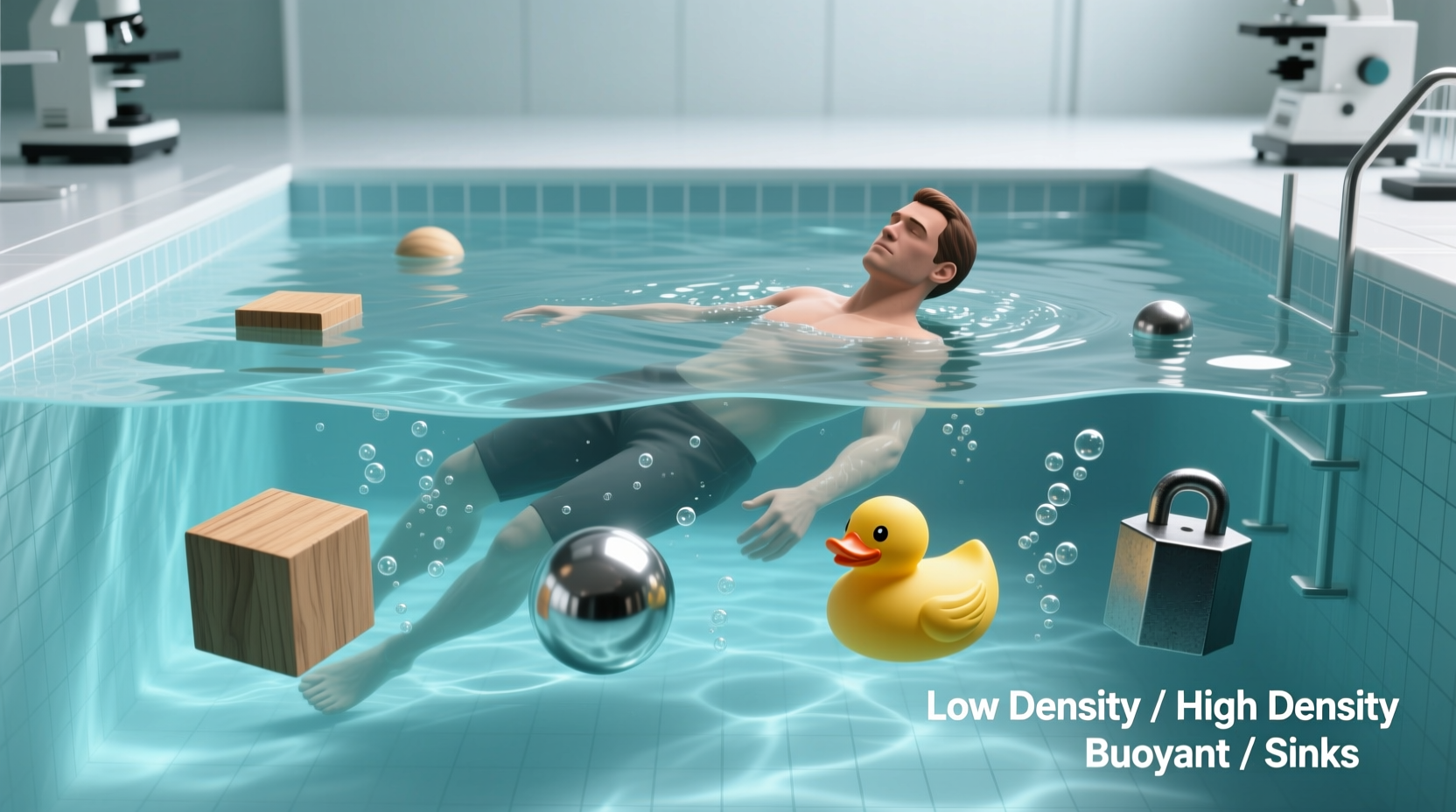
Buoyancy is the upward force exerted by a fluid that opposes the weight of an object immersed in it. This principle was first articulated over two millennia ago by the Greek mathematician Archimedes. According to his discovery, any object submerged in a fluid experiences an upward force equal to the weight of the fluid it displaces.
This means if you step into a bathtub full to the brim, the amount of water that spills over weighs exactly as much as the upward push you feel on your body. If the displaced water weighs more than you do, you’ll float. If it weighs less, you’ll sink—unless you generate lift through movement, like kicking or paddling.
“Any body completely or partially submerged in a fluid is acted upon by an upward force equal to the weight of the fluid displaced.” — Archimedes of Syracuse
In practical terms, this explains why massive steel ships can float: their hulls are designed to displace a volume of water that weighs more than the entire ship. For humans, the same rule applies—but with more variability due to body composition.
Density: The Key to Floating or Sinking
Density—the mass of an object per unit volume—is the deciding factor in whether something floats. Water has a density of about 1 gram per cubic centimeter (g/cm³). An object with a lower average density than water will float; one with a higher density will sink.
The human body’s overall density varies from person to person. On average, it hovers just below that of water, which is why most people can float with some effort. But several internal factors influence this balance:
- Fat tissue: Less dense than water, fat increases buoyancy.
- Muscle and bone: Denser than water, these tissues pull you downward.
- Lung capacity: Air in the lungs reduces overall body density significantly.
- Body composition: Individuals with higher body fat percentages tend to float more easily.
How Body Type Affects Flotation
Two individuals of the same height and weight may experience very different floating behaviors due to differences in body composition. Consider this comparison:
| Body Type | Fat Percentage | Muscle Mass | Typical Flotation Ability |
|---|---|---|---|
| Endomorph | Higher (25–35%) | Lower | Floats easily, often naturally |
| Mesomorph | Moderate (15–22%) | High | May need technique to stay afloat |
| Ectomorph | Low (10–15%) | Moderate | Tends to sink; requires active effort |
This variation explains why elite swimmers—often mesomorphic with high muscle-to-fat ratios—can struggle with floating during rest phases. Their powerful physiques work against them in passive buoyancy, requiring learned techniques to remain on the surface without effort.
Real-World Example: Floating in Saltwater vs. Freshwater
A striking example of density in action occurs when comparing floating in freshwater lakes versus saltwater seas. The Dead Sea, bordered by Jordan and Israel, contains nearly ten times the salinity of typical seawater. This dramatically increases the water’s density—up to 1.24 g/cm³—making it almost impossible to sink.
Visitors routinely recline on the surface, reading books or sipping tea, supported entirely by the buoyant force. In contrast, the same person might need to tread water in a freshwater lake. The added dissolved salts increase the mass of the water without increasing volume, enhancing the upward push on the body.
This phenomenon isn’t limited to extreme cases. Even ocean water (density ~1.03 g/cm³) provides noticeably better buoyancy than a swimming pool (~1.00 g/cm³). Swimmers often report feeling “lighter” in the sea—a direct result of physics, not imagination.
Step-by-Step Guide to Floating Effectively
Even if your body type isn’t naturally buoyant, you can improve your ability to float with proper technique. Follow these steps:
- Relax completely: Tension causes muscles to tighten and sinks the chest. Practice breathing slowly and letting go of fear.
- Fill your lungs: Take a deep breath before lying back. More air = greater buoyancy.
- Lean back gently: Start in shallow water. Tilt your head slightly back and allow your legs to rise.
- Spread your limbs: Extend arms and legs slightly outward to distribute weight and stabilize position.
- Adjust posture: If your legs drop, try pointing toes up or bending knees slightly to shift balance.
- Exhale slowly: When ready to submerge or stand, release air gradually to avoid sudden sinking.
With practice, even those with dense builds can master passive floating. It’s less about strength and more about alignment, breath control, and trust in the water’s support.
Common Misconceptions About Floating
Several myths persist about why people float or sink:
- Myth: Only good swimmers can float.
Truth: Floating is a function of physics, not skill. Many non-swimmers float naturally. - Myth: Everyone should be able to float on their back.
Truth: Some individuals, especially those with high bone density and low body fat, will always require motion to stay afloat. - Myth: Water temperature doesn’t affect buoyancy.
Truth: Cold water is denser than warm water, offering slightly more buoyant force.
FAQ
Can a person with low body fat learn to float?
Yes. While they may not float as effortlessly, proper technique—such as maximizing lung volume and optimizing body position—can enable anyone to float temporarily. Using flotation aids during learning can also build confidence.
Why do my legs sink when I try to float on my back?
This is common, especially among muscular or lean individuals. Legs are denser than the upper body. To correct this, tilt your head back further, take a deeper breath, and spread your arms wider to counterbalance.
Does holding your breath really help you float?
Absolutely. Inhaling increases your lung volume, reducing overall body density. Studies show that full inhalation can decrease body density by up to 7%, making a significant difference in buoyancy.
Conclusion: Embrace the Science, Enjoy the Float
Floating isn’t magic—it’s physics made personal. By understanding buoyancy and density, you gain insight into how your body interacts with water. Whether you're a natural floater or someone who sinks like a stone, knowledge and technique can transform your experience. Respect the principles, practice patience, and let the water do the work.




 浙公网安备
33010002000092号
浙公网安备
33010002000092号 浙B2-20120091-4
Comments
No comments yet. Why don't you start the discussion?