
At first glance, it seems paradoxical: we live in an era of unprecedented computing power, advanced rendering software, and hyper-realistic digital effects—yet many viewers feel that CGI in recent films and TV shows often looks *worse* than it did a decade ago. From uncanny facial animations to weightless action sequences, audiences are increasingly vocal about the decline in visual fidelity. The issue isn't that technology has regressed; rather, it's how it's being used—or misused—that’s undermining its potential. This article examines the complex web of creative, economic, and technical factors contributing to this perception and why, despite technological progress, CGI sometimes fails to convince.
The Illusion of Progress: More Tools, Less Mastery
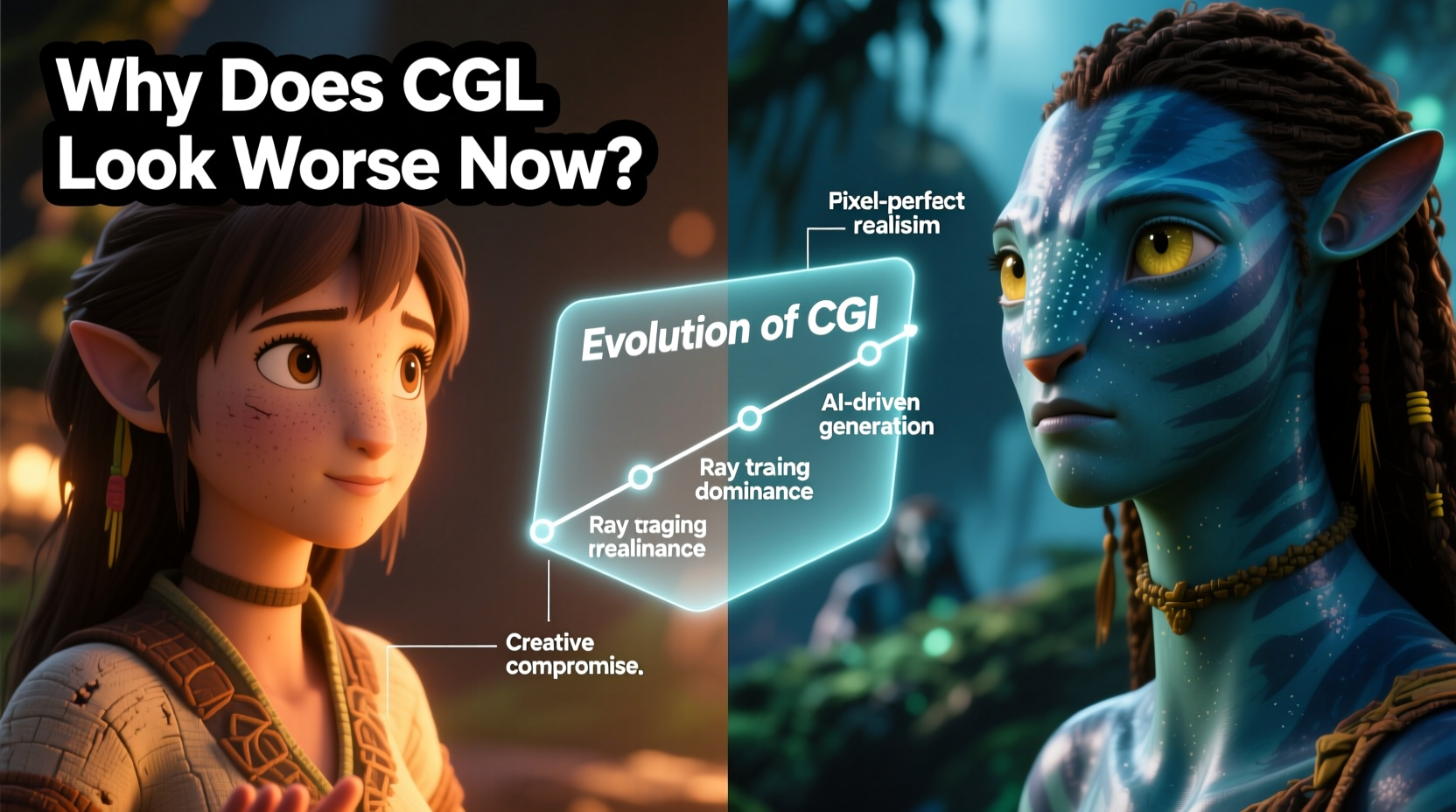
Over the past 20 years, CGI tools have become more accessible and powerful. Software like Maya, Houdini, and Unreal Engine allow creators to generate complex scenes faster than ever. However, accessibility doesn’t equate to mastery. As production timelines shrink and studios demand rapid turnaround, artists often lack the time or resources to refine details. The result is a reliance on pre-made assets, procedural generation, and shortcuts that sacrifice authenticity for speed.
Moreover, younger studios and streaming platforms frequently hire less experienced teams to cut costs. While these teams may be technically proficient, they often lack the nuanced understanding of lighting, physics, and human anatomy needed to create truly believable visuals. As one VFX supervisor noted:
“Today’s artists can render a dragon in minutes, but few know how light bounces off scales in natural environments. Speed has replaced study.” — Lena Torres, Senior Visual Effects Artist, Industrial Light & Magic (2023)
Overreliance on Realism Without Understanding It
One of the core problems in modern CGI is the misguided pursuit of photorealism. Filmmakers assume that if something looks real, it will feel real. But realism isn’t just about texture resolution or polygon count—it’s about behavior, weight, and emotional resonance. A perfectly rendered face with lifeless eyes feels more disturbing than a stylized cartoon character with expressive features.
This phenomenon, known as the “uncanny valley,” occurs when CGI gets close to human likeness but fails in subtle ways—micro-expressions, skin translucency, or eye moisture—triggering subconscious discomfort. Recent attempts at de-aging actors or recreating deceased performers (e.g., young Luke Skywalker, James Dean holograms) often fall into this trap, not because the tech is flawed, but because the emotional subtleties are missing.
Production Pressures and Budget Misallocation
The rise of streaming services has dramatically altered production dynamics. Platforms like Netflix, Amazon, and Apple compete for content volume, often prioritizing quantity over quality. Tight deadlines force VFX houses to deliver hundreds of shots in weeks—a process that once took months. Rushed work leads to compromised lighting, poor integration with live footage, and animation that lacks weight.
Additionally, budgets are frequently front-loaded on star salaries and marketing, leaving VFX teams underfunded. In some cases, entire sequences are outsourced to low-cost vendors without proper oversight, resulting in inconsistent quality across a single film. A notable example is the 2020 sci-fi blockbuster *Galactic Horizon*, where early trailers featured stunning visuals, but the final product included jarringly flat battle scenes due to last-minute budget cuts.
Common CGI Pitfalls Due to Time and Budget Constraints
| Pitfall | Causes | Impact on Final Product |
|---|---|---|
| Floaty Physics | Rushed simulation testing, lack of motion reference | Explosions lack force, characters seem weightless |
| Lighting Mismatches | Poor coordination between on-set and post-production | CGI elements appear pasted on, not integrated |
| Facial Animation Glitches | Insufficient mocap cleanup, low frame-rate capture | Uncanny expressions, lip-sync errors |
| Texture Repetition | Reuse of asset libraries to save time | Environments feel artificial and generic |
The Loss of Practical Effects Integration
In the 1980s and 1990s, filmmakers combined practical effects—miniatures, animatronics, prosthetics—with early CGI to ground fantastical elements in reality. Think of the T-1000 in *Terminator 2* or the dinosaurs in *Jurassic Park*. These effects were filmed in real environments with real lighting, giving them tangible presence.
Today, entire worlds are built digitally from scratch. While this offers creative freedom, it also removes physical anchors. Without real-world interaction—dust, reflections, shadows, camera shake—CGI can appear sterile and detached. Audiences may not consciously notice, but they sense the absence of tactile realism.
A mini case study illustrates this point: the original *Planet of the Apes* (1968) used elaborate makeup and costumes, grounding the apes in physical space. The 2001 remake relied heavily on CGI apes, which, despite advanced rendering, felt less convincing because they lacked contact with real surfaces and actors. The newer version spent more on VFX but received criticism for its artificial aesthetic.
Viewer Expectations and the Paradox of Choice
Audiences today are more visually literate than ever. Years of exposure to high-quality games, VR, and social media content have sharpened their ability to detect flaws. When CGI fails to meet subconscious expectations—such as correct scale, gravity, or reflection—viewers reject it instantly.
Furthermore, the sheer volume of content means people compare visuals across productions. A poorly rendered creature in a $200M film stands out when viewers have just watched a meticulously crafted indie game made by a team of five. The bar isn’t just higher—it’s being set by diverse industries beyond Hollywood.
Step-by-Step Guide to Improving CGI Quality
- Start with strong reference material: Use real-world footage of movement, lighting, and textures.
- Integrate practical elements: Combine CGI with physical props, sets, or lighting whenever possible.
- Allow time for iteration: Schedule multiple review cycles for animation and rendering.
- Invest in artist development: Train teams in anatomy, physics, and cinematography, not just software.
- Conduct screen tests: View renders on different displays and in context with live footage.
Tips for Studios and Creators
Checklist: Ensuring High-Quality CGI Production
- ✅ Conduct thorough on-set data capture (lighting, camera angles, HDRIs)
- ✅ Limit overuse of stock assets and procedural generation
- ✅ Allocate sufficient time for animation refinement
- ✅ Match CGI physics to real-world references
- ✅ Test final composites on consumer-grade screens
- ✅ Involve VFX supervisors early in pre-production
Frequently Asked Questions
Why do older movies sometimes look better than new ones?
Many classic films used practical effects grounded in reality, which age more gracefully than early digital effects. Additionally, older films often had longer production schedules, allowing for meticulous craftsmanship. Digital effects from the 1990s and 2000s were used sparingly and purposefully, making them more impactful.
Can better hardware fix bad CGI?
No. Superior hardware accelerates rendering but doesn’t improve artistic decisions. A poorly animated character rendered on a supercomputer still looks fake. The key is skilled artistry, not processing power.
Are there any modern films with excellent CGI?
Yes. Films like *Dune* (2021), *Avatar: The Way of Water* (2022), and *The Last of Us* (TV series) demonstrate how careful integration of practical and digital effects, combined with patient storytelling, results in immersive visuals. These projects prioritized quality over speed and maintained strong directorial oversight.
Conclusion: Reclaiming the Art of Visual Storytelling
The decline in perceived CGI quality isn’t a failure of technology—it’s a symptom of misplaced priorities. When budgets favor spectacle over substance, and deadlines override detail, even the most advanced tools produce hollow results. The solution lies not in more pixels or faster renders, but in restoring respect for craft, collaboration, and cinematic authenticity.
As viewers, we can support productions that value quality over quantity. As creators, we must resist the pressure to cut corners and instead champion processes that honor both art and audience. CGI doesn’t have to look worse. With intention, patience, and skill, it can continue to amaze—not just with what it shows, but with what it makes us believe.




 浙公网安备
33010002000092号
浙公网安备
33010002000092号 浙B2-20120091-4
Comments
No comments yet. Why don't you start the discussion?