
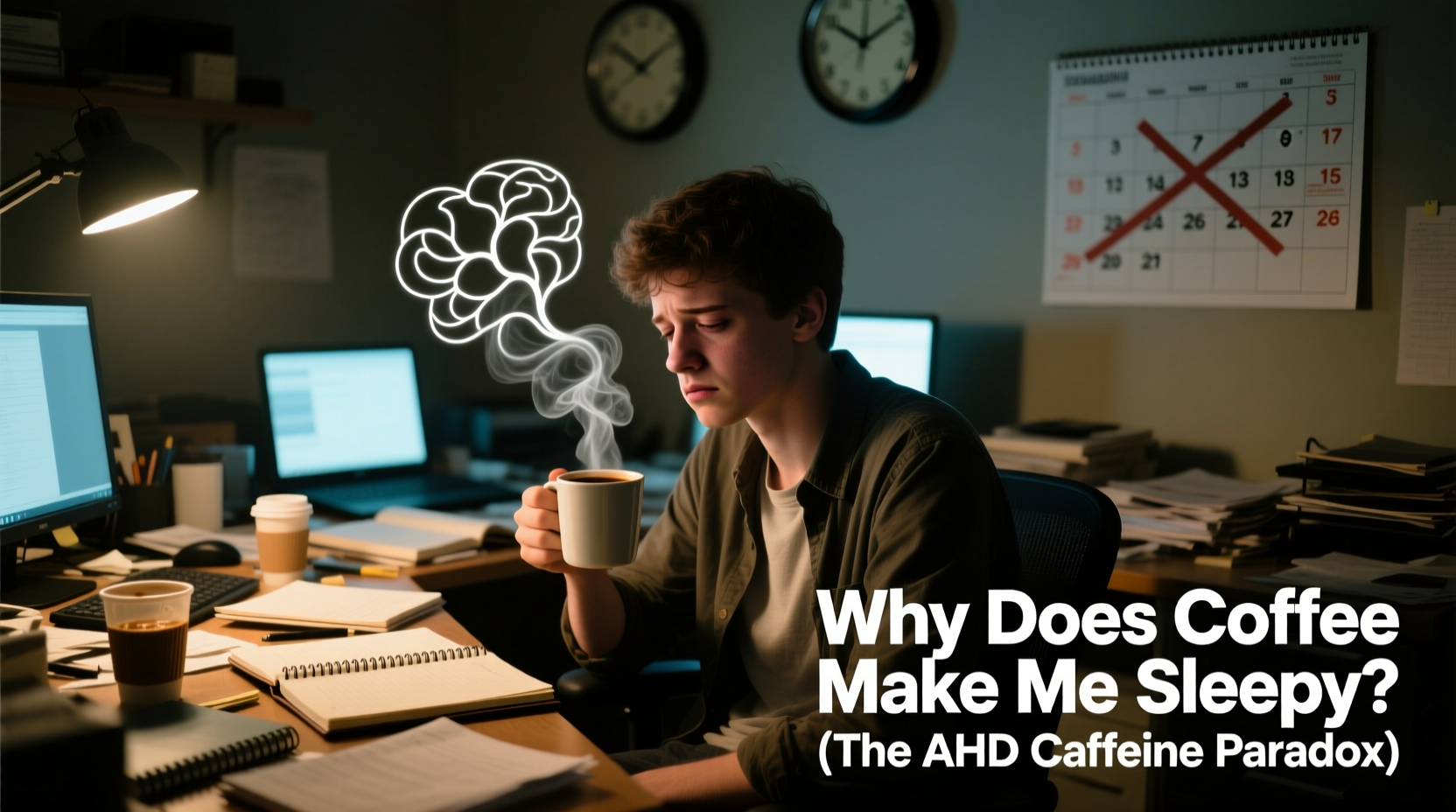
For most people, a cup of coffee is synonymous with alertness—a quick fix for grogginess, brain fog, or late-night work sessions. But if you’ve ever taken a sip of your morning brew only to feel more tired minutes later, you’re not alone. Even more puzzling: this effect can be especially common among individuals with ADHD. The phenomenon—where caffeine, a known stimulant, seems to induce drowsiness rather than wakefulness—is often called the “caffeine paradox.” It’s counterintuitive, frustrating, and sometimes misunderstood. Yet it’s grounded in real neurochemistry, individual biology, and the unique way attention deficit hyperactivity disorder (ADHD) interacts with stimulant substances.
This article explores why coffee might make you sleepy instead of alert, particularly if you have ADHD. We’ll examine the science behind caffeine metabolism, dopamine regulation, and how stimulants can paradoxically calm certain brains. You’ll learn about tolerance, timing, and the hidden role of adenosine—and walk away with practical strategies to use caffeine effectively without crashing.
The Science Behind Caffeine and Alertness
Caffeine works primarily by blocking adenosine receptors in the brain. Adenosine is a neurotransmitter that builds up throughout the day as your cells consume energy. As adenosine levels rise, it binds to its receptors, slowing neural activity and making you feel increasingly drowsy—a natural signal that it’s time to rest.
When you consume caffeine, it mimics adenosine’s shape and occupies these receptors without activating them. This prevents adenosine from doing its job, effectively delaying fatigue and increasing alertness. At the same time, caffeine indirectly boosts the release of other neurotransmitters like dopamine, norepinephrine, and glutamate—all associated with improved mood, focus, and cognitive speed.
In theory, this should keep anyone awake and sharp. But human physiology isn’t uniform. Factors such as genetics, medication use, sleep quality, and neurological conditions like ADHD significantly alter how caffeine affects the body and mind.
Why Stimulants Can Calm: The ADHD Paradox
One of the most widely misunderstood aspects of ADHD treatment is that stimulant medications—like methylphenidate (Ritalin) or amphetamines (Adderall)—often have a calming, focusing effect on people with ADHD, rather than making them hyperactive. This same principle applies to caffeine, which, though milder, is also classified as a central nervous system stimulant.
According to Dr. Russell Barkley, a leading expert in ADHD research:
“Stimulants don’t increase overall brain activity—they enhance underactive networks responsible for executive function. In ADHD, where these circuits are under-responsive, stimulants act like a ‘volume knob,’ bringing focus into clearer range.” — Dr. Russell Barkley, Clinical Neuropsychologist
In individuals with ADHD, the prefrontal cortex—the region governing attention, impulse control, and working memory—often functions below optimal levels. Rather than overstimulating an already chaotic brain, caffeine helps regulate neural signaling. For some, this results in reduced mental noise, improved concentration, and even a sense of calm. What looks like “sleepiness” may actually be the absence of hyperactivity or anxiety once mental circuits stabilize.
Caffeine Metabolism and Individual Differences
Not everyone processes caffeine at the same rate. Your genetic makeup plays a crucial role in how quickly your liver breaks down caffeine via the CYP1A2 enzyme. Some people are “fast metabolizers,” clearing caffeine within a few hours, while “slow metabolizers” can feel its effects for 8–10 hours or longer.
Slow metabolizers are more prone to side effects like insomnia, heart palpitations, and—paradoxically—fatigue after the initial boost wears off. When caffeine lingers too long, it can disrupt natural sleep cycles, leading to poorer sleep quality and daytime exhaustion. Over time, this creates a cycle: poor sleep → more caffeine → worse sleep → increased fatigue.
Additionally, variations in adenosine receptor genes (such as ADORA2A) influence sensitivity to caffeine. Some individuals experience heightened anxiety or restlessness even with small amounts, while others barely react at all. These differences help explain why one person feels energized all day on a single espresso, while another crashes two hours after a double shot.
Tolerance and Rebound Fatigue
Regular caffeine consumption leads to tolerance. Your brain responds to constant adenosine blockade by producing more adenosine receptors. This means you need more caffeine to achieve the same level of alertness. But when caffeine eventually clears your system, there’s now *more* adenosine binding to *more* receptors—leading to a stronger crash than before.
This rebound effect is often mistaken for immediate drowsiness post-coffee. In reality, the fatigue isn’t caused by caffeine itself, but by the sudden unmasking of accumulated sleep pressure once the stimulant wears off. If you're already sleep-deprived, dehydrated, or consuming caffeine on an empty stomach, this crash hits harder and faster.
The Role of Sleep Debt and Timing
No amount of caffeine can fully compensate for chronic sleep deprivation. If you’re consistently getting less than 7 hours of sleep per night, your brain accumulates sleep debt. Caffeine masks symptoms temporarily, but it doesn’t erase the underlying need for rest. Eventually, the body demands payment.
Timing matters significantly. Consuming caffeine too late in the day—even as early as 2 p.m. for sensitive individuals—can fragment sleep architecture, reducing deep sleep and REM stages. Poor-quality sleep leaves you feeling unrested, regardless of morning coffee intake. This sets up a self-defeating loop: drink coffee to fight tiredness → sleep poorly → feel tired again → drink more coffee.
Moreover, cortisol—the body’s natural wakefulness hormone—peaks shortly after waking. Drinking coffee during this peak (within the first hour of waking) may blunt its effectiveness because your body is already alert. Experts suggest waiting 60–90 minutes after waking to consume caffeine, aligning intake with the natural dip in cortisol levels.
Dehydration and Blood Sugar Effects
Coffee is a mild diuretic, meaning it increases urine production. While moderate consumption doesn’t cause significant dehydration, excessive intake without adequate water can lead to fluid loss, contributing to fatigue, headaches, and brain fog.
Additionally, many people drink coffee with little or no food, especially in the morning. Caffeine stimulates insulin release, which can cause blood sugar to drop rapidly—especially on an empty stomach. Hypoglycemia-like symptoms (shakiness, irritability, fatigue) may follow, reinforcing the illusion that coffee made you sleepy.
“Caffeine isn’t inherently sedating, but its secondary effects—dehydration, blood sugar swings, disrupted sleep—can mimic drowsiness.” — Dr. Sara Mednick, Sleep Researcher and Author of *Take a Nap!*
Practical Strategies: Using Caffeine Wisely with ADHD
If you have ADHD and notice coffee makes you tired, consider refining your approach rather than abandoning caffeine altogether. Used strategically, it can support focus and reduce impulsivity. The key lies in dosage, timing, hydration, and pairing with healthy habits.
Step-by-Step Guide to Optimizing Caffeine Use
- Start Low: Begin with 50–100 mg of caffeine (about half a cup of brewed coffee). Observe how your body and mind respond over 60–90 minutes.
- Time It Right: Avoid caffeine within 8–10 hours of bedtime. Aim to consume it between 9:30 a.m. and 2:00 p.m. for most people.
- Pair with Food: Always consume caffeine with protein or complex carbs to stabilize blood sugar and prevent energy crashes.
- Stay Hydrated: Drink a glass of water for every cup of coffee to offset diuretic effects.
- Limit Daily Intake: Stick to 200–300 mg per day (roughly 2 cups of coffee) to avoid tolerance buildup and rebound fatigue.
- Track Your Response: Keep a log of caffeine timing, dose, mood, focus, and sleep quality for one week to identify patterns.
Checklist: Signs You’re Misusing Caffeine
- Feeling anxious, shaky, or irritable after coffee
- Falling asleep within an hour of drinking caffeine
- Needing more than 400 mg daily to feel alert
- Experiencing midday crashes despite caffeine intake
- Having trouble falling or staying asleep
- Relying on coffee to start the day despite adequate sleep
Real Example: How One Adult with ADHD Adjusted Her Coffee Routine
Sarah, a 34-year-old graphic designer diagnosed with ADHD, used to drink three large coffees before noon. By 1 p.m., she’d feel drained, unfocused, and unusually sleepy—despite having just consumed a strong latte. She assumed coffee didn’t work for her and considered quitting altogether.
After consulting a functional medicine practitioner, Sarah discovered several issues: she was drinking coffee on an empty stomach, skipping breakfast, and averaging only 5.5 hours of sleep per night. Her cortisol rhythm was flattened due to chronic stress, and her caffeine tolerance was high.
She made three changes:
- She began eating a protein-rich breakfast before her first coffee.
- She limited herself to one 8-oz cup at 9:30 a.m. and switched to herbal tea after noon.
- She prioritized sleep hygiene, aiming for 7.5 hours nightly.
Do’s and Don’ts: Caffeine and ADHD
| Do | Don’t |
|---|---|
| Use caffeine as a tool, not a crutch | Rely on it to compensate for poor sleep |
| Pair coffee with food to stabilize energy | Drink it on an empty stomach |
| Limit intake to early afternoon | Consume after 3 p.m. if sensitive |
| Stay hydrated throughout the day | Ignore signs of dehydration or jitters |
| Monitor how it affects your focus and mood | Assume more is better |
Frequently Asked Questions
Can caffeine worsen ADHD symptoms?
Yes, in some cases. While low to moderate caffeine may improve focus, high doses can increase anxiety, restlessness, and heart rate—exacerbating ADHD-related hyperactivity or emotional dysregulation. It’s essential to find your personal threshold.
Is it normal to feel sleepy right after coffee?
Not typically—but it can happen indirectly. If you're severely sleep-deprived, the temporary alertness from caffeine may wear off quickly, revealing underlying fatigue. Additionally, the placebo effect or expectation of relaxation (e.g., sitting down with coffee) can trigger drowsiness.
Should people with ADHD avoid caffeine?
No, not necessarily. Many adults with ADHD use caffeine safely and effectively as part of their routine. However, it should complement—not replace—evidence-based treatments like medication, therapy, and lifestyle adjustments. Consult your healthcare provider if combining caffeine with stimulant medications.
Conclusion: Rethinking the Relationship Between Coffee and Energy
Feeling sleepy after coffee isn’t a glitch—it’s a signal. Whether you have ADHD or not, your body uses fatigue to communicate imbalance. Caffeine doesn’t create energy; it redistributes it, borrowing from future reserves. When used carelessly, it leads to crashes, dependency, and disrupted sleep. But when applied with intention—respecting timing, dosage, and biological needs—it can become a valuable ally in managing focus and productivity.
For those with ADHD, the paradox of stimulation-induced calm isn’t a contradiction. It’s evidence of a brain seeking equilibrium. Understanding this empowers you to make smarter choices, break free from energy rollercoasters, and build sustainable routines that honor your neurology.




 浙公网安备
33010002000092号
浙公网安备
33010002000092号 浙B2-20120091-4
Comments
No comments yet. Why don't you start the discussion?