
For millions of people, coffee is the essential morning ritual—the dark, aromatic brew that jumpstarts focus, energy, and alertness. But what happens when that same cup of coffee leaves you feeling more sluggish than stimulated? If you’ve ever taken a sip of your favorite roast only to feel a wave of drowsiness minutes later, you’re not alone. The phenomenon of coffee making you sleepy instead of awake is more common—and more scientifically explainable—than most realize.
This paradox isn’t a sign of personal failure or caffeine resistance. Rather, it’s the result of complex interactions between your brain chemistry, hormones, hydration levels, and even your daily habits. Understanding why coffee can backfire helps demystify your body’s response and empowers you to use caffeine more effectively.
The Adenosine Rebound Effect
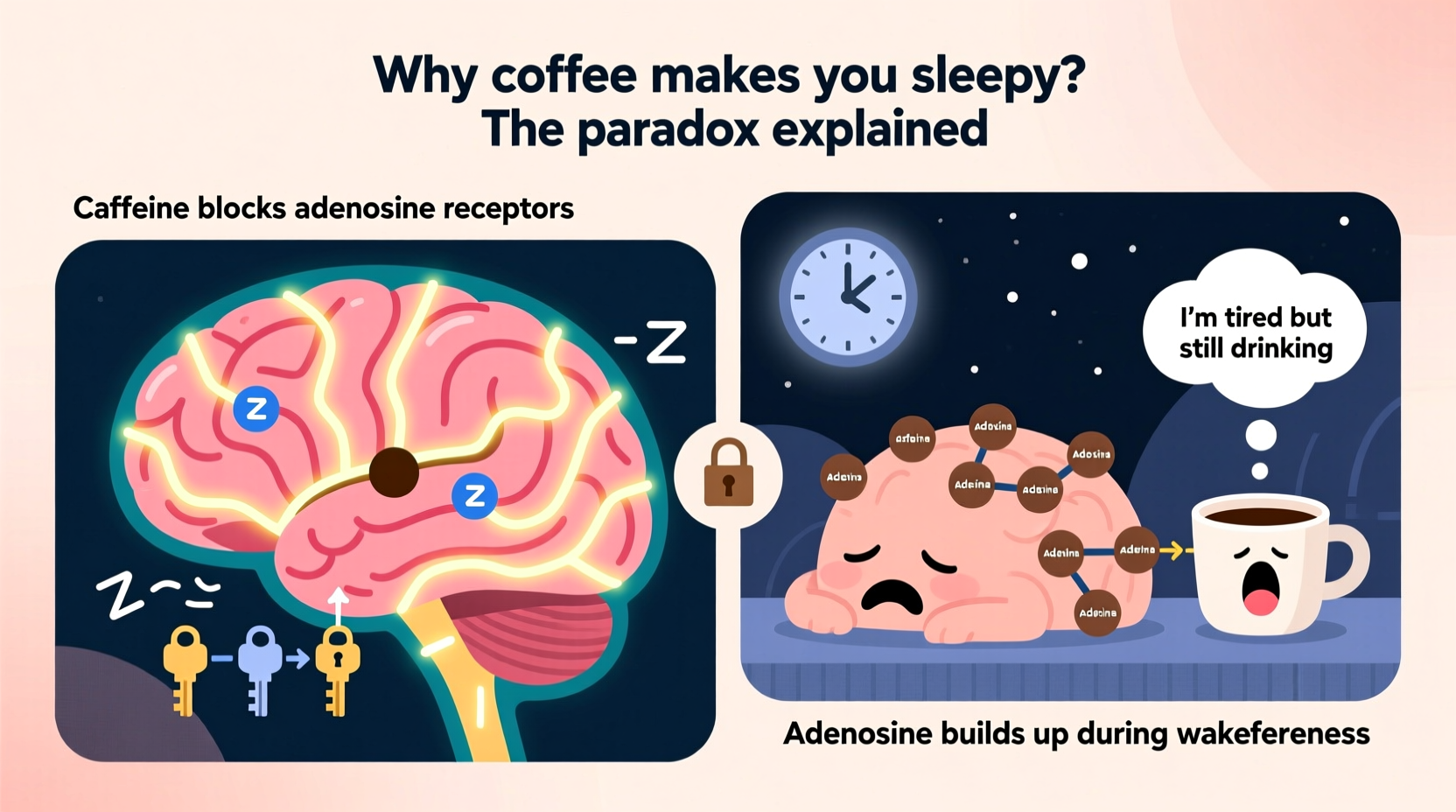
Caffeine works by blocking adenosine receptors in the brain. Adenosine is a neurotransmitter that builds up throughout the day as your cells burn energy. As its concentration increases, it binds to receptors that slow neural activity, promoting relaxation and eventually sleep. When you drink coffee, caffeine molecules attach to these same receptors, preventing adenosine from doing its job. This blockade creates the alertness we associate with caffeine.
But here's where the paradox begins: while caffeine blocks the signal, it doesn't stop adenosine from accumulating. In fact, during periods of caffeine influence, adenosine continues to build up in the background—unnoticed because its effects are masked. Once the caffeine starts to wear off (typically 3–5 hours after consumption), all that stored-up adenosine floods the receptors at once. The result? A sudden and often intense crash, commonly described as “hitting a wall.”
This rebound effect can be especially pronounced if you consume caffeine late in the day or on an empty stomach. Your body may interpret the rapid shift from stimulation to inhibition as a cue to initiate rest, leading to unexpected drowsiness shortly after your second cup.
Cortisol and Your Body’s Natural Rhythm
Your body operates on a circadian rhythm that regulates hormone production, including cortisol—the so-called “stress hormone” that also plays a key role in wakefulness. Cortisol levels naturally peak between 8 a.m. and 9 a.m., helping you feel alert upon waking. Drinking coffee during this window may not only be unnecessary but counterproductive.
When you introduce caffeine during high-cortisol periods, your body may downregulate its natural alertness mechanisms over time. Dr. Steven Wright, a researcher in chronobiology, explains:
“Consuming caffeine when your cortisol is already elevated trains your body to rely less on its internal wakefulness signals and more on external stimulants. Over time, this can blunt your natural energy peaks.”
Moreover, relying on coffee too early can desensitize your adenosine receptors faster, increasing tolerance and reducing caffeine’s effectiveness. By midday, when cortisol dips and fatigue naturally sets in, your usual cup might fail to deliver its intended boost—leaving you tired despite having consumed caffeine.
A better strategy is to delay your first cup until 90–120 minutes after waking, when cortisol begins to decline. This timing aligns caffeine intake with your body’s actual need for stimulation, enhancing its impact without disrupting hormonal balance.
Dehydration and Its Role in Fatigue
Coffee is a mild diuretic, meaning it increases urine production and can contribute to fluid loss. While moderate coffee consumption doesn’t lead to significant dehydration for most people, it can tip the scales if you're already marginally hydrated—especially if you skip water in favor of multiple cups.
Even mild dehydration (as little as 1–2% loss of body water) has been shown to impair concentration, mood, and energy levels. Symptoms include headaches, brain fog, and yes—drowsiness. So if your coffee habit displaces water intake, you could be inadvertently causing the very fatigue you’re trying to prevent.
This effect is compounded when drinking coffee on an empty stomach or in hot environments, both of which accelerate fluid loss. The combination of caffeine-induced stimulation followed by dehydration-related exhaustion creates a misleading cycle: you feel awake briefly, then crash hard.
“Hydration status is one of the most overlooked factors in perceived energy levels. People blame caffeine for making them tired when they’ve simply forgotten to drink water.” — Dr. Lena Patel, Clinical Nutritionist
Insulin Spikes and Blood Sugar Crashes
What you add to your coffee matters just as much as the coffee itself. Sugary syrups, flavored creamers, and pastries consumed alongside caffeine can trigger rapid spikes in blood glucose. In response, your pancreas releases insulin to bring sugar levels back down. But sometimes, insulin overcorrects, leading to a hypoglycemic dip 60–90 minutes after eating.
This blood sugar crash mimics fatigue symptoms: yawning, lack of focus, irritability, and sleepiness. Because this follows shortly after coffee consumption, it’s easy to attribute the drowsiness to caffeine rather than dietary choices.
Consider this real-world example:
The takeaway: caffeine isn’t always the culprit. Often, it’s the sugar-laden accompaniments that set the stage for fatigue.
Individual Sensitivity and Genetic Factors
Not everyone metabolizes caffeine the same way. Variations in the CYP1A2 gene determine how quickly your liver processes caffeine. “Fast metabolizers” clear caffeine efficiently and experience sustained energy with minimal side effects. “Slow metabolizers,” however, process caffeine more gradually, leading to prolonged exposure and increased risk of jitteriness, anxiety, and paradoxical fatigue.
Additionally, people with higher baseline anxiety or disrupted sleep patterns may find that caffeine amplifies nervous system fatigue. In such cases, the stimulating effect triggers a stress response that drains mental reserves rapidly, resulting in post-stimulant exhaustion.
Regular, heavy consumption also leads to tolerance. As your brain produces more adenosine receptors to compensate for constant blockage, you need more caffeine to achieve the same effect. Over time, baseline alertness drops, making you feel dependent on caffeine just to reach normal energy levels—let alone exceed them.
| Factor | Effect on Energy | Solution |
|---|---|---|
| Slow caffeine metabolism | Prolonged stimulation → fatigue | Reduce dose; switch to tea |
| High sugar intake | Blood sugar crash → drowsiness | Use unsweetened creamers |
| Low hydration | Reduced cognitive function | Drink water with each cup |
| Early cortisol disruption | Blunted natural energy | Delay first cup by 90 min |
| Caffeine tolerance | Diminished returns | Cycle usage; take breaks |
How to Use Coffee Without the Crash: A Step-by-Step Guide
If you want to enjoy coffee’s benefits without falling into the sleepiness trap, follow this practical timeline:
- Wait 90 minutes after waking to drink your first cup. Let cortisol do its job before introducing caffeine.
- Hydrate first: Drink a full glass of water upon rising and continue sipping throughout the morning.
- Limit added sugars: Avoid syrups, sweetened creamers, and pairing coffee with sugary snacks.
- Control portion size: Stick to 8–12 oz per serving. More isn’t better—it increases crash risk.
- Time your last cup: Avoid caffeine after 2 p.m. to prevent interference with nighttime sleep quality.
- Take regular breaks: Implement a weekly caffeine detox (even one day off resets sensitivity).
- Pair with protein or healthy fats: Eat nuts, eggs, or avocado with your coffee to stabilize blood sugar.
Checklist: Optimize Your Coffee Experience
- ☑ Delay first cup until 90+ minutes after waking
- ☑ Drink water before and with each coffee
- ☑ Eliminate added sugars in beverages
- ☑ Limit daily intake to 200–400 mg (about 1–2 standard cups)
- ☑ Avoid caffeine within 8 hours of bedtime
- ☑ Take a caffeine reset day once a week
- ☑ Pair coffee with balanced meals, not on an empty stomach
Frequently Asked Questions
Can decaf coffee make me sleepy?
Decaf won’t cause drowsiness directly, but if you’re accustomed to caffeine and suddenly remove it, withdrawal symptoms like fatigue and headaches may occur. Additionally, drinking decaf late in the day with milk or sugar can still affect digestion and energy via insulin response.
Is it bad if coffee makes me tired immediately?
An immediate sense of fatigue after coffee could indicate adrenal fatigue, chronic stress, or poor sleep hygiene. It may also reflect psychological conditioning—if you associate coffee breaks with rest, your body may respond with relaxation despite the stimulant. Consult a healthcare provider if this persists.
Does roasting level affect how sleepy I feel?
No—darker roasts don’t have less caffeine than lighter ones, contrary to popular belief. In fact, light roasts retain slightly more caffeine due to shorter roasting times. However, flavor intensity may influence perceived stimulation. Some people report smoother energy from medium roasts without sharp peaks and crashes.
Conclusion: Rethink Your Relationship with Caffeine
Coffee isn’t inherently flawed—our approach to it often is. The irony of feeling sleepy after a stimulant isn’t a mystery, but a signal. It tells us that timing, diet, hydration, and biology all play crucial roles in how caffeine affects us. By respecting your body’s natural rhythms and avoiding common pitfalls, you can transform coffee from a source of confusion into a reliable tool for sustained energy.
Start small: delay your first cup tomorrow, add a glass of water, and skip the sugar. Notice how your energy shifts. Over time, these adjustments compound into greater mental clarity, fewer crashes, and a deeper understanding of your own physiology.




 浙公网安备
33010002000092号
浙公网安备
33010002000092号 浙B2-20120091-4
Comments
No comments yet. Why don't you start the discussion?