
In the world of Dragon Ball, few characters embody the spirit of battle quite like Goku. From his early days as a naive martial artist to becoming the universe’s most powerful warrior, Goku has consistently demonstrated an unwavering love for combat—especially against strong opponents. One of the most baffling yet recurring habits in his journey is offering Senzu Beans to his enemies after defeating them. At first glance, it seems illogical: why heal someone who just tried to destroy you? But beneath the surface lies a complex blend of character psychology, narrative design, and cultural storytelling norms unique to anime. This article unpacks the real reasons—both in-universe and meta—why Goku keeps giving enemies Senzu Beans.
The Nature of the Senzu Bean
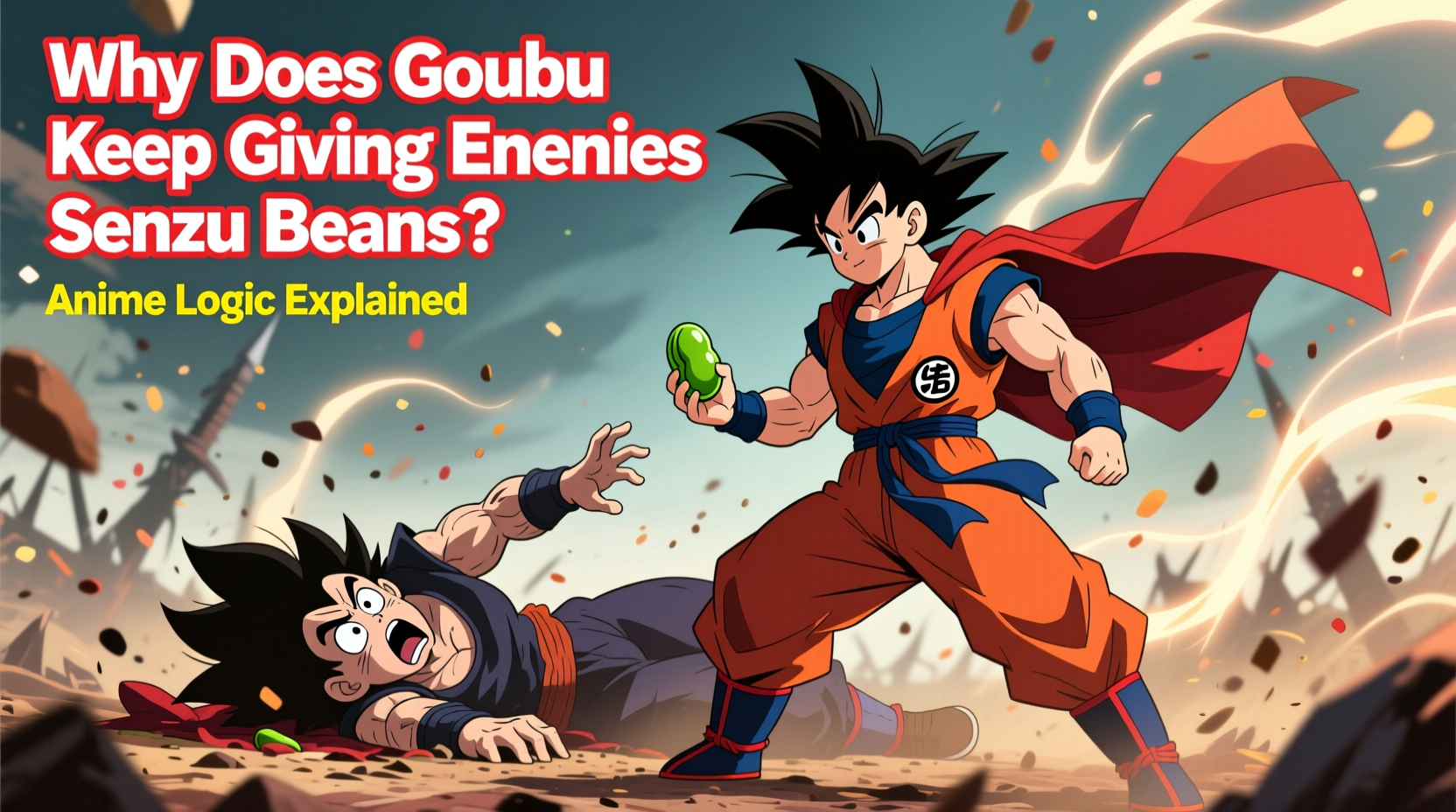
Before dissecting Goku’s behavior, it's essential to understand what a Senzu Bean actually does. Cultivated by Korin, these magical legumes possess extraordinary restorative properties:
- Instantly restore full health and stamina
- Heal all wounds, broken bones, and internal injuries
- Eliminate fatigue and hunger for up to one day
- Do not increase power levels or grant new abilities
While incredibly rare, they are not irreplaceable. Korin can grow more, though the process takes time. Their scarcity makes each bean valuable—but not so much that Goku treats them like currency. Instead, he sees them as tools for readiness, not resources to hoard.
Goku’s Warrior Philosophy: Strength Through Challenge
Goku isn't motivated by conquest, domination, or even survival alone. His primary drive is growth through battle. He seeks worthy opponents—not mindless destruction. When Frieza destroys Planet Vegeta, Goku doesn’t immediately seek revenge; he trains relentlessly to surpass him. When Cell absorbs Android 18, Goku allows it—not out of weakness, but because he knows the resulting fight will push everyone to evolve.
This mindset explains why healing an enemy isn’t seen as mercy in the traditional sense—it’s preparation. If an opponent is injured, the fight ends prematurely. To Goku, that’s a waste. As Akira Toriyama, creator of Dragon Ball, once noted:
“Goku fights not to win, but to see how far he can go. If the other side collapses before showing their true strength, the experience loses meaning.” — Akira Toriyama (paraphrased from Shonen Jump interviews)
Offering a Senzu Bean ensures the next round—if there is one—is fought at peak capacity. It preserves the integrity of the contest. In essence, Goku respects the struggle more than the outcome.
Narrative Function: Sustaining Conflict and Character Arcs
From a storytelling perspective, healing enemies serves several key functions in long-form anime series like Dragon Ball Z and Dragon Ball Super:
- Prolongs dramatic tension: A healed villain means another confrontation, allowing for multi-stage battles (e.g., Vegeta’s arc from foe to ally).
- Enables redemption arcs: Characters like Piccolo, Vegeta, and even Frieza survive thanks to indirect aid, creating space for moral evolution.
- Maintains roster continuity: Recurring villains become fan favorites. Eliminating them permanently would shorten the narrative lifespan of the series.
- Highlights protagonist contrast: Goku’s generosity underscores the arrogance or cruelty of antagonists, making their eventual defeats more satisfying.
Anime thrives on cyclical conflict and transformation. Unlike Western action heroes who often eliminate threats permanently, Eastern narratives frequently emphasize balance, coexistence, and personal growth—even among former enemies.
Case Study: The Saiyan Saga – A Turning Point
One of the clearest examples occurs during the Saiyan Saga. After Krillin gives a Senzu Bean to Yamcha—nearly dead from battling a Saibaman—the group uses the remaining beans strategically. But when Goku defeats Vegeta, badly injured himself, he still insists others use the final bean on Nappa, whose spine was crushed.
At first, this decision frustrates the Z Fighters. Why heal a genocidal alien warlord? But within the logic of the story, two things happen:
- Vegeta witnesses Goku’s compassion despite being enemies.
- Nappa’s revival allows Vegeta to escape, setting up future confrontations and eventual alliance.
This moment marks the beginning of Vegeta’s complex journey from villain to anti-hero. Without that single act of unexpected mercy—facilitated by the Senzu Bean—the entire dynamic of the series shifts. Healing the enemy wasn’t foolishness; it was narrative inevitability.
Cultural Context: Bushido, Mudo, and the Way of the Warrior
To fully grasp Goku’s actions, one must consider Japanese martial arts philosophy. Concepts like bushido (the way of the warrior) and mudo (the path of non-violence through discipline) permeate anime storytelling. These traditions value honor, self-improvement, and restraint—even in victory.
Consider historical samurai codes: a defeated opponent might be spared if they showed courage. Execution was reserved for dishonorable foes. While Goku isn’t bound by feudal ethics, his instincts align with this ethos—he fights warriors, not monsters (unless they behave like the latter).
Moreover, many shonen protagonists operate under a \"fight with dignity\" principle. Healing an enemy isn’t kindness for its own sake—it’s respect for the battle itself. The act says: “You were strong. I want to see what else you can do.”
When Goku Doesn’t Heal: Exceptions That Prove the Rule
Not every enemy receives a Senzu Bean. There are notable exceptions that clarify the boundaries of Goku’s logic:
| Enemy | Healed? | Reason |
|---|---|---|
| Radditz | No | Killed mid-battle via sacrifice; no opportunity or intent to revive. |
| Frieza (Namek) | No | Frieza committed planetary genocide; Goku refused to heal him after final defeat. |
| Cell (after second death) | No | Cell chose suicide after losing pride; Goku honored his final decision. |
| Jiren (Tournament of Power) | Indirectly | After tournament, all surviving fighters were restored by Zen’o, not Goku directly. |
These cases reveal that Goku’s generosity has limits. He won’t heal those who show no honor, refuse redemption, or represent pure malice without challenge. The Senzu Bean is offered not to evil incarnate, but to warriors caught in conflict.
Practical Implications: What Fans Can Learn from Goku’s Logic
While most of us won’t be handing out magical healing beans, Goku’s approach offers real-life lessons about competition, rivalry, and personal growth.
Checklist: Applying Goku’s Mindset to Real Challenges
- Seek opponents who challenge your limits, not just those you can beat easily.
- Honor effort over outcome—recognize when someone gives their best, even if they lose.
- Avoid humiliating defeated competitors; preserve their dignity for future growth.
- Use setbacks as resets, not endings. Like a Senzu Bean, view recovery as part of progress.
- Stay open to former rivals becoming allies—you never know where shared struggle will lead.
FAQ: Common Questions About Goku and Senzu Beans
Does giving Senzu Beans to enemies make Goku naive?
Only if judged by conventional hero standards. Goku isn’t trying to “save” people in a traditional sense—he’s cultivating stronger challenges. His choices reflect confidence, not naivety. He knows most healed enemies will return, and he welcomes that.
Could enemies abuse the Senzu Bean system?
Theoretically, yes—but the supply is limited, and Goku doesn’t hand them out freely. They’re typically given post-defeat, when the threat level is neutralized. Plus, many villains (like Frieza) are too proud to accept help from their nemesis, making abuse unlikely.
Has anyone ever rejected a Senzu Bean?
Not explicitly, but characters like Vegeta initially resist help out of pride. He wouldn’t ask for a bean, but accepts medical treatment when necessary. The symbolism remains: aid is available, but must be earned through meaningful conflict.
Conclusion: Beyond Anime Logic — A Philosophy of Growth
Goku giving enemies Senzu Beans isn’t a plot hole—it’s a cornerstone of his identity. It reflects a worldview where growth matters more than dominance, where battle is sacred, and where even adversaries deserve a chance to rise again. In the context of anime storytelling, where character arcs span hundreds of episodes and transformations are central, this behavior makes perfect sense.
It also challenges viewers to rethink what it means to win. Is victory crushing the other side into oblivion? Or is it inspiring them to become stronger, so the next clash means even more?
Next time you see Goku toss a green bean to a fallen foe, remember: he’s not being reckless. He’s investing in the future of combat, in honor, and in the endless pursuit of becoming better—not just as a fighter, but as a warrior.




 浙公网安备
33010002000092号
浙公网安备
33010002000092号 浙B2-20120091-4
Comments
No comments yet. Why don't you start the discussion?