
Every holiday season, millions of homes light up with strings of festive bulbs, only for some to flicker—or worse, lose half their glow. If you’ve ever plugged in a strand of Christmas lights and found that only the first section illuminates while the rest remain dark, you’re not alone. This issue is more common than most realize, especially with older incandescent mini-lights. The problem usually lies in the way these lights are wired and how individual bulbs interact within the circuit.
Understanding why half a string goes dark isn’t just about fixing one strand—it’s about learning how holiday lighting systems work so you can troubleshoot faster, extend the life of your decorations, and avoid last-minute scrambling before guests arrive. Whether you're dealing with vintage strands passed down through generations or budget-friendly sets from the local store, the principles of diagnosis and repair remain consistent.
How Christmas Light Strings Are Wired
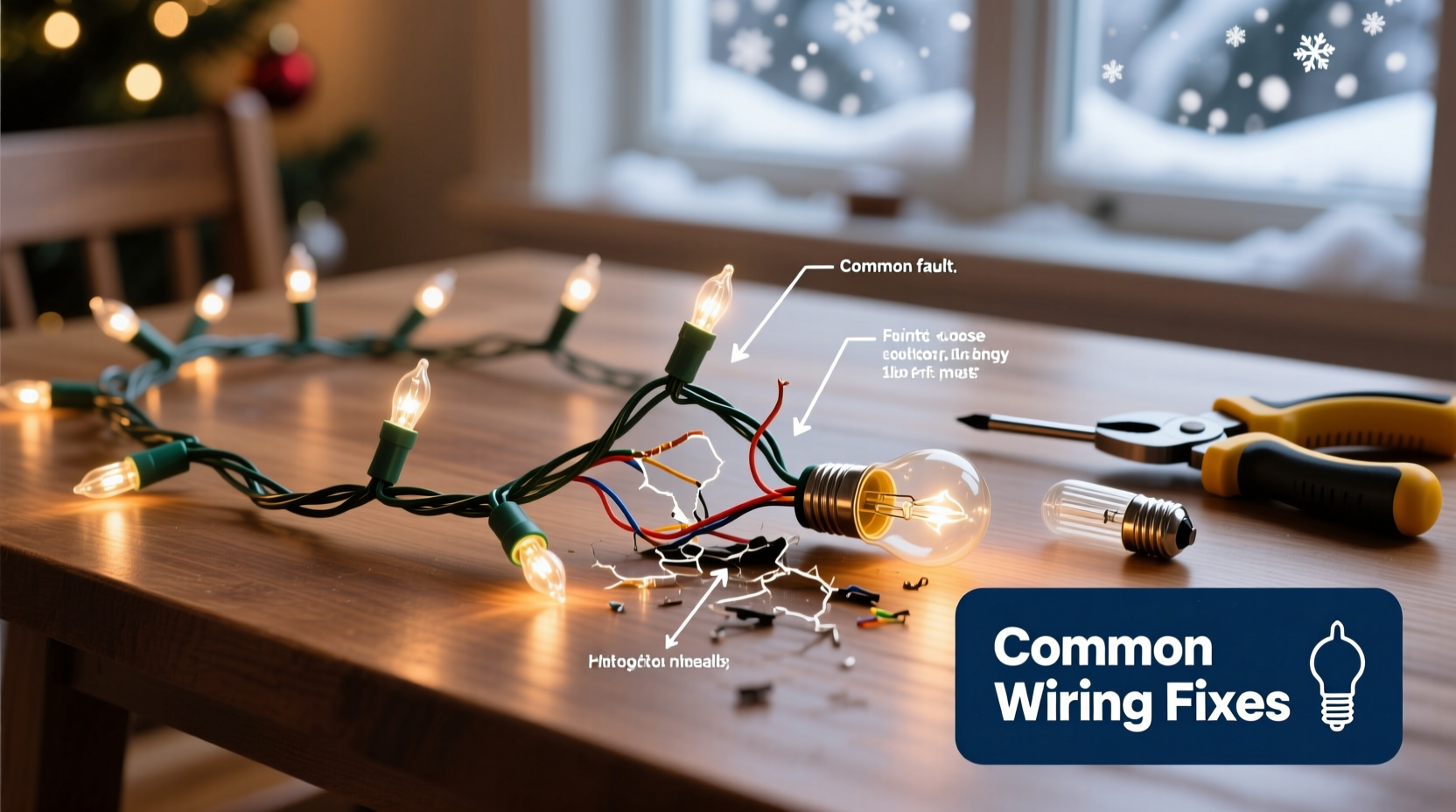
The root cause of partial failure often comes down to wiring design. Most traditional Christmas light strings—especially those made before LED dominance—are wired in series. In a series circuit, electricity flows from the plug, through each bulb socket in sequence, and returns via the neutral wire. If one bulb burns out or becomes loose, it breaks the circuit, cutting power to all bulbs downstream.
However, many modern light sets use a hybrid approach: multiple bulbs are grouped into short series circuits, which are then connected in parallel across the main line. This allows part of the string to stay lit even if another segment fails. When exactly half the string dies, it typically means one entire series segment has failed due to a single faulty bulb, poor connection, or internal shunt malfunction.
Here's a simplified breakdown:
- Series Circuit: All bulbs share the same current path. One break = total failure (or half-failure in split designs).
- Parallel Circuit: Each bulb has its own path. One failure doesn’t affect others—but this is rare in low-voltage mini-lights.
- Series-Parallel Hybrid: Groups of series-wired bulbs run in parallel. Common in 50- or 100-light sets where half stays on when the other fails.
Common Causes of Half-Light Failure
When only part of your Christmas light string works, several culprits could be at play. Identifying the right one saves time and frustration.
Faulty or Missing Bulb
A single missing, loose, or burned-out bulb in a series segment will interrupt the flow of electricity to the rest of that section. Even if the filament appears intact, internal damage may prevent conduction.
Shunt Failure
Many incandescent mini-lights include a tiny device called a shunt—a small wire coated in insulating material. When a bulb burns out, heat should melt the coating, allowing the shunt to activate and reroute current around the dead bulb. But sometimes the shunt fails to activate, leaving the circuit open and halting power downstream.
Loose Bulb in Socket
Bulbs can vibrate loose during storage or handling. A bulb that looks seated might not be making proper contact. Wiggle each one gently; if the lights flicker, that’s a sign of intermittent connection.
Damaged Wiring or Pinched Cord
Physical damage along the wire—especially near the midpoint connector—can sever one leg of the circuit. Rodents, staples, or repeated bending can cause internal breaks without obvious external signs.
Blown Fuse in Plug
While a blown fuse usually kills the entire string, some dual-circuit designs have separate fuses for each half. Check the plug compartment: most have two small fuses under a sliding door. Use a multimeter or visual inspection (look for darkened metal) to test them.
“Over 70% of partial-light failures in vintage strands come down to either a single unseated bulb or inactive shunt.” — Mark Reynolds, Electrical Technician & Holiday Lighting Specialist
Step-by-Step Guide to Fixing Half-Out Christmas Lights
Follow this systematic process to identify and resolve the issue efficiently.
- Unplug the strand immediately. Never handle electrical components while powered.
- Inspect the plug for blown fuses. Open the fuse compartment. Replace any damaged fuses with identical ratings (usually 3A or 5A depending on length).
- Test the working half. Plug in the strand. Confirm that the functional section still lights. If neither side works now, suspect a main fuse or cord break.
- Examine the non-working section visually. Look for cracked sockets, discolored wires, or missing bulbs.
- Check each bulb in the dead section. Remove and inspect one by one. Ensure filaments are intact and bases aren’t corroded. Reinsert firmly, twisting slightly to ensure contact.
- Use a known-good replacement bulb. Swap in a fresh bulb from the working half (temporarily) to test each socket in the dark section. If the new bulb lights, the original was faulty. If not, the socket or wiring may be compromised.
- Look for the “magic” bulb. Some manufacturers place a red-tipped or differently colored bulb at the start of each circuit. Focus on this one first—it often controls the entire downstream chain.
- Test continuity with a multimeter (optional). Set to continuity mode. Place probes on both contacts inside a dead socket. If no beep, there’s a break upstream. Trace back toward the plug until you find where continuity stops.
- Replace damaged sections (if possible). Some premium brands offer splice kits. Otherwise, consider retiring heavily damaged strands.
- Reassemble and retest. Once repairs are made, plug in carefully and observe results.
Troubleshooting Table: Do’s and Don’ts
| Action | Do | Don't |
|---|---|---|
| Handling Bulbs | Twist gently into socket until snug. Use gloves to avoid oil transfer. | Force bulbs in aggressively or touch glass with bare hands (oil reduces lifespan). |
| Testing Fuses | Use correct amperage replacement. Test with multimeter if unsure. | Substitute higher-rated fuses—they won’t protect against overloads. |
| Splicing Wires | Use waterproof wire nuts or solder with heat shrink tubing. | Wrap with electrical tape alone—it degrades quickly outdoors. |
| Storing Lights | Wrap loosely around a cardboard reel or use a light keeper spool. | Knot tightly or compress into small boxes—causes wire stress and breakage. |
| Outdoor Use | Use only UL-listed outdoor-rated strands. Elevate plugs off ground. | Connect indoor-only strings outside—even under eaves. Moisture risk is high. |
Mini Case Study: Restoring Grandma’s Heirloom Strand
Martha, a homeowner in Vermont, pulled out her mother’s 1980s-era red-and-white Christmas light string each year. Last season, only the first 25 bulbs lit on the 50-bulb strand. She replaced every visible bulb but saw no improvement. Frustrated, she nearly discarded it—until her grandson suggested checking the third bulb from the end of the live section.
Using a multimeter, he found continuity ended there. Upon removing the bulb, they discovered the shunt had never activated despite a broken filament. After inserting a new bulb, the entire second half flared to life. Martha saved a sentimental piece and learned the importance of shunt reliability in older sets.
This case illustrates how emotional value often drives repair efforts—and why understanding basic electronics matters more than brute-force replacement.
Preventive Checklist for Long-Lasting Lights
To minimize future failures, follow this annual maintenance checklist:
- ✅ Unplug lights before removal from trees or railings
- ✅ Inspect all bulbs for looseness or discoloration before storage
- ✅ Replace any dim or flickering bulbs immediately
- ✅ Clean dust from sockets with a dry cotton swab
- ✅ Store coiled loosely in a ventilated container—avoid attics or damp basements
- ✅ Label each strand as “indoor,” “outdoor,” or “fragile vintage”
- ✅ Test all strings before decorating season begins
- ✅ Keep spare fuses and matching bulbs on hand
Frequently Asked Questions
Can I mix LED and incandescent bulbs on the same string?
No. Mixing bulb types disrupts voltage distribution and can damage LEDs or cause overheating. Always use the exact replacement specified by the manufacturer. Even if the base fits, the electrical characteristics differ significantly.
Why do my new LED strings also go half-out?
While less common, some budget LED strings use series wiring per segment. A failed LED or driver component in one section can disable half the strand. Higher-end LED sets use parallel wiring and rarely exhibit this issue.
Is it safe to cut off a bad section and reuse the good half?
Only if you’re experienced with electrical work. Cutting a strand requires rewiring the end with a proper plug rated for outdoor use and ensuring polarity matches. Improper splices create shock and fire hazards. For safety, retire damaged sections instead of improvising.
Expert Tips for Modernizing Your Display
As technology evolves, so should your lighting strategy. Consider upgrading aging incandescent strands to commercial-grade LED alternatives designed for durability and energy efficiency.
- Choose commercial-grade LEDs: Brands like Netlights or Commercial Electric offer shatterproof, low-heat, and weather-sealed options built for years of use.
- Switch to pre-connected net or curtain lights: These eliminate complex string runs and reduce connection points where failure occurs.
- Use smart controllers: Systems like Philips Hue or LIFX allow remote diagnostics, scheduling, and color changes—all while monitoring performance.
- Invest in light keepers: These plastic reels prevent tangling and make seasonal unwrapping effortless.
“Upgrading to quality LEDs pays for itself in three seasons through lower energy bills and zero replacement costs.” — Lena Torres, Sustainable Home Decor Consultant
Conclusion: Shine Bright Without the Stress
Half-dead Christmas lights don’t have to ruin your holiday spirit. With a clear understanding of series wiring, shunt behavior, and common failure points, you can diagnose and fix most issues in under an hour. From checking fuses to testing individual bulbs, the solutions are accessible to anyone willing to take a methodical approach.
More importantly, preventive care—annual inspections, proper storage, and timely upgrades—can eliminate recurring problems altogether. Whether preserving family heirlooms or building a modern display, attention to detail ensures your home shines brightly year after year.




 浙公网安备
33010002000092号
浙公网安备
33010002000092号 浙B2-20120091-4
Comments
No comments yet. Why don't you start the discussion?