
The crimson scars etched across Kratos’ pale skin are among the most iconic visual elements in video game history. More than just a design choice, these red marks carry deep narrative weight, symbolizing trauma, vengeance, and transformation. For fans of the *God of War* franchise, understanding the origin and meaning of these markings is key to appreciating Kratos’ journey from vengeful demigod to reluctant father and protector. This article explores the full story behind the red marks—from their literal source to their symbolic evolution throughout the series.
Origins: The Ashes of His Family
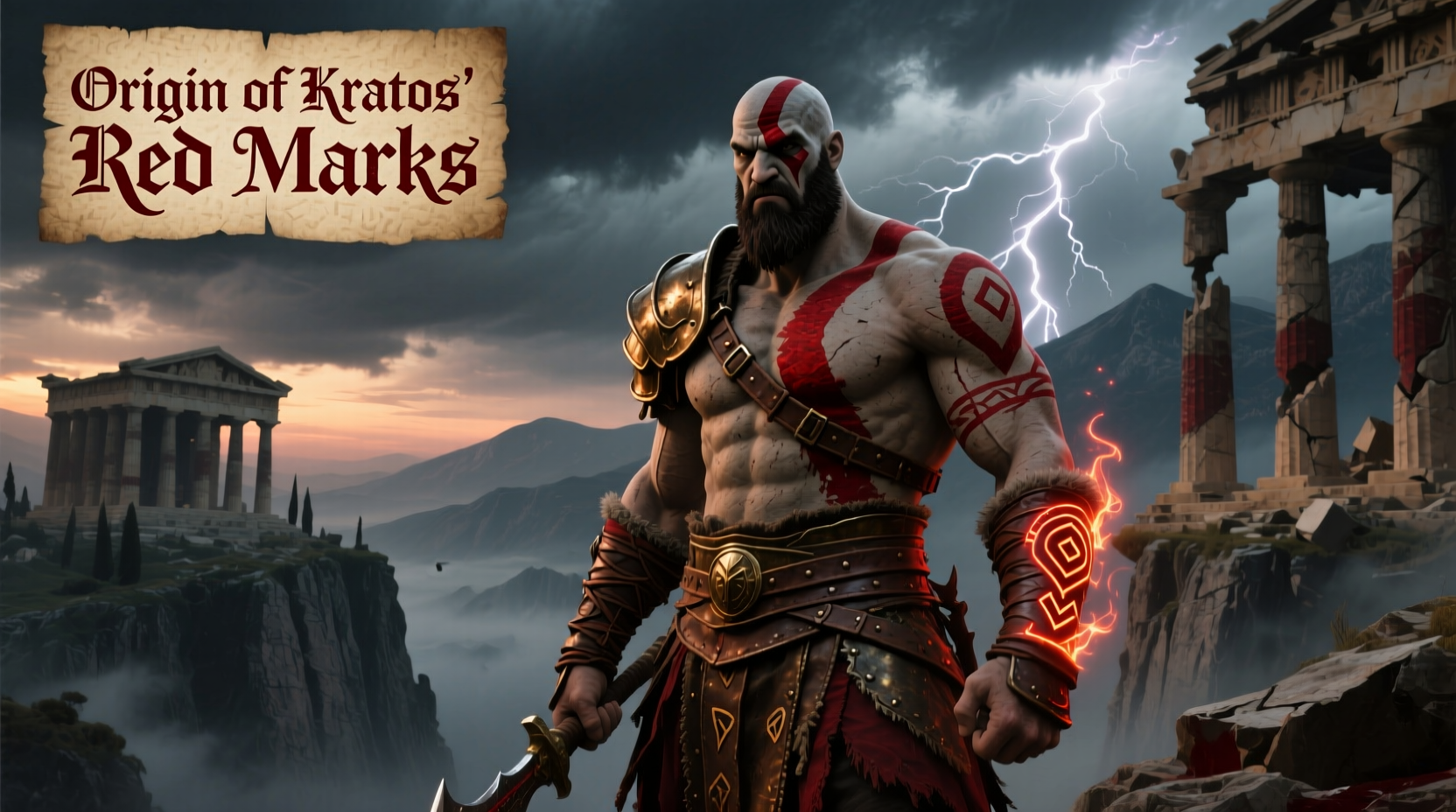
Kratos’ red scars are not tattoos or war paint. They are made from the ashes of his murdered wife and daughter. In the original *God of War* (2005), it’s revealed that Kratos was manipulated by Ares, the Greek God of War, into killing his own family during a fit of divine-induced rage. Upon regaining his senses and realizing what he had done, Kratos was consumed by guilt and grief. As an eternal reminder of his unforgivable act, he cremated their bodies and used their ashes to paint permanent red lines across his body.
This act was both penance and self-punishment. The ashes bonded with his skin, turning it permanently pale—a physical manifestation of a soul drained by sorrow. The red pigment stands in stark contrast to his ashen complexion, symbolizing blood, loss, and the irreversible consequences of his past.
“Kratos wears his pain on his skin. Every mark is a memory he can never escape.” — David Jaffe, Creator of God of War
Symbolism: Guilt, Rage, and Identity
The red marks serve multiple symbolic purposes throughout the series:
- Guilt and Remorse: The most immediate interpretation is that the scars represent Kratos’ unrelenting guilt. No matter how many gods he kills or battles he wins, he cannot undo what he did to his family.
- Rage and Vengeance: The color red evokes blood and fury. It reflects the burning anger that drove Kratos through his early campaigns against the Olympian pantheon.
- Identity: Over time, the marks become inseparable from Kratos himself. They are not hidden; they are displayed. In this sense, they evolve from symbols of shame into emblems of survival.
In *God of War III*, when Kratos finally reaches Olympus and confronts Zeus, the scars take on a new layer of meaning. They are no longer just reminders of personal tragedy—they are battle standards. Each line becomes a declaration of defiance against a pantheon that exploited and discarded him.
Evolution Across the Series: From Greece to Midgard
When the franchise rebooted in 2018 with *God of War* (often called *God of War: Ragnarök*’s predecessor), Kratos reappeared in Norse mythology, now living in Midgard with his young son Atreus. Visually, the red marks remained—but their context shifted dramatically.
No longer driven solely by vengeance, Kratos is attempting to break the cycle of violence. Yet the scars persist, serving as silent warnings to his son and reminders of the man he once was. Interestingly, in colder climates, the scars appear more faded—perhaps suggesting emotional distance or healing. But in moments of intense emotion, such as rage or confrontation, they seem to darken, visually echoing internal turmoil.
The 2018 game introduces a subtle but powerful moment: Atreus asks about the scars. Kratos responds only with silence. This interaction underscores the complexity of the marks—not just as physical traits, but as emotional barriers between father and son.
Timeline of Key Moments Involving the Red Marks
- God of War (2005): Kratos applies the ashes after murdering his family. The transformation of his skin begins.
- God of War II: The scars are fully visible. Flashbacks reveal the ritualistic nature of their application.
- God of War III: Scars remain unchanged despite divine transformations—symbolizing that some wounds don’t heal, even with power.
- God of War (2018): Scars are still present but less emphasized. Represent a past life being slowly reconciled.
- God of War: Ragnarök (2022): Scars endure through final battles. Now part of a legacy passed down, not just a burden carried alone.
Cultural and Mythological Inspirations
The concept of wearing the remains of loved ones is rooted in real-world traditions. Some ancient cultures practiced ash-binding or scarification as rites of mourning or spiritual protection. The developers at Santa Monica Studio drew inspiration from these practices to ground Kratos’ mythos in emotional authenticity.
Additionally, the use of white skin and red markings parallels certain depictions of ancient Spartan warriors, who were known for their austerity and martial devotion. While not historically accurate, this aesthetic reinforces Kratos’ identity as a warrior forged by war and loss.
| Era | Appearance of Marks | Emotional Significance |
|---|---|---|
| Greek Era (2005–2010) | Bold, defined, highly visible | Active guilt, rage, obsession with revenge |
| Norse Era (2018–2022) | Slightly muted, weather-worn | Reflection, restraint, fear of repeating the past |
| Post-Ragnarök (Speculative) | Potentially faded or accepted | Redemption, closure, paternal legacy |
Mini Case Study: The Campfire Scene in God of War (2018)
One of the most poignant moments involving the red marks occurs early in the 2018 *God of War* game. After surviving a brutal encounter with Draugr, Kratos and Atreus sit by a campfire. Atreus stares at his father’s arms, clearly curious about the scars. He asks, “Why are your eyes like that? And your skin?” Kratos replies tersely, “My past… is my own.”
This exchange illustrates how the red marks function beyond aesthetics. They are conversation stoppers—barriers built from trauma. Yet the fact that Atreus notices them foreshadows future revelations. The scene sets up a central theme: Can a man defined by his scars learn to open up? The answer unfolds over the course of the game, showing that while the marks remain, their meaning can change.
Frequently Asked Questions
Are Kratos’ red marks real in the lore?
Yes. Within the *God of War* universe, the red marks are physically real—made from the ashes of his deceased wife and daughter. They are magically bound to his skin and cannot be removed.
Do the red marks give Kratos any powers?
No, the marks themselves do not grant abilities. However, they are tied to his transformation into the \"Ghost of Sparta\"—a title earned due to his pale skin and vengeful spirit.
Will Kratos ever remove the red marks?
It’s unlikely. The scars are integral to his identity. Even if healed, removing them would contradict the narrative of accepting one’s past rather than erasing it.
Actionable Checklist: Understanding Kratos’ Journey Through His Scars
- Review key cutscenes where Kratos discusses or reacts to his past.
- Compare his demeanor in Greek-era games versus Norse-era titles.
- Analyze dialogue involving Atreus asking about his father’s appearance.
- Pay attention to visual cues—how lighting and environment affect the visibility of the scars.
- Reflect on how personal trauma is portrayed in storytelling across media.
Conclusion: Scars That Tell a Story
Kratos’ red marks are far more than a striking visual gimmick. They are a narrative anchor—a constant, visible thread connecting every phase of his tragic odyssey. From the ashes of his family rose a legend forged in blood and regret. Yet, as the series progresses, those same marks come to represent something else: resilience. The ability to carry unbearable pain without letting it consume you entirely.
In the end, the red scars may never fade. But their meaning can evolve—from symbols of shame to testaments of growth. Kratos doesn’t need to erase his past to be a better man. He just needs to ensure his son doesn’t repeat it.




 浙公网安备
33010002000092号
浙公网安备
33010002000092号 浙B2-20120091-4
Comments
No comments yet. Why don't you start the discussion?