
Lipstick is one of the most powerful tools in a makeup lover’s arsenal—capable of transforming a look from casual to polished with a single swipe. Yet, few frustrations rival watching your carefully applied lip color seep into fine lines minutes after application. This phenomenon, commonly known as “lipstick bleeding” or “feathering,” doesn’t just dull your look—it can make lips appear aged and uneven. Understanding why this happens and how to stop it is essential for anyone seeking a crisp, clean, and enduring finish.
The issue isn’t simply about product quality. It stems from a combination of skin aging, texture changes, product formulation, and application technique. The good news? With the right knowledge and routine, you can significantly reduce—or even eliminate—this common cosmetic concern.
The Science Behind Lipstick Bleeding
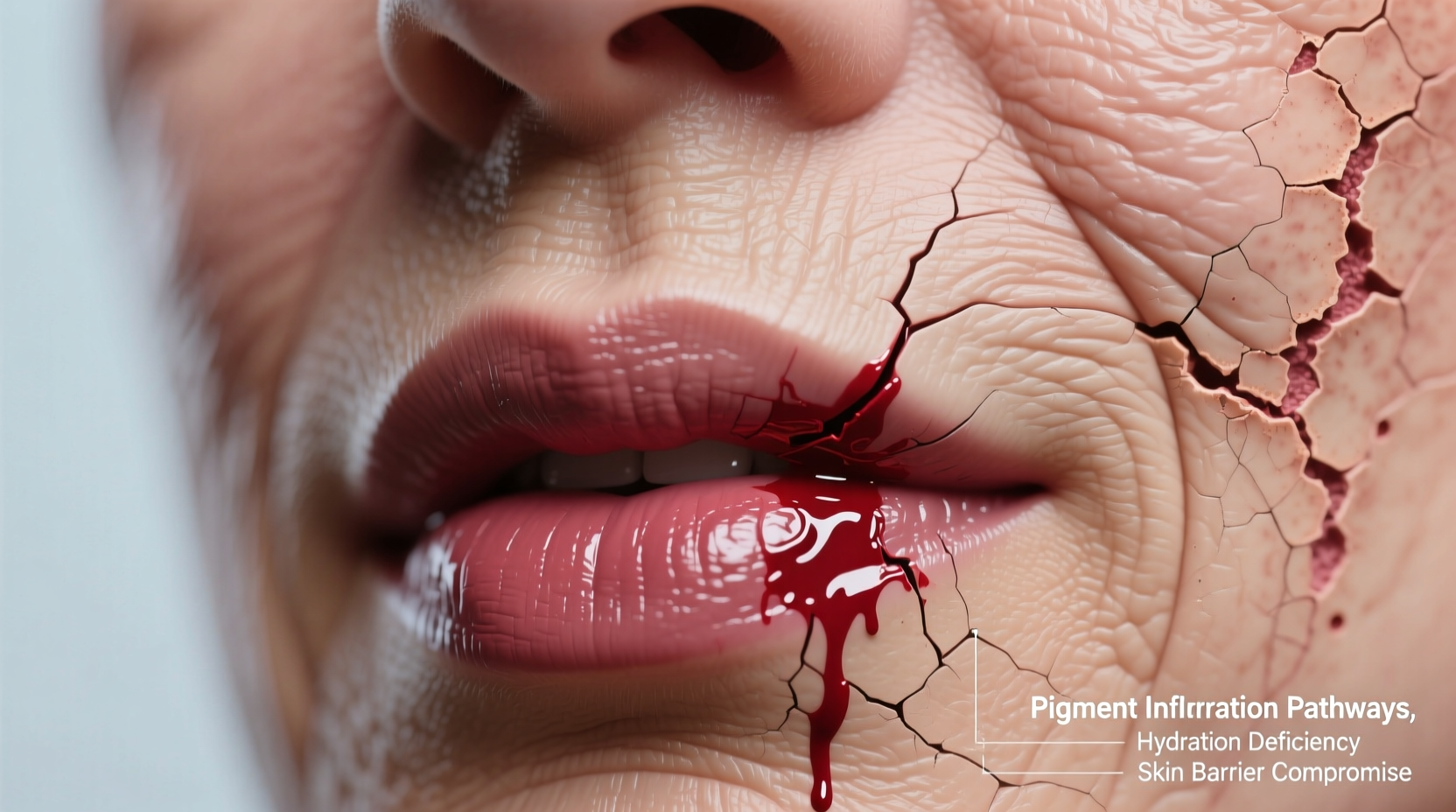
Lipstick tends to migrate into fine lines around the mouth due to both structural and environmental factors. As we age, the skin above and below the lips loses elasticity and collagen, leading to the formation of vertical lines—often called “smoker’s lines,” though they affect non-smokers too. These tiny crevices act like channels, drawing in soft, emollient-rich lip products over time.
Additionally, natural oils on the skin’s surface can cause lipstick to slide and settle into these grooves. Products high in wax or oil, while comfortable, are more prone to migration. The movement of facial muscles during talking, eating, or smiling also encourages pigment to shift outward from the lip line and into surrounding areas.
“Lipstick bleeding is less about the product itself and more about the canvas it's applied to. Prepping the lip zone properly is half the battle.” — Dr. Lena Moretti, Cosmetic Dermatologist
Key Causes of Lipstick Migration
Understanding the root causes allows for targeted solutions. Here are the primary contributors:
- Aging Skin: Reduced collagen and thinner epidermis increase visibility of perioral lines.
- Dryness: Flaky or dehydrated skin creates uneven texture that traps pigment.
- Excess Oil: Sebum production around the mouth helps spread product beyond the lip line.
- Inappropriate Formulas: Creamy, glossy, or liquid lipsticks with slippery textures migrate easily.
- Poor Application Technique: Skipping lip liner or applying without definition invites bleeding.
- Facial Movements: Constant muscle use breaks down the integrity of the lip edge over time.
How to Prevent Lipstick from Bleeding: A Step-by-Step Guide
Prevention starts long before the lipstick touches your lips. A strategic approach combining skincare, priming, and precise application yields the best results.
- Exfoliate Weekly: Gently buff away dead skin cells with a soft toothbrush or a mild sugar scrub. Smooth lips provide an even surface and reduce trapping of pigment.
- Hydrate Strategically: Apply a lightweight moisturizer or hydrating serum to the lips 15–20 minutes before makeup. Blot thoroughly to remove excess residue.
- Prime the Area: Use a dedicated lip primer or a small amount of matte foundation around the lip line to create a barrier against migration.
- Define with Liner: Choose a lip liner that matches your natural lip color or lipstick shade. Trace precisely along the lip border, then fill in the entire lip. This creates a “base layer” that locks in color.
- Apply Lipstick with Precision: Use a lip brush for control. Start from the center and work outward, avoiding going beyond the natural lip line.
- Blot and Set: Press a tissue between your lips to absorb excess oil. Lightly dust translucent powder over the lips through the tissue to set without removing color.
- Touch Up Smartly: Carry a lip liner and blotting paper for midday refreshes—redefine edges rather than reapplying full layers.
Real Example: Sarah’s Evening Out Transformation
Sarah, a 42-year-old marketing executive, loved bold red lips but dreaded how quickly they’d bleed by the time she reached dinner. After consulting a makeup artist, she adjusted her routine: she began exfoliating twice weekly, switched to a matte liquid lipstick, and started using a nude-toned liner slightly inside her natural lip line. She also applied concealer around the edges for sharp definition. At her next event, her lipstick stayed intact for over six hours—with no touch-ups. “I finally felt confident enough to laugh and talk freely,” she said. “It’s not just about beauty; it’s about comfort.”
Choosing the Right Products Matters
Not all lipsticks behave the same way on mature or textured skin. The formula plays a crucial role in longevity and precision.
| Formula Type | Bleeding Risk | Best For | Tips |
|---|---|---|---|
| Glossy Lipstick | High | Youthful, plump lips | Use only on well-exfoliated lips; pair with strong liner. |
| Creamy Matte | Moderate | Daily wear | Set with powder; avoid overlining. |
| Long-Wear Liquid | Low (when applied correctly) | All skin types, especially mature | Apply thin layers; avoid drying out lips. |
| Sheer Tint | Low | Natural looks | Layer over balm if needed. |
| Waxy Bullet | High | Beginners | Prone to feathering; prime first. |
Experts recommend opting for transfer-proof or “crease-resistant” formulas if you’re prone to bleeding. Look for keywords like “long-wearing,” “mattified,” or “defined hold” on packaging. Additionally, consider using a setting spray with a matte finish to lock everything in place.
Skincare That Supports Smoother Lips
Makeup is only as good as the skin beneath it. Incorporating targeted skincare habits can dramatically improve lip texture and resilience.
- Use SPF on Lips: Daily sun exposure accelerates collagen breakdown. Choose a lip balm with SPF 30+ every morning.
- Retinoids (with caution): Topical retinol around the mouth can thicken skin and reduce fine lines—but use sparingly to avoid irritation.
- Peptides and Hyaluronic Fillers: Over-the-counter lip serums containing peptides may help plump and smooth over time.
- Stay Hydrated: Dehydration exacerbates dryness and flakiness, making lines more pronounced.
- Avoid Licking Lips: Saliva dries out the delicate lip skin and worsens chapping.
For those with deeper perioral lines, dermatological treatments such as laser resurfacing, chemical peels, or hyaluronic acid fillers can offer longer-term improvements. These should be discussed with a licensed professional.
“Topical care is cumulative. Consistent hydration and protection yield better makeup results than any single product.” — Dr. Anita Shah, Aesthetic Skincare Specialist
Checklist: How to Keep Lipstick in Place All Day
Follow this actionable checklist each time you apply lipstick for optimal staying power and minimal bleeding:
- ✅ Exfoliate lips gently (1–2 times per week)
- ✅ Moisturize early and blot before makeup
- ✅ Prime lips and surrounding area
- ✅ Line lips with a matching or slightly darker pencil
- ✅ Fill in entire lip with liner for a base
- ✅ Apply lipstick with a brush for precision
- ✅ Blot with tissue and set with powder
- ✅ Clean up edges with concealer
- ✅ Carry liner and blotting papers for touch-ups
- ✅ Reapply color without adding more product to the perimeter
Frequently Asked Questions
Can lip liner really stop bleeding?
Yes—when used correctly. A waxy, smudge-proof lip liner acts as a physical barrier that prevents lipstick from migrating beyond the lip line. For best results, choose a long-wear formula and apply it just inside your natural border to create a buffer zone.
Is there a difference between lip liner and regular eyeliner?
Absolutely. Lip liners are formulated to be safe for use on mucosal tissue and are typically softer and more blendable. Eyeliners may contain ingredients not intended for the lips and can be too harsh or drying.
Do matte lipsticks last longer than glosses?
Generally, yes. Matte formulas—especially liquids—tend to have higher pigment concentration and less slip, reducing migration. However, they can emphasize dryness if lips aren’t prepped properly. Balance longevity with comfort by choosing hydrating mattes or applying them over a smooth base.
Final Thoughts: Confidence Starts with Control
Lipstick bleeding into fine lines is a common challenge, but it’s far from inevitable. By understanding the interplay between skin condition, product choice, and technique, you gain control over your look—and your confidence. The goal isn’t to hide your lips under layers of product, but to enhance them with intention and precision.
Great makeup isn’t about perfection—it’s about feeling put together, expressive, and self-assured. When your lipstick stays where it belongs, you can speak, smile, and sip your coffee without second-guessing your reflection. Small adjustments in routine can lead to big improvements in results.




 浙公网安备
33010002000092号
浙公网安备
33010002000092号 浙B2-20120091-4
Comments
No comments yet. Why don't you start the discussion?