
Suddenly hearing your Alexa device activate without prompting can be unsettling—especially if it happens in the middle of the night or during a quiet moment. You're not alone. Thousands of users report their Echo devices turning on unexpectedly, sometimes speaking aloud, flashing lights, or even recording snippets of conversation. While Amazon designs Alexa to respond only to its wake word, real-world conditions often introduce interference, software bugs, or hardware quirks that trigger false activations. Understanding the root causes and applying targeted fixes can restore peace and privacy to your home.
Common Causes of Random Alexa Activations
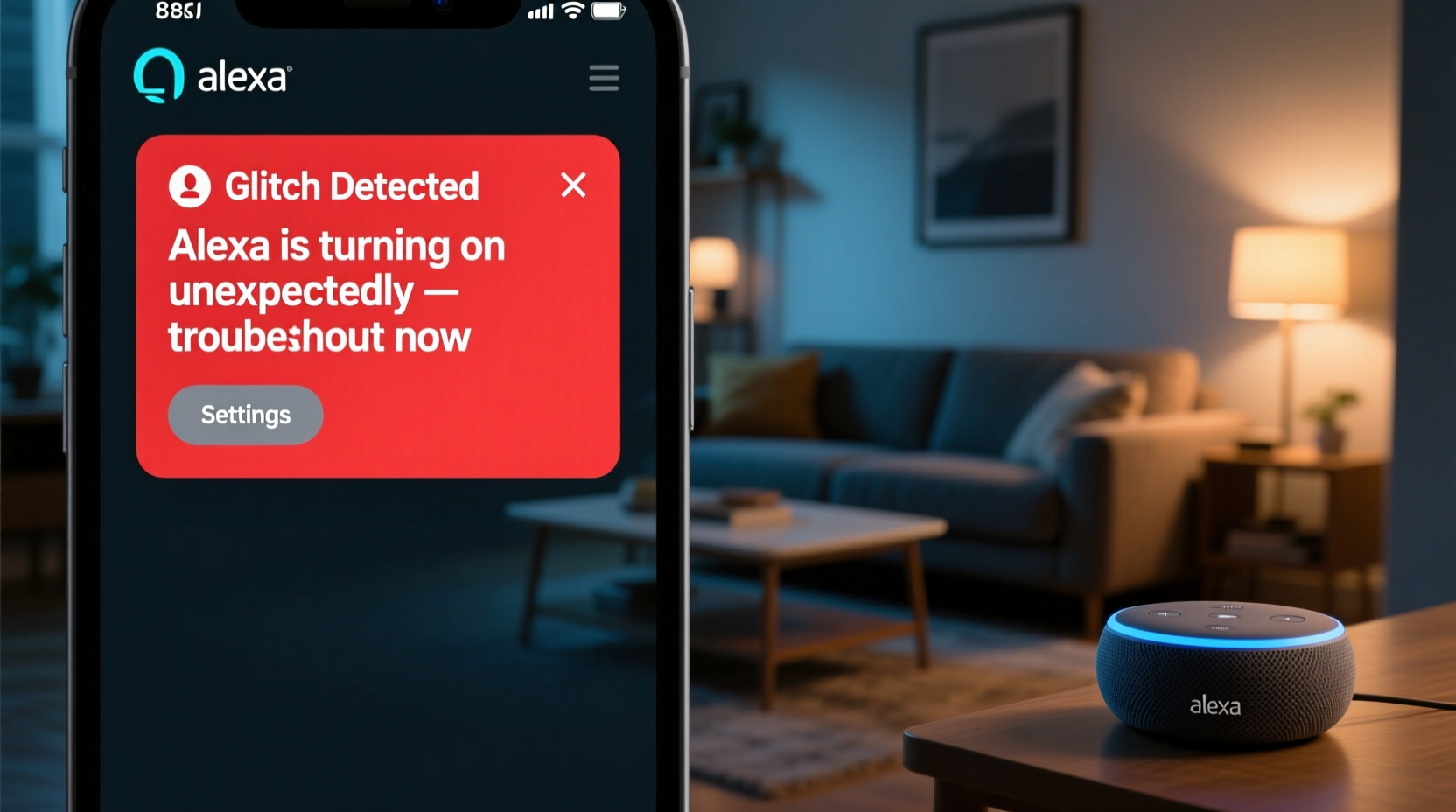
Alexa is built to listen for specific voice triggers like “Alexa,” “Echo,” or “Computer.” However, background noise, similar-sounding words, or technical malfunctions can trick the device into thinking it's been called. These false positives are more common than most users realize and stem from several sources:
- Voice misinterpretation: Words like “election,” “alexandra,” or phrases with similar phonetics can activate the device.
- Noise interference: Loud TV commercials, music, or household appliances may mimic the wake word’s frequency pattern.
- Firmware bugs: Outdated or corrupted software can cause erratic behavior, including phantom activations.
- Hardware sensitivity: Microphones on newer models are highly sensitive and may pick up distant or muffled sounds as commands.
- Connected smart routines: Automated schedules or motion-based triggers might unintentionally prompt Alexa to speak or turn on lights.
Amazon acknowledges that no voice assistant is 100% accurate. In a 2023 transparency report, the company noted that less than 2% of all audio captured by Echo devices were false wake-ups—but even one per week can feel intrusive.
“False activations are typically due to environmental acoustics or software timing issues. Adjusting settings and location often resolves over 80% of cases.” — Dr. Lena Patel, Senior Acoustic Engineer at Consumer Tech Insights
Step-by-Step Guide to Diagnose and Fix Alexa Glitches
Before assuming your device is defective, follow this structured approach to identify and eliminate the cause of random activations.
- Check recent activity in the Alexa app: Open the app, go to Settings > Your Profile > History. Review timestamps of unexpected activations. Note whether a command was recognized or just the wake light turned on.
- Review smart home routines: Navigate to Routines in the app. Disable any automation that uses sound, motion sensors, or time-based triggers that could initiate Alexa responses.
- Adjust microphone sensitivity: Some Echo models allow manual tuning of voice detection thresholds. Go to Device Settings > Microphone Sensitivity and reduce it slightly if you live in a noisy environment.
- Reboot the device: Unplug your Echo for 30 seconds, then plug it back in. This clears temporary memory glitches and resets network connections.
- Update firmware: Ensure your device runs the latest software. In the Alexa app, check under Device Settings > About > Software Version. Updates are usually automatic but can lag behind on weak Wi-Fi.
- Test in another room: Move the device to a quieter area temporarily. If activations stop, the original location likely has interfering sounds.
- Factory reset (last resort): Press and hold the microphone off button for 20 seconds until the ring turns orange. Reconnect via the app to start fresh.
Do’s and Don’ts When Managing Alexa Behavior
| Do’s | Don’ts |
|---|---|
| Position Alexa away from reflective surfaces like mirrors or glass that can distort sound waves. | Don’t place multiple Echos in the same room unless necessary—they can cross-trigger each other. |
| Use the \"Brief Mode\" setting to minimize verbal feedback after simple commands. | Don’t ignore routine updates; outdated firmware increases glitch risks. |
| Enable voice confirmation only for critical actions like unlocking doors or making purchases. | Don’t leave the microphone always-on in private spaces like bedrooms without disabling it when not needed. |
| Regularly clear voice history to reduce data clutter and potential mislearning. | Don’t assume silence means no recording—always verify with the blue light indicator. |
Real Example: How One Family Fixed Their Midnight Alexa Episodes
The Thompson family in Portland began noticing their kitchen Echo Dot lighting up around 2:30 a.m., occasionally saying, “I didn’t catch that,” or playing soft chimes. They initially suspected a security breach. After ruling out intrusions, they reviewed their Alexa history and discovered activations coincided with their refrigerator’s ice dispenser cycling.
Using the Alexa app, they found that the phrase “ice release” closely matched the acoustic profile of “Alexa.” By relocating the Echo from the countertop next to the fridge to a shelf across the room—and lowering microphone sensitivity—the random triggers stopped completely within two days.
This case highlights how everyday household appliances can generate false positives, especially when devices are placed too close to mechanical noise sources.
Customize Wake Words and Reduce False Triggers
One of the most effective ways to prevent accidental activation is changing Alexa’s default wake word. Amazon offers four options: “Alexa,” “Echo,” “Computer,” and “Amazon.” Choosing a less common term reduces the chance of interference.
To change the wake word:
- Open the Alexa app.
- Tap Devices, then select your Echo device.
- Scroll to Wake Word and choose an alternative.
- Wait for the device to reboot and confirm the new setting.
For households with non-English speakers or multilingual members, switching to “Computer” often yields the best results, as it’s rarely used in casual conversation and phonetically distinct from common phrases.
Additionally, consider using voice profiles. Enabling Voice ID allows Alexa to recognize individual users and respond only to authorized voices for certain tasks, reducing unintended interactions from guests or children.
Checklist: Stop Alexa From Turning On Randomly
Follow this actionable checklist to systematically address and resolve unexplained activations:
- ✅ Review Alexa app history for unrecognized commands or activations
- ✅ Disable unnecessary routines involving sound or motion triggers
- ✅ Change the wake word to “Computer” or “Echo” for lower false-positive rates
- ✅ Reposition the device away from TVs, fridges, alarms, or loud appliances
- ✅ Lower microphone sensitivity in Device Settings
- ✅ Perform a full reboot of the Echo device
- ✅ Confirm firmware is up to date in the Alexa app
- ✅ Enable Brief Mode to reduce verbal responses
- ✅ Use the microphone mute button at night or during private conversations
- ✅ Consider factory resetting if problems persist after all other steps
FAQ: Common Questions About Alexa Glitches
Can Alexa turn on by itself without hearing anything?
Yes, though rare. Internal glitches, failed software updates, or corrupted cache files can cause spontaneous reboots or partial wake-ups. More commonly, faint or distant sounds resembling the wake word trigger activation. True “self-turn-on” events without any audio stimulus are extremely uncommon and usually indicate a hardware fault.
Is Alexa listening all the time?
Alexa continuously processes audio locally on the device but only sends data to the cloud when it detects the wake word. The local processing happens in a looped buffer that gets overwritten every few seconds unless triggered. No recordings are stored or transmitted unless the wake word is detected. However, false detections do result in brief uploads—which you can review and delete in the Alexa app.
How do I know if my Alexa activated accidentally?
Check the Activity section in the Alexa app. Each interaction—including false wakes—is logged with a timestamp and audio snippet (if recorded). Look for entries where no clear command follows the wake-up. You can also enable notifications for every Alexa interaction to get real-time alerts on your phone.
Protecting Privacy and Preventing Future Issues
Beyond convenience, unexplained Alexa activations raise valid privacy concerns. While Amazon encrypts voice data and allows users to delete recordings automatically, proactive measures offer greater peace of mind.
Set up auto-deletion of voice history: In the Alexa app, go to Settings > Alexa Privacy > Manage Your Alexa Data, then choose “Auto-Delete” for recordings older than 3 or 18 months. For maximum control, select “Never Save” to disable voice storage entirely—though this limits some personalization features.
Also, make physical controls part of your routine. Use the microphone off button nightly, especially in bedrooms. A red light band indicates the mic is disabled, ensuring no audio is being processed. Combine this with smart plugs that cut power during extended absences to eliminate any risk of remote access or background operation.
“User awareness is the first line of defense. Simple habits like muting mics and reviewing activity logs drastically reduce both glitches and privacy exposure.” — Mark Tran, Cybersecurity Analyst at HomeIoT Watchdog
Conclusion
Random Alexa activations are usually not signs of malfunction or surveillance, but rather the result of environmental factors, software quirks, or overly sensitive settings. With deliberate adjustments—relocating devices, changing wake words, updating firmware, and managing routines—you can significantly reduce or eliminate unwanted behavior. The key is consistent monitoring and small, strategic changes tailored to your home’s unique acoustics and usage patterns.




 浙公网安备
33010002000092号
浙公网安备
33010002000092号 浙B2-20120091-4
Comments
No comments yet. Why don't you start the discussion?