
Every December, millions of households unpack their artificial Christmas trees expecting festive reliability — not a carpet littered with plastic shards by New Year’s Eve. Unlike real trees, which naturally drop needles as they dehydrate, artificial trees are engineered for longevity. When they begin shedding, it’s not seasonal; it’s symptomatic. This isn’t just about aesthetics or vacuuming extra debris — it signals degradation in materials, structural integrity, or cumulative environmental stress. Understanding *why* shedding occurs — and distinguishing between normal wear and irreversible failure — empowers you to extend your tree’s life meaningfully or replace it before safety, appearance, or functionality deteriorates.
The Science Behind Fake Needle Shedding
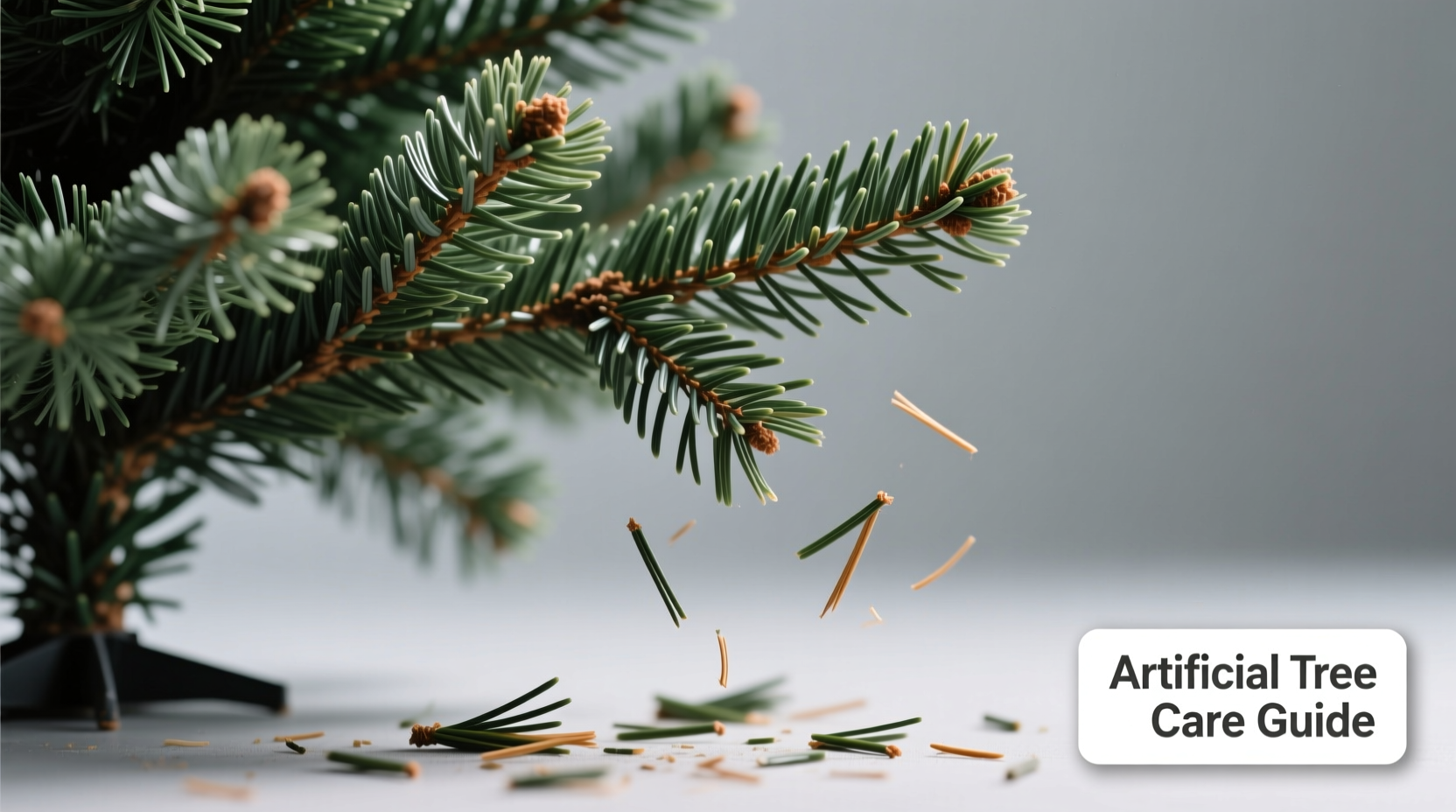
Most modern artificial trees use PVC (polyvinyl chloride) or PE (polyethylene) for branch tips. PVC is rigid, cost-effective, and widely used in budget and mid-tier trees; PE mimics real pine texture more closely and is often blended with PVC for realism. Both plastics degrade over time, but through different mechanisms:
- PVC embrittlement: Exposure to UV light, heat fluctuations, and oxygen causes plasticizers (chemicals added to keep PVC flexible) to migrate out of the material. As they leach away, the plastic becomes brittle, prone to cracking, and easily dislodged from wire stems.
- PE micro-fracturing: Though more UV-stable than PVC, PE suffers from repeated bending and compression. Each time branches are folded, twisted, or forced into storage bags, microscopic fissures form at stress points — especially near the base of needle clusters where thin wires anchor them.
- Wire stem fatigue: The metal or plastic-coated wire running through each branch acts as both skeleton and anchor. Over 5–10 seasons of assembly and disassembly, this wire bends, weakens, and eventually snaps — releasing entire clusters of needles at once.
Crucially, shedding rarely starts uniformly. It begins subtly: a few stray tips on the floor after fluffing, then clumps near the base, then visible bald patches on lower branches. That progression maps directly to mechanical stress history — not random failure.
5 Key Causes — and What They Reveal About Your Tree’s Health
Shedding is never caused by a single factor. It’s almost always the result of overlapping stressors. Here’s how to diagnose the root cause based on pattern, timing, and context:
- Premature shedding in the first or second season: Points to manufacturing defects — undersized wire gauges, insufficient adhesive bonding between needle clusters and stems, or low-grade recycled PVC with inconsistent plasticizer content. This is not user error; it’s a warranty issue.
- Seasonal worsening after 3–4 years: Indicates progressive embrittlement. If shedding increases noticeably year over year — especially when combined with discoloration (yellowing or grayish haze), stiffness in branch movement, or “crunching” sounds when adjusting limbs — the tree has passed its functional midpoint.
- Localized shedding near the trunk or base branches: Reflects chronic weight stress. Lower branches bear the most load from upper tiers and ornaments. If needles detach only where branches meet the central pole — or where heavy garlands were hung — the structure is fatiguing under sustained compression.
- Shedding triggered only during assembly or fluffing: Suggests improper storage. Trees compressed tightly for months develop “memory set” in bent branches. Forcing them outward reactivates micro-fractures. This is reversible with careful, gradual fluffing — but repeated cycles accelerate damage.
- Shedding accompanied by metallic odor or visible corrosion on hinges or poles: Signals moisture exposure during storage. Even ambient humidity in damp basements or garages promotes oxidation of steel components and hydrolysis of PVC — accelerating breakdown far beyond typical aging.
When to Replace: A Practical Decision Framework
Replacing an artificial tree isn’t just about aesthetics — it’s about safety, efficiency, and value retention. Consider replacement when two or more of the following conditions apply:
| Condition | Why It Matters | Action Threshold |
|---|---|---|
| More than 5% of needle clusters visibly detached or loose | Indicates systemic material failure; repair is impractical and temporary | Replace if >100–150 clusters missing on a 7.5-ft tree (approx. 2,000–2,500 total) |
| Central pole or hinge joints show rust, warping, or wobble | Compromised structural stability increases tip-over risk — especially with children or pets | Immediate replacement required |
| Branches snap or bend permanently during setup | Loss of shape fidelity and mounting capacity for ornaments/garlands | Replace before next season — no safe workaround |
| Visible yellowing, chalky residue, or stiff, inflexible tips | Chemical degradation has progressed to the point where fire-retardant coatings may be compromised | Verify UL/ETL certification status; replace if uncertified or >10 years old |
| Annual fluffing requires >30 minutes and yields diminishing returns | Time investment exceeds functional benefit — signals diminishing utility | Calculate cumulative hours spent vs. cost per season; replace if ROI drops below $25/hour |
This framework moves beyond subjective “it looks tired” assessments. It grounds replacement decisions in measurable thresholds tied to performance, safety, and economics.
Mini Case Study: The 12-Year Tree That Outlived Its Warranty
Sarah K., a schoolteacher in Portland, OR, purchased a 7.5-foot pre-lit PE/PVC blend tree in 2012. She stored it upright in a climate-controlled closet using manufacturer-recommended segmented bags — never folding branches. For the first eight years, shedding was negligible: fewer than five loose tips per season, all easily removed with tweezers. In Year 9, she noticed fine white powder (PVC bloom) near branch junctions and occasional snapping sounds when rotating top sections. By Year 11, clusters began detaching near the pole on three lower branches — totaling 42 loose clusters. She contacted the brand’s customer service; her warranty had expired after 5 years, but they offered a 30% discount on a new model. Sarah declined. Instead, she performed a targeted intervention: she reinforced high-stress branch bases with archival-quality plastic-safe epoxy (not superglue — which degrades PVC), replaced corroded pole screws with stainless steel, and switched to lightweight LED ornaments. Her tree completed its 12th season with only 17 new detachments — less than half the previous year’s count. Her conclusion? “It wasn’t about clinging to nostalgia. It was about understanding what was failing — and whether that failure was fixable. Some trees earn their keep.”
Expert Insight: Material Longevity Is Not Just About Time
“People assume ‘10-year lifespan’ means ten calendar years. It doesn’t. It means ten seasons of proper use — defined as controlled storage temperature (40–75°F), zero UV exposure, full branch extension during storage, and avoidance of plastic-on-plastic friction. I’ve tested trees stored in attic heat cycles (120°F summer / 25°F winter) versus basement humidity (70% RH year-round): both cut functional life by 40–60%, regardless of brand or price point.” — Dr. Lena Torres, Polymer Durability Researcher, North Carolina State University, Department of Materials Science & Engineering
Step-by-Step: Extending Your Tree’s Life — A 5-Season Maintenance Plan
Follow this annual sequence to maximize longevity — even for trees already showing early signs of shedding:
- Post-Holiday Disassembly (Late December): Remove all ornaments, lights, and garlands. Gently brush branches with a soft-bristle brush (like a clean paintbrush) to dislodge dust. Never use water or cleaners — moisture invites mold and accelerates plastic hydrolysis.
- Storage Prep (Early January): Fully extend every branch to its natural position. Loosely coil light cords — never wrap tightly around branches. Place tree in its original segmented bag or a breathable canvas storage sleeve (never plastic trash bags, which trap moisture and off-gas).
- Off-Season Storage (January–October): Store upright in a cool, dry, dark space. Ideal conditions: 50–70°F, <50% relative humidity, zero sunlight. Avoid garages, attics, or basements unless climate-controlled.
- Pre-Season Inspection (Mid-November): Unpack and examine branch tips for brittleness, discoloration, or loose clusters. Test hinge flexibility. If any joint resists smooth motion, apply one drop of silicone lubricant (not oil-based) to the pivot point.
- Assembly & Fluffing (Late November): Assemble the trunk first, then attach sections from bottom up. Once fully assembled, begin fluffing at the lowest tier. Work outward and upward, rotating each branch 180° slowly — never forcing resistance. Use two hands: one stabilizing the main stem, the other guiding the tip.
FAQ
Can I glue fallen needles back on?
No — and doing so risks further damage. Adhesives like hot glue or superglue generate heat and solvents that accelerate PVC degradation. Even “plastic-safe” epoxies create rigid bonds where flexibility is needed. Glued clusters will likely snap off again within weeks, often taking underlying stem material with them. Focus instead on preventing future loss through proper storage and handling.
Does shedding mean my tree is a fire hazard?
Not inherently — but it’s a red flag worth investigating. UL-listed artificial trees undergo flammability testing *when new*. As PVC embrittles, its ability to self-extinguish diminishes. If your tree also shows yellowing, a chemical odor, or crumbling base material, have it inspected by a certified fire safety technician. Do not use near heat sources (fireplaces, space heaters, or incandescent lights) if shedding exceeds 1% of total needles.
Are newer “no-shed” trees actually better?
Yes — but with caveats. Premium models now use proprietary PE blends with UV-stabilized polymers and thicker-gauge internal wires (e.g., 18-gauge steel instead of 22-gauge). Independent lab tests show these reduce shedding by 70–85% over 8 seasons compared to standard PVC. However, they cost 2.5–4× more upfront. Their true advantage lies in consistent performance — not magic. They still require proper storage and handling to deliver on their promise.
Conclusion
Your artificial Christmas tree is more than decor — it’s a recurring investment, a family ritual, and a quiet testament to intentionality in consumption. Shedding isn’t inevitable; it’s information. Every fallen needle carries data about storage conditions, material quality, and usage patterns. Recognizing that shifts the conversation from resignation (“It’s just an old tree”) to agency (“What can I adjust to make this last?”). Whether you choose to extend its life with disciplined care or replace it with a higher-grade model, do so deliberately — guided by observation, not assumption. The most sustainable choice isn’t always the cheapest or longest-lasting one; it’s the one aligned with your values, safety needs, and genuine enjoyment. So this holiday season, pause before you vacuum those stray tips. Look closer. Assess honestly. Then act — not out of habit, but with purpose.




 浙公网安备
33010002000092号
浙公网安备
33010002000092号 浙B2-20120091-4
Comments
No comments yet. Why don't you start the discussion?