
Sitting on the couch should be relaxing, not painful. Yet millions of people experience nagging lower or upper back discomfort shortly after settling in for a movie, work-from-home session, or casual downtime. This type of pain isn’t normal—it’s a signal from your body that something is off with your posture, seating structure, or movement habits. The good news: most causes are fixable with simple, immediate changes. Understanding why your back hurts—and how to correct it—can transform your comfort and long-term spinal health.
The Hidden Causes of Couch-Induced Back Pain
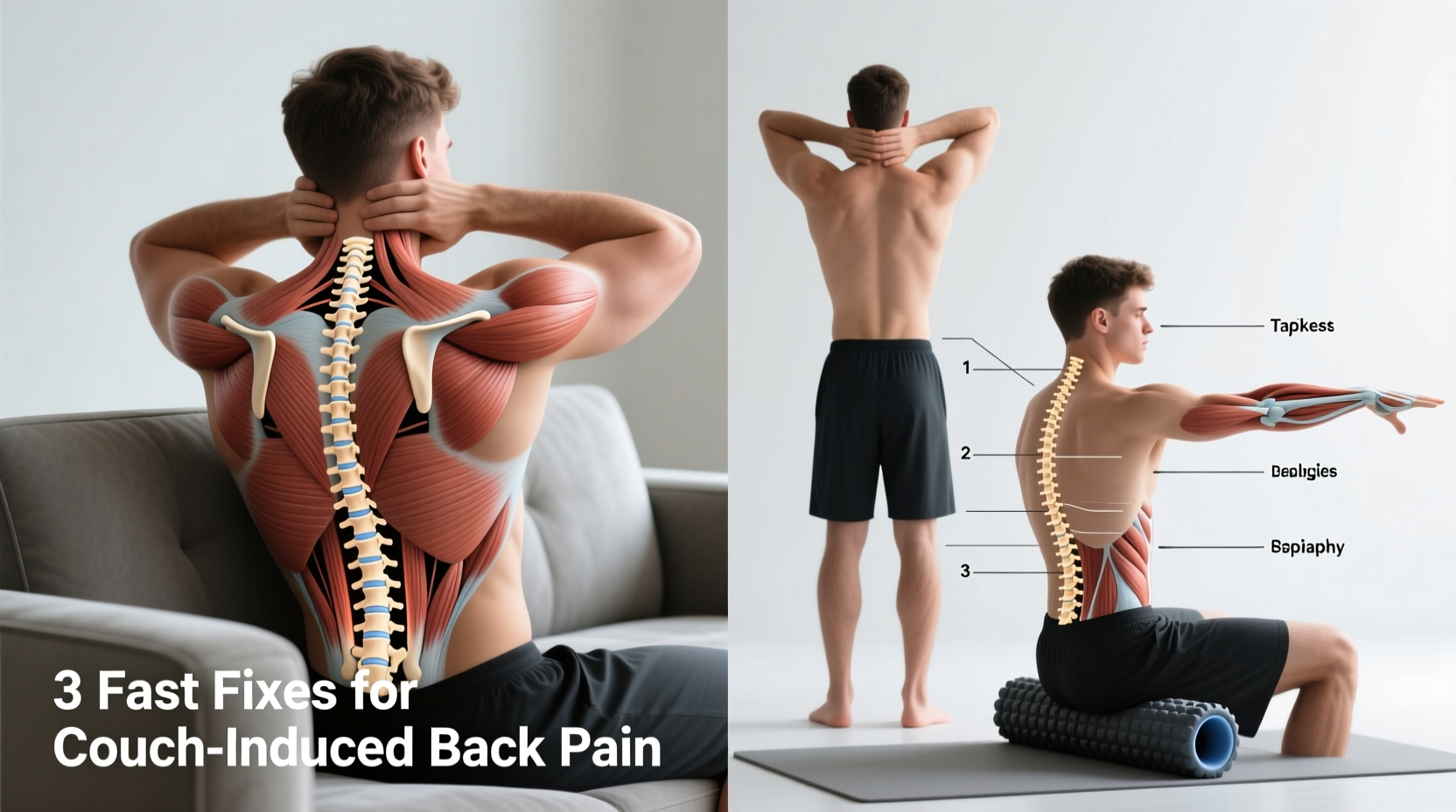
Back pain after lounging on the couch rarely stems from one single issue. Instead, it’s usually a combination of poor ergonomics, weak core muscles, and prolonged static positioning. Unlike office chairs designed with lumbar support and adjustability, most couches prioritize aesthetics over function. Deep seats, soft cushions, and low backs encourage slouching, which places excessive pressure on the lumbar spine and strains supporting muscles.
When you sink into a plush sofa, your hips often drop below your knees, tilting the pelvis backward. This pelvic tilt flattens the natural curve of your lower back (the lumbar lordosis), leading to disc compression and muscle fatigue. Over time, this position irritates spinal ligaments and can contribute to chronic conditions like disc degeneration or sciatica.
Another overlooked factor is duration. Even a well-designed seating arrangement becomes harmful when maintained for more than 30–45 minutes without movement. The human spine thrives on motion. Prolonged immobility reduces blood flow to spinal tissues, stiffens joints, and increases inflammation.
Ergonomic Fixes That Work Immediately
You don’t need to replace your entire living room setup to find relief. Small adjustments can yield dramatic improvements in comfort and spinal alignment.
Use Lumbar Support Properly
A rolled-up towel or small cushion placed at the base of your spine restores the natural inward curve. Position it so it fits snugly between your lower back and the couch. Avoid placing support too high—that targets the thoracic region and can worsen posture.
Elevate Your Legs
If your couch causes your hips to dip below knee level, use a footstool or ottoman. Elevating your legs brings your knees closer to hip height, reducing strain on the lower back. Even a stack of books under your feet can make a noticeable difference.
Sit Forward, Not Back
Fight the urge to sink all the way back into deep cushions. Instead, sit toward the front third of the couch seat. This helps maintain an upright pelvis and encourages active sitting, where your core muscles engage slightly to stabilize your posture.
“Most people assume comfort means sinking into soft furniture, but true spinal comfort comes from support and alignment—not plushness.” — Dr. Lena Patel, Physical Therapist and Spine Specialist
Step-by-Step Guide to Pain-Free Couch Sitting
Follow this five-step process to reconfigure your couch environment and eliminate back pain quickly.
- Assess Your Current Setup: Sit down as you normally would. Notice if your back rounds, shoulders slump forward, or head juts ahead. These are signs of poor alignment.
- Add Lumbar Support: Place a firm pillow or lumbar roll at the small of your back. Adjust until you feel slight pressure supporting the inward curve.
- Adjust Leg Position: Use a footrest so your knees are level with or slightly below your hips. This reduces tension in the hamstrings and lower back.
- Engage Your Core Gently: Without tensing up, draw your navel slightly toward your spine. This activates postural muscles and stabilizes your spine.
- Take Movement Breaks: Every half hour, stand up, walk around, or do two minutes of gentle stretching (e.g., cat-cow, standing side bends).
Repeat this routine each time you sit down. Consistency trains your body to adopt better habits automatically.
Do’s and Don’ts of Couch Sitting
| Do | Don't |
|---|---|
| Use a lumbar roll or small pillow for lower back support | Sink into deep cushions without any back support |
| Keep feet flat on a footstool or floor | Cross your legs for extended periods (causes pelvic imbalance) |
| Sit upright with ears over shoulders and shoulders over hips | Slouch or lean to one side while watching TV |
| Switch positions frequently (e.g., side-sitting with leg support) | Stay in the same position longer than 45 minutes |
| Stretch after getting up (forward fold, torso twist) | Rise quickly without mobilizing your spine first |
Real-Life Example: How Mark Reduced His Evening Back Pain
Mark, a 42-year-old software developer, began experiencing sharp lower back pain every evening after working remotely from his sectional sofa. He assumed the pain was inevitable due to long hours, but it started affecting his sleep and weekend activities.
After consulting a physical therapist, he made three key changes: First, he placed a firm lumbar pillow behind his lower back. Second, he used a wooden crate as a footrest to align his hips and knees. Third, he set a phone reminder to stand and stretch every 35 minutes.
Within two days, his pain dropped from a daily 7/10 to a manageable 2/10. After one week, he no longer needed pain relievers in the evenings. “I didn’t realize how much my couch was working against me,” Mark said. “Now I actually enjoy sitting down without dreading the ache.”
Strengthening Exercises to Prevent Future Pain
Beyond adjusting your environment, building resilience in key muscle groups protects your back over time. Weak glutes, tight hip flexors, and underactive core muscles all contribute to poor sitting mechanics.
Incorporate these three exercises into your daily routine (each takes less than 60 seconds):
- Glute Bridges: Lie on your back, knees bent, feet flat. Lift hips toward the ceiling, squeezing your glutes at the top. Do 15 reps daily to activate posterior chain muscles that support upright posture.
- Dead Bugs: Lie on your back, arms extended toward the ceiling, knees bent at 90 degrees. Slowly extend one arm overhead while straightening the opposite leg, then return. Alternate sides for 10 reps per side. This strengthens the deep core without straining the back.
- Piriformis Stretch: Sit on the floor, cross one ankle over the opposite knee, and gently lean forward. Hold 30 seconds per side. This relieves tension in the deep hip rotators, which often pull on the lower back when tight.
These movements counteract the muscular imbalances caused by passive sitting and enhance your body’s ability to maintain alignment even on suboptimal furniture.
Quick Relief Techniques When Pain Strikes
If you’re already feeling discomfort, try these fast-acting strategies to reduce inflammation and restore mobility.
Heat Therapy
Apply a heating pad to your lower back for 15–20 minutes. Heat increases blood flow, relaxes tight muscles, and eases stiffness. Use moist heat (like a warm towel) for deeper penetration.
Self-Massage with a Tennis Ball
Place a tennis ball between your back and a wall or the floor. Target sore spots near the spine (avoid direct pressure on the spine itself). Roll slowly to release trigger points in the paraspinal muscles.
Child’s Pose (Balasana)
Kneel on the floor, sit back on your heels, and stretch your arms forward, lowering your chest toward the ground. Hold for 1–2 minutes. This gently decompresses the spine and stretches the lower back.
“Movement is medicine for the spine. Even five minutes of targeted stretching can reset muscle tone and reduce pain signals.” — Dr. Rajiv Mehta, Orthopedic Rehabilitation Specialist
FAQ: Common Questions About Couch Back Pain
Can a bad couch cause permanent back damage?
Occasional poor sitting is unlikely to cause permanent harm, but chronic misuse—especially combined with lack of exercise—can accelerate disc wear, lead to muscle imbalances, and increase risk of herniated discs. Long-term exposure to poor posture contributes to degenerative changes over time.
Is it better to sit on a hard or soft couch?
A moderately firm couch is ideal. Too soft, and you’ll sink into poor alignment; too hard, and pressure points develop. Look for a balance: cushions that compress slightly but still provide structural support. Adding adjustable pillows lets you customize firmness.
Why does my upper back hurt when reclining on the couch?
Upper back pain often stems from forward head posture. When watching TV from a reclined position, people tend to crane their necks upward, straining the cervical and thoracic spine. Prop your head with a contoured pillow and angle the screen at eye level to prevent this.
Your Action Checklist for Immediate Relief
Use this checklist to eliminate back pain the next time you sit on the couch:
- ✅ Place a lumbar roll or small pillow at the base of your spine
- ✅ Elevate your feet so knees are level with or slightly below hips
- ✅ Sit on the front third of the couch, not sunk into the back
- ✅ Align ears, shoulders, and hips in a vertical line
- ✅ Set a 30-minute timer to stand and stretch
- ✅ Perform 2 minutes of cat-cow or child’s pose after getting up
- ✅ Avoid crossing legs or twisting to one side for long periods
Conclusion: Take Control of Your Comfort and Spinal Health
Back pain after sitting on the couch isn’t something you have to accept. With awareness and small, deliberate changes, you can turn a source of discomfort into a truly restful experience. The key is balancing support, alignment, and movement. Whether you’re binge-watching a series or answering emails from home, your spine deserves better than sinking into silent suffering.
Start tonight. Adjust your position, add support, and move often. Your back will respond faster than you think. Share your progress or tips in the comments—help others break free from avoidable pain and reclaim their comfort.




 浙公网安备
33010002000092号
浙公网安备
33010002000092号 浙B2-20120091-4
Comments
No comments yet. Why don't you start the discussion?