
Bearded dragons are among the most expressive reptiles kept as pets, and their behaviors often leave owners puzzled—especially when they lift a front leg and slowly wave it in the air. This seemingly whimsical gesture is not random playfulness; it’s a deeply rooted form of communication. Understanding what waving signifies can transform your relationship with your pet, allowing for better care, reduced stress, and deeper connection.
The wave is one of several non-verbal signals bearded dragons use to convey submission, acknowledgment, or deference. Unlike mammals, reptiles rely heavily on body language to navigate social interactions—even in solitary species like *Pogona vitticeps*. When your bearded dragon waves, it’s typically responding to perceived dominance, acknowledging your presence, or signaling that it means no harm.
The Biology Behind the Wave: A Sign of Submissiveness
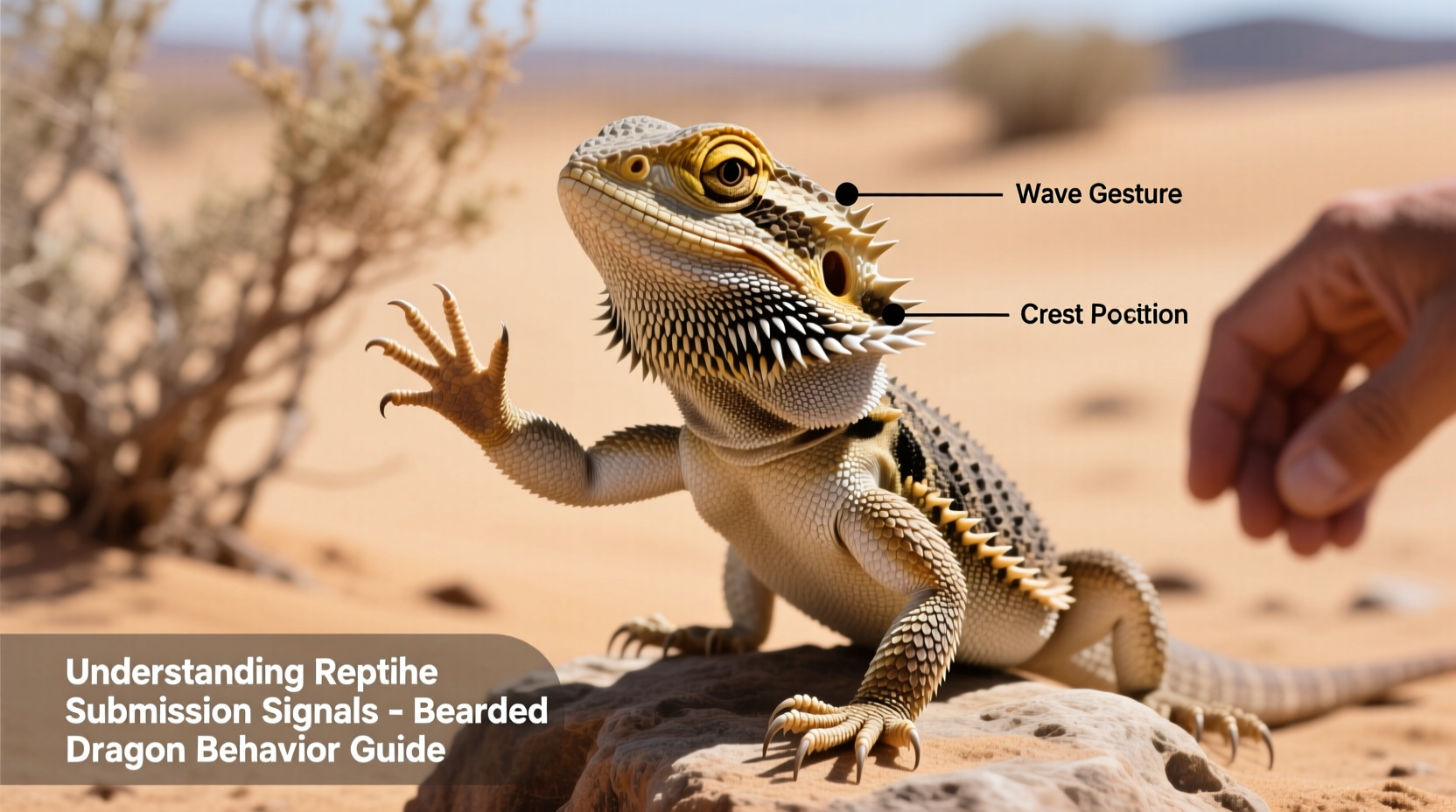
In the wild, bearded dragons inhabit arid regions of Australia where resources are limited and territorial disputes are common. To avoid physical confrontation—which could result in injury or death—they’ve evolved complex visual displays. One of the most distinctive is the slow, deliberate arm wave.
This behavior is primarily observed in younger dragons or subordinate individuals. When a smaller or less dominant dragon encounters a larger one, it may initiate a wave to signal peaceful intent. The dominant dragon, in turn, may respond with a head bob—a display of authority—without escalating to aggression. This ritualized exchange helps maintain social order without violence.
Domesticated bearded dragons retain these instincts. When your pet waves at you, it’s likely interpreting your movements—such as reaching into the enclosure or standing over the tank—as signs of dominance. By waving, it communicates, “I see you, I acknowledge your status, and I am not a threat.”
Context Matters: When and Why Waving Occurs
Not all waves carry the same meaning. The context in which the behavior occurs determines its significance. Here are the most common scenarios:
- First thing in the morning: After basking, your dragon may wave upon noticing you. This is often an acknowledgment of your presence after a period of inactivity.
- During handling: If you pick up your dragon and it begins to wave, it may feel vulnerable and is signaling submission.
- When seeing its reflection: Glass enclosures can create reflections, leading dragons to perceive another individual. They may wave at their own image, mistaking it for a peer.
- In multi-dragon households: Subordinate dragons frequently wave at more dominant cage mates, especially during feeding or basking competition.
It's important to note that waving is not a sign of affection in the human sense. While it may seem endearing, it’s fundamentally a survival mechanism—an effort to de-escalate potential conflict.
Gender and Age Differences in Waving Behavior
Younger dragons wave far more frequently than adults. Juveniles are naturally lower in the social hierarchy and use waving as a default response to unfamiliar stimuli. As they mature and gain confidence, especially males, they tend to replace waving with head bobbing or stillness.
Female and juvenile dragons are more likely to wave consistently, while adult males may only wave in highly stressful situations or when confronted by a much larger perceived threat. In some cases, a male may stop waving altogether once he establishes himself as the dominant figure in his environment—even if that environment is a 40-gallon tank.
“Waving is one of the clearest examples of ritualized submissive behavior in reptiles. It’s not learned—it’s innate. Even hand-raised dragons that have never seen another of their kind will wave when exposed to dominant postures.” — Dr. Lila Torres, Herpetologist and Behavioral Researcher, University of Queensland
Common Misinterpretations of the Wave
Many new owners interpret the wave as a friendly greeting, similar to a human waving hello. While it’s tempting to anthropomorphize this behavior, doing so can lead to misunderstandings about your dragon’s emotional state.
For example, if your dragon waves while being handled, it may not be enjoying the interaction. Instead, it could be stressed and attempting to pacify you. Similarly, persistent waving in the absence of threats might indicate chronic stress—perhaps due to improper lighting, overcrowding, or excessive handling.
Another misconception is that all dragons should wave. Some rarely or never exhibit this behavior, especially confident adults. Lack of waving doesn’t mean your dragon is aggressive or unhealthy; it may simply feel secure enough not to submit.
Do’s and Don’ts of Responding to Waving
| Do’s | Don’ts |
|---|---|
| Observe the context of the wave (time of day, location, triggers) | Wave back at your dragon expecting social reciprocity |
| Minimize sudden movements or overhead gestures near the enclosure | Handle your dragon immediately after it waves, as this may increase stress |
| Ensure proper habitat setup to reduce anxiety | Assume waving always means your dragon is happy |
| Use the wave as a cue to assess your dragon’s comfort level | House multiple dragons together without monitoring social dynamics |
How to Reduce Unnecessary Waving
Frequent or constant waving can be a red flag. While occasional waving is normal, excessive submission signals may point to environmental stressors. Addressing these can improve your dragon’s well-being and reduce reliance on defensive behaviors.
Step-by-Step Guide to Minimizing Stress-Induced Waving
- Assess enclosure size and layout: Bearded dragons need space to establish zones for basking, hiding, and cooling. A cramped or poorly arranged tank increases stress.
- Eliminate reflective surfaces: Cover the sides of glass tanks with background panels to prevent your dragon from seeing its reflection, which can trigger repeated waving.
- Regulate human interaction: Limit handling sessions to 10–15 minutes, especially for young or shy dragons. Always approach from the side, not above.
- Check thermal gradients: Ensure the basking spot is 95–105°F (35–40°C) and the cool side stays around 75–85°F (24–29°C). Inconsistent temperatures cause discomfort and anxiety.
- Avoid housing dragons together: Unless breeding, cohabitation often leads to chronic stress. Subordinate dragons may wave constantly and fail to thrive.
- Monitor for illness: A dragon that waves while lethargic, refusing food, or showing color changes may be unwell. Consult a reptile veterinarian if symptoms persist.
Mini Case Study: Reducing Chronic Waving in a Juvenile Dragon
Sarah adopted a 3-month-old bearded dragon named Ember who waved incessantly—every time she entered the room, during feeding, and even while basking. Concerned, she reached out to a reptile behavior consultant.
The assessment revealed two key issues: first, the glass terrarium created a mirror effect under certain lighting conditions; second, Sarah was feeding Ember by hand, which required her to hover over the tank—a posture dragons interpret as dominant.
After applying corrective measures—installing a dark background, switching to bowl feeding, and reducing direct overhead interaction—Ember’s waving decreased by over 80% within three weeks. She became more active, ate better, and began exploring her enclosure confidently.
This case illustrates how subtle environmental changes can dramatically impact a reptile’s behavioral expression. What appeared to be a quirky habit was actually a cry for environmental reassessment.
FAQ: Common Questions About Bearded Dragon Waving
Is waving a sign that my bearded dragon likes me?
Not exactly. Waving is a submissive signal, not an expression of affection. However, a dragon that feels safe in its environment and trusts its caregiver may wave less frequently because it doesn’t feel threatened by your presence.
Should I wave back at my bearded dragon?
While harmless, waving back isn’t recommended. Your dragon may interpret your movement as a response from a dominant individual, potentially reinforcing its submissive state. It won’t understand the gesture as friendly, and it may increase anxiety in sensitive individuals.
My adult male bearded dragon never waves. Is that normal?
Yes, entirely normal. Adult males, especially those raised as single pets, often display dominance behaviors like head bobbing instead of waving. A lack of waving usually indicates confidence, not distress.
Building Trust Beyond the Wave
Understanding the wave is just the beginning of decoding your bearded dragon’s world. True bonding comes from consistent, respectful interaction. Over time, a well-cared-for dragon may show signs of familiarity—like remaining calm during handling, approaching you voluntarily, or displaying relaxed body language (e.g., open-mouth basking, slow blinking).
To build trust:
- Establish a routine for feeding, cleaning, and interaction.
- Allow your dragon to initiate contact when possible.
- Learn to read other body language cues, such as beard puffing (threat), head bobbing (dominance), or glass surfing (stress).
- Provide mental stimulation through safe exploration outside the enclosure (supervised).
Remember, reptiles don’t bond like dogs or cats, but they can develop learned associations with safety and positive experiences. Your role is to create an environment where submission signals like waving become rare—not because they’re suppressed, but because they’re unnecessary.
Conclusion: Seeing the World Through Reptilian Eyes
The bearded dragon’s wave is more than a curious quirk—it’s a window into the intricate social language of reptiles. By recognizing it as a signal of submission rather than friendliness, you gain insight into your pet’s emotional state and can respond with greater empathy.
Every wave is a silent message: “I acknowledge you. I mean no harm.” How you respond—through calm handling, thoughtful enclosure design, and informed care—shapes whether that message becomes a routine greeting or a plea for relief.




 浙公网安备
33010002000092号
浙公网安备
33010002000092号 浙B2-20120091-4
Comments
No comments yet. Why don't you start the discussion?