
Bread is one of the most cherished staples in kitchens around the world. Whether toasted with butter, used for sandwiches, or served alongside a hearty soup, its soft texture and comforting flavor make it indispensable. Yet few things are more disappointing than slicing into a loaf just a day after purchase only to find it dry, tough, and lacking that fresh-baked spring. Staling happens quickly—sometimes within hours—and understanding why is the first step toward preserving freshness. More importantly, knowing how to slow the process can transform your baking and shopping habits, ensuring every slice tastes as good as the first.
The Science Behind Bread Staling
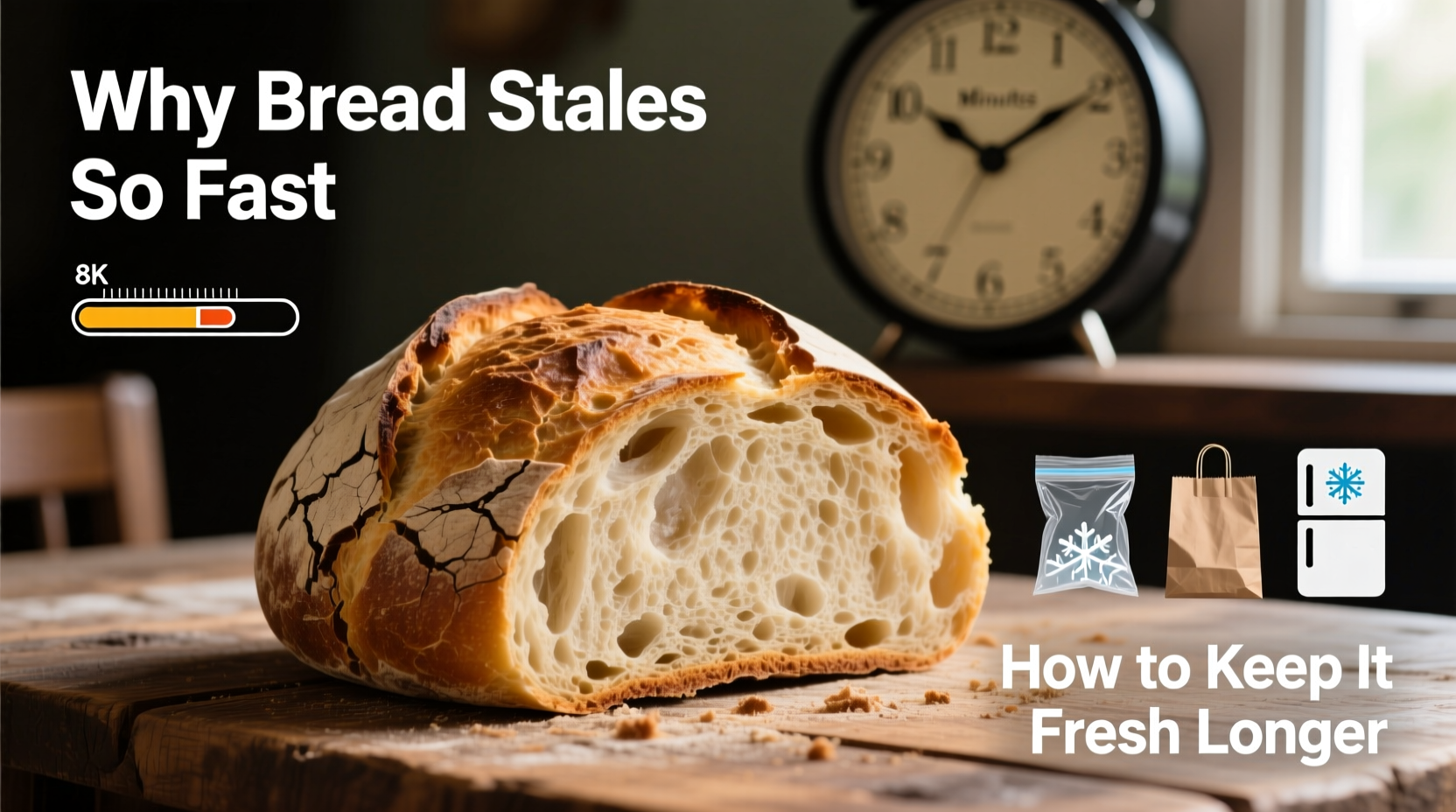
Contrary to popular belief, bread staling isn’t primarily about drying out. While moisture loss contributes to a dry mouthfeel, the real culprit behind staleness is a physical transformation within the starch molecules—a process called retrogradation. When bread bakes, heat causes starch granules to absorb water and swell, a stage known as gelatinization. As the bread cools and sits, these starches begin to recrystallize, pushing out moisture and making the crumb firm and dense. This structural change occurs fastest at temperatures just above freezing—ironically, the same range found in most refrigerators.
Moisture migration also plays a role. Water moves from the crumb (the soft interior) to the crust and eventually evaporates into the air. In dry environments, this accelerates surface drying, leading to a leathery crust and parched texture. Meanwhile, in humid conditions, mold may develop before staling becomes noticeable—another reason proper storage is essential.
“Staling is not dehydration—it’s a reorganization of starch at the molecular level. That’s why refrigerating bread often makes it stale faster.” — Dr. Susan Brewer, Food Scientist, University of Illinois
Why Some Breads Go Stale Faster Than Others
Not all breads deteriorate at the same rate. Several factors influence shelf life, starting with ingredients. Commercial sandwich loaves often contain preservatives like calcium propionate or enzymes that delay mold and slow staling. Artisanal and homemade breads, while richer in flavor and free from additives, lack these stabilizers and thus stale more quickly.
Fat content matters too. Breads made with butter, eggs, or oil—such as brioche or challah—tend to stay softer longer because fat interferes with starch retrogradation. Similarly, enriched doughs with milk or sugar retain moisture better than lean doughs like baguettes or rustic sourdoughs.
Crust thickness also affects longevity. A thick, crisp crust acts as a partial moisture barrier but can become unpleasantly hard as the loaf ages. Conversely, soft-crust sandwich breads may feel stale sooner due to their thinner protective layer, even if the interior remains relatively moist.
Best Storage Methods to Extend Freshness
Where and how you store bread dramatically impacts its lifespan. The ideal method depends on how soon you plan to eat it and whether you prioritize softness, crust integrity, or long-term preservation.
Room Temperature (Short-Term: 1–3 Days)
For immediate consumption, storing bread at room temperature in a cool, dark place is best. Use a cloth bread bag, a paper bag, or a wooden bread box. These materials allow slight airflow while protecting against rapid moisture loss. Avoid airtight plastic bags if you want to preserve crust texture—though they do keep sandwich bread soft, they can create condensation that promotes mold.
Freezing (Long-Term: Up to 3 Months)
Freezing halts staling almost completely. Slice the bread before freezing so you can toast or thaw individual portions. Wrap tightly in aluminum foil or freezer-safe plastic, then place in a sealed bag to prevent freezer burn. Thaw at room temperature or pop slices directly into the toaster.
Avoid the Refrigerator
Despite common practice, refrigeration speeds up staling. Temperatures between 32°F and 40°F (0°C–4°C) are optimal for starch retrogradation. While refrigeration slows mold growth, it sacrifices texture. If mold is a recurring issue, freezing is a far better alternative.
| Storage Method | Shelf Life | Pros | Cons |
|---|---|---|---|
| Room Temp – Paper/Cloth Bag | 2–3 days | Preserves crust; allows breathability | Limited mold protection; dries over time |
| Room Temp – Plastic Bag | 3–5 days | Keeps soft bread soft; widely accessible | Promotes sogginess and mold; ruins crust |
| Refrigerator | 5–7 days | Slows mold | Accelerates staling; poor texture |
| Freezer | Up to 3 months | Halts staling; portion-friendly | Requires planning; texture may slightly degrade |
Step-by-Step Guide: How to Keep Bread Fresh From Day One
Follow this timeline-based approach to maximize your bread’s freshness based on when you plan to consume it.
- Day 0 – Purchase or Bake: Let freshly baked bread cool completely (1–2 hours) before storing. Trapped heat creates steam, which leads to sogginess and mold.
- Day 0–3 – Daily Use: Store cut-side down on a cutting board or in a bread box. Cover loosely with a clean kitchen towel to protect from dust while allowing airflow.
- If Not Consumed in 3 Days: Slice what remains and wrap in parchment, then foil. Place in a labeled freezer bag and freeze immediately.
- When Ready to Eat (Frozen): Thaw slices on the counter for 30 minutes or toast directly. For whole loaves, thaw wrapped at room temperature for 2–3 hours before unwrapping to minimize condensation.
- Reviving Stale Bread: Lightly dampen the crust and heat in a 350°F (175°C) oven for 5–10 minutes. The steam re-gelatinizes starches temporarily, restoring softness.
Real Example: How One Baker Reduced Waste by 70%
Sarah Kim, who runs a small sourdough bakery in Portland, noticed customers frequently returned with complaints about rapid staling—even though her bread used no preservatives. After consulting a food lab, she adjusted her cooling and packaging process. Instead of sealing loaves in plastic right after baking, she now lets them cool fully on wire racks, then wraps them in breathable linen-lined bags.
She also began educating customers: “We include a card explaining that sourdough peaks at 24 hours and lasts 4–5 days at room temp if stored properly. We recommend freezing any bread not eaten by day three.” Within two months, customer complaints dropped by 70%, and bread waste decreased significantly. Her takeaway? “Freshness isn’t just about the bake—it’s about the full lifecycle, including how people store it at home.”
Common Myths About Bread Storage Debunked
- Myth: Keeping bread in the fridge keeps it fresh longer.
Reality: It prevents mold but speeds up staling due to starch recrystallization. - Myth: A bread machine or plastic bag stops staling completely.
Reality: They slow moisture loss but don’t stop retrogradation—the core cause of firmness. - Myth: All bread should be frozen immediately.
Reality: Freezing is ideal for long-term storage, but it’s unnecessary for bread consumed within 48 hours. - Myth: Toasting revives stale bread permanently.
Reality: Toasting improves texture temporarily by adding heat and crispness, but it doesn’t reverse starch changes.
Checklist: How to Keep Your Bread Fresh
Use this simple checklist every time you buy or bake bread:
- ✅ Cool bread completely before storing
- ✅ Store cut-side down on a non-porous surface
- ✅ Use a bread box, linen bag, or paper bag for short-term storage
- ✅ Freeze surplus within 48 hours of baking
- ✅ Label and date frozen bread for easy tracking
- ✅ Avoid plastic wrap unless eating within 2 days
- ✅ Never refrigerate unless mold is an unavoidable issue
- ✅ Refresh stale bread in the oven, not the microwave
Frequently Asked Questions
Can I store bread in the pantry?
Yes, the pantry is ideal if it’s cool, dark, and dry. Use a bread box or breathable container to shield the loaf from air currents and pests. Avoid placing near appliances that generate heat.
Does sourdough last longer than regular bread?
Yes, naturally. Sourdough’s lactic acid lowers pH, inhibiting mold growth. Its dense crumb also slows moisture migration. Properly stored, a good sourdough can stay palatable for 5–7 days, compared to 3–4 for standard white bread.
Why does store-bought bread last so much longer?
Most commercial breads contain preservatives like calcium propionate, fungal inhibitors, and dough conditioners such as mono- and diglycerides. These extend shelf life by days or even weeks. While safe, they’re absent in artisanal and homemade versions, which rely solely on proper storage for longevity.
Conclusion: Take Control of Your Bread’s Freshness
Bread doesn’t have to go stale overnight. With a clear understanding of the science behind staling and practical storage strategies, you can enjoy fresh, flavorful loaves for days—not just hours. Whether you bake at home or pick up a loaf from the market, the way you handle it afterward determines its fate. Embrace breathable storage for daily use, freeze what you won’t eat soon, and never underestimate the power of a well-wrapped sourdough in the freezer.




 浙公网安备
33010002000092号
浙公网安备
33010002000092号 浙B2-20120091-4
Comments
No comments yet. Why don't you start the discussion?