
It’s a familiar sound: you reach for your car door, unlock it, and as soon as the handle moves—or even before—the interior chime starts beeping. For many drivers, this is just background noise, a routine reminder they’ve learned to tune out. But if you're wondering why your car beeps when you open the door—and whether it could signal something more than a simple alert—you’re not alone.
The truth is, that beep isn’t random. It’s part of your vehicle’s integrated warning system designed to keep you safe and informed. While in most cases, the sound is harmless and tied to expected behaviors like leaving the keys in the ignition or forgetting headlights, there are scenarios where persistent or unexpected beeping points to deeper electrical or sensor issues.
Understanding what triggers the beep, when to pay attention, and when to take action can save you time, money, and potential safety risks down the road.
How Your Car’s Door-Activated Beep System Works
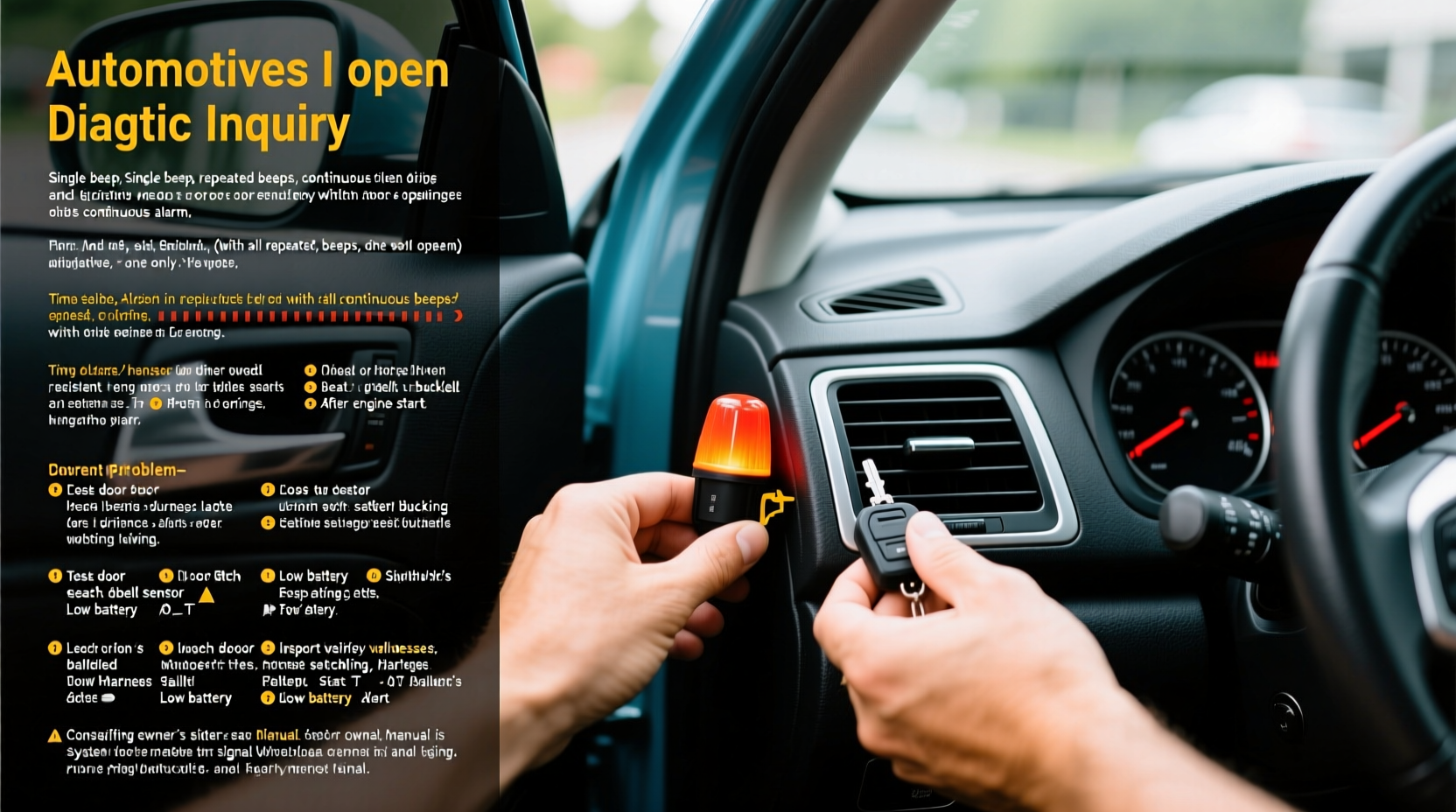
Modern vehicles are equipped with a network of sensors and control modules that communicate constantly. One of the most basic yet effective systems monitors door status through door jamb switches—small mechanical or magnetic sensors located inside each door frame. When a door opens, the switch activates and sends a signal to the body control module (BCM), which then triggers specific responses based on context.
The most common response is an audible chime or beep. This alert serves multiple purposes:
- Warning you that the ignition key is still in the lock cylinder
- Alerting you that headlights are on while the engine is off
- Indicating that the interior lights should turn on
- Notifying you if seatbelts aren’t fastened
The BCM cross-references inputs from various sources—ignition position, light switches, seatbelt sensors—before deciding whether to activate the chime. So while the trigger may be opening the door, the decision to beep depends on other conditions being met simultaneously.
Common Reasons Your Car Beeps When Opening the Door
Not all beeping is cause for concern. In fact, many instances are by design. Here are the most frequent explanations:
1. Keys Left in the Ignition
One of the oldest and most universal warning systems. If the driver-side door opens while the key remains in the ignition (especially in the “accessory” or “on” position), the car emits a repetitive beep to prevent accidental lockouts or battery drain.
2. Headlights Left On
If exterior lights remain active after turning off the engine, many vehicles will beep when the driver’s door opens. This prevents overnight battery depletion—a common issue in older models without automatic shutoffs.
3. Seatbelt Not Fastened
Some cars initiate a brief chime upon entry if the driver hasn’t buckled up within a few seconds. Though typically associated with starting the engine, certain systems begin the alert as soon as the door closes.
4. Interior Lights Delay
In some cases, the beep accompanies a fading interior light sequence. The tone may serve as a secondary cue that the cabin lights are still drawing power and will shut off shortly.
5. Key Fob Still Inside the Vehicle
Newer vehicles with smart key systems often beep when the driver exits with the engine off but the key fob still inside. This helps prevent locking yourself out accidentally.
“Most door-related beeping is intentional and rooted in decades of automotive safety engineering. It’s not a glitch—it’s a guardrail.” — Mark Delaney, Automotive Systems Engineer
When the Beep Might Signal Something Serious
While standard warning chimes follow predictable logic, irregular or unexplained beeping can point to underlying problems. These require closer inspection because they may reflect faults in wiring, grounding, software, or sensor calibration.
Persistent Beeping Without Trigger Conditions
If your car beeps every time you open the door—even with keys removed, lights off, and no occupants—the issue may lie with a faulty door jamb switch. These switches can stick open or closed due to moisture ingress, corrosion, or physical damage, sending false signals to the BCM.
Intermittent or Random Chimes
Erratic beeping that occurs sporadically—not tied to door use or ignition state—can indicate loose electrical connections, failing control modules, or parasitic draws. In rare cases, this behavior has been linked to early signs of battery failure or alternator issues.
Beeping Accompanied by Dashboard Warnings
If the door-triggered beep coincides with illuminated warning lights—such as battery, brake, or airbag indicators—it suggests a broader system fault. A diagnostic scan is strongly advised in these situations.
No Beep When Expected
Silence can be just as telling. If your car used to beep under normal conditions (e.g., keys in ignition) but suddenly stops, it could mean a blown fuse, disabled chime module, or tampering with factory settings—possibly during aftermarket installations like alarms or stereos.
Aftermarket Modifications Gone Wrong
Installing dash cameras, LED lighting, or remote start systems without proper integration can interfere with factory chime circuits. Miswired accessories sometimes create feedback loops that trick the BCM into thinking doors are opening repeatedly.
Troubleshooting Checklist: What to Do When Your Car Beeps Unusually
Before scheduling a dealership visit or pulling apart panels, run through this practical checklist to identify and possibly resolve the issue at home.
- Verify the obvious triggers: Are keys in the ignition? Are headlights on? Is the parking brake engaged?
- Test all doors: Open each door individually. Does one produce a different pattern of beeping? That door may have a stuck switch.
- Inspect door jamb switches: Look for visible damage, grime, or misalignment. Press gently on the plunger to see if it clicks smoothly.
- Clean affected areas: Use electrical contact cleaner on sticky switches. Avoid WD-40, which attracts dust.
- Check fuses: Refer to your owner’s manual for the location of the chime, BCM, and interior lighting fuses. Replace any blown ones.
- Reset the system: Disconnect the negative battery terminal for 10–15 minutes to reset electronic modules. Reconnect and retest.
- Scan for error codes: Use an OBD-II scanner to check for stored body control or door circuit codes (e.g., B2XXX series).
- Monitor battery health: Weak batteries can cause erratic module behavior. Test voltage (should be 12.6V+ engine off).
Real-World Example: A Hidden Short Circuit
Jessica, a 2018 Honda CR-V owner, noticed her car began beeping nonstop whenever she opened the passenger door—even with the keys far away and lights off. At first, she assumed it was a fluke. But after three days of escalating frequency, including random beeps while driving, she brought it to a local mechanic.
The technician discovered water had seeped into the left front door during a heavy rainstorm, corroding the door jamb switch and creating a partial short. The faulty switch sent intermittent \"door open\" signals to the BCM, triggering both the chime and, unexpectedly, the automatic dome light activation while driving.
Replacing the switch and sealing the rubber boot resolved the issue. More importantly, catching it early prevented further damage to the BCM, which could have led to costly repairs.
This case highlights how seemingly minor symptoms—like unusual beeping—can stem from environmental exposure and escalate quickly if ignored.
Do’s and Don’ts: Managing Door Beep Issues
| Do | Don't |
|---|---|
| Test beeping under different conditions to identify patterns | Assume all beeping is normal without verification |
| Clean door switches regularly, especially in humid climates | Use oil-based lubricants on electrical contacts |
| Consult your owner’s manual for chime logic specifics | Ignore beeping that changes in tone or frequency |
| Use a multimeter to test switch continuity if comfortable | Disconnect wiring harnesses without labeling them |
| Schedule diagnostics if beeping persists after basic checks | Delay inspection when accompanied by other electrical glitches |
Frequently Asked Questions
Can I disable the door-open beep permanently?
Technically, yes—but not recommended. Some vehicles allow chime adjustments via infotainment settings. Others require fuse removal or coding changes using specialized tools. Disabling safety alerts increases risk of battery drain or lockouts. Consider reducing volume instead, if available.
Why does my car beep five times when I lock it?
This is typically a confirmation signal indicating successful locking, especially in cars with alarm systems. Five beeps may also indicate an open door, trunk, or hood. Check that all compartments are fully closed before locking.
Is it safe to drive if my car keeps beeping randomly?
Occasional, explainable beeping (e.g., unbuckled seatbelt) is safe. However, continuous or unpredictable chimes may mask critical warnings (like low tire pressure or engine faults). Erratic sounds can also distract while driving. Diagnose promptly to rule out electrical instability.
Step-by-Step Guide to Resetting Your Car’s Warning System
If troubleshooting doesn’t stop unwanted beeping, try this full reset procedure:
- Turn off the engine and remove the key or place the fob outside the vehicle.
- Open all doors and ensure interior lights come on.
- Locate the fuse box (usually under the dashboard or in the engine bay). Find the fuse labeled “BODY,” “CHIME,” or “INTERIOR LIGHTS.”
- Remove the relevant fuse and wait 10 minutes to allow capacitors to discharge.
- Reinsert the fuse securely.
- Close all doors completely and listen for any residual chimes.
- Start the car and test door openings again.
- Use an OBD2 scanner to clear any soft codes related to door circuits.
This process resets the BCM’s temporary memory and often resolves phantom alerts caused by software hiccups.
Conclusion: Listen to What Your Car Is Telling You
The beep when you open your car door is more than just noise—it’s communication. Designed over decades of automotive evolution, these auditory cues help prevent small oversights from becoming big problems. In most cases, the sound is nothing to worry about. But when the pattern changes, persists without cause, or appears alongside other anomalies, it deserves attention.
By understanding the logic behind the chime, recognizing red flags, and taking timely action, you protect not only your vehicle’s electronics but also your safety and peace of mind. Don’t dismiss repeated warnings as mere nuisances. Investigate, document, and address them early.




 浙公网安备
33010002000092号
浙公网安备
33010002000092号 浙B2-20120091-4
Comments
No comments yet. Why don't you start the discussion?