
If your debit or credit card keeps being compromised, you're not imagining things—and you're certainly not alone. Card fraud has surged in recent years, with global losses exceeding $30 billion annually. While banks and payment networks have improved security, cybercriminals adapt quickly. Understanding why your card keeps getting hacked is the first step toward protecting yourself. It’s not just about weak passwords or unsafe websites; the threats are layered, often invisible, and sometimes originate from places you’d never suspect.
How Card Hacking Actually Happens
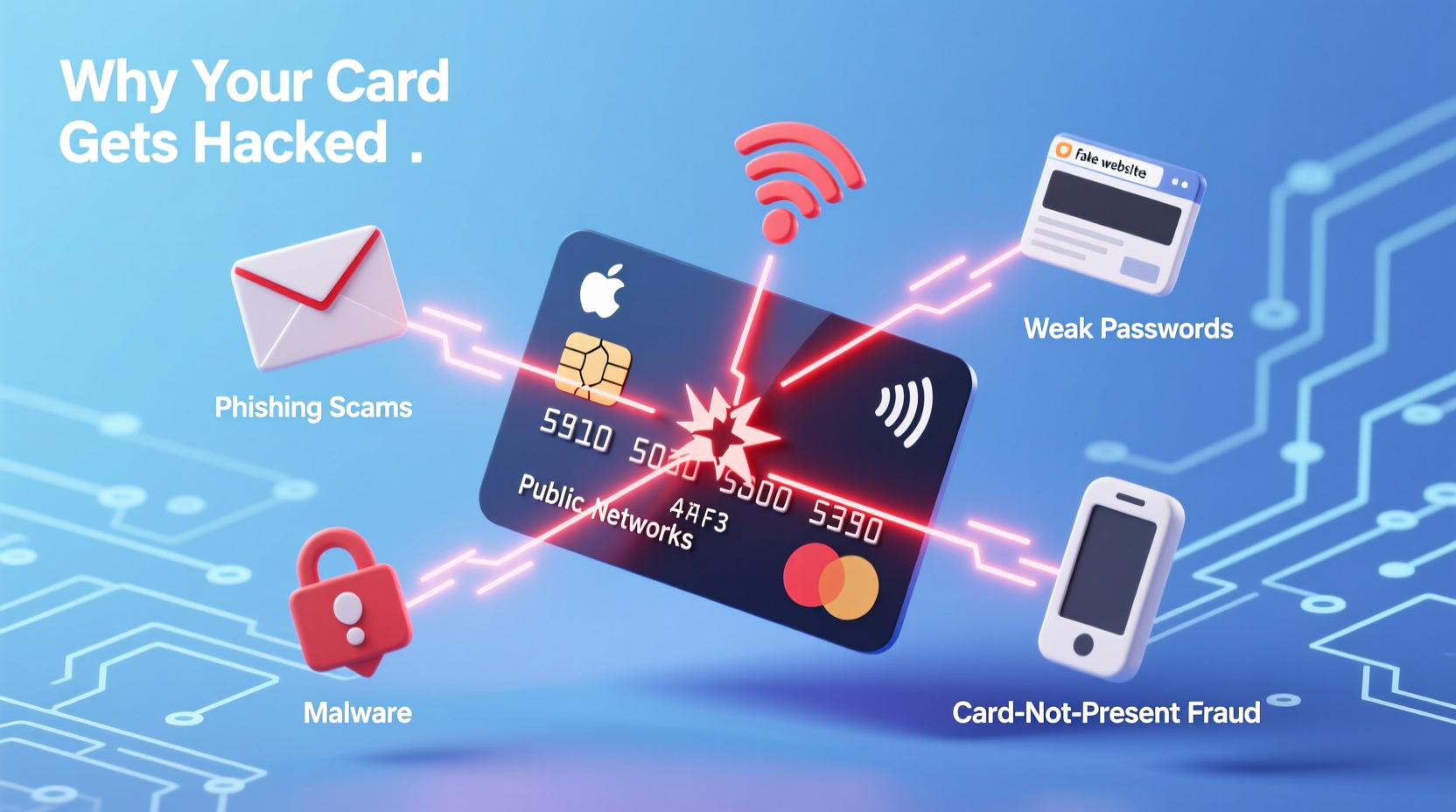
Credit and debit card hacking rarely involves someone physically stealing your wallet. Instead, most breaches occur digitally through data theft, phishing, or malware. Here are the most common methods:
- Phishing attacks: Fraudsters send fake emails or texts that mimic legitimate banks or retailers, tricking you into entering your card details on a counterfeit website.
- Skimming devices: Installed at ATMs or gas pumps, these small gadgets capture your card’s magnetic stripe data when you swipe.
- Data breaches: Retailers, airlines, or subscription services you use may suffer security lapses, exposing thousands of customers’ card information at once.
- Malware on personal devices: Keyloggers or banking trojans can record keystrokes or intercept payment forms on infected smartphones or computers.
- Weak point-of-sale (POS) systems: Small businesses using outdated software or unsecured Wi-Fi may unknowingly expose transaction data.
Many victims don’t realize their card was compromised until they see unauthorized charges weeks later—often after the damage is done.
Why It Keeps Happening: Recurring Vulnerabilities
One-time fraud might be bad luck. But if your card is repeatedly targeted, there’s likely a pattern. Consider these recurring risk factors:
- You reuse the same card everywhere: The more merchants have your card on file, the greater the chance one will suffer a breach.
- You save cards on shopping apps: Convenience comes at a cost. Saved cards increase exposure if your phone is lost or hacked.
- You shop on unsecured websites: Sites without HTTPS encryption or third-party trust seals are higher-risk environments.
- You click links in unsolicited messages: Even if the message looks official, verify URLs before entering any financial data.
- Your device lacks protection: Outdated operating systems or missing antivirus software make you an easy target.
Each time your card is exposed, its details enter underground marketplaces where hackers trade and resell them. Once your number is out there, it can circulate for months or even years.
Real Example: Sarah’s Repeated Card Issues
Sarah, a freelance designer from Austin, noticed unauthorized charges on her primary credit card three times in six months. Each time, her bank canceled the card and issued a new one. Frustrated, she reviewed her spending habits and discovered a pattern: all fraudulent charges originated from online subscriptions she didn’t recognize.
After investigating, she realized she had used her card on a third-party plugin marketplace that later suffered a data breach. Though the site went offline, her card details were already sold on the dark web. Because she continued using the same card across multiple platforms, each new merchant became a potential entry point for attackers using her leaked info.
Only after switching to virtual card numbers and enabling transaction alerts did the fraud stop. Her experience highlights how one initial breach can lead to repeated compromises if underlying behaviors aren’t addressed.
Protect Yourself: A Security Checklist
Preventing card fraud isn’t about paranoia—it’s about smart habits. Use this checklist to reduce your risk:
- ✅ Enable two-factor authentication (2FA) on all financial accounts
- ✅ Use virtual card numbers for online subscriptions
- ✅ Monitor transactions weekly via mobile banking apps
- ✅ Avoid saving card details on e-commerce sites or browsers
- ✅ Install reputable antivirus software on all devices
- ✅ Freeze your credit if you suspect identity theft
- ✅ Regularly update passwords and avoid reusing them
- ✅ Use credit cards instead of debit cards online (better fraud protection)
Do’s and Don’ts of Card Safety
| Do | Don't |
|---|---|
| Use credit cards for online purchases—they offer stronger consumer protections under the Fair Credit Billing Act. | Use your debit card online. If compromised, funds are taken directly from your bank account. |
| Set up real-time transaction alerts through your bank’s app. | Ignore small, unfamiliar charges—they may be fraud tests. |
| Shop only on HTTPS-secured websites (look for the padlock icon). | Enter card details on public Wi-Fi without a VPN. |
| Use digital wallets like Apple Pay or Google Pay—they tokenize your card data. | Carry your physical card everywhere; store it securely at home when possible. |
“Once a card number is breached, it can be reused across multiple platforms. Consumers need to treat every new card like a fresh start—new habits, new protections.” — James Reed, Senior Fraud Analyst at CyberShield Financial Security
Step-by-Step: What to Do If Your Card Is Hacked
If you spot suspicious activity, act fast. Follow this timeline to minimize damage:
- Immediately (within 1 hour): Call your bank or card issuer to report the fraud and request the card be canceled.
- Within 24 hours: Log into your online banking and review all recent transactions. Flag anything unauthorized.
- Day 1: Change passwords for any accounts linked to the compromised card, especially email and shopping profiles.
- Day 2: Place a fraud alert on your credit reports via one of the major bureaus (Equifax, Experian, TransUnion).
- Day 3–7: Monitor all other financial accounts closely. Consider freezing unused credit lines.
- Ongoing: Switch to virtual cards or digital wallets for future purchases to limit exposure.
The faster you respond, the better your chances of full reimbursement. Under federal law, your liability for unauthorized credit card charges is capped at $50—if reported promptly.
Frequently Asked Questions
Can someone hack my card just by knowing the number?
Not easily—but with your card number, expiration date, and CVV, fraudsters can make online purchases. That’s why protecting all three is critical. Never share them over email or unsecured channels.
Is contactless payment safe?
Yes. Contactless payments (tap-to-pay) use tokenization, meaning your actual card number isn’t transmitted. However, keep your card away from RFID skimmers by using shielded wallets if concerned.
Should I close my account after a hack?
Yes, if the compromise was severe or repeated. Closing the account stops future misuse and forces you to adopt better security practices with a new card.
Take Control of Your Financial Security
Card hacking doesn’t happen because you’re careless—it happens because the system is under constant attack. But you’re not powerless. By understanding how fraud occurs, recognizing patterns in your own behavior, and implementing practical safeguards, you can drastically reduce your risk.
Start today: review your saved cards, enable alerts, and consider switching to virtual card solutions. One proactive step now can prevent months of stress later. Your financial safety isn’t just the bank’s responsibility—it’s yours too.




 浙公网安备
33010002000092号
浙公网安备
33010002000092号 浙B2-20120091-4
Comments
No comments yet. Why don't you start the discussion?