
It happens every December: you hang the first string of lights, step back to admire the warm glow—and within minutes, your cat is a blur of paws and focus, batting, pouncing, and sometimes even chewing at the blinking bulbs. You’ve tried tucking wires, adding bitter sprays, and redirecting with toys—but the fascination persists. This isn’t misbehavior. It’s biology in motion. Understanding *why* your cat targets those lights—and responding with empathy, not correction—makes all the difference for both safety and peace of mind.
The Feline Brain on Blink: Why Lights Trigger the Hunt
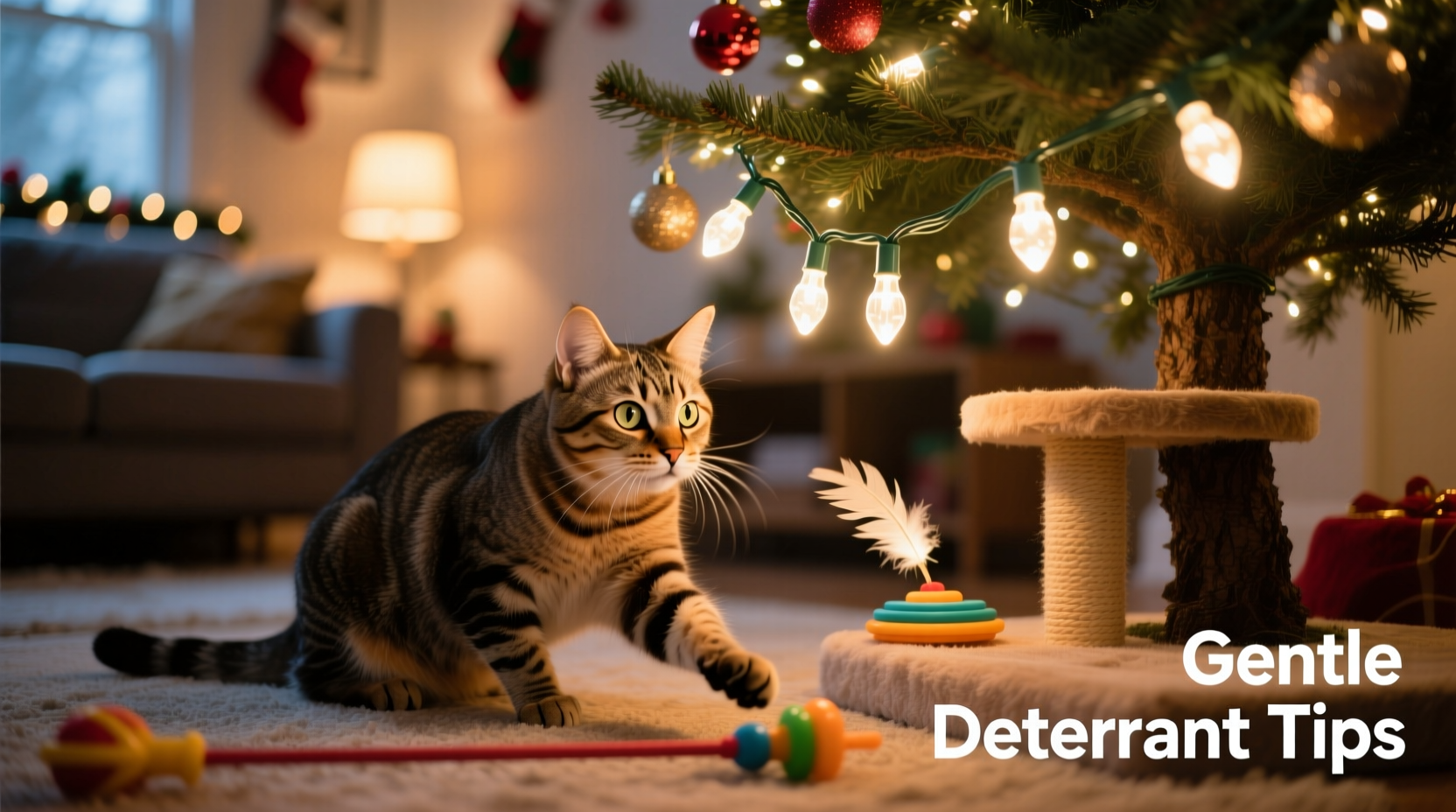
Cats don’t see blinking lights as festive décor. They perceive them as high-contrast, unpredictable movement—exactly the kind of stimulus evolution wired them to chase. Their visual system is optimized for detecting rapid motion in low light: retinas packed with rod cells (up to 8 times denser than humans), a tapetum lucidum that amplifies available light, and a visual processing speed nearly twice ours. A flickering LED doesn’t register as “holiday cheer.” It registers as “potential prey.”
Neurologically, the intermittent pattern of blinking lights activates the superior colliculus—the brain region governing orienting responses and predatory targeting. Unlike steady light, which fades into background awareness, blinking creates micro-contrasts that trigger sustained attention. Add in subtle heat signatures from older incandescent bulbs or faint electrical hums (inaudible to us but detectable by cats’ sensitive ears), and the display becomes multisensory bait.
This isn’t boredom or mischief. It’s an unfiltered expression of intact hunting wiring—even in well-fed, indoor cats. As Dr. Mikel Delgado, certified cat behavior consultant and researcher at the University of California, Davis, explains:
“Blinking lights hijack the same neural circuitry used to track birds in flight or insects darting across sunlit floors. For a cat, it’s not ‘playing.’ It’s practicing survival skills—on demand, 24/7, right there on your mantel.” — Dr. Mikel Delgado, Certified Cat Behavior Consultant
Gentle Deterrence: Why Punishment Backfires (and What Works Instead)
Shouting, spraying water, or tapping a cat’s nose when it approaches lights doesn’t teach avoidance—it teaches fear and erodes trust. Worse, it often intensifies fixation through negative reinforcement loops: the cat learns that approaching the lights reliably produces human attention (even if unpleasant), making the behavior more likely to recur.
Gentle deterrence works by respecting feline cognition—not overriding it. It combines environmental design, sensory redirection, and predictable routine. The goal isn’t to eliminate curiosity; it’s to make the lights less compelling *and* provide richer alternatives that satisfy the same instincts.
A 5-Step Holiday-Safe Prevention Plan
Follow this sequence before decorations go up—or adapt it mid-season. Each step builds on the last, creating layered protection without stress.
- Secure and Conceal First: Route all cords through rigid cord covers (not fabric sleeves) and affix them tightly to walls or baseboards using adhesive clips rated for weight. Tuck excess wire behind furniture or inside hollow legs. Never rely on tape alone—cats peel it off with claws.
- Neutralize the Blink Effect: Replace blinking strings with steady-warm LEDs. If blinking is non-negotiable for your aesthetic, limit blinking sections to high, inaccessible areas (e.g., top third of a tree, ceiling garlands) and use only non-blinking lights at cat level (mantels, stair railings, window sills).
- Create a “Light-Free Zone” Around Hotspots: Use baby gates or freestanding pet barriers (not decorative ones cats can vault) to create 3-foot buffer zones around trees, fireplaces, and lit shelves. Anchor barriers firmly—no wobbling.
- Deploy Strategic Distraction: Place interactive food puzzles, motorized toys with erratic movement patterns (e.g., FroliCat Bolt), or feather wands on a timer *away* from lights—but within sightlines. Activate them 15 minutes before peak cat activity (dawn and dusk). Consistency trains anticipation.
- Introduce Light Desensitization (Optional, for Highly Reactive Cats): In a quiet room, place a single unplugged, battery-operated LED string (no heat, no risk) on the floor. Let your cat investigate at its own pace for 5 minutes daily over 5 days. Gradually add one second of *gentle* blinking on day 6—then two seconds on day 7—only if no lunging occurs. Stop immediately if ears flatten or tail lashes.
Do’s and Don’ts: A Practical Safety Table
| Action | Do | Don’t |
|---|---|---|
| Wiring | Use UL-listed LED strings with insulated, chew-resistant coating; bundle excess cord with reusable silicone straps | Leave loose ends dangling; use extension cords under rugs or near water sources |
| Tree Safety | Anchor tree to wall with a flexible, breakaway strap (e.g., Tree Tether); choose artificial trees with wide, stable bases | Use tinsel (easily swallowed and causes intestinal blockages); hang ornaments lower than 3 feet |
| Light Placement | Mount garlands on ceilings or high doorframes; use adhesive hooks rated for 5x expected weight | Wrap lights around low furniture legs or cat trees; drape strings over pet beds or resting spots |
| Behavior Response | Redirect with a wand toy *before* the cat lunges; reward calm observation with treats | Yell or clap when cat approaches; physically block access with your body (triggers defensive posturing) |
| Post-Holiday Care | Unplug and store lights in rigid, labeled bins—never cardboard (attracts nesting instinct) | Leave lights plugged in “just overnight”; coil cords tightly (causes wire fatigue and short-circuit risk) |
Real Example: How Maya Saved Her Vintage Tree and Her Maine Coon
Maya’s 1950s aluminum Christmas tree was a family heirloom—thin, silvery branches that shimmered under cool-white LEDs. Her 14-pound Maine Coon, Atlas, treated it like a jungle gym and hunting ground. Within two days, he’d dislodged three bulbs, chewed through a cord sheath, and knocked the tree sideways twice.
She didn’t banish him from the living room. Instead, she implemented a hybrid approach: she replaced the blinking base string with steady-warm LEDs, installed a lightweight, mesh-style pet gate shaped like an archway (so it felt open, not restrictive), and placed Atlas’s favorite puzzle feeder—a slow-release ball with kibble—on a low shelf directly opposite the tree. She also added a new cardboard tunnel beside the sofa, lined with fleece and scented lightly with silver vine.
Within 72 hours, Atlas spent more time batting the rolling feeder and napping in the tunnel than investigating the tree. By day 10, he’d sit calmly 2 feet away, watching the lights blink—tail still, ears forward, no tension. Maya kept the gate up until New Year’s, then removed it gradually over three days. The tree stood upright all season. More importantly, Atlas’s confidence around novelty increased—he approached new objects with curiosity, not compulsion.
FAQ: Addressing Common Concerns
Is my cat stressed or just playing?
Observe body language. Playful stalking includes relaxed ears, slow blinks, and fluid movement. Stress signals include flattened ears, dilated pupils, low crouching with tail tucked, or sudden freezing. If blinking lights trigger vocalizations (yowling, hissing) or aggression toward people nearby, consult a veterinary behaviorist—this may indicate underlying anxiety amplified by sensory triggers.
Can I use motion-activated deterrents?
Not recommended. Devices that emit ultrasonic sounds or sudden puffs of air startle cats unpredictably and damage their sense of environmental safety. They also fail to address the root cause—unmet predatory drive. Redirective enrichment is consistently more effective and humane.
What if my cat already chewed a cord?
Stop using that string immediately—even if it still lights up. Frayed insulation poses electrocution and fire risks. Inspect all other cords for bite marks using a magnifying glass. Replace damaged strings entirely; do not tape or wrap them. Schedule a vet visit if your cat shows drooling, vomiting, lethargy, or mouth irritation—signs of oral burns or toxin exposure.
Long-Term Mindset: Beyond the Holidays
Your cat’s reaction to blinking lights isn’t a flaw to fix—it’s data about their needs. Many owners notice heightened reactivity peaks during seasonal changes, suggesting circadian and hormonal influences (e.g., melatonin shifts in shorter days). Use this insight year-round: rotate toys weekly, schedule two 10-minute play sessions at dawn/dusk, and provide vertical territory (shelves, perches) where cats can observe household movement safely.
Interestingly, cats who engage in consistent, vigorous predatory play show measurably lower cortisol levels and fewer compulsive behaviors—not just during holidays, but across seasons. A study published in Applied Animal Behaviour Science (2022) found that cats given daily object-play opportunities exhibited 42% less redirected aggression toward household objects over a 12-week period.
So while December’s lights fade, the habits you build now ripple outward: deeper trust, calmer coexistence, and a home where wonder and safety aren’t mutually exclusive.




 浙公网安备
33010002000092号
浙公网安备
33010002000092号 浙B2-20120091-4
Comments
No comments yet. Why don't you start the discussion?