
Every holiday season, millions of homes welcome a festive centerpiece: the Christmas tree. For many families, it’s a tradition filled with warmth, lights, and celebration. But for cats, that same tree can look like an invitation to climb, pounce, and play. If you’ve found yourself repeatedly asking, “Why does my cat attack the Christmas tree?” you’re not alone. This common behavior frustrates pet owners and poses risks to both the tree and the cat. The good news is that understanding the root causes—combined with practical, consistent interventions—can help preserve your holiday decor while keeping your feline friend happy and safe.
The Feline Fascination with Christmas Trees
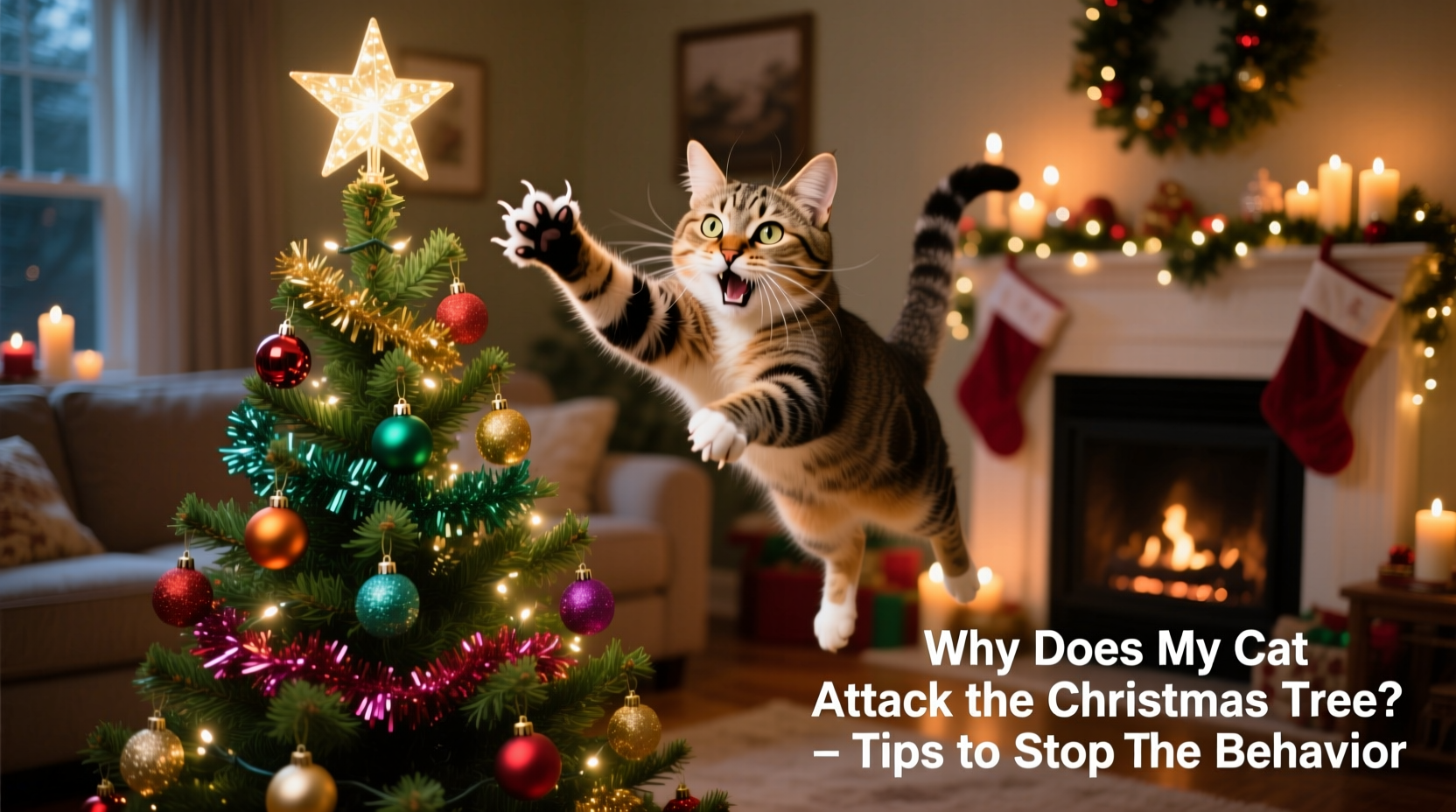
Cats are natural hunters, climbers, and explorers. Their instincts drive them to investigate new objects in their environment, especially those that move, dangle, or reflect light. A Christmas tree, with its flickering lights, shiny ornaments, and dangling tinsel, becomes a sensory playground. From a cat’s perspective, the tree isn’t just decoration—it’s a vertical jungle gym, a source of entertainment, and possibly even prey.
Moreover, cats often mark territory through scent and physical presence. By climbing or scratching the tree, your cat may be asserting ownership over this sudden addition to their space. The trunk resembles a scratching post, and the branches offer elevated vantage points—ideal for surveillance. These instinctual behaviors aren’t acts of malice; they’re expressions of normal feline psychology.
“Cats don’t misbehave out of spite—they respond to environmental cues. A Christmas tree disrupts their routine and triggers curiosity and territorial instincts.” — Dr. Sarah Thompson, Veterinary Behaviorist
Common Triggers Behind Tree Attacks
To effectively prevent tree attacks, it helps to identify what specifically draws your cat in. Several factors make the tree irresistible:
- Movement and Reflection: Ornaments that swing, tinsel that shimmers, and blinking lights mimic prey-like motion, triggering hunting instincts.
- New Scent and Texture: Real trees emit pine sap and bark odors that intrigue cats. Artificial trees may have plastic textures that invite chewing or clawing.
- Elevated Access: Cats seek high places for safety and observation. The tree offers a novel perch, especially if other climbing structures are limited.
- Boredom or Lack of Stimulation: Indoor cats without adequate playtime may redirect energy toward destructive behaviors during the holidays.
- Unsupervised Access: When left alone, cats explore more freely, increasing the chance of knocking over the tree or ingesting hazardous materials.
Step-by-Step Guide to Prevent Tree Attacks
Stopping your cat from attacking the Christmas tree requires patience, consistency, and proactive planning. Follow this timeline to minimize incidents:
- Week 1: Pre-Tree Preparation
Create alternative enrichment. Set up a cat tree near the living area, stock up on interactive toys, and schedule daily play sessions lasting 10–15 minutes to burn excess energy. - Day of Setup: Controlled Introduction
Assemble the tree in a secure stand and anchor it to the wall using fishing line or a tree stabilizer. Avoid placing it near furniture your cat could use as a launchpad. - Days 1–3: Bare Tree Exposure
Leave the tree undecorated. Allow your cat to sniff and inspect it while you’re present. Reward calm behavior with treats or praise. Discourage climbing by gently removing them and redirecting to a cat tree. - Days 4–5: Add Decorations Strategically
Begin decorating from the top down. Keep lower branches free of tempting items. Use lightweight, unbreakable ornaments above the cat’s reach. - Ongoing: Supervise and Reinforce Boundaries
When you’re not around, consider closing the door to the room or using deterrents (discussed below). Continue daily play to reduce stress and boredom.
Effective Deterrents and Cat-Safe Alternatives
While you can’t eliminate feline curiosity, you can redirect it. The key is making the tree less appealing while offering better options.
| Deterrent Method | How It Works | Effectiveness |
|---|---|---|
| Foil or Double-Sided Tape Around Base | Cats dislike the texture under their paws, discouraging approach. | High – especially when combined with other methods |
| Citrus Peels or Scented Cotton Balls | Cats generally avoid citrus smells. Place peels or scented balls under the tree. | Moderate – may need refreshing every few days |
| Aluminum Can Wind Chime at Base | Creates noise when disturbed, startling the cat without harm. | Medium – works best with sensitive or cautious cats |
| Remote-Controlled Motion Activator | Emits a harmless puff of air when movement is detected near the tree. | High – immediate negative association with approaching the tree |
| Designated Cat Tree with Toys | Offers a competing attraction with climbing, scratching, and hiding features. | Very High – most effective when paired with playtime |
Avoid using punishment-based techniques such as spraying water or yelling. These can increase anxiety and damage trust. Instead, focus on positive reinforcement and environmental management.
Mini Case Study: The Johnson Family’s Holiday Solution
The Johnsons had struggled for three years with their 2-year-old tabby, Milo, who consistently knocked over their Christmas tree by Day 5 of December. One year, he chewed through the electrical cord of the lights, creating a fire hazard. Determined to find a solution, they consulted a certified cat behavior consultant.
The consultant recommended anchoring the tree to the wall, wrapping the base in crinkly foil, and placing Milo’s favorite feather wand toy on a nearby cat tree. They also began two short play sessions each evening using a laser pointer and treat-dispensing puzzle toy. Within a week, Milo showed increased interest in his own play zone. By Christmas Eve, he approached the tree once but was distracted by a new teaser toy. The tree remained upright throughout the season.
This case illustrates that success isn’t about eliminating access—it’s about redirecting attention and meeting the cat’s needs elsewhere.
Checklist: Cat-Proofing Your Christmas Tree
Use this checklist before and during the holiday season to protect your tree and your pet:
- ✅ Secure the tree stand and anchor the trunk to a wall or ceiling
- ✅ Remove or secure electrical cords with cord covers or tape
- ✅ Avoid tinsel, ribbons, and small ornaments that can be ingested
- ✅ Keep toxic plants (e.g., poinsettia, mistletoe) out of reach
- ✅ Use only pet-safe tree water (avoid additives like aspirin or fertilizer)
- ✅ Install deterrents around the base (foil, tape, scent barriers)
- ✅ Provide a competing cat tree or climbing structure nearby
- ✅ Schedule daily interactive play sessions (at least 10 minutes twice a day)
- ✅ Supervise initial interactions with the tree
- ✅ Close the room door when unsupervised, if necessary
FAQ: Common Questions About Cats and Christmas Trees
Can a cat’s obsession with the tree be a sign of stress?
Yes. Sudden changes in the home environment can unsettle cats. While some react by hiding, others become hyperactive or fixated on new objects. Providing routine, safe spaces, and mental stimulation helps reduce stress-related behaviors.
Is it safe for my cat to drink from the tree stand?
No. Tap water alone is generally harmless, but commercial tree preservatives often contain fertilizers, sugars, or aspirin-like compounds that are toxic to cats. Always cover the water reservoir with a tree skirt or lid to prevent access.
What if my cat is determined to climb no matter what I try?
Some cats are highly persistent. In these cases, consider a smaller, tabletop tree placed in an inaccessible area, or delay tree setup until closer to Christmas to reduce exposure time. Alternatively, create a “cat-friendly” tree using a sturdy branch in a pot decorated with felt ornaments and catnip toys.
Long-Term Considerations for Multi-Cat Households
In homes with multiple cats, competition for space and attention can intensify tree-related behaviors. One cat may initiate climbing, encouraging others to follow. To manage group dynamics:
- Ensure each cat has its own vertical space (cat trees, shelves, window perches).
- Feed cats in separate areas to reduce resource guarding.
- Rotate toys regularly to maintain novelty and engagement.
- Monitor interactions around the tree and intervene early if tension arises.
Remember, prevention works best when started before problems occur. Begin preparations at least a week before bringing the tree indoors.
Conclusion: Harmony Over Holiday Havoc
Your cat’s attack on the Christmas tree isn’t defiance—it’s instinct. By recognizing the motivations behind the behavior and responding with empathy and strategy, you can enjoy a festive season without constant vigilance or damaged decor. The goal isn’t to suppress your cat’s nature but to guide it toward safer, more appropriate outlets. With secure anchoring, smart deterrents, enriched alternatives, and consistent routines, peace between pet and pine is entirely achievable.




 浙公网安备
33010002000092号
浙公网安备
33010002000092号 浙B2-20120091-4
Comments
No comments yet. Why don't you start the discussion?