
Cats are naturally curious creatures, and their instincts often lead them to investigate anything that moves, glimmers, or dangles. During the holiday season, few decorations attract a cat’s attention more than Christmas tinsel. Whether it’s batting at strands on the tree or attempting to carry entire garlands across the room, many feline companions treat tinsel like the ultimate toy. But while this behavior might seem harmless—or even endearing—it raises an important question: Why are cats so obsessed with tinsel, and could it actually be putting them in danger?
This article explores the behavioral science behind a cat’s fascination with tinsel, outlines the very real health risks associated with ingestion, and provides actionable steps for pet owners to enjoy festive decor without compromising their cat’s safety.
The Feline Fascination with Tinsel: Instincts in Action
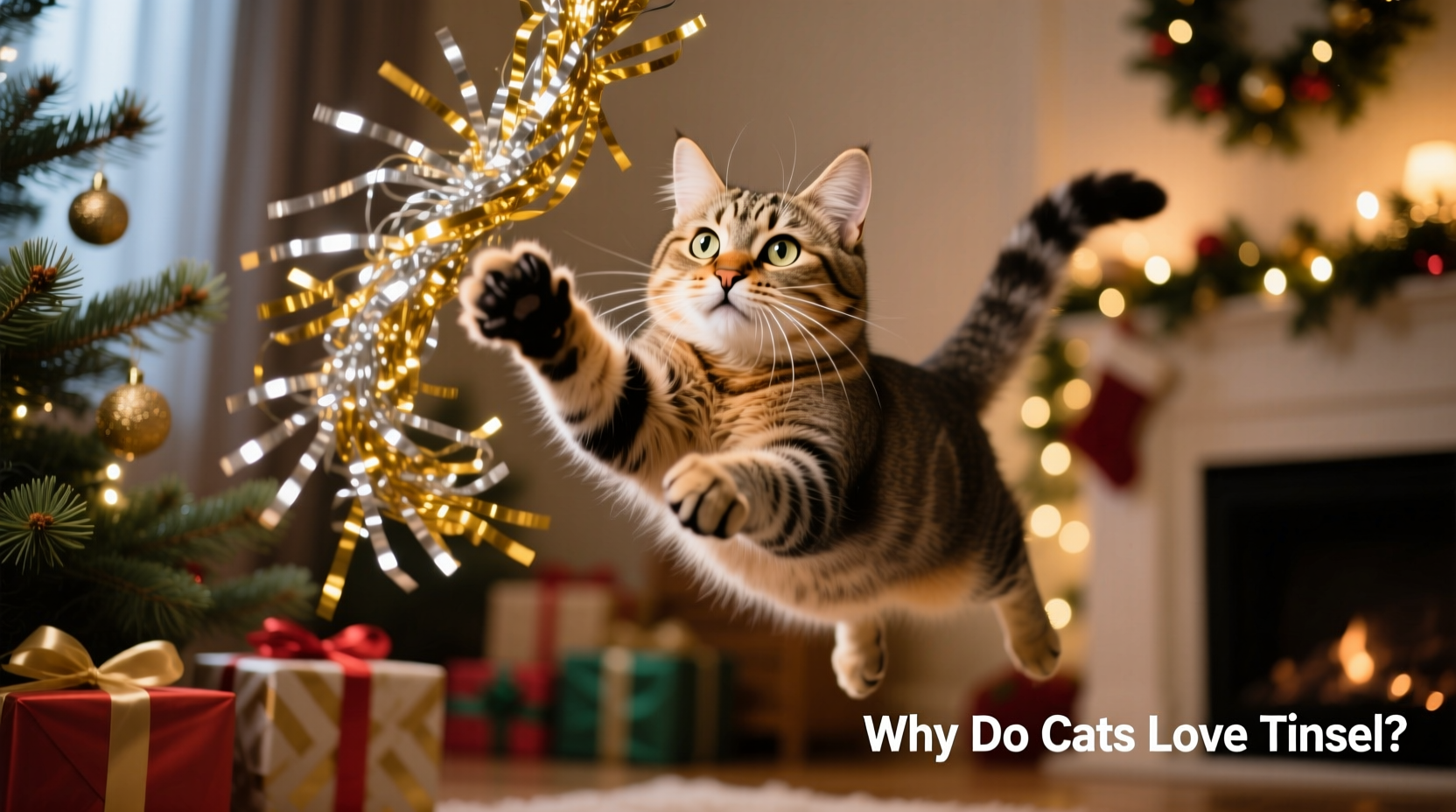
Cats don’t see tinsel as decoration—they see it as prey. The reflective surfaces, shimmering movement, and dangling shape mimic the behavior of small animals such as snakes, insects, or birds in flight. When light hits tinsel, it creates flickering reflections that trigger a cat’s predatory reflexes. This visual stimulation activates the same neural pathways used when stalking real prey.
In the wild, cats rely on motion detection to identify potential food sources. Tinsel swaying from a breeze or jostled by human movement closely resembles the erratic motion of a fleeing creature. Even the crinkling sound some tinsel makes when touched adds an auditory cue that further enhances its appeal.
Additionally, tinsel often hangs from elevated points—like a Christmas tree—which places it directly in a cat’s preferred hunting zone. Elevated objects draw feline attention not only because they’re visually prominent but also because they represent territory worth exploring or claiming.
“Cats are hardwired to respond to movement, shine, and texture. Tinsel checks every box: it moves unpredictably, reflects light, and has a ribbon-like form that’s easy to bat around.” — Dr. Lena Patel, Veterinary Behaviorist
The Hidden Dangers of Tinsel Ingestion
While playing with tinsel may appear playful, the risk begins when a cat starts chewing or swallowing it. Unlike soft plush toys, tinsel is made of thin, non-digestible materials—typically metallized plastic film—that can cause serious internal complications if ingested.
One of the most severe dangers is linear foreign body obstruction. When a cat swallows a long strand of tinsel, one end can become lodged—often under the tongue or in the stomach—while the rest extends through the intestines. As the digestive tract contracts, the tinsel acts like a saw, cutting into intestinal walls. This can lead to perforations, peritonitis, and life-threatening infections.
Symptoms of tinsel ingestion include:
- Vomiting (especially repetitive)
- Lethargy or hiding behavior
- Loss of appetite
- Abdominal pain (evident when touched)
- Diarrhea or constipation
- Dehydration
Because symptoms may not appear immediately, early intervention is critical. Delayed treatment increases the risk of surgical complications and reduces survival rates.
When to Seek Emergency Care
If you witness your cat chewing or swallowing tinsel—even a small piece—it’s best to contact your veterinarian immediately. Do not wait for symptoms to develop. In many cases, vets recommend inducing vomiting only under professional supervision, as improper induction can worsen the situation, especially if the object is already past the esophagus.
Real-Life Case: Bella the Tinsel-Trapper
Bella, a 3-year-old domestic shorthair from Portland, Oregon, began acting unusually quiet two days after her family put up their Christmas tree. Her owner noticed she wasn’t eating and had vomited twice. Assuming it was a mild stomach bug, they waited another day before calling the vet.
At the clinic, X-rays revealed no obvious blockage, but an ultrasound detected a linear foreign body in her lower intestine. Surgery uncovered nearly 18 inches of silver tinsel wrapped tightly through multiple sections of her bowel. Fortunately, the damage was caught early enough to repair, and Bella recovered after a week of hospitalization.
Her veterinarian later confirmed that the tinsel likely became trapped after Bella played with it for hours, eventually chewing off a strand. The family hadn’t realized how accessible the tinsel was until reviewing security camera footage showing Bella leaping onto the tree stand and batting at the decorations.
Bella’s case highlights how quickly a festive choice can turn into a medical emergency—and how easily it might have been prevented.
Safe Holiday Decorating: A Step-by-Step Guide
You don’t need to skip tinsel altogether to protect your cat. With thoughtful planning, you can maintain holiday cheer while minimizing risks. Follow these steps to create a cat-safe environment:
- Assess Your Cat’s Behavior: Observe how your cat interacts with new objects. Does she pounce on strings? Climb trees? These habits indicate higher risk.
- Elevate or Eliminate Tinsel: If using tinsel, place it high on the tree—above where your cat can reach. Better yet, consider skipping it entirely in favor of safer alternatives.
- Use Secure Anchoring: Ensure the Christmas tree is firmly anchored to prevent tipping if your cat climbs it. Weighted bases or wall straps work well.
- Provide Distractions: Set up a designated play zone near the tree with cat-friendly toys, scratching posts, or a perch. Redirecting attention reduces temptation.
- Supervise Initial Exposure: Monitor interactions during the first few days after decorating. This helps catch problematic behaviors early.
- Nightly Removal Routine: Take down tinsel and other tempting ornaments each night and rehang them in the morning. It’s time-consuming but effective for high-risk cats.
Alternatives to Traditional Tinsel
Many modern pet owners are opting for festive, cat-safe alternatives that deliver holiday sparkle without the hazard. Consider these options:
| Alternative | Benefits | Considerations |
|---|---|---|
| Paper chains | Non-toxic, biodegradable, easy to make with kids | Still mildly tempting; supervise if cat chews paper |
| Felt garlands | Soft, colorful, no shine to trigger hunting instinct | Ensure pieces are large enough not to swallow |
| Wooden bead strands | Durable, decorative, not appealing to chew | Heavy—secure properly to avoid falling |
| LED string lights (without tinsel wrap) | Gives glow without dangling hazards | Keep cords out of reach; use cord protectors |
| Pet-safe ornament kits | Designed specifically for homes with animals | Higher cost, limited availability |
Essential Safety Checklist for Cat Owners
Before completing your holiday setup, run through this checklist to ensure your home remains safe for your feline family members:
- ✅ Removed or secured all tinsel beyond cat’s reach
- ✅ Anchored Christmas tree to wall or ceiling
- ✅ Replaced small or breakable ornaments with unbreakable ones
- ✅ Covered electrical cords with protectors or tucked them away
- ✅ Avoided toxic plants like poinsettias, mistletoe, and holly
- ✅ Installed baby gates to restrict access if needed
- ✅ Stocked up on interactive toys to redirect attention
- ✅ Posted emergency vet number in visible location
FAQ: Common Questions About Cats and Tinsel
Can a small piece of tinsel hurt my cat?
Yes. Even a short strand—just a few inches long—can cause a linear foreign body obstruction if one end gets stuck. The risk isn't just size; it's shape and material. Non-digestible, string-like objects are particularly dangerous regardless of length.
Are there any types of tinsel that are safe for cats?
No commercially available tinsel is considered truly “safe” for cats. Some brands market \"pet-friendly\" versions, but these still pose ingestion risks. Veterinarians universally recommend avoiding tinsel altogether in homes with cats who show interest in decorations.
What should I do if I think my cat swallowed tinsel?
Contact your veterinarian or an emergency animal hospital immediately. Do not induce vomiting unless instructed. Provide details about what was ingested, when, and how much. Time is critical—early diagnosis via imaging improves outcomes significantly.
Expert Insight: What Vets Wish Pet Owners Knew
Holiday-related foreign body cases spike every December, and tinsel consistently ranks among the top culprits. According to the ASPCA Animal Poison Control Center, calls related to tinsel ingestion increase by over 30% during the festive season.
“We see at least one tinsel obstruction case per week during December. Most owners don’t realize how fast it happens. One minute the cat is playing, the next they’re in surgery. Prevention is always better than treatment.” — Dr. Marcus Tran, Emergency Veterinarian, NYC Animal Medical Center
Veterinarians emphasize that education—not regret—is the goal. Many pet owners simply don’t know the severity of the risk until it’s too late. Awareness campaigns and safer product design are slowly improving the situation, but responsibility ultimately lies with the household.
Conclusion: Celebrate Safely, Not Regrettably
The joy of the holiday season should be shared by every member of the family—including pets. While tinsel adds sparkle to your tree, it introduces a silent threat that can turn celebration into crisis in moments. Understanding your cat’s instincts helps explain the attraction, but recognizing the medical consequences empowers you to act.
By choosing safer alternatives, modifying your decor strategy, and staying alert to warning signs, you can preserve both the magic of the season and the health of your cat. Festive memories shouldn’t be overshadowed by emergency vet visits. With a little foresight and care, you can have a joyful, glittering holiday—without the danger.




 浙公网安备
33010002000092号
浙公网安备
33010002000092号 浙B2-20120091-4
Comments
No comments yet. Why don't you start the discussion?