
Every year, families across the world bring home a beautifully decorated Christmas tree, only to find it toppled over within days—often with a smug-looking cat nearby. If you’ve ever woken up to pine needles scattered across the floor and a crooked tree leaning against the wall, you’re not alone. Cats have a long-standing reputation for treating holiday trees like personal climbing towers and batting targets. But why do they do it? And more importantly, how can you enjoy a stable, festive centerpiece without compromising your cat’s well-being?
The truth is, your cat isn’t being malicious. Its behavior stems from natural instincts, curiosity, and sometimes boredom. Understanding the root causes is the first step toward finding humane, effective solutions. With thoughtful preparation and a few strategic adjustments, you can coexist peacefully with both your feline companion and your Christmas tree.
Understanding Your Cat’s Natural Instincts
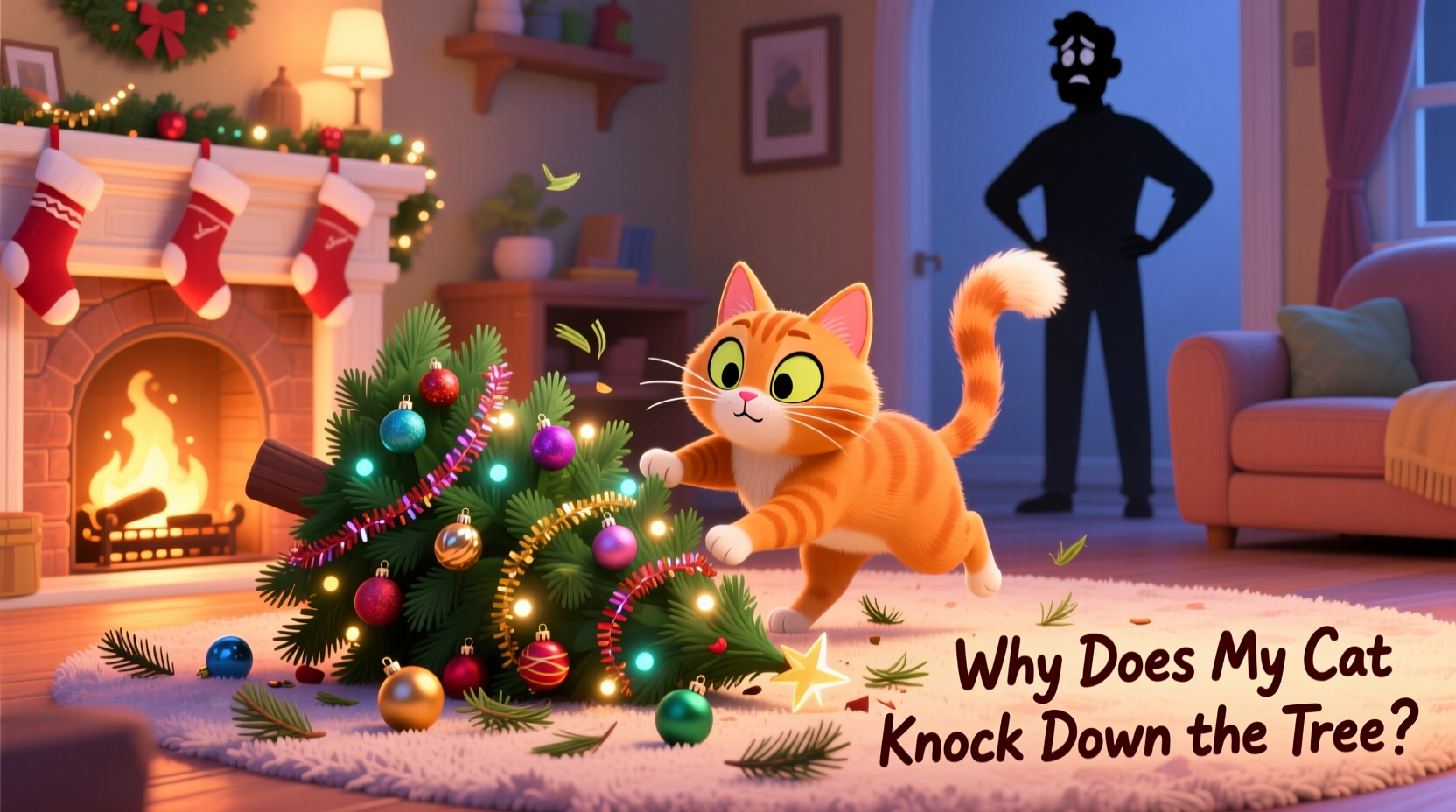
Cats are predators by nature. Even domesticated cats retain strong hunting and climbing instincts developed over thousands of years. A Christmas tree, especially one adorned with shiny ornaments, dangling tinsel, and blinking lights, mimics the kind of environment that triggers their prey drive. The movement of reflections off ornaments or flickering lights can appear like small animals darting through foliage.
Additionally, trees offer vertical space—something indoor cats crave. In the wild, cats climb to survey their territory, escape threats, and rest in safety. A tall, full Christmas tree presents an irresistible opportunity to explore upward. When your cat bats at a low-hanging ornament or pushes against the trunk, it may simply be testing stability, much like they would with branches in nature.
Dr. Sarah Thompson, a certified feline behaviorist, explains:
“Cats don’t knock things over to annoy us—they’re gathering information. Every tap, nudge, or leap helps them understand their environment. A Christmas tree is essentially a giant puzzle filled with moving parts and strange smells.”
Moreover, the scent of real pine or fir can be stimulating to cats. While not toxic in typical household exposure, the aroma may pique interest, encouraging exploration. Combined with unfamiliar decorations and changes in routine during the holidays, the tree becomes a focal point of novelty and excitement.
Common Triggers That Encourage Tree-Toppling Behavior
Several factors increase the likelihood of your cat targeting the Christmas tree:
- Moving or reflective ornaments: Balls that spin, mirrors, or metallic ribbons catch light and mimic prey movement.
- Dangling items: Tinsel, garlands, and strings resemble snakes or worms, triggering hunting instincts.
- Unstable base: A poorly secured tree is easier to tip, making it more tempting for curious paws.
- Lack of alternative stimulation: If your cat doesn’t have other outlets for play or climbing, the tree becomes the main attraction.
- Unsupervised access: Free roaming around the tree increases opportunities for interaction.
Step-by-Step Guide to Securing Your Christmas Tree
Preventing tree disasters requires a combination of physical security, environmental management, and behavioral redirection. Follow this timeline to set up a cat-safe holiday display:
- Choose the right location: Place the tree away from furniture your cat can jump from, such as sofas or bookshelves. Avoid corners where tipping could cause injury.
- Use a sturdy stand: Invest in a heavy-duty tree stand with a wide base. Fill it with enough water to add weight and stability.
- Anchor the tree: Secure the top or middle section to a wall hook, door frame, or ceiling bracket using fishing line or soft straps. Make sure the anchor is tight but discreet.
- Create a physical barrier: Surround the base with a decorative fence, baby gate, or even a large wreath-covered box to block access to the trunk and stand.
- Decorate strategically: Keep lower branches free of ornaments. Use lightweight or unbreakable decorations higher up. Avoid hanging anything within paw’s reach.
- Introduce deterrents: Temporarily place aluminum foil, double-sided tape, or citrus-scented cotton balls around the base—cats dislike these textures and smells.
- Supervise initial exposure: Let your cat explore the tree under supervision for short periods. Redirect unwanted behavior immediately with toys or treats.
- Provide alternatives: Set up a cat tree or climbing shelf nearby to satisfy vertical exploration needs.
Safe Alternatives and Enrichment Strategies
Instead of trying to eliminate your cat’s curiosity—which is neither fair nor realistic—redirect it into appropriate outlets. Environmental enrichment reduces stress and prevents destructive behaviors born from boredom.
Consider creating a “cat-friendly” corner near the Christmas tree with its own mini-tree or holiday-themed cat tree. Some pet stores sell small cardboard or fabric trees with dangling toys that mimic ornaments. This gives your cat a sense of participation without risking the real tree.
Daily interactive play sessions also help. Use wand toys, laser pointers, or crinkle balls to simulate hunting for 10–15 minutes twice a day. A tired cat is less likely to seek out trouble. Puzzle feeders or treat-dispensing toys placed in different rooms encourage exploration away from the tree.
| Strategy | Effectiveness | Notes |
|---|---|---|
| Tree anchoring | High | Essential for safety; invisible when done well |
| Physical barrier | High | Use baby gates or decorative fencing |
| Scent deterrents | Moderate | Citrus, lavender, or commercial sprays work temporarily |
| Texture deterrents | Moderate | Foil or double-sided tape lose effect over time |
| Environmental enrichment | Very High | Long-term solution; reduces overall mischief |
Mini Case Study: The Johnson Family’s Tree Rescue Plan
The Johnsons had given up on having a traditional Christmas tree after three consecutive years of disasters. Their two cats, Luna and Milo, treated the tree like a jungle gym, pulling down ornaments and eventually toppling the entire setup. One year, a falling light strand sparked minor concern when Milo batted at the plug.
Determined to try again, they consulted a local pet behavior consultant. They implemented a multi-pronged approach: relocating the tree to a narrower hallway (limiting jumping angles), anchoring it to the wall with clear fishing line, and installing a low baby gate around the base covered with holiday fabric. They removed all breakable and string-like decorations from the bottom two feet.
They also invested in a tall cat tree beside the sofa and introduced daily play sessions with feather toys. Within a week, both cats were more engaged with their new climbing structure. Though Luna still sniffed the tree daily, she never attempted to climb it. The tree remained upright throughout the season—complete with twinkling lights and delicate glass balls.
“We realized we were asking our cats to ignore something incredibly interesting,” said Sarah Johnson. “Once we gave them better options, they lost interest in the tree.”
Checklist: Cat-Safe Christmas Tree Setup
Before turning on the lights, go through this essential checklist:
- ✅ Tree is placed away from jump-off points (furniture, shelves)
- ✅ Base is secured in a heavy, stable stand
- ✅ Tree is anchored to wall or ceiling
- ✅ No tinsel, ribbons, or small ingestible decorations
- ✅ Lower branches are decoration-free
- ✅ Electrical cords are taped down or concealed
- ✅ Water reservoir is covered or inaccessible (to prevent ingestion)
- ✅ Deterrents (foil, tape, scent) are in place around the base
- ✅ Alternative climbing structures are available
- ✅ Interactive play schedule is established
FAQ: Common Concerns About Cats and Christmas Trees
Is a real Christmas tree toxic to cats?
Pine and fir trees are generally non-toxic in small amounts, but ingesting needles can cause mouth irritation or gastrointestinal upset. The real danger lies in the tree water, which may contain preservatives, bacteria, or pesticides. Always cover the water reservoir with a lid or decorative cover.
Can I use essential oils to deter my cat?
No. Many essential oils—including pine, fir, and citrus—are toxic to cats, even when diffused. Never use oil-based deterrents around cats. Stick to physical barriers or pet-safe sprays labeled as feline-friendly.
What if my cat is afraid of the tree?
Some cats react negatively to sudden changes. If your cat avoids the room or seems stressed, allow gradual introduction. Let them sniff the tree (unlit, undecorated) for short periods. Offer treats nearby to create positive associations. Avoid forcing interaction.
Expert Insight: Balancing Festivity and Feline Well-Being
Dr. Elena Ruiz, a veterinarian specializing in companion animal behavior, emphasizes coexistence over control:
“The goal isn’t to stop your cat from being a cat—it’s to design a home where both species thrive. Holiday safety isn’t about restriction; it’s about smart planning and empathy.”
She recommends viewing the Christmas tree not as a battleground but as an opportunity to enrich your cat’s environment. “A little creativity goes a long way. A bell on a spring toy can satisfy the same urge as a jingling ornament—but safely.”
Conclusion: Enjoy the Holidays Without Sacrificing Peace
Your Christmas tree doesn’t have to become a casualty of feline curiosity. By understanding your cat’s instincts and taking proactive steps, you can preserve both your holiday spirit and your home’s safety. It’s not about winning a battle against your pet—it’s about creating harmony during a busy, joyful season.
Start early, stay consistent, and remember that small changes make a big difference. Whether it’s anchoring the tree, rethinking your decorations, or investing in extra playtime, every effort contributes to a calmer, safer environment for everyone in your household—including your whiskered family member.




 浙公网安备
33010002000092号
浙公网安备
33010002000092号 浙B2-20120091-4
Comments
No comments yet. Why don't you start the discussion?